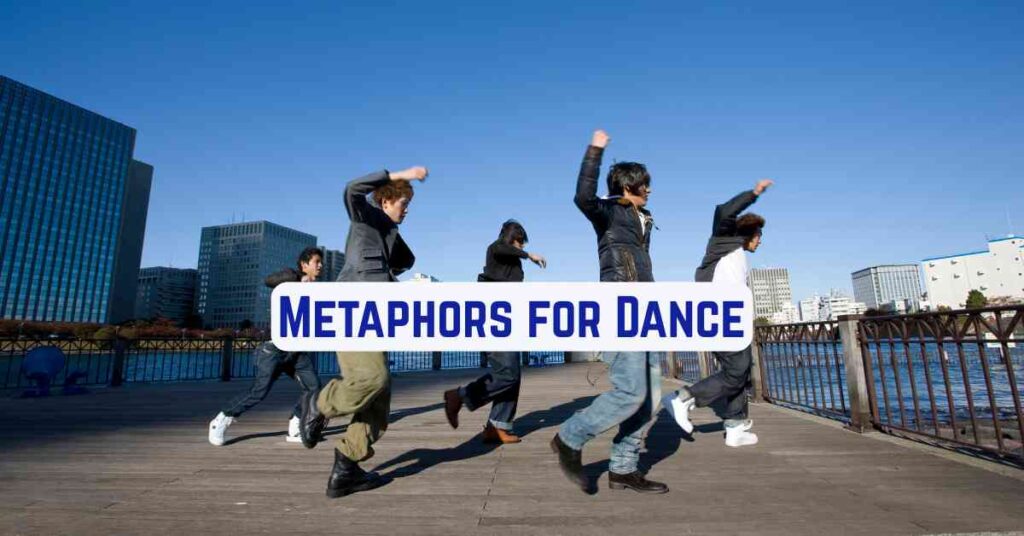

Dance, a universal language expressed through movement, often transcends the limitations of literal description. To capture its essence, we turn to metaphors, figures of speech that allow us to understand one thing in terms of another. This article delves into the rich world of metaphors for dance, exploring how they enhance our understanding and appreciation of this art form. Whether you’re a dancer, a writer, or simply an admirer of movement, understanding these metaphors will enrich your vocabulary and deepen your insight into the expressive power of dance.
Table of Contents
- Introduction
- Definition of Metaphor for Dance
- Structural Breakdown of Dance Metaphors
- Types and Categories of Dance Metaphors
- Examples of Metaphors for Dance
- Usage Rules for Dance Metaphors
- Common Mistakes When Using Dance Metaphors
- Practice Exercises
- Advanced Topics in Dance Metaphors
- Frequently Asked Questions
- Conclusion
Definition of Metaphor for Dance
A metaphor for dance is a figure of speech that describes dance or dancers by comparing them to something else, without using “like” or “as” (which would make it a simile). This comparison is not literal but suggestive, aiming to evoke a deeper understanding or emotional response. Metaphors are crucial in dance criticism, choreography, and even everyday conversations about dance, as they help bridge the gap between the visual experience and the verbal description.
The function of a dance metaphor is multifaceted. Firstly, it provides a vivid and imaginative way to describe the often-elusive qualities of dance. Secondly, it can highlight specific aspects of a performance, such as its energy, emotion, or technical skill. Thirdly, it allows for a more subjective and interpretive understanding of dance, opening up new avenues for appreciation. Context is key when interpreting a metaphor for dance. The same metaphor can evoke different meanings depending on the style of dance, the choreographer’s intention, and the viewer’s personal experience.
Structural Breakdown of Dance Metaphors
Dance metaphors, like all metaphors, typically consist of two main components: the tenor and the vehicle. The tenor is the subject being described (in this case, the dance or dancer), and the vehicle is the thing to which it is being compared. The relationship between the tenor and the vehicle is what creates the metaphorical meaning.
For example, in the metaphor “The dancer was a whirlwind,” the tenor is “the dancer,” and the vehicle is “a whirlwind.” The implied connection is that the dancer, like a whirlwind, is energetic, fast-moving, and perhaps even chaotic. Understanding this structure allows you to analyze and interpret metaphors more effectively, identifying the specific qualities being emphasized.
The effectiveness of a dance metaphor relies on the aptness of the comparison. A strong metaphor will resonate with the audience, creating a clear and insightful connection between the dance and the chosen vehicle. A weak metaphor, on the other hand, may be confusing or irrelevant, failing to enhance the understanding of the dance.
Types and Categories of Dance Metaphors
Dance metaphors can be categorized based on the types of imagery they evoke. Here are some common categories:
Elemental Metaphors
These metaphors draw comparisons to the elements of nature, such as fire, water, air, and earth. They often describe the energy, fluidity, or groundedness of the dance.
Emotional Metaphors
These metaphors relate the dance to specific emotions or emotional states, such as joy, sorrow, anger, or peace. They help convey the emotional content of the dance to the audience.
Animalistic Metaphors
These metaphors compare dancers or their movements to animals, highlighting qualities such as grace, strength, agility, or ferocity.
Nature Metaphors
These metaphors use aspects of nature, such as trees, flowers, or mountains, to describe the form, growth, or resilience of the dance.
Abstract Metaphors
These metaphors use abstract concepts, such as time, space, or geometry, to describe the structure, dynamics, or intention of the dance.
Examples of Metaphors for Dance
The following tables provide a variety of examples of metaphors for dance, categorized by type. Each example includes the metaphor, the type of metaphor, and a brief explanation of its meaning.
Table 1: Elemental Metaphors for Dance
This table showcases how elements like fire, water, air, and earth can be used metaphorically to describe the qualities of dance, focusing on energy, fluidity, and groundedness.
| Metaphor | Type | Explanation |
|---|---|---|
| The dancer moved like liquid mercury. | Elemental (Water) | Describes fluid and seamless movements. |
| Her leaps were bursts of fire. | Elemental (Fire) | Highlights energetic and passionate jumps. |
| He was grounded, an oak in the storm of music. | Elemental (Earth) | Emphasizes stability and strength. |
| The choreography flowed like a river. | Elemental (Water) | Illustrates a continuous and natural progression. |
| Their duet was a whirlwind of emotion. | Elemental (Air) | Suggests a powerful and chaotic display. |
| She was a flame, dancing with intensity. | Elemental (Fire) | Conveys passion and energy. |
| His steps were as solid as granite. | Elemental (Earth) | Indicates firmness and precision. |
| The dancers floated like clouds across the stage. | Elemental (Air) | Describes light and graceful movements. |
| The music ignited a fiery performance. | Elemental (Fire) | Shows how the music fueled an energetic dance. |
| Her movements were a gentle stream. | Elemental (Water) | Suggests calm and flowing motions. |
| The dancer’s presence was as immovable as a mountain. | Elemental (Earth) | Highlights a strong and unwavering stage presence. |
| The dance lifted the audience on wings of air. | Elemental (Air) | Indicates an uplifting and ethereal quality. |
| The dancer’s passion burned like a wildfire. | Elemental (Fire) | Emphasizes intense and uncontrolled energy. |
| The choreography ebbed and flowed like the tide. | Elemental (Water) | Illustrates a natural and rhythmic movement. |
| He stood as firm as bedrock, a pillar of strength. | Elemental (Earth) | Conveys stability and resilience. |
| Her voice soared, a current of pure air. | Elemental (Air) | Describes an effortless and uplifting vocal performance. |
| The fire of their performance was unforgettable. | Elemental (Fire) | Highlights the unforgettable intensity of the dance. |
| The dance unfolded like a calm, clear lake. | Elemental (Water) | Suggests a peaceful and serene experience. |
| He was the earth, anchoring the performance. | Elemental (Earth) | Emphasizes the grounding and foundational role of the dancer. |
| The stage became an airy realm with their jumps. | Elemental (Air) | Describes the light and ethereal quality of the dance. |
Table 2: Emotional Metaphors for Dance
This table illustrates how dance can be metaphorically linked to various emotions, conveying the emotional depth and narrative of the performance.
| Metaphor | Type | Explanation |
|---|---|---|
| The dance was a lament for lost love. | Emotional | Expresses sadness and grief. |
| Her movements were an explosion of joy. | Emotional | Highlights happiness and exuberance. |
| His solo was a silent scream of anger. | Emotional | Conveys frustration and rage. |
| The choreography was a tapestry of emotions. | Emotional | Illustrates a complex and interwoven range of feelings. |
| Their pas de deux was a conversation of hearts. | Emotional | Suggests a deep and intimate connection. |
| She danced with the weight of the world on her shoulders. | Emotional | Conveys burden and responsibility. |
| His performance was a beacon of hope. | Emotional | Indicates optimism and inspiration. |
| The dancers embodied the spirit of resilience. | Emotional | Describes strength and the ability to overcome adversity. |
| The music evoked a sense of longing. | Emotional | Shows how the music stirred deep desires. |
| Her smile was a sunrise in a dark scene. | Emotional | Suggests that smile’s bright and hopeful impact. |
| The dance was a mirror reflecting inner turmoil. | Emotional | Reflects internal struggles and conflicts. |
| Their embrace was a sanctuary of peace. | Emotional | Highlights comfort and safety. |
| The dancer’s steps were laden with sorrow. | Emotional | Conveys deep sadness and grief. |
| The crescendo was a burst of pure elation. | Emotional | Illustrates a moment of intense happiness. |
| His movement was a whisper of intimacy. | Emotional | Suggests closeness and vulnerability. |
| The performance was a testament to courage. | Emotional | Indicates bravery and strength in adversity. |
| The dance expressed a profound sense of freedom. | Emotional | Highlights liberation and independence. |
| Her tears were a river of unspoken pain. | Emotional | Conveys deep and suppressed sorrow. |
| The dancer’s passion was a fire of desire. | Emotional | Suggests intense longing and emotion. |
| Their connection was a bond of unwavering trust. | Emotional | Illustrates deep and secure reliance. |
| The dance was a prayer of hope for the future. | Emotional | Expresses optimism and faith. |
| The dancers moved with the grace of forgiveness. | Emotional | Conveys reconciliation and compassion. |
| His performance was a raw expression of vulnerability. | Emotional | Highlights openness and emotional exposure. |
Table 3: Animalistic Metaphors for Dance
This table shows how animalistic metaphors can be used to describe the dancer’s movements, highlighting grace, strength, agility, or ferocity.
| Metaphor | Type | Explanation |
|---|---|---|
| She moved with the grace of a swan. | Animalistic | Describes elegant and fluid movements. |
| He was a panther, stalking the stage. | Animalistic | Highlights agility and predatory energy. |
| Their leaps were like gazelles bounding across the savanna. | Animalistic | Conveys lightness and freedom. |
| The dancers moved as a flock of birds, synchronized and free. | Animalistic | Illustrates unity and effortless coordination. |
| He was a bear, powerful and grounded. | Animalistic | Suggests strength and stability. |
| She danced like a butterfly, light and ethereal. | Animalistic | Describes delicate and graceful movements. |
| His jumps were as high as a kangaroo’s. | Animalistic | Indicates powerful leaps and bounds. |
| The dancers swirled like a school of fish. | Animalistic | Describes fluid and synchronized movements. |
| He prowled the stage like a lion, commanding attention. | Animalistic | Shows how the dancer dominated the stage. |
| She coiled like a snake before striking a pose. | Animalistic | Suggests controlled power and precision. |
| The dancer’s movements were as fluid as an eel. | Animalistic | Highlights flexibility and smoothness. |
| Their coordination was as precise as a hive of bees. | Animalistic | Illustrates perfect synchronization. |
| He soared like an eagle, a majestic presence. | Animalistic | Conveys freedom and dominance. |
| She fluttered like a hummingbird, quick and vibrant. | Animalistic | Describes rapid and energetic movements. |
| His steps were as deliberate as a tortoise. | Animalistic | Indicates careful and measured movements. |
| The dancers moved like a pack of wolves, fierce and united. | Animalistic | Shows intensity and group cohesion. |
| She was a gazelle, leaping with effortless grace. | Animalistic | Highlights agility and elegance. |
| His strength was as unwavering as a bull’s charge. | Animalistic | Conveys power and determination. |
| The dancers mimicked the flight of swallows. | Animalistic | Describes swift and acrobatic movements. |
| He moved with the sinuous grace of a cat. | Animalistic | Suggests fluid and controlled movements. |
| The dancers hopped like frogs across the stage. | Animalistic | Highlights playful and energetic movements. |
| Their movements were as synchronized as a school of dolphins. | Animalistic | Illustrates perfect timing and coordination. |
| She was a spider, spinning a web of movement. | Animalistic | Conveys intricacy and control. |
Table 4: Nature Metaphors for Dance
This table displays how elements of nature can be used metaphorically to describe the dance’s form, growth, or resilience.
| Metaphor | Type | Explanation |
|---|---|---|
| The dance was a blooming flower. | Nature | Describes gradual unfolding and beauty. |
| His movements were as strong as the roots of an oak. | Nature | Highlights stability and resilience. |
| The choreography was a landscape of emotions. | Nature | Illustrates a diverse and evocative range of feelings. |
| Their duet was a dance of the seasons. | Nature | Suggests cyclical change and growth. |
| She was a willow, bending but never breaking. | Nature | Conveys flexibility and perseverance. |
| His performance was a sunrise, full of promise. | Nature | Indicates hope and new beginnings. |
| The dancers moved like leaves in the wind. | Nature | Describes light and free movements. |
| The music was the sound of the forest. | Nature | Shows how the music invoked natural imagery. |
| The dancer was a force of nature. | Nature | Highlights power and inevitability. |
| Their steps were as delicate as snowflakes. | Nature | Suggests fragility and uniqueness. |
| The dance unfolded like a mountain range. | Nature | Illustrates grandeur and complexity. |
| His solo was a desert in bloom. | Nature | Conveys transformation and resilience. |
| The dancers swayed like reeds in the water. | Nature | Describes flexible and harmonious movements. |
| The performance was a testament to nature’s beauty. | Nature | Highlights the elegance and power of natural forms. |
| His presence loomed like a towering redwood. | Nature | Conveys strength and longevity. |
| The dance was a garden, filled with diverse expressions. | Nature | Illustrates variety and beauty. |
| Their movements mirrored the flow of a river. | Nature | Suggests fluidity and continuity. |
| She was a sunflower, turning towards the light. | Nature | Conveys optimism and growth. |
| His steps were as precise as the rings of a tree. | Nature | Indicates accuracy and depth. |
| The dance was a symphony of natural elements. | Nature | Highlights harmony and balance. |
Table 5: Abstract Metaphors for Dance
This table illustrates how abstract concepts can be used metaphorically to describe the dance’s structure, dynamics, or intention.
| Metaphor | Type | Explanation |
|---|---|---|
| The dance was a conversation between bodies. | Abstract | Suggests communication and interaction. |
| His solo was a journey through time. | Abstract | Highlights progression and transformation. |
| The choreography was a geometric puzzle. | Abstract | Illustrates structure and precision. |
| Their duet was a balance of opposing forces. | Abstract | Conveys harmony and tension. |
| She danced with the rhythm of the universe. | Abstract | Indicates connectedness and flow. |
| His performance was a study in contrasts. | Abstract | Shows the interplay of opposing elements. |
| The dancers moved within a framework of space. | Abstract | Describes the use of spatial dynamics. |
| The music was the architecture of the dance. | Abstract | Highlights the structural role of the music. |
| The dance was a tapestry of moments. | Abstract | Illustrates a rich and complex composition. |
| Their movements were a language without words. | Abstract | Shows non-verbal communication. |
| The dance was a mirror of the human condition. | Abstract | Reflects universal experiences. |
| His solo was a dialogue with silence. | Abstract | Conveys introspection and contemplation. |
| The dancers moved within a canvas of light. | Abstract | Describes the use of lighting to enhance the dance. |
| Their performance was a testament to human potential. | Abstract | Highlights achievement and capability. |
| The dance was a celebration of life. | Abstract | Indicates joy and vitality. |
| His steps were a mapping of inner space. | Abstract | Conveys introspection and self-discovery. |
| The dancers embodied the essence of time. | Abstract | Illustrates the passage and impact of time. |
| The choreography was a landscape of sound. | Abstract | Shows the auditory dimension of the dance. |
| Their movements were a dance of pure energy. | Abstract | Highlights vitality and force. |
| The dance was a gateway to another dimension. | Abstract | Conveys transcendence and escape. |
Usage Rules for Dance Metaphors
When using metaphors for dance, consider the following rules:
- Ensure Relevance: The metaphor should be relevant to the dance being described. It should highlight specific qualities or aspects of the performance.
- Maintain Consistency: Avoid mixing metaphors that create conflicting images. Choose a central metaphor and develop it consistently throughout your description.
- Consider the Audience: The metaphor should be accessible to your audience. Avoid obscure or overly complex metaphors that may confuse or alienate readers.
- Avoid Clichés: Steer clear of overused metaphors that have lost their impact. Strive for originality and creativity in your descriptions.
- Be Specific: A strong metaphor is specific and detailed. Instead of saying “The dancer was graceful,” try “The dancer moved with the grace of a swan, gliding effortlessly across the stage.”
Common Mistakes When Using Dance Metaphors
Here are some common mistakes to avoid when using metaphors for dance:
- Mixing Metaphors: Combining unrelated metaphors that create a confusing image.
- Incorrect: “The dancer was a whirlwind of emotion, but also a solid rock of stability.”
- Correct: “The dancer was a whirlwind of emotion, captivating the audience with her intensity.” Or “The dancer was a solid rock of stability, grounding the performance with his unwavering presence.”
- Using Clichés: Relying on overused metaphors that lack originality.
- Incorrect: “The dance was poetry in motion.”
- Correct: “The dance was a carefully crafted sonnet, each movement a precisely chosen word.”
- Being Too Vague: Using metaphors that are too general and don’t provide specific insight.
- Incorrect: “The dance was beautiful.”
- Correct: “The dance was a blooming flower, each movement unfolding to reveal a new layer of beauty.”
- Ignoring Context: Failing to consider the context of the dance when choosing a metaphor.
- Incorrect: Describing a modern, angular dance as “a gentle stream.”
- Correct: Describing a modern, angular dance as “a fractured mirror, reflecting the complexities of modern life.”
Practice Exercises
Exercise 1: Identifying Metaphors
Identify the metaphors in the following sentences and explain what they mean.
| Question | Answer |
|---|---|
| 1. Her leaps were bursts of sunlight. | Metaphor: “bursts of sunlight.” Meaning: Highlights energetic and joyful jumps. |
| 2. The dancers moved like shadows in the night. | Metaphor: “shadows in the night.” Meaning: Describes elusive and mysterious movements. |
| 3. His solo was a conversation with his soul. | Metaphor: “conversation with his soul.” Meaning: Conveys introspection and self-reflection. |
| 4. The dance was a storm of passion. | Metaphor: “storm of passion.” Meaning: Conveys overwhelming emotion and energy. |
| 5. Her movements were the whispers of the wind. | Metaphor: “whispers of the wind.” Meaning: Describes subtle and delicate movements. |
| 6. The choreography was a puzzle of interconnected stories. | Metaphor: “puzzle of interconnected stories.” Meaning: Illustrates complexity and narrative. |
| 7. Their duet was a dream woven with longing. | Metaphor: “dream woven with longing.” Meaning: Suggests a beautiful but unfulfilled desire. |
| 8. He stood as a sentinel, guarding the stage’s emotion. | Metaphor: “sentinel.” Meaning: Indicates a strong and protective presence. |
| 9. The dance was a beacon, drawing the audience in. | Metaphor: “beacon.” Meaning: Highlights the dance’s captivating power. |
| 10. Her presence was a magnet, attracting all eyes. | Metaphor: “magnet.” Meaning: Conveys irresistible allure. |
Exercise 2: Creating Metaphors
Create metaphors to describe the following aspects of dance:
| Question | Answer |
|---|---|
| 1. The energy of a hip-hop dance. | The energy of the hip-hop dance was an electric current, coursing through the performers and electrifying the audience. |
| 2. The fluidity of a ballet dancer’s arms. | The ballet dancer’s arms were like flowing ribbons, gracefully tracing patterns in the air. |
| 3. The strength of a male dancer’s jumps. | The male dancer’s jumps were like rockets launching into the sky, defying gravity with each powerful leap. |
| 4. The emotion conveyed in a contemporary dance piece. | The emotion conveyed in the contemporary dance piece was a raw nerve, exposed and vulnerable, resonating with the audience’s deepest feelings. |
| 5. The precision of a tap dancer’s steps. | The precision of the tap dancer’s steps was like a perfectly tuned machine, each tap a precise note in a rhythmic symphony. |
| 6. The collaboration between two dancers in a pas de deux. | The collaboration between two dancers in a pas de deux was like a delicate dance of stars, each movement complementing and enhancing the other. |
| 7. The storytelling aspect of a narrative ballet. | The storytelling aspect of a narrative ballet was like a novel unfolding on stage, each scene a chapter in a captivating tale. |
| 8. The power of a dancer’s stage presence. | The power of the dancer’s stage presence was like a silent command, holding the audience captive with every move. |
| 9. The uplifting effect of a joyful dance performance. | The uplifting effect of the joyful dance performance was like a ray of sunshine, brightening the spirit and filling the heart with happiness. |
| 10. The complexity of a modern dance composition. | The complexity of a modern dance composition was like a mosaic, each movement a piece contributing to a rich and intricate design. |
Exercise 3: Rewriting with Metaphors
Rewrite the following sentences using effective metaphors to enhance their descriptive power.
| Question | Answer |
|---|---|
| 1. The dancer moved gracefully. | The dancer moved with the grace of a willow, bending and swaying with effortless elegance. |
| 2. The music was very emotional. | The music was a river of tears, carrying the weight of unspoken sorrow. |
| 3. The stage was brightly lit. | The stage was bathed in golden sunlight, illuminating every movement with radiant energy. |
| 4. The dancers were well-coordinated. | The dancers were a synchronized clock, each movement timed to perfection. |
| 5. The performance was powerful. | The performance was a volcanic eruption, unleashing a torrent of raw emotion. |
| 6. The dancer was strong and resilient. | The dancer was an oak, weathering any storm with unwavering strength. |
| 7. The choreography told a story. | The choreography was a whispered secret, unfolding a tale of love and loss. |
| 8. The dancer commanded attention. | The dancer was a magnet, drawing all eyes with his undeniable presence. |
| 9. The dance was inspiring. | The dance was a beacon of hope, illuminating a path of courage and resilience. |
| 10. The movements were intricate and complex. | The movements were a labyrinth, each step a careful navigation through a maze of emotions. |
Advanced Topics in Dance Metaphors
For advanced learners, consider exploring the following topics:
- The use of extended metaphors in choreography: How choreographers use a central metaphor to structure and develop an entire dance piece.
- The cultural context of dance metaphors: How cultural values and beliefs influence the metaphors used to describe dance.
- The role of metaphor in dance criticism: How critics use metaphors to interpret and evaluate dance performances.
- The relationship between metaphor and symbolism in dance: How metaphors and symbols work together to create meaning in dance.
Frequently Asked Questions
- What is the difference between a metaphor and a simile?
Both metaphors and similes are figures of speech that compare two unlike things. However, a metaphor states that one thing *is* another, while a simile uses “like” or “as” to make the comparison. For example, “The dancer was a whirlwind” (metaphor) versus “The dancer was like a whirlwind” (simile). - Why are metaphors important in describing dance?
Metaphors provide a vivid and imaginative way to capture the often-elusive qualities of dance. They allow us to express complex ideas and emotions in a concise and memorable way, enhancing our understanding and appreciation of the art form. - How can I improve my ability to create effective dance metaphors?
Practice observing dance closely and paying attention to the specific qualities you want to describe. Read widely and expose yourself to different types of imagery and figurative language. Experiment with different comparisons and ask for feedback from others. - Are some metaphors more effective than others?
Yes, the effectiveness of a metaphor depends on its relevance, originality, and clarity. A strong metaphor will resonate with the audience and create a clear and insightful connection between the dance and the chosen vehicle. A weak metaphor may be confusing or irrelevant. - Can the same dance be described using different metaphors?
Absolutely. Dance is subjective, and different viewers may interpret it in different ways. Therefore, it is possible to use a variety of metaphors to describe the same dance, each highlighting different aspects or qualities. - How do cultural differences affect the interpretation of dance metaphors?
Cultural differences can significantly influence the interpretation of dance metaphors, as different cultures may have different associations and understandings of certain images or concepts. For example, a metaphor that references a specific animal may have different connotations in different cultures. - What role does personal experience play in understanding dance metaphors?
Personal experience plays a crucial role in understanding dance metaphors. Your own emotional and physical experiences can shape how you interpret the metaphors used to describe dance, allowing you to connect with the performance on a deeper level. For example, if you have experienced a similar emotion to that expressed in the dance, you may be more likely to understand and appreciate the metaphor used to convey that emotion. - Can metaphors be used in choreography itself, not just in describing dance?
Yes, absolutely. Metaphors can serve as powerful tools for choreographers. A choreographer might use a metaphor as a starting point or a guiding principle for creating a dance. For example, a choreographer might create a dance exploring the metaphor of “a seed growing into a tree,” using movement to represent the different stages of growth, resilience, and reaching for the sky. - How can I avoid using clichéd metaphors?
To avoid clichés, try to think beyond the most obvious comparisons. Ask yourself what unique aspects of the dance you want to highlight. Consider unusual or unexpected pairings. Brainstorm a list of potential metaphors, and then challenge yourself to come up with even more original options. - Is it okay to create a metaphor that only makes sense to me?
While personal metaphors can be valuable for your own understanding and creative process, if you intend to communicate with others, it’s important to ensure that your metaphors are at least somewhat accessible. Test your metaphors on a small group to see if they resonate or if they are too obscure.
Conclusion
Metaphors are essential tools for understanding, appreciating, and describing dance. By using imaginative comparisons, we can capture the essence of dance in ways that literal language cannot. Whether you are a dancer, a choreographer, a critic, or simply an admirer of movement, mastering the art of dance metaphors will enrich your experience and deepen your connection to this powerful art form. Embrace the creativity and expressive potential of metaphors, and let your words dance along with the movements on stage.