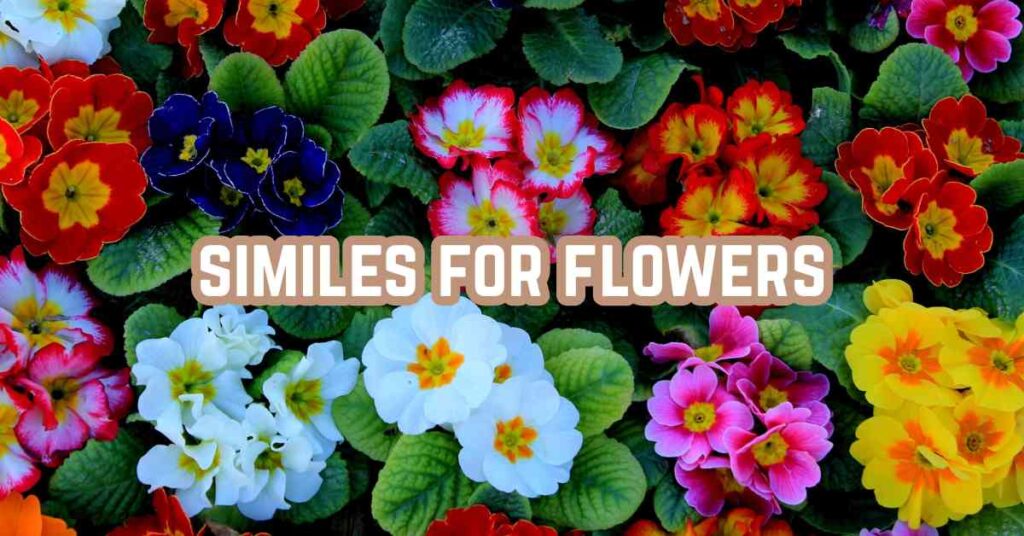

Similes are powerful tools in the English language, allowing us to create vivid and memorable comparisons. When applied to flowers, similes can evoke their beauty, fragility, and unique characteristics in a way that simple descriptions often fail to achieve. This article provides a comprehensive guide to understanding and using similes for flowers, exploring various types and offering numerous examples. Whether you’re a student looking to improve your writing or simply a flower enthusiast seeking creative expression, this guide will equip you with the knowledge and inspiration to craft stunning floral similes.
Understanding similes is crucial for anyone looking to enhance their descriptive writing skills and appreciate the nuances of language. This article will benefit students, writers, poets, and anyone interested in exploring the expressive power of similes in the context of floral descriptions.
Table of Contents
- Definition of Simile
- Structural Breakdown of Similes
- Types of Similes
- Examples of Similes for Flowers
- Usage Rules for Similes
- Common Mistakes with Similes
- Practice Exercises
- Advanced Topics in Similes
- Frequently Asked Questions
- Conclusion
Definition of Simile
A simile is a figure of speech that compares two unlike things using the words “like” or “as.” The purpose of a simile is to create a vivid image or to emphasize a particular quality by drawing a parallel between the two things being compared. Similes add depth and color to writing, making it more engaging and memorable for the reader. They are a fundamental element of figurative language, enriching descriptions and offering fresh perspectives.
In essence, a simile asserts a similarity between two things that are otherwise different. This comparison allows the reader to understand the subject in a new light, often highlighting a specific characteristic or attribute. The use of “like” or “as” is what distinguishes a simile from other figures of speech, such as metaphors, which imply a direct equivalence.
Structural Breakdown of Similes
The basic structure of a simile involves three key components: the subject being described, the word “like” or “as,” and the object to which the subject is being compared. Understanding this structure is essential for creating effective and grammatically correct similes.
Here’s a breakdown of the structural elements:
- Subject: The noun or pronoun that is being described.
- Comparison Word: The word “like” or “as,” which indicates the comparison.
- Object of Comparison: The noun or pronoun to which the subject is being compared.
For example, in the simile “The rose is as red as blood,” the rose is the subject, “as” is the comparison word, and blood is the object of comparison. This structure allows for a clear and concise comparison, highlighting the intense redness of the rose.
Types of Similes
Similes can be categorized based on the aspect being compared. Understanding these categories can help you choose the most effective simile for a particular situation. Here are some common types of similes used to describe flowers:
Similes Based on Color
These similes compare the color of a flower to something else that shares a similar hue. They are particularly useful for emphasizing the vibrancy or subtlety of a flower’s color.
Similes Based on Fragrance
These similes focus on the scent of a flower, comparing it to other pleasant or familiar smells. They can evoke a sense of nostalgia, freshness, or sweetness.
Similes Based on Texture
These similes describe the feel of a flower’s petals or stem, comparing it to other textures such as silk, velvet, or paper. They add a tactile dimension to the description.
Similes Based on Shape
These similes compare the shape of a flower to other objects or forms. They can highlight the flower’s symmetry, complexity, or uniqueness.
General Descriptive Similes
These similes encompass a broader range of comparisons, focusing on overall appearance, beauty, or other general characteristics. They offer a versatile way to describe flowers in a creative and engaging manner.
Examples of Similes for Flowers
The following sections provide extensive examples of similes for flowers, organized by category. Each table contains a variety of similes, illustrating the diverse ways in which flowers can be compared to other objects and concepts.
Similes Based on Color
These similes focus on the vibrant and varied colors of flowers, drawing comparisons to other objects that share similar hues. They help to create a vivid and memorable image in the reader’s mind.
| Simile | Explanation |
|---|---|
| The rose is as red as blood. | Emphasizes the intense, deep red color of the rose. |
| The sunflower is as yellow as the sun. | Highlights the bright, cheerful yellow of the sunflower. |
| The lavender is as purple as twilight. | Evokes the soft, muted purple of lavender flowers. |
| The daisy is as white as snow. | Describes the pure, pristine white color of the daisy. |
| The poppy is like a flame in the field. | Suggests the vibrant, fiery red of the poppy. |
| The orchid is as pink as a flamingo. | Compares the delicate pink of the orchid to the flamingo’s feathers. |
| The bluebell is like a patch of sky on the ground. | Highlights the intense blue color of the bluebell. |
| The marigold is as orange as a sunset. | Emphasizes the warm, vibrant orange of the marigold. |
| The iris is like a jewel-toned dream. | Suggests the rich, multi-colored hues of the iris. |
| The petunia is as colorful as a rainbow. | Highlights the wide variety of colors found in petunias. |
| The tulip is as scarlet as a cardinal’s robe. | Emphasizes a deep, rich red. |
| The lily is as pure white as fresh cream. | Suggests a flawless and unblemished white. |
| The violet is like a whisper of indigo. | Evokes a subtle and delicate purple hue. |
| The zinnia is as bright as a child’s painting. | Highlights the vibrant and varied colors. |
| The chrysanthemum is like a burst of gold. | Emphasizes a radiant and metallic yellow. |
| The carnation is as pale pink as a seashell. | Suggests a delicate and subtle pink. |
| The dahlia is like a splash of crimson paint. | Highlights a deep and intense red. |
| The geranium is as ruby red as fine wine. | Emphasizes a luxurious and rich red. |
| The hibiscus is like a tropical sunset. | Evokes a mix of vibrant oranges, reds, and yellows. |
| The morning glory is as blue as a summer sky. | Highlights a bright and clear blue. |
| The pansy is as velvety black as night. | Emphasizes a deep and rich black. |
| The Queen Anne’s Lace is like a field of gathered moonlight. | Suggests a soft and luminous white. |
| The snapdragon is as fiery orange as a dragon’s breath. | Highlights a vibrant and intense orange. |
| The sweet pea is like a pastel rainbow. | Evokes a mix of soft and muted colors. |
Similes Based on Fragrance
These similes focus on the captivating scents of flowers, comparing them to other pleasant or familiar smells. They can evoke feelings of nostalgia, freshness, or sweetness, adding another layer of sensory detail to the description.
| Simile | Explanation |
|---|---|
| The rose smells as sweet as honey. | Compares the rose’s fragrance to the sweetness of honey. |
| The jasmine smells like a summer night. | Evokes the warm, intoxicating scent of jasmine. |
| The lily smells as fresh as a spring morning. | Highlights the clean, invigorating scent of the lily. |
| The lavender smells like a calming breeze. | Suggests the soothing, relaxing scent of lavender. |
| The gardenia smells as intoxicating as perfume. | Emphasizes the strong, alluring fragrance of the gardenia. |
| The hyacinth smells like a burst of spring. | Highlights the fresh, vibrant scent of hyacinth. |
| The freesia smells as delicate as a whisper. | Suggests the subtle, gentle scent of freesia. |
| The honeysuckle smells like liquid sunshine. | Evokes the warm, sweet scent of honeysuckle. |
| The peony smells as rich as vanilla. | Compares the peony’s fragrance to the creamy sweetness of vanilla. |
| The sweet pea smells like a candy shop. | Highlights the sugary, sweet scent of sweet peas. |
| The lilac smells as nostalgic as grandma’s garden. | Evokes a sense of comforting familiarity. |
| The tuberose smells like a tropical dream. | Suggests an exotic and intoxicating fragrance. |
| The heliotrope smells as comforting as almond cookies. | Compares the flower’s scent to a warm, sweet treat. |
| The chamomile smells like a cup of herbal tea. | Highlights the calming and soothing fragrance. |
| The rosemary blossom smells as invigorating as mountain air. | Evokes a sense of freshness and vitality. |
| The stock flower smells like a blend of cloves and honey. | Suggests a spicy and sweet aroma. |
| The narcissus smells as heady as an old romance novel. | Compares the flower’s scent to a strong and passionate feeling. |
| The star gazer lily smells like sweet spice. | Highlights aromatic spice elements. |
| The calendula smells like a sunny meadow. | Evokes a sense of warmth and natural beauty. |
| The daffodil smells as cheerful as a songbird’s melody. | Highlights a bright and uplifting fragrance. |
| The garden phlox smells like a bouquet of mixed spices. | Suggests a complex and aromatic scent. |
| The verbena smells as zesty as a lemon grove. | Compares the flower’s scent to a citrusy and refreshing aroma. |
| The ylang-ylang smells like a blend of custard and jasmine. | Evokes a rich and exotic fragrance. |
| The chocolate cosmos smells faintly like dark chocolate. | Highlights a unique and enticing scent. |
Similes Based on Texture
These similes focus on the tactile qualities of flowers, describing the feel of their petals or stems. By comparing them to other textures, such as silk, velvet, or paper, these similes add a sensory dimension to the description.
| Simile | Explanation |
|---|---|
| The rose petals feel as soft as velvet. | Compares the rose petals to the smooth, luxurious feel of velvet. |
| The poppy petals are like delicate tissue paper. | Highlights the thin, fragile texture of poppy petals. |
| The sunflower’s head is as rough as sandpaper. | Emphasizes the coarse, textured surface of the sunflower head. |
| The orchid petals feel like smooth silk. | Suggests the soft, delicate texture of orchid petals. |
| The dahlia petals are as crisp as autumn leaves. | Compares the dahlia petals to the dry, brittle texture of autumn leaves. |
| The carnation petals feel like fringed ribbons. | Highlights the textured edges of carnation petals. |
| The lisianthus petals are as smooth as porcelain. | Suggests a flawless and polished texture. |
| The peony petals feel like crumpled silk. | Compares the peony petals to the soft, wrinkled texture of silk. |
| The zinnia petals are as stiff as painted paper. | Emphasizes a firm and slightly rough texture. |
| The cosmos petals feel like smooth, painted skin. | Compares the petal’s surface to supple, artistic material. |
| The snapdragon feels like a velvety glove. | Highlights the delicate and soft sensation. |
| The Queen Anne’s Lace is like a delicate lace doily. | Suggests intricate and fine detailing. |
| The sweet pea petals are as gossamer as a butterfly’s wings. | Compares the flower to something light and ethereal. |
| The sunflower stem is as coarse as burlap. | Highlights a rough and textured surface. |
| The forget-me-not petals feel like the softest suede. | Suggests a gentle and plush sensation. |
| The aster petals are as fine as spun sugar. | Compares the petals to something delicate and sweet. |
| The freesia petals feel like cool satin. | Highlights a smooth and luxurious texture. |
| The gardenia petals are as waxy as candle drippings. | Suggests a smooth and slightly heavy texture. |
| The hyacinth petals feel like tiny, soft bells. | Compares the petals to small, delicate shapes. |
| The iris petal feels like a painted butterfly wing. | Highlights a delicate and colorful texture. |
| The lily petals are as smooth as polished ivory. | Suggests a refined and elegant texture. |
| The pansy petals feel like pressed velvet. | Compares the petals to a rich and textured fabric. |
| The tulip petals are as crisp as parchment paper. | Highlights a thin and slightly brittle texture. |
| The violet petals feel like a soft, gentle caress. | Suggests a delicate and comforting sensation. |
Similes Based on Shape
These similes compare the shape of a flower to other objects or forms, highlighting its symmetry, complexity, or uniqueness. They provide a visual comparison that helps the reader to better understand the flower’s structure.
| Simile | Explanation |
|---|---|
| The rosebud is shaped like a teardrop. | Compares the rosebud’s shape to the form of a teardrop. |
| The sunflower is like a miniature sun. | Highlights the round, radiant shape of the sunflower. |
| The tulip is shaped like an elegant goblet. | Suggests the refined, cup-like shape of the tulip. |
| The daisy is like a star in the grass. | Compares the daisy’s shape to the form of a star. |
| The morning glory is shaped like a delicate bell. | Highlights the bell-like shape of the morning glory. |
| The lily is like an open trumpet. | Suggests the flared, trumpet-like shape of the lily. |
| The orchid is shaped like a dancing lady. | Compares the orchid’s shape to the form of a dancing woman. |
| The snapdragon is like a dragon’s mouth. | Highlights the unique, mouth-like shape of the snapdragon. |
| The dandelion is shaped like a fluffy ball. | Suggests the round, spherical shape of the dandelion. |
| The violet is like a tiny heart. | Compares the violet’s shape to the form of a heart. |
| The dahlia is like a burst of fireworks. | Highlights a complex and radiant shape. |
| The carnation is shaped like a ruffled cloud. | Suggests a soft and textured appearance. |
| The chrysanthemum is like a pompom. | Compares the flower to a decorative ball. |
| The iris is shaped like a regal crown. | Highlights an elegant and sophisticated shape. |
| The peony is like a ball of silk. | Suggests a soft and round form. |
| The Queen Anne’s Lace is shaped like a delicate umbrella. | Compares the flower to a protective canopy. |
| The sweet pea is like a cluster of butterflies. | Highlights a light and airy arrangement. |
| The freesia is shaped like a miniature fountain. | Suggests a cascading and elegant form. |
| The gardenia is like a perfect, white rose. | Compares the flower to a symbol of beauty and purity. |
| The hyacinth is shaped like a spire of tiny stars. | Highlights a tall and intricate structure. |
| The lisianthus is like a delicate teacup. | Suggests a refined and graceful shape. |
| The pansy is shaped like a smiling face. | Compares the flower to a cheerful expression. |
| The zinnia is like a colorful button. | Highlights a round and vibrant form. |
| The aster is shaped like a miniature sunburst. | Suggests a radiant and energetic shape. |
General Descriptive Similes
These similes encompass a broader range of comparisons, focusing on overall appearance, beauty, or other general characteristics. They offer a versatile way to describe flowers in a creative and engaging manner.
| Simile | Explanation |
|---|---|
| The flower is as delicate as a butterfly’s wing. | Emphasizes the fragility and beauty of the flower. |
| The flower is like a jewel in the garden. | Highlights the precious and beautiful nature of the flower. |
| The flower is as vibrant as a painter’s palette. | Suggests the rich and varied colors of the flower. |
| The flower is like a smile in the sunshine. | Evokes a sense of happiness and warmth. |
| The flower is as graceful as a dancer. | Compares the flower’s movement to the elegance of a dancer. |
| The flower is like a breath of fresh air. | Highlights the invigorating and refreshing qualities of the flower. |
| The flower is as resilient as hope. | Suggests the flower’s ability to thrive even in difficult conditions. |
| The flower is like a dream come true. | Evokes a sense of wonder and fulfillment. |
| The flower is as captivating as a work of art. | Compares the flower to the beauty and artistry of a masterpiece. |
| The flower is like a silent poem. | Highlights the flower’s ability to convey beauty and emotion without words. |
| The flower is as timeless as nature itself. | Emphasizes the flower’s enduring beauty and connection to the natural world. |
| The flower is like a symbol of love. | Evokes feelings of affection and romance. |
| The flower is as radiant as the morning sun. | Highlights the flower’s brightness and warmth. |
| The flower is like a secret whispered on the breeze. | Suggests a delicate and intimate quality. |
| The flower is as gentle as a mother’s touch. | Compares the flower’s softness to a comforting gesture. |
| The flower is like a melody in the garden. | Highlights the flower’s harmonious presence. |
| The flower is as enchanting as a fairy tale. | Evokes a sense of magic and wonder. |
| The flower is like a beacon of light. | Suggests the flower’s ability to bring joy and hope. |
| The flower is as inspiring as a mountain vista. | Compares the flower’s beauty to a breathtaking scene. |
| The flower is like a moment of pure bliss. | Highlights the flower’s ability to bring happiness. |
| The flower is as refreshing as a cool rain. | Compares the flower to a revitalizing experience. |
| The flower is like a promise of spring. | Evokes anticipation and renewal. |
| The flower is as captivating as a starry night. | Compares the flower’s beauty to a stunning celestial display. |
| The flower is like a vibrant note in a green symphony. | Highlights the flower’s contribution to the garden’s overall harmony. |
Usage Rules for Similes
While similes offer creative freedom, there are certain rules to follow to ensure clarity and effectiveness. Understanding these rules will help you craft similes that are both grammatically correct and impactful.
- Use “like” or “as”: Similes must explicitly use the words “like” or “as” to indicate the comparison.
- Compare unlike things: The subject and object of comparison should be distinct entities. Comparing similar things does not create a simile.
- Ensure clarity: The comparison should be clear and easily understood by the reader. Avoid obscure or confusing references.
- Maintain consistency: The comparison should be consistent in terms of the attribute being emphasized.
For instance, “The rose is like a velvet cushion” is a valid simile because it compares the texture of the rose petals to the softness of a velvet cushion. However, “The rose is like a flower” is not a simile because it compares a rose to something that is essentially the same thing.
Common Mistakes with Similes
Several common mistakes can undermine the effectiveness of similes. Being aware of these pitfalls will help you avoid them and create stronger, more impactful comparisons.
| Mistake | Incorrect Example | Correct Example | Explanation |
|---|---|---|---|
| Confusing similes with metaphors | The rose *is* a velvet cushion. | The rose is *like* a velvet cushion. | Metaphors imply direct equivalence, while similes use “like” or “as” to indicate comparison. |
| Comparing similar things | The rose is like another rose. | The rose is like a ruby. | Similes should compare distinct entities. |
| Using clichéd similes | The flower is as beautiful as a flower. | The flower is as beautiful as a sunrise. | Avoid overused comparisons that lack originality. |
| Creating unclear comparisons | The flower is like a thing. | The flower is like a hidden treasure. | Similes should be specific and easily understood. |
| Using mixed metaphors and similes | The flower is a jewel, like a breath of fresh air. | The flower is like a jewel, radiant and precious. | Maintain consistency in figurative language. |
Practice Exercises
Test your understanding of similes with these practice exercises. Complete the sentences below by adding appropriate similes.
Exercise 1: Fill in the Blanks
Complete the following sentences with appropriate similes.
| Question | Answer |
|---|---|
| 1. The sunflower is as tall as __________. | 1. The sunflower is as tall as a lamppost. |
| 2. The rose smells like __________. | 2. The rose smells like a summer garden. |
| 3. The petals felt as smooth as __________. | 3. The petals felt as smooth as polished stone. |
| 4. The shape of the flower is like __________. | 4. The shape of the flower is like a delicate star. |
| 5. The flower is as vibrant as __________. | 5. The flower is as vibrant as a rainbow after the storm. |
| 6. The flower is as delicate as __________. | 6. The flower is as delicate as spun glass. |
| 7. The flower’s color is like __________. | 7. The flower’s color is like a sunset over the ocean. |
| 8. The fragrance of the blossoms is like __________. | 8. The fragrance of the blossoms is like a field of wildflowers after a spring rain. |
| 9. The texture of the petals is as soft as __________. | 9. The texture of the petals is as soft as a baby’s skin. |
| 10. The flower’s stem is as sturdy as __________. | 10. The flower’s stem is as sturdy as an ancient oak. |
Exercise 2: Identify the Simile
Identify the simile in each sentence and explain what two things are being compared.
| Question | Answer |
|---|---|
| 1. The lavender field is like a sea of purple. | 1. Simile: “like a sea of purple.” Comparison: lavender field and a sea. |
| 2. The sunflower’s face is as bright as the sun. | 2. Simile: “as bright as the sun.” Comparison: sunflower’s face and the sun. |
| 3. The petals of the rose are as soft as velvet. | 3. Simile: “as soft as velvet.” Comparison: rose petals and velvet. |
| 4. The gardenia’s scent is like a sweet dream. | 4. Simile: “like a sweet dream.” Comparison: gardenia’s scent and a sweet dream. |
| 5. The tulip stands as tall as a soldier on guard. | 5. Simile: “as tall as a soldier on guard.” Comparison: tulip and a soldier. |
| 6. The daisy is as cheerful as a child’s smile. | 6. Simile: “as cheerful as a child’s smile.” Comparison: daisy and a child’s smile. |
| 7. The peony is like a fluffy cloud of pink. | 7. Simile: “like a fluffy cloud of pink.” Comparison: peony and a fluffy cloud. |
| 8. The iris is as elegant as a queen’s gown. | 8. Simile: “as elegant as a queen’s gown.” Comparison: iris and a queen’s gown. |
| 9. The honeysuckle smells like liquid sunshine. | 9. Simile: “like liquid sunshine.” Comparison: honeysuckle’s smell and liquid sunshine. |
| 10. The violet is as small as a whisper. | 10. Simile: “as small as a whisper.” Comparison: violet and a whisper. |
Advanced Topics in Similes
For advanced learners, exploring more complex aspects of similes can further enhance their writing skills. This includes understanding the nuances of creating original similes and using them effectively in various literary contexts.
One advanced technique is to create similes that are unexpected and thought-provoking. This involves drawing comparisons between seemingly unrelated things, forcing the reader to think more deeply about the connection. For example, “The flower is like a forgotten memory, beautiful but distant.”
Another advanced topic is the use of extended similes, where the comparison is developed over several sentences or even paragraphs. This allows for a more detailed and nuanced exploration of the subject, creating a richer and more immersive reading experience.
Frequently Asked Questions
Here are some frequently asked questions about similes:
- What is the difference between a simile and a metaphor?
A simile compares two things using “like” or “as,” while a metaphor directly equates two things without using these words. For example, “The rose is like a velvet cushion” is a simile, while “The rose is a velvet cushion” is a metaphor.
- Can a simile be too obvious?
Yes, clichéd or overused similes can lack impact and originality. It’s important to strive for fresh and creative comparisons that engage the reader.
- How can I make my similes more effective?
To make similes more effective, focus on creating vivid and specific comparisons. Use sensory details to enhance the image and evoke emotions in the reader.
- Are similes only used in poetry?
No, similes are used in various forms of writing, including prose, poetry, and even everyday conversation. They are a versatile tool for adding depth and color to language.
- What is the purpose of using similes?
The purpose of using similes is to create vivid images, emphasize particular qualities, and make writing more engaging and memorable for the reader.
- How do I avoid using clichéd similes?
To avoid clichés, brainstorm unique and unexpected comparisons. Think about the specific qualities you want to emphasize and look for fresh ways to express them.
- Is it possible to overuse similes in writing?
Yes, using too many similes can make writing feel cluttered and artificial. It’s important to use them judiciously and only when they enhance the overall effect.
- Can similes be used in formal writing?
Yes, similes can be used in formal writing, but they should be used sparingly and with careful consideration of the audience and purpose. The similes should be sophisticated and contribute to the overall tone and message.
Conclusion
Mastering the art of crafting similes for flowers can significantly enhance your descriptive writing skills, allowing you to paint vivid and memorable images with words. By understanding the structure, types, and usage rules of similes, you can create comparisons that are both grammatically correct and creatively impactful. Remember to avoid common mistakes and strive for originality to make your similes truly shine.
Continue practicing and experimenting with different types of similes to develop your own unique style. By incorporating similes effectively into your writing, you can bring your descriptions to life and captivate your audience with the beauty and wonder of flowers. Keep exploring the
endless possibilities of language and let your creativity bloom!