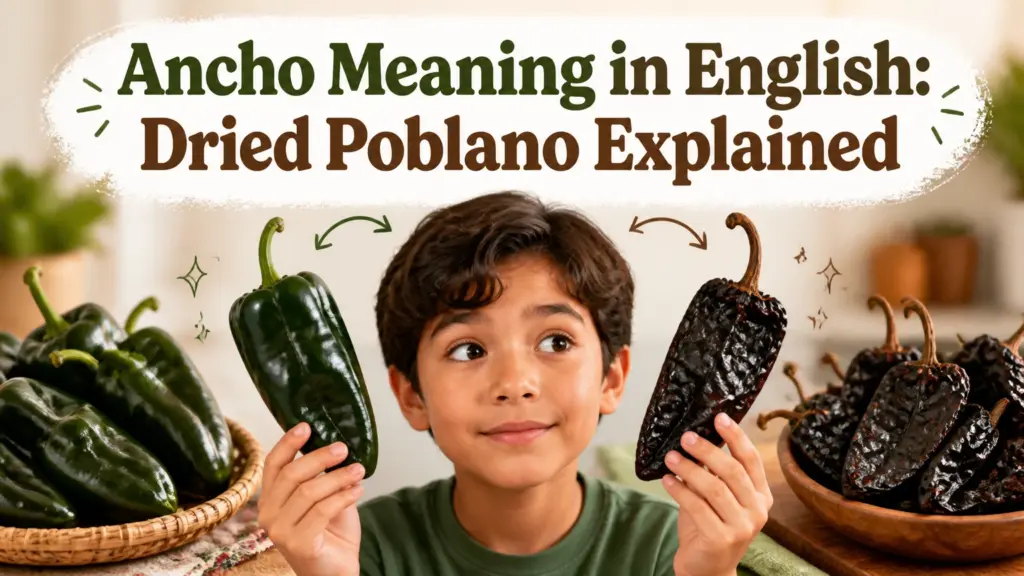

In English, ancho usually means an ancho chile, the dried form of a fully ripe red poblano pepper. The Spanish adjective ancho means “wide” or “broad,” describing the pepper’s broad, flattened shape. In recipes, “ancho” generally identifies a mild dried chile with raisin-like sweetness, earthy fruit, and moderate depth rather than sharp heat.
Key Facts at a Glance
- Ancho means “wide” or “broad” in Spanish.
- An ancho chile is a dried ripe poblano pepper, not a different fresh pepper variety.
- Ancho chiles typically provide about 1,000-2,000 Scoville Heat Units, although individual pods vary.
- Whole ancho pods taste fruity, raisin-like, earthy, lightly smoky, and mildly chocolatey.
- Cooks use ancho in mole, enchilada sauce, adobo, marinades, beans, soups, and dry rubs.
- A pliable whole pod generally gives fresher flavor than old, brittle powder.
What Does Ancho Mean in English?
Ancho means “wide” or “broad” in English, and the culinary noun refers to a dried ripe poblano pepper. Spanish uses ancho as an adjective, while English food writing commonly uses ancho as a noun in phrases such as “ancho chile,” “ancho powder,” and “ancho sauce.”
The name relates to the poblano’s broad body, especially after the pepper loses water and flattens during drying. English dictionaries including Merriam-Webster, Cambridge Dictionary, Collins Dictionary, and Dictionary.com recognize the culinary meaning. The word is commonly pronounced approximately AHN-choh, with the first syllable stressed.
The spelling ancho chile is especially common in the United States. Ancho chili also appears in English, but “chile” helps distinguish the pepper from prepared chili dishes or generic chili powder. In Spanish, chile ancho literally places the noun first and the adjective second. Both forms refer to the same dried pepper in culinary contexts.
Is Ancho a Spanish Adjective or a Pepper?
Ancho is both a Spanish adjective and an English culinary name. The grammatical meaning is “wide” or “broad,” while the food meaning identifies the dried, mature form of Capsicum annuum known fresh as poblano.
That distinction matters when translating a sentence. Una calle ancha means “a wide street,” while chile ancho means “wide chile.” A recipe that requests ancho is almost always asking for the dried pepper, not an ingredient translated simply as “wide.”
How Is an Ancho Chile Made?
Ancho chiles are made by allowing poblano peppers to ripen from green to deep red, then drying the mature peppers until they become dark, wrinkled, and leathery. The drying process concentrates sugars and aromatic compounds, producing a sweeter and deeper flavor than a fresh poblano.
The usual process has four stages:
- Ripening: Farmers leave green poblanos on the plant until they mature to red. Fully ripe peppers contain more developed sugars and aroma compounds.
- Harvesting: Workers pick, sort, and clean the peppers. Damaged or moldy fruit should not enter the drying process.
- Drying: Producers commonly sun-dry or mechanically dehydrate the red peppers. Some products may receive smoke exposure, but smoke-drying is not a defining requirement for ancho.
- Packaging: The finished pods become dark red, burgundy, or nearly black, with wrinkled skin and a flexible leather-like texture.
Ancho is therefore a processed form of poblano, similar to how a raisin is a dried grape. It does not grow as a dry spice, and it is not normally made by smoking green poblanos.
What Changes During Drying?
Drying removes water while concentrating flavor, but it does not create the same flavor profile as smoking. Ancho develops plum, raisin, prune, cocoa, tobacco, and mild earthy notes; chipotle develops a much stronger smoke character because chipotle is a smoked, dried jalapeño.
The final flavor depends on cultivar, ripeness, drying method, age, storage, and growing region. Two packages labeled ancho can therefore differ in sweetness and aroma even when both are correctly labeled.
What Does Ancho Taste Like?
Ancho chiles taste mild, fruity, earthy, and slightly sweet, with common notes of raisin, dried plum, cocoa, tobacco, and black tea. Ancho contributes body and aromatic depth more than aggressive heat, which makes it useful in sauces, braises, and seasoning blends.
Ancho’s sweetness pairs well with roasted tomato, garlic, onion, cinnamon, cumin, oregano, coriander, allspice, and unsweetened chocolate. Fat also carries its aroma effectively, so cooks often bloom ancho powder in oil or blend rehydrated pods into a sauce.
Ancho is not a neutral substitute for generic chili powder. Commercial chili powder may contain ground chiles, salt, cumin, garlic, oregano, and anti-caking agents. Pure ancho powder supplies the dried pepper’s flavor but usually less salt, less cumin, and less heat than a complete chili seasoning blend.
How Hot Is an Ancho Chile?
Ancho chiles are typically mild, measuring about 1,000-2,000 Scoville Heat Units, or SHU. The range is often lower than a jalapeño, which commonly measures about 2,500-8,000 SHU on standard pepper heat charts, although growing conditions and individual fruit create substantial variation.
| Pepper | Typical form | Approximate heat | Main flavor |
|---|---|---|---|
| Ancho | Dried ripe poblano | 1,000-2,000 SHU | Raisin, cocoa, earth |
| Poblano | Fresh green pepper | 1,000-2,000 SHU | Green, vegetal, roasted |
| Jalapeño | Fresh or pickled | 2,500-8,000 SHU | Grassy, bright, crisp |
| Guajillo | Dried mirasol pepper | 2,500-5,000 SHU | Tangy, berry-like, clean |
| Chipotle | Smoked dried jalapeño | 2,500-8,000 SHU | Smoke, tomato, wood |
Scoville values are estimates, not guarantees for a particular pod. The Scoville scale measures capsaicin-related pungency, and pepper heat can vary with genetics, maturity, water availability, and cultivation conditions.
Ancho is mild enough for many people who avoid fresh hot peppers, but a whole pod can still add noticeable warmth when several are blended into a sauce. Remove the veins and seeds when you want to reduce bitterness and some heat, although most capsaicin is concentrated in the inner ribs rather than the seeds themselves.
Which Forms of Ancho Should You Buy?
Buy whole dried ancho pods for the freshest aroma and the most control; choose powder for speed, and choose paste for convenience after checking its ingredients. Whole pods require more preparation but reveal whether the product is fresh, pure, and free from added salt.
| Form | Typical package price | Preparation time | Best applications | Main limitation |
|---|---|---|---|---|
| Whole dried pods | $4-$8 per 4-ounce bag | 20-35 minutes | Mole, enchiladas, adobo | Requires stemming and blending |
| Pure ancho powder | $3-$7 per 2- to 3-ounce jar | 1-3 minutes | Rubs, soups, beans | Aroma fades faster after grinding |
| Ancho paste | $4-$9 per 7- to 10-ounce jar | 1-2 minutes | Marinades, sauces, quick meals | May contain vinegar, oil, or salt |
| Ancho flakes | $4-$8 per 2-ounce bag | 5-10 minutes | Toppings, infused oil, broths | Less available than powder |
Retail prices vary by brand, region, package size, and whether the product comes from a specialist Mexican grocer. The figures above are typical consumer ranges, not fixed market prices.
Read the ingredient panel. A jar labeled “ancho chili powder” may contain 100 percent ground ancho, while “chili powder” commonly refers to a multi-ingredient seasoning mix.
How Can You Judge Fresh Whole Pods?
Fresh dried ancho pods bend slightly without immediately snapping, smell sweet and fruity, and show no fuzzy growth or damp patches. A pod that is dusty, gray, brittle, or odorless has probably lost much of its aromatic quality.
Avoid pods with:
- Green or white fuzzy mold
- Wet, sticky areas
- Insect holes or webbing
- A sour, musty, or chemical odor
- Extreme brittleness combined with faded color
A few surface wrinkles are normal. Wrinkles indicate dehydration, not spoilage.
How Do You Prepare Whole Ancho Chiles?
Prepare whole ancho chiles by inspecting, stemming, optionally seeding, briefly toasting, soaking for 15-30 minutes, and blending with fresh liquid. The most important control is heat: an ancho pod should become fragrant, not blackened.
Step 1: Inspect and Clean
Wipe each pod with a dry cloth. Cut off the stem, open the pod, and remove loose seeds, pale inner ribs, or damaged sections.
Do not rinse pods aggressively unless a recipe specifically requires it, because excess surface water makes toasting uneven. If you rinse them, dry them completely first.
Step 2: Toast Briefly
Heat a dry skillet or comal over medium heat. Toast each ancho for roughly 10-20 seconds per side, pressing it flat with a spatula until the aroma becomes warm and fruity.
You will know the step worked when the pod becomes flexible and fragrant without turning black. Burned ancho develops a strong bitter taste that blending or adding sugar will not reliably fix.
Step 3: Rehydrate
Place toasted pods in hot water for 15-30 minutes. A small plate can keep them submerged.
The soaking liquid may taste pleasantly peppery, earthy, or bitter. Taste it before using it in a sauce. Retain clean-tasting liquid for extra chile flavor; discard bitter liquid and use water, stock, or tomato liquid instead.
Step 4: Blend
Blend softened ancho with enough liquid to create a smooth paste. A high-speed blender usually needs 1-2 minutes, while a less powerful blender may leave skin fragments.
Strain the puree through a fine-mesh sieve when making a smooth mole or enchilada sauce. Straining is optional for rustic beans, braises, and marinades.
Step 5: Cook the Paste
Fry the blended chile paste in oil for approximately 3-8 minutes, depending on volume and recipe. Cooking drives off raw aromas and integrates the ancho with garlic, onion, spices, stock, or tomato.
A practitioner’s rule is to judge color and aroma rather than time alone. The paste should darken slightly and smell rounded, but it should not stick and scorch.
What Are Ancho Chiles Used For?
Ancho chiles are used in Mexican sauces, marinades, soups, braises, beans, and meat rubs because they add concentrated fruitiness and color with moderate heat. Their broad flavor profile works in both traditional Mexican cooking and applications such as barbecue, roasted vegetables, and compound butter.
| Dish or use | Recommended form | Typical quantity | Result |
|---|---|---|---|
| Enchilada sauce | Rehydrated whole pods | 2-4 pods for 2 cups sauce | Dark color and fruit depth |
| Mole | Whole pods plus other chiles | 2-6 pods per batch | Sweet, earthy chile base |
| Beef or pork braise | Chile paste | 2-4 tablespoons | Rich seasoning and color |
| Dry rub | Pure powder | 1-2 tablespoons per pound | Mild warmth and cocoa notes |
| Bean soup | Powder or puree | 1-2 teaspoons per quart | Background fruitiness |
| Marinade | Paste | 2-4 tablespoons per pound | Pepper flavor with color |
Ancho works especially well with pork shoulder, beef brisket, chicken thighs, roasted squash, sweet potatoes, black beans, pinto beans, and mushrooms. It can also balance acidic ingredients such as vinegar, tomatillo, citrus juice, and tomatoes.
Ancho is not the best choice when a recipe needs bright, sharp chile flavor. Guajillo is often more tangy, árbol is much hotter, and fresh poblano supplies greener vegetal notes.
Ancho Versus Poblano, Chipotle, and Guajillo
Ancho and poblano are the same pepper at different stages or forms, while chipotle is a smoked dried jalapeño and guajillo is a different dried pepper. The best alternative depends on whether the recipe needs sweetness, smoke, brightness, or heat.
| Ingredient | Pepper identity | Drying or preparation | Heat range | Flavor direction |
|---|---|---|---|---|
| Ancho | Ripe poblano | Dried without required smoking | 1,000-2,000 SHU | Sweet, raisin-like, earthy |
| Poblano | Fresh green poblano | Used fresh or roasted | 1,000-2,000 SHU | Green, vegetal, mild |
| Chipotle | Ripe jalapeño | Smoked and dried | 2,500-8,000 SHU | Smoky, savory, hotter |
| Guajillo | Dried mirasol | Dried | 2,500-5,000 SHU | Tangy, berry-like, brighter |
| Pasilla | Dried chilaca | Dried | 1,000-2,500 SHU | Dark, herbal, raisin-like |
A fresh poblano cannot replace dried ancho in equal weight because fresh poblano contains much more water and has a greener taste. Roasted red bell pepper can supply sweetness and body but almost no chile aroma or heat.
Chipotle can replace ancho when smoke is welcome, but use less at first because chipotle is usually hotter and more forceful. Guajillo is a better substitute when the dish needs a cleaner, brighter dried-chile flavor.
Can Ancho Replace Chili Powder?
Pure ancho powder can replace generic chili powder for fruitiness and mild chile flavor, but it cannot reproduce the salt, cumin, garlic, oregano, or additional peppers found in many chili powder blends. Start with an equal volume only when the original recipe mainly needs dried chile.
For a pot of chili, replace one tablespoon of generic chili powder with one tablespoon of ancho powder, then add cumin, garlic, oregano, salt, and another chile if the recipe needs more heat. Taste after simmering because ancho’s sweetness becomes more apparent during cooking.
For a dry rub, ancho powder pairs with salt, black pepper, cumin, smoked paprika, and brown sugar. Keep smoked paprika modest if the ancho is intended to provide a rounded, non-smoky profile.
How Should Ancho Chiles Be Stored?
Store whole ancho pods in an airtight container in a cool, dark, dry cupboard for about 6-12 months, and refrigerate or freeze them when buying in bulk. Powder generally loses aroma sooner because grinding exposes more surface area to oxygen.
| Product | Pantry duration, typical | Best container | Quality warning |
|---|---|---|---|
| Whole pods | 6-12 months | Sealed glass or heavy bag | Brittle, odorless texture |
| Powder | 3-6 months for best aroma | Small airtight jar | Flat or dusty smell |
| Paste, unopened | Package date | Manufacturer’s sealed container | Bulging or leaking package |
| Paste, opened | 2-3 weeks refrigerated, label permitting | Clean sealed jar | Mold, gas, sour odor |
Storage times are quality guidelines, not universal safety guarantees. Follow the manufacturer’s date and refrigeration instructions for commercial paste.
Freezing whole pods can preserve aroma, but condensation becomes a problem if the container is opened while cold. Let the sealed package reach room temperature before opening.
What Problems Occur When Using Ancho?
The most common ancho problems are bitterness, weak flavor, gritty sauce, and excessive sweetness; each problem usually comes from burning, stale storage, incomplete blending, or using too much powder. Ancho’s mild heat can encourage overuse, but large quantities can make a sauce heavy and sweet.
Burnt Pods
Blackened skin produces bitterness. Discard a scorched pod rather than trying to hide it with sugar, dairy, or extra stock.
Bitter Soaking Water
Soaking liquid can carry bitter compounds, dust, or charred flavor. Taste it before adding it to a blender, especially when the pods were toasted aggressively.
Gritty Sauce
Tough dried skin may remain fibrous after blending. Blend longer, add liquid gradually, and strain the sauce when a smooth texture matters.
Weak Powder
Old powder may still be safe but lack aroma. Replace it if the smell is faint, dusty, or mostly papery, and buy smaller containers when using ancho infrequently.
Excessive Sweetness
Ancho can make a sauce taste raisin-like when used with sweet tomatoes, brown sugar, or dried fruit. Reduce added sugar and balance the sauce with acid, salt, or a brighter chile.
How Much Ancho Should You Use?
Use 1-2 teaspoons of ancho powder per quart of soup, 1-2 tablespoons per pound of meat for a rub, or 2-4 whole pods for approximately 2 cups of sauce. These are practical starting amounts, and the final quantity depends on pod size, freshness, and the presence of other chiles.
Remove stems and seeds before weighing whole pods. A large pod can contribute substantially more skin than a small one, so volume measurements are less consistent than weight.
Ancho should usually build flavor gradually. Add half the planned powder to a soup or rub, cook or rest the mixture, then adjust after the pepper’s sweetness becomes noticeable.
Is Ancho Used in Traditional Mexican Cooking?
Ancho is a major dried chile in Mexican cooking, especially in central and southern preparations such as mole, adobo, enchilada sauces, and chile-based marinades. Recipes vary by state, household, and cook, so no single “traditional” ancho ratio applies to every dish.
Mole often combines ancho with pasilla, mulato, guajillo, or other chiles, alongside nuts, seeds, spices, fruit, aromatics, and sometimes cacao. The exact blend is a recipe choice rather than a fixed “holy trinity” ratio.
A frequently repeated 3:2:1 or 2:1:1 ratio for ancho, pasilla, and guajillo is not a universal Mexican standard. It may describe one recipe framework, but cooks should not treat it as an authoritative rule for all mole.
Frequently Asked Questions
Does Ancho Mean Spicy?
Ancho does not automatically mean very spicy. Ancho chiles are usually mild, with a typical range of 1,000-2,000 SHU, but several pods can create noticeable warmth. The ingredient’s main contribution is sweet, dark, fruity flavor rather than intense capsaicin heat.
Is Ancho the Same as Ancho Powder?
Ancho powder is ground dried ancho chile. Whole ancho pods and ancho powder come from the same ingredient, but powder loses aroma faster and offers less control over seeds, texture, and freshness. Check the label because some products called chili powder contain salt and other spices.
Can You Eat Ancho Chiles Without Rehydrating Them?
You can grind dried ancho directly into powder, but the leathery whole pod is difficult to chew and digest comfortably. Toasting and rehydrating produce a smoother puree, while dry grinding works well for rubs, compound butter, spice blends, and quick soups.
Are Ancho Chiles Smoked?
Ancho chiles are not defined by smoking. Ancho is a dried ripe poblano, commonly sun-dried or mechanically dehydrated. Chipotle is the dried smoked jalapeño, so a strongly smoky product marketed as ancho should be checked for added smoke or mixed peppers.
What Is the Best Ancho Substitute?
Guajillo is usually the closest practical substitute when a recipe needs a dried Mexican chile, although it is brighter and often somewhat hotter. Chipotle works when smoke is acceptable, pasilla works for darker herbal notes, and roasted red pepper works for color and body without comparable chile flavor.
Does Ancho Mean “Wide” in Every Context?
In Spanish, ancho generally means “wide” or “broad,” with grammatical forms changing according to gender and number. In English food contexts, the unmodified word most often means the dried poblano pepper. Translation therefore depends on whether the word describes an object or names an ingredient.
The Bottom Line
Ancho meaning in English is “wide” or “broad,” but ancho in a recipe means a dried ripe poblano pepper. Whole ancho chiles provide mild heat, dark fruitiness, raisin-like sweetness, and earthy depth in mole, enchilada sauce, braises, beans, and rubs. Buy pliable pods for maximum flavor, toast them briefly, rehydrate them for 15-30 minutes, and taste the soaking liquid before blending.