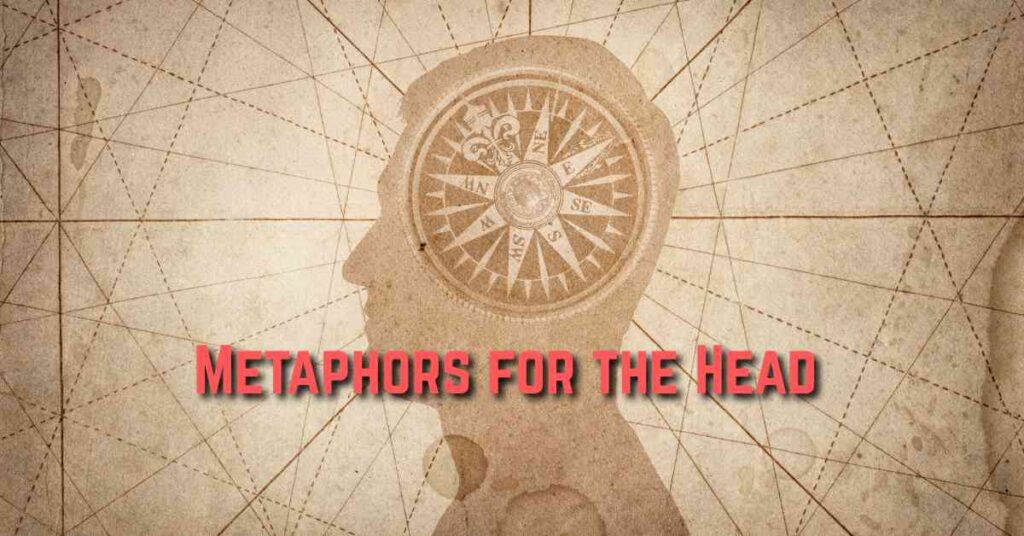

Understanding metaphors for the head is crucial for comprehending figurative language and enhancing communication skills. These metaphors, which describe the head in creative and non-literal ways, enrich our language and provide deeper insights into human thought and perception. This article is designed for English language learners, writers, and anyone interested in exploring the fascinating world of figurative language. By the end of this guide, you will be able to identify, interpret, and use metaphors for the head effectively, adding color and depth to your writing and speech.
This comprehensive guide will explore various metaphors for the head, explaining their meanings, usage, and cultural significance. We will delve into examples, grammatical rules, and common mistakes to help you master this aspect of English grammar. Whether you are a student, a teacher, or a language enthusiast, this article will provide you with the knowledge and tools to understand and appreciate the power of metaphorical language related to the head.
Table of Contents
- Definition of Metaphors for the Head
- Structural Breakdown
- Types and Categories of Head Metaphors
- Examples of Head Metaphors
- Usage Rules for Head Metaphors
- Common Mistakes with Head Metaphors
- Practice Exercises
- Advanced Topics
- Frequently Asked Questions (FAQ)
- Conclusion
Definition of Metaphors for the Head
A metaphor for the head is a figure of speech that describes the head or its functions (thinking, intelligence, memory) by comparing it to something else. These metaphors are not literal; instead, they suggest a resemblance or analogy to convey a particular meaning or feeling. The head, as the seat of intellect and consciousness, is often represented metaphorically to express complex ideas about thought processes, mental states, and cognitive abilities.
Metaphors for the head can be classified based on the type of imagery they evoke. For instance, some metaphors portray the head as a container, emphasizing its capacity to hold thoughts and ideas. Others depict it as a machine, highlighting its processing functions. Still, others use object metaphors to describe the head’s physical attributes or symbolic significance. Understanding these classifications helps in interpreting and appreciating the nuances of these metaphors.
The function of metaphors for the head is to add depth and color to language. They enable us to express abstract concepts in a more concrete and relatable way. By using metaphors, writers and speakers can create vivid images in the minds of their audience, making their message more memorable and impactful. These metaphors are commonly used in literature, poetry, everyday conversation, and academic discourse to convey complex ideas in a concise and engaging manner.
Structural Breakdown
The structure of a metaphor for the head typically involves two main elements: the tenor and the vehicle. The tenor is the subject being described (in this case, the head or its functions), and the vehicle is the object or concept to which the subject is compared. The connection between the tenor and the vehicle is not literal but is based on shared characteristics or associations.
For example, in the metaphor “Her head was a beehive of activity,” the tenor is “her head,” and the vehicle is “a beehive.” The shared characteristic is the idea of intense activity and busyness. The metaphor suggests that her head is full of thoughts and ideas, just as a beehive is full of bees and activity.
The effectiveness of a metaphor depends on the clarity and relevance of the connection between the tenor and the vehicle. A well-chosen metaphor can create a powerful image and convey a complex idea in a simple and memorable way. However, a poorly chosen metaphor can be confusing or ineffective. Therefore, it is important to carefully consider the connotations and associations of the vehicle when crafting a metaphor for the head.
Types and Categories of Head Metaphors
Metaphors for the head can be categorized based on the type of imagery they employ. Understanding these categories can help in analyzing and appreciating the diverse ways in which the head and its functions are represented metaphorically.
Container Metaphors
Container metaphors depict the head as a container that holds thoughts, ideas, and memories. These metaphors emphasize the capacity of the head to store and process information. Common examples include “a head full of ideas,” “a mind brimming with thoughts,” and “an empty head.”
Container metaphors often reflect the idea that the head has a limited capacity and can be filled or emptied. They can also suggest the idea of organization or disorganization, as in “a cluttered mind” or “a well-organized head.” These metaphors are particularly useful for describing mental states and cognitive processes in a tangible way.
Machine Metaphors
Machine metaphors compare the head to a machine, highlighting its processing functions and ability to perform complex tasks. These metaphors often emphasize the efficiency, precision, or breakdown of mental processes. Examples include “a well-oiled mind,” “a mind like a steel trap,” and “a mind that’s firing on all cylinders.”
Machine metaphors can also be used to describe the effects of stress or fatigue on mental performance, as in “a mind that’s grinding to a halt” or “a mind that’s short-circuiting.” These metaphors are particularly useful for describing the mechanics of thought and the impact of external factors on cognitive function.
Object Metaphors
Object metaphors describe the head by comparing it to a physical object. These metaphors can emphasize the head’s physical attributes, symbolic significance, or perceived value. Examples include “a blockhead,” “a hardhead,” and “a pinhead.”
Object metaphors often carry negative connotations, suggesting a lack of intelligence or understanding. However, some object metaphors can be positive, such as “a bright spark” (referring to intelligence) or “a level head” (referring to composure and rational thinking). The meaning of an object metaphor depends on the specific object being used and its cultural associations.
Animal Metaphors
Animal metaphors compare the head or its functions to the characteristics of an animal. These metaphors can highlight traits such as intelligence, instinct, or stubbornness. Examples include “bird-brained,” “wolfish cunning,” and “bullheaded.”
Animal metaphors often draw on the perceived qualities of different animals to convey a particular meaning. For example, “bird-brained” suggests a lack of intelligence, while “wolfish cunning” implies a shrewd and predatory mind. The effectiveness of an animal metaphor depends on the audience’s familiarity with the animal and its associated traits.
Examples of Head Metaphors
To illustrate the different types of head metaphors, here are several examples organized by category. These examples demonstrate the diverse ways in which the head and its functions can be represented metaphorically.
Container Metaphor Examples
Container metaphors are used to describe the head as a vessel that holds thoughts, ideas, and memories. They emphasize the capacity and contents of the mind.
The following table provides 30 examples of container metaphors for the head, illustrating the variety of ways in which the head can be described as a container.
| Example | Meaning |
|---|---|
| Her head was full of dreams. | She had many aspirations and ambitions. |
| His mind was a blank slate. | He had no prior knowledge or ideas about the subject. |
| Her head was overflowing with ideas. | She had an abundance of creative thoughts. |
| His mind was a bottomless pit of knowledge. | He had an extensive and seemingly endless amount of information. |
| Her head was a treasure chest of memories. | She had a rich and valuable collection of past experiences. |
| His mind was a sponge, soaking up information. | He was able to absorb new information quickly and easily. |
| Her head was a vault of secrets. | She kept many confidential matters to herself. |
| His mind was a library of facts. | He had a vast store of factual information. |
| Her head was a whirlwind of thoughts. | She was experiencing a chaotic and rapid flow of ideas. |
| His mind was an empty room. | He was feeling devoid of thoughts or ideas. |
| Her head was a jar of fireflies, each thought flickering and bright. | Her thoughts were numerous, distinct, and vibrant. |
| His mind was a crowded marketplace. | He had many conflicting thoughts and ideas. |
| Her head was a cup runneth over with joy. | She was experiencing an abundance of happiness. |
| His mind was a deep well of wisdom. | He possessed profound insight and understanding. |
| Her head was a garden of ideas. | She cultivated a variety of creative thoughts. |
| His mind was a dark forest. | He was feeling confused and lost in his thoughts. |
| Her head was a box of wonders. | She had a curious and imaginative mind. |
| His mind was a storage room of old memories. | He retained many memories from the past. |
| Her head was a bubbling cauldron of thoughts. | Her thoughts were intense and rapidly changing. |
| His mind was a clean slate, ready for new beginnings. | He was open to new experiences and ideas. |
| Her head was a museum of forgotten stories. | She held many memories that were rarely accessed. |
| His mind was a treasure trove of knowledge. | He possessed a wealth of valuable information. |
| Her head was an echo chamber, thoughts bouncing around endlessly. | Her thoughts were repetitive and unresolved. |
| His mind was a canvas, ready to be painted with new experiences. | He was eager to learn and grow. |
| Her head was a library filled with unread books. | She had untapped potential and knowledge. |
| His mind was a vast ocean of possibilities. | He saw endless opportunities and potential outcomes. |
| Her head was a beehive of buzzing ideas. | She was generating many active thoughts. |
| His mind was a fortress, protecting his innermost thoughts. | He was guarded and private about his thoughts. |
| Her head was a Pandora’s Box of curiosity. | She was driven by an insatiable desire to explore and understand. |
Machine Metaphor Examples
Machine metaphors describe the head as a complex mechanism that processes information and performs cognitive tasks. They often highlight the efficiency, precision, or breakdown of mental processes.
The following table provides 30 examples of machine metaphors for the head, demonstrating how the head can be compared to various types of machines.
| Example | Meaning |
|---|---|
| His mind was a well-oiled machine. | His thinking was efficient and smooth. |
| Her brain was firing on all cylinders. | She was performing at her peak mental capacity. |
| His mind was like a steel trap. | He had an excellent memory and could quickly grasp information. |
| Her brain was short-circuiting from stress. | She was experiencing mental overload due to stress. |
| His mind was grinding to a halt. | His thinking was slowing down due to fatigue or confusion. |
| Her brain was a computer processing data. | She was analyzing information logically and systematically. |
| His mind was a finely tuned engine. | He had a sharp and efficient intellect. |
| Her thoughts were like gears turning in her head. | She was deeply engaged in mental processing. |
| His mind was a calculator, quickly solving problems. | He was adept at mathematical and logical reasoning. |
| Her brain was a factory producing ideas. | She was generating a constant stream of creative thoughts. |
| His mind was a radar, constantly scanning for information. | He was highly observant and attentive to detail. |
| Her brain was a switchboard, connecting different ideas. | She could easily make connections between disparate concepts. |
| His mind was a hard drive, storing vast amounts of data. | He had an extensive memory capacity. |
| Her thoughts were like cogs in a machine, working together. | Her ideas were interconnected and mutually supportive. |
| His mind was a generator, producing energy and enthusiasm. | He was highly motivated and energetic. |
| Her brain was a processor, analyzing complex information. | She was skilled at breaking down and understanding complicated issues. |
| His mind was a GPS, guiding him through life’s challenges. | He had a clear sense of direction and purpose. |
| Her brain was a network, connecting her to others. | She had strong social connections and communication skills. |
| His thoughts were like circuits, completing logical pathways. | He was a logical and systematic thinker. |
| Her brain was a motor, driving her ambition and determination. | She was highly motivated and driven to succeed. |
| His mind was a transformer, converting ideas into action. | He was able to translate thoughts into practical solutions. |
| Her brain was a server, providing information on demand. | She was knowledgeable and resourceful. |
| His thoughts were like algorithms, solving complex problems. | He was skilled at problem-solving and critical thinking. |
| Her brain was a motherboard, connecting all her functions. | She had a well-integrated and coordinated mind. |
| His mind was a mainframe, processing vast amounts of information. | He had a powerful and sophisticated intellect. |
| Her brain was a robot, executing tasks with precision. | She was efficient and methodical in her work. |
| His thoughts were like software, running smoothly and efficiently. | He had a well-organized and effective thinking process. |
| Her brain was a satellite, receiving signals from the world. | She was highly perceptive and attuned to her surroundings. |
| His mind was a microscope, examining details closely. | He was meticulous and detail-oriented. |
| Her brain was a telescope, exploring new possibilities. | She was imaginative and forward-thinking. |
Object Metaphor Examples
Object metaphors describe the head by comparing it to a physical object. These metaphors often emphasize the head’s physical attributes, symbolic significance, or perceived value.
The following table provides 30 examples of object metaphors for the head, illustrating the diversity of objects that can be used to describe the head.
| Example | Meaning |
|---|---|
| He was a blockhead. | He was unintelligent or stubborn. |
| She had a hard head. | She was stubborn and resistant to change. |
| He was a pinhead. | He was considered unintelligent or foolish. |
| She had a level head. | She was calm and rational in stressful situations. |
| He was a bright spark. | He was intelligent and quick-witted. |
| She was a rock, unyielding in her beliefs. | She was firm and unwavering in her convictions. |
| He was a brick wall, impossible to reason with. | He was stubborn and unwilling to listen to others. |
| She had a head like a sieve. | She had a poor memory and easily forgot things. |
| He was a dim bulb. | He was not very intelligent. |
| She had a head full of hot air. | She was full of empty talk and lacked substance. |
| He was a walking encyclopedia. | He had a vast knowledge of many subjects. |
| She had a mind like a steel trap. | She had an excellent memory and could quickly grasp information. |
| He was a human calculator. | He was skilled at mathematical and logical reasoning. |
| She was a fountain of knowledge. | She had a deep understanding of many subjects. |
| He was a bookworm, always with his nose in a book. | He was an avid reader and scholar. |
| She had a mind like a Swiss watch. | Her thoughts were precise and well-organized. |
| He was a walking dictionary. | He had an extensive vocabulary and knowledge of language. |
| She had a head full of cotton wool. | She was feeling confused and disoriented. |
| He was a human computer. | He was capable of complex calculations and logical reasoning. |
| She had a mind like a labyrinth. | Her thoughts were complex and difficult to follow. |
| He was a walking library. | He possessed a wealth of knowledge and information. |
| She had a head like a pin cushion. | She was easily overwhelmed by stress and anxiety. |
| He was a human encyclopedia. | He had a vast knowledge of many subjects. |
| She had a mind like a steel vault. | She was secretive and guarded about her thoughts. |
| He was a walking thesaurus. | He had an extensive vocabulary and command of language. |
| She had a head like a pressure cooker. | She was under intense stress and about to explode. |
| He was a human database. | He had a vast store of information and could recall it easily. |
| She had a mind like a circus. | Her thoughts were chaotic and disorganized. |
| He was a walking almanac. | He had a comprehensive knowledge of facts and figures. |
| She had a head like a jack-in-the-box. | Her thoughts were unpredictable and surprising. |
Animal Metaphor Examples
Animal metaphors compare the head or its functions to the characteristics of an animal. These metaphors often highlight traits such as intelligence, instinct, or stubbornness.
The following table provides 30 examples of animal metaphors for the head, illustrating the diverse ways in which animal characteristics can be used to describe the head.
| Example | Meaning |
|---|---|
| He was bird-brained. | He was unintelligent or scatterbrained. |
| She had wolfish cunning. | She was shrewd and manipulative. |
| He was bullheaded. | He was stubborn and unwilling to listen to reason. |
| She had a mind like a fox. | She was clever and resourceful. |
| He was acting like a sheep, blindly following others. | He was easily led and lacked independent thought. |
| She had a mind like an owl, wise and observant. | She was intelligent and perceptive. |
| He was as stubborn as a mule. | He was extremely resistant to change. |
| She had a mind like a hawk, focused and sharp. | She was highly attentive and perceptive. |
| He was acting like a parrot, mindlessly repeating others. | He lacked originality and simply imitated others. |
| She had a mind like a bee, busy and productive. | She was diligent and hardworking. |
| He was behaving like a chicken, easily frightened. | He was timid and cowardly. |
| She had a mind like a spider, weaving intricate webs of thought. | She was highly creative and imaginative. |
| He was as slow as a tortoise. | He was slow to understand or react. |
| She had a mind like an eagle, soaring above the details. | She had a broad and insightful perspective. |
| He was acting like a snake, sly and deceitful. | He was cunning and untrustworthy. |
| She had a mind like a dolphin, playful and intelligent. | She was quick-witted and adaptable. |
| He was as quiet as a mouse. | He was timid and reserved. |
| She had a mind like a cat, curious and independent. | She was inquisitive and self-reliant. |
| He was behaving like a dog, loyal and devoted. | He was faithful and supportive. |
| She had a mind like a lion, courageous and strong. | She was brave and determined. |
| He was as busy as a beaver. | He was industrious and hardworking. |
| She had a mind like a hummingbird, flitting from thought to thought. | She was easily distracted and had a short attention span. |
| He was acting like a sloth, lazy and unproductive. | He was indolent and lacked motivation. |
| She had a mind like a chameleon, adapting to new situations. | She was flexible and versatile. |
| He was as fierce as a tiger. | He was aggressive and determined. |
| She had a mind like a butterfly, delicate and fleeting. | Her thoughts were ephemeral and easily forgotten. |
| He was behaving like a fox, cunning and sly. | He was shrewd and manipulative. |
| She had a mind like an ant, organized and efficient. | She was methodical and detail-oriented. |
| He was as wise as an owl. | He was knowledgeable and perceptive. |
| She had a mind like a hawk, sharp and focused. | She was highly attentive and perceptive. |
Usage Rules for Head Metaphors
Using metaphors effectively requires understanding certain rules and guidelines. While metaphors are inherently creative, adhering to these principles will ensure clarity and impact.
1. Relevance: The vehicle (the object or concept used in the metaphor) should have a clear and relevant connection to the tenor (the head or its functions). The shared characteristics should be easily recognizable to the audience.
2. Clarity: The metaphor should be easy to understand. Avoid using obscure or overly complex imagery that may confuse the audience. The purpose of a metaphor is to clarify, not to obfuscate.
3. Originality: While common metaphors can be effective, using original and creative metaphors can make your writing or speech more engaging and memorable. Strive to find fresh and unexpected ways to describe the head and its functions.
4. Consistency: Maintain consistency in your metaphorical language. Avoid mixing metaphors or using conflicting images that can create confusion. Choose a consistent theme or imagery and stick to it throughout your writing or speech.
5. Appropriateness: Consider the context and audience when using metaphors. Some metaphors may be appropriate in certain situations but not in others. Be mindful of cultural sensitivities and avoid using metaphors that may be offensive or insensitive.
6. Avoid Clichés: While some common metaphors are acceptable, try to avoid overused clichés. Phrases like “head in the clouds” or “hardheaded” are well-understood, but lack originality. Strive for fresh, creative comparisons.
7. Contextual Support: Provide enough context for your audience to understand the metaphor. If the metaphor is not immediately clear, provide additional information or explanation to clarify its meaning.
Common Mistakes with Head Metaphors
Even experienced writers and speakers can make mistakes when using metaphors. Being aware of these common errors can help you avoid them and use metaphors more effectively.
1. Mixed Metaphors: Combining two or more inconsistent metaphors in a single sentence or passage.
- Incorrect: “He was burning the candle at both ends, but he also had an ace up his sleeve.” (Mixing the metaphor of burning a candle with having an ace up one’s sleeve)
- Correct: “He was burning the candle at both ends, pushing himself to the limit.”
- Correct: “He had an ace up his sleeve, giving him an advantage in the situation.”
2. Overused Clichés: Using metaphors that have become stale and predictable.
- Incorrect: “His head was in the clouds.” (Overused cliché)
- Correct: “His thoughts were wandering, disconnected from reality.”
3. Unclear Metaphors: Using metaphors that are difficult to understand or interpret.
- Incorrect: “His mind was a quagmire of obfuscation.” (Too abstract and unclear)
- Correct: “His thoughts were muddled and confused, making it hard to understand the situation.”
4. Inappropriate Metaphors: Using metaphors that are not suitable for the context or audience.
- Incorrect: “Her brain was like a rusty engine.” (Potentially offensive to someone with cognitive challenges)
- Correct: “Her thoughts were slow and labored, making it difficult to process information.”
5. Overly Complex Metaphors: Using metaphors that are too elaborate or convoluted.
- Incorrect: “His mind was a complex ecosystem of interconnected neural pathways, constantly evolving and adapting to new stimuli.” (Too verbose and complicated)
- Correct: “His mind was adaptable, constantly learning and evolving.”
6. Inconsistent Tone: Using a metaphor that clashes with the overall tone of the writing or speech.
- Incorrect: In a serious, formal speech: “His head was a total goofball zone.”
- Correct: “His thoughts were disorganized and frivolous.”
Practice Exercises
To reinforce your understanding of metaphors for the head, here are several practice exercises. These exercises will help you identify, interpret, and use metaphors effectively.
Exercise 1: Identifying Metaphors
Identify the metaphors for the head in the following sentences. Explain the meaning of each metaphor.
| Question | Answer |
|---|---|
| 1. Her head was a beehive of activity. | Her head (tenor) is compared to a beehive (vehicle). Meaning: She had many thoughts and ideas rapidly occurring in her mind. |
| 2. His mind was a blank slate. | His mind (tenor) is compared to a blank slate (vehicle). Meaning: He had no prior knowledge or preconceived notions. |
| 3. She was a bright spark. | She (tenor, referring to her intelligence) is compared to a bright spark (vehicle). Meaning: She was intelligent and quick-witted. |
| 4. His mind was like a steel trap. | His mind (tenor) is compared to a steel trap (vehicle). Meaning: He had an excellent memory and could quickly grasp information. |
| 5. Her head was full of dreams. | Her head (tenor) is compared to a container full of dreams (vehicle). Meaning: She had many aspirations and ambitions. |
| 6. His thoughts were like tangled wires. | His thoughts (tenor) are compared to tangled wires (vehicle). Meaning: His ideas were confused and disorganized. |
| 7. She approached the problem with a level head. | Her head (tenor, referring to her composure) is compared to being level (vehicle). Meaning: She remained calm and rational. |
| 8. His mind was a vast ocean. | His mind (tenor) is compared to a vast ocean (vehicle). Meaning: His thoughts were deep and expansive. |
| 9. Her brain was firing on all cylinders. | Her brain (tenor) is compared to an engine firing on all cylinders (vehicle). Meaning: She was thinking very efficiently and effectively. |
| 10. He was a human calculator. | He (tenor, referring to his math skills) is compared to a human calculator (vehicle). Meaning: He was very good at math. |
Exercise 2: Completing the Metaphors
Complete the following sentences by adding an appropriate metaphor for the head.
| Question | Answer |
|---|---|
| 1. His mind was ________, unable to focus on anything. | a fog |
| 2. Her thoughts were ________, constantly changing and evolving. | a kaleidoscope |
| 3. He approached the situation with ________. | a cool head |
| 4. Her brain was ________, processing information at lightning speed. | a supercomputer |
| 5. His mind was ________, storing a wealth of knowledge and experience. | an archive |
| 6. Her head felt like ________ after the long day. | a lead weight |
| 7. His ideas were ________, innovative and original. | sparks of genius |
| 8. Her mind was ________ when faced with the complex problem. | a labyrinth |
| 9. He was ________, stubbornly refusing to change his mind. | a brick wall |
| 10. Her head was ________, overflowing with creative thoughts. | a fountain of ideas |
Exercise 3: Using Metaphors in Sentences
Write sentences using the following metaphors for the head.
| Question | Answer |
|---|---|
| 1. A mind like a steel trap | With a mind like a steel trap, she remembered every detail of the meeting. |
| 2. A head full of dreams | Her head was full of dreams, each one a stepping stone to her future. |
| 3. A blank slate | He approached the new project with a blank slate, ready to learn and explore. |
| 4. A whirlwind of thoughts | After the accident, her mind was a whirlwind of thoughts, making it hard to focus. |
| 5. A level head | In a crisis, it’s important to keep a level head and make rational decisions. |
| 6. A mind like a fox | With a mind like a fox, he cleverly navigated the complex negotiations. |
| 7. A head in the clouds | She often had her head in the clouds, dreaming of faraway lands and exciting adventures. |
| 8. A well-oiled machine | His mind was a well-oiled machine, efficiently processing information and solving problems. |
| 9. A sea of ideas | During the brainstorming session, their minds became a sea of ideas, each one more innovative than the last. |
| 10. A hard drive | Her mind was like a hard drive, storing vast amounts of information and experiences. |
Advanced Topics
Beyond the basics, there are more advanced aspects of using metaphors for the head that can further enhance your understanding and skill.
1. Extended Metaphors: An extended metaphor is a metaphor that is developed over several lines or even throughout an entire piece of writing. Using extended metaphors for the head can create a richer and more complex image, allowing you to explore the nuances of thought and perception in greater detail.
2. Subverted Metaphors: A subverted metaphor is a metaphor that is intentionally used in a way that contradicts or challenges its conventional meaning. Subverted metaphors can be used to create humor, irony, or to provoke deeper thought about the subject.
3. Cultural Significance: Different cultures may have different associations with certain metaphors for the head. Understanding these cultural nuances can help you use metaphors more effectively and avoid unintended offense or misinterpretation.
4. Interdisciplinary Applications: The study of metaphors for the head can be applied to various fields, such as psychology, neuroscience, and artificial intelligence. Exploring these interdisciplinary connections can provide new insights into the nature of thought and consciousness.
Frequently Asked Questions (FAQ)
What is the difference between a metaphor and a simile?
A metaphor is a direct comparison between two unlike things, stating that one thing *is* another. A simile, on the other hand, uses “like” or “as” to make a comparison. For example, “His mind was a steel trap” is a metaphor, while “His mind was *like* a steel trap” is a simile.
How can I come up with original metaphors for the head?
To create original metaphors, try to think outside the box and make connections between seemingly unrelated things. Consider the qualities you want to emphasize about the head (e.g., its capacity, its processing functions, its physical attributes) and then brainstorm objects or concepts that share those qualities. Don’t be afraid to experiment and play with language.
Are there any metaphors for the head that I should avoid?
Avoid using metaphors that are offensive, insensitive, or culturally inappropriate. Also, avoid using metaphors that are overly complex or difficult to understand. The best metaphors are clear, relevant, and engaging.
Can metaphors for the head be used in formal writing?
Yes, metaphors can be used in formal writing, but they should be used judiciously and with careful consideration of the audience and context. In formal writing, it’s important to use metaphors that are clear, precise, and appropriate for the tone and style of the piece.
How do metaphors for the head enhance communication?
Metaphors enhance communication by making abstract concepts more concrete and relatable. They can create vivid images in the minds of the audience, making your message more memorable and impactful. Metaphors can also add depth and nuance to your writing or speech, allowing you to express complex ideas in a concise and engaging manner.
Conclusion
Metaphors for the head are a powerful tool for enhancing communication and expressing complex ideas about thought, intelligence, and perception. By understanding the different types of head metaphors, following usage rules, and avoiding common mistakes, you can effectively incorporate these metaphors into your writing and speech. Whether you are a student, a writer, or a language enthusiast, mastering the art of using metaphors for the head will enrich your language skills and deepen your appreciation for the creative power of figurative language.