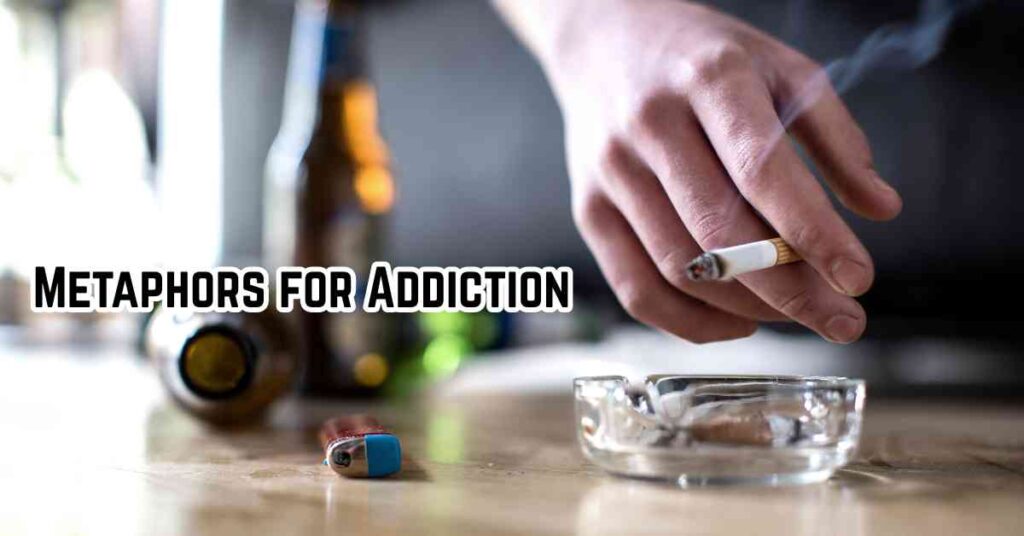

Understanding addiction can be challenging, especially when trying to convey its complexities to others. Metaphors offer a powerful tool for illustrating the often-abstract experiences of craving, dependence, and recovery. This article delves into the world of metaphors used to describe addiction, exploring their meanings, structures, and how they shape our understanding of this complex issue. Whether you’re a student of language, a healthcare professional, or someone seeking to better understand addiction, this guide will provide valuable insights into the language used to describe it.
This article will explore some common metaphors, providing clear examples and usage rules to help you understand how they function in both everyday language and clinical settings. By understanding the metaphors we use, we can gain a deeper insight into the nature of addiction itself.
Table of Contents
- Introduction
- What is a Metaphor for Addiction?
- Structural Breakdown of Addiction Metaphors
- Types of Addiction Metaphors
- Examples of Addiction Metaphors
- Usage Rules for Addiction Metaphors
- Common Mistakes When Using Addiction Metaphors
- Practice Exercises
- Advanced Topics in Addiction Metaphors
- Frequently Asked Questions
- Conclusion
What is a Metaphor for Addiction?
A metaphor is a figure of speech that directly compares two unlike things without using “like” or “as.” In the context of addiction, metaphors are used to describe the complex experiences and behaviors associated with substance use disorder in terms that are more easily understood or emotionally resonant. They provide a framework for understanding abstract concepts like craving, withdrawal, and recovery by relating them to more concrete experiences.
Metaphors for addiction serve several important functions. First, they can help to simplify complex phenomena, making them more accessible to individuals who may not have a clinical understanding of addiction. Second, they can evoke empathy and understanding by highlighting the emotional and psychological struggles of those affected by addiction. Third, metaphors can shape perceptions and attitudes towards addiction, influencing public discourse and policy decisions. The choice of metaphor can dramatically alter how addiction is perceived, whether as a moral failing, a disease, or a complex biopsychosocial issue.
The context in which a metaphor is used is crucial to its interpretation. A metaphor used in a clinical setting may have a different connotation than the same metaphor used in a casual conversation. Consider the phrase “battling addiction.” In a therapeutic context, it might signify the active struggle against cravings and triggers. In a casual setting, it could be used to describe someone’s ongoing efforts to quit smoking or reduce alcohol consumption. Understanding these nuances is essential for effective communication about addiction.
Structural Breakdown of Addiction Metaphors
Addiction metaphors, like all metaphors, consist of two key elements: the tenor and the vehicle. The tenor is the subject being described (in this case, addiction), and the vehicle is the concept used to describe it. For example, in the metaphor “Addiction is a prison,” the tenor is addiction, and the vehicle is prison. The metaphor works by highlighting the shared characteristics between addiction and prison, such as confinement, loss of freedom, and difficulty in escaping.
The effectiveness of an addiction metaphor depends on the clarity and relevance of the connection between the tenor and the vehicle. A strong metaphor will create a vivid and compelling image that resonates with the audience, helping them to understand the complexities of addiction. A weak metaphor, on the other hand, may be confusing or misleading, failing to capture the essence of the experience. The choice of vehicle is crucial, as it will shape the overall perception of addiction. Using “monster” as a vehicle evokes different feelings and understanding compared to using “disease”.
The underlying framework of these metaphors often involves a source domain (the concept used to describe addiction) and a target domain (addiction itself). The source domain provides a set of concepts and associations that are mapped onto the target domain, allowing us to understand addiction in new and insightful ways. For instance, if we use the metaphor “Addiction is a storm,” the source domain is “storm,” which brings with it associations of chaos, destruction, and loss of control. These associations are then mapped onto the target domain of “addiction,” helping us to understand the tumultuous and overwhelming nature of the experience. The structure helps us understand the connection and meaning of the metaphor.
Types of Addiction Metaphors
Addiction metaphors can be categorized based on the type of concept used as the vehicle. Here are some common categories:
Addiction as a Disease Metaphor
This is one of the most prevalent metaphors, framing addiction as a chronic, relapsing illness. It emphasizes the biological and psychological factors that contribute to addiction, reducing stigma and promoting treatment-based approaches. This metaphor often leads to viewing addiction as something that requires medical intervention and ongoing management, much like diabetes or heart disease.
Addiction as a Battle Metaphor
This metaphor portrays addiction as an ongoing struggle against an enemy. It highlights the effort and determination required to overcome addiction, but it can also be seen as overly combative and potentially stigmatizing. Terms like “fighting addiction,” “winning the battle,” and “losing the fight” are common examples. The battle metaphor can be empowering for some, but can also create a sense of failure if relapse occurs.
Addiction as a Trap Metaphor
This metaphor emphasizes the feeling of being ensnared and unable to escape. It highlights the addictive substance’s power and the difficulty of breaking free from its grip. Phrases like “caught in the cycle of addiction” and “trapped by substance abuse” illustrate this metaphor. This can be helpful in understanding the feelings of powerlessness that many people with addiction experience.
Addiction as a Monster Metaphor
This metaphor presents addiction as an external, destructive force that consumes and controls the individual. It illustrates the feeling of being overtaken by something powerful and malevolent, emphasizing the loss of control and the destructive consequences of addiction. Phrases like “the monster of addiction” and “battling my inner demon” exemplify this metaphor. It can be seen as a way to externalize the addiction, separating the person from the disease.
Addiction as a Weight Metaphor
This metaphor portrays addiction as a heavy burden that weighs down the individual, hindering their progress and happiness. It emphasizes the emotional and psychological toll of addiction, highlighting feelings of guilt, shame, and despair. Phrases like “carrying the weight of addiction” and “crushed by the burden of substance abuse” exemplify this metaphor. It can be useful in understanding the emotional struggles associated with addiction.
Examples of Addiction Metaphors
Below are several tables showcasing various examples of addiction metaphors, categorized by type. Each table provides numerous examples to illustrate the concept fully.
The examples in the following table illustrate how addiction is frequently compared to a disease. These metaphors emphasize the involuntary nature of addiction and the need for medical treatment.
| Metaphor | Explanation |
|---|---|
| Addiction is a disease. | Highlights the chronic and relapsing nature of addiction. |
| Addiction is a sickness. | Emphasizes the physical and mental health aspects of addiction. |
| Addiction is a virus. | Suggests that addiction can spread and infect other aspects of life. |
| Addiction is a cancer. | Highlights the destructive and life-threatening nature of addiction. |
| He is battling a disease. | Describes someone fighting against addiction as if it were a physical ailment. |
| Addiction is a chronic illness. | Stresses the long-term management required for addiction. |
| It’s a disease of the brain. | Focuses on the neurological impact of addiction. |
| Addiction is like having diabetes. | Compares the need for ongoing management to a common chronic condition. |
| She’s suffering from the disease of addiction. | Emphasizes the pain and distress caused by addiction. |
| Addiction is a medical condition. | Reinforces the idea that addiction requires medical attention. |
| He needs treatment for his disease. | Highlights the importance of seeking professional help. |
| Addiction is a health problem. | Broadly categorizes addiction as a concern for physical and mental well-being. |
| It’s a condition that needs to be managed. | Stresses the ongoing effort required to control addiction. |
| Addiction is a problem for the medical field. | Highlights the role of healthcare professionals in addressing addiction. |
| The disease took over his life. | Emphasizes the all-consuming nature of addiction. |
| She’s fighting the illness with therapy. | Illustrates the use of therapy as a tool to combat addiction. |
| Addiction hijacked his brain. | Suggests the addiction has taken control of his cognitive functions. |
| He is a victim of this disease. | Highlights the involuntary nature of addiction. |
| Addiction is a silent killer. | Emphasizes the deadly consequences of addiction. |
| It is a public health crisis. | Highlights the widespread impact of addiction on society. |
| Addiction is a disorder. | Classifies addiction as a recognized medical or psychological condition. |
| He is struggling with a mental illness. | Highlights the mental health aspects of addiction. |
| Addiction is an epidemic. | Emphasizes the rapid spread and widespread impact of addiction. |
The metaphors in this table compare addiction to a battle or war, highlighting the struggle and effort required to overcome it.
| Metaphor | Explanation |
|---|---|
| Fighting addiction. | Emphasizes the active struggle against cravings and triggers. |
| Winning the battle against addiction. | Suggests a successful outcome in overcoming addiction. |
| Losing the fight with addiction. | Implies a relapse or failure to overcome addiction. |
| He’s at war with his demons. | Portrays addiction as an internal conflict. |
| She’s battling her addiction. | Highlights the ongoing effort to combat addiction. |
| The war on drugs. | A broader societal framing of efforts to combat drug use. |
| He’s a soldier in recovery. | Suggests discipline and perseverance in the recovery process. |
| She’s armed with coping mechanisms. | Emphasizes the tools and strategies used to fight addiction. |
| Addiction is a constant battle. | Highlights the ongoing nature of the struggle. |
| He’s struggling to stay on the front lines. | Suggests the difficulty of maintaining sobriety. |
| She’s fighting an uphill battle. | Emphasizes the challenges and obstacles in overcoming addiction. |
| He’s defending himself against cravings. | Portrays cravings as an attack that needs to be resisted. |
| She’s launching an offensive against addiction. | Suggests a proactive approach to recovery. |
| He’s retreating from triggers. | Highlights the importance of avoiding situations that provoke cravings. |
| She’s building a strong defense against relapse. | Emphasizes the strategies used to prevent a return to addiction. |
| He’s a survivor of the addiction war. | Suggests resilience and strength in overcoming addiction. |
| She’s a warrior in recovery. | Portrays the individual as strong and determined in their recovery journey. |
| He’s battling the addiction monster. | Highlights the destructive and overwhelming nature of addiction. |
| She’s winning small victories every day. | Emphasizes the importance of celebrating progress in recovery. |
| He’s facing his addiction head-on. | Suggests courage and determination in confronting addiction. |
| Addiction is his greatest enemy. | Highlights the destructive impact of addiction. |
| He is at war with himself. | Suggests an internal conflict caused by addiction. |
| She is trying to conquer her addiction. | Emphasizes the effort to regain control over her life. |
The following table lists metaphors that describe addiction as a trap, emphasizing the feeling of being stuck and unable to escape.
| Metaphor | Explanation |
|---|---|
| Trapped in the cycle of addiction. | Highlights the repetitive and inescapable nature of addiction. |
| Caught in the web of addiction. | Suggests that addiction is an intricate and difficult trap to escape. |
| Addiction has a hold on him. | Emphasizes the controlling power of addiction. |
| She’s chained to her addiction. | Portrays addiction as a form of bondage. |
| He’s imprisoned by his addiction. | Highlights the loss of freedom and control. |
| Addiction is a dark hole. | Suggests the difficulty of escaping from addiction. |
| She’s stuck in the quicksand of addiction. | Emphasizes the feeling of being pulled deeper into addiction. |
| He’s trapped in a vicious cycle. | Highlights the repetitive and self-destructive nature of addiction. |
| She’s caught in a downward spiral. | Suggests the progressively worsening consequences of addiction. |
| He’s lost in the maze of addiction. | Emphasizes the confusion and disorientation caused by addiction. |
| She’s ensnared by addiction. | Highlights the feeling of being trapped and unable to escape. |
| He’s bound by his addiction. | Portrays addiction as a form of restriction and confinement. |
| She’s confined by addiction. | Highlights the limited opportunities and choices available due to addiction. |
| He’s shackled to his addiction. | Suggests a strong and unbreakable bond with the addictive substance. |
| She’s a prisoner of addiction. | Emphasizes the loss of freedom and control. |
| He’s in the clutches of addiction. | Portrays addiction as a powerful and inescapable force. |
| She’s in the grip of addiction. | Highlights the controlling influence of addiction. |
| He’s caught in the undertow of addiction. | Suggests being pulled deeper into addiction against one’s will. |
| She’s trapped in a cage of addiction. | Emphasizes the feeling of being confined and unable to escape. |
| He’s in addiction’s grasp. | Highlights the powerful control that addiction can exert. |
| Addiction is a prison. | Highlights the loss of freedom and control. |
| He is a slave to his addiction. | Emphasizes the lack of control and the overwhelming power of addiction. |
This table provides examples of metaphors that depict addiction as a monster or destructive force, highlighting its negative impact on the individual and their life.
| Metaphor | Explanation |
|---|---|
| Addiction is a monster. | Highlights the destructive and overwhelming nature of addiction. |
| Addiction is a demon. | Portrays addiction as an evil and malevolent force. |
| Addiction is a beast. | Suggests that addiction is a wild and uncontrollable force. |
| Addiction is a plague. | Emphasizes the widespread and devastating impact of addiction. |
| Addiction is a curse. | Portrays addiction as a source of suffering and misfortune. |
| The monster of addiction. | Highlights the destructive impact of addiction. |
| Battling his inner demons. | Portrays addiction as an internal conflict. |
| The beast of addiction. | Emphasizes the uncontrollable nature of addiction. |
| Addiction is a destructive force. | Highlights the damaging consequences of addiction. |
| The demon of substance abuse. | Portrays addiction as an evil and malevolent force. |
| Addiction is a black hole. | Suggests that addiction consumes everything in its path. |
| The curse of addiction. | Emphasizes the suffering and misfortune caused by addiction. |
| Addiction is a parasite. | Portrays addiction as something that feeds off the individual’s life. |
| The plague of addiction. | Highlights the widespread and devastating impact of addiction. |
| Addiction is a shadow. | Suggests that addiction follows the individual and darkens their life. |
| The monster within. | Portrays addiction as an internal and destructive force. |
| Addiction is a silent killer. | Emphasizes the deadly consequences of addiction. |
| The beast that consumes. | Highlights the all-consuming nature of addiction. |
| Addiction is a thief. | Suggests that addiction steals away the individual’s life and happiness. |
| The destructive force of addiction. | Highlights the damaging consequences of addiction. |
| Addiction is a vampire. | Portrays addiction as something that drains the individual’s life force. |
| Addiction has taken over his soul. | Emphasizes the all-consuming nature of addiction. |
| Addiction is a nightmare. | Highlights the terrifying and distressing experiences of addiction. |
This table provides examples of metaphors that depict addiction as a weight or burden, highlighting its emotional and psychological impact on the individual.
| Metaphor | Explanation |
|---|---|
| Carrying the weight of addiction. | Emphasizes the emotional and psychological toll of addiction. |
| Crushed by the burden of substance abuse. | Highlights the overwhelming nature of addiction. |
| Addiction is a heavy load. | Portrays addiction as a significant and difficult burden to bear. |
| Weighed down by addiction. | Emphasizes the feeling of being burdened and restricted by addiction. |
| The burden of addiction. | Highlights the emotional and psychological toll of addiction. |
| Addiction is a ball and chain. | Portrays addiction as something that restricts and confines the individual. |
| Carrying the baggage of addiction. | Emphasizes the emotional and psychological issues associated with addiction. |
| Weighed down by guilt and shame. | Highlights the emotional consequences of addiction. |
| Addiction is a millstone around his neck. | Portrays addiction as a heavy and oppressive burden. |
| Carrying the cross of addiction. | Emphasizes the suffering and sacrifice associated with addiction. |
| Weighed down by despair. | Highlights the emotional consequences of addiction. |
| Addiction is a dark cloud. | Portrays addiction as something that overshadows the individual’s life. |
| Carrying the burden of secrets. | Emphasizes the emotional toll of hiding addiction. |
| Weighed down by regrets. | Highlights the emotional consequences of addiction. |
| Addiction is a heavy heart. | Portrays addiction as a source of emotional pain and suffering. |
| Carrying the weight of broken promises. | Emphasizes the guilt and shame associated with addiction. |
| Weighed down by disappointment. | Highlights the emotional consequences of addiction. |
| Addiction is a lead weight. | Portrays addiction as a heavy and oppressive burden. |
| Carrying the burden of lost opportunities. | Emphasizes the consequences of addiction. |
| Weighed down by fear and anxiety. | Highlights the emotional consequences of addiction. |
| Addiction is a dark shadow over his life. | Emphasizes the overwhelming impact of addiction. |
| He is burdened by his addiction. | Highlights the emotional and psychological toll of addiction. |
| She is carrying a heavy secret. | Emphasizes the emotional weight of hiding addiction. |
Usage Rules for Addiction Metaphors
While metaphors can be powerful, it’s important to use them thoughtfully and avoid clichés. Here are some guidelines:
- Be mindful of your audience: Choose metaphors that will resonate with your audience and avoid those that may be confusing or offensive.
- Avoid clichés: Overused metaphors can lose their impact. Try to find fresh and original ways to describe addiction.
- Be consistent: Avoid mixing metaphors in a way that creates confusion. Stick to a single metaphor throughout a discussion or piece of writing.
- Consider the implications: Be aware of the potential impact of your chosen metaphor. Some metaphors may inadvertently perpetuate stigma or promote harmful stereotypes.
- Use sparingly: Overuse of metaphors can make your writing or speech sound forced and unnatural. Use them judiciously for maximum impact.
For example, instead of saying “He’s fighting a losing battle,” which is a common cliché, you could say “He’s navigating a treacherous landscape, constantly facing hidden pitfalls.” This conveys the same sense of struggle but in a more original and engaging way.
Common Mistakes When Using Addiction Metaphors
Here are some common mistakes to avoid when using metaphors for addiction:
| Mistake | Correct Usage | Explanation |
|---|---|---|
| Mixing metaphors (e.g., “He’s fighting a losing battle in the quicksand of addiction.”) | “He’s fighting a losing battle.” OR “He’s stuck in the quicksand of addiction.” | Mixing metaphors creates confusion and weakens the impact. |
| Using clichés (e.g., “Addiction is a monster.”) | “Addiction is a ravenous beast, devouring his life.” | Clichés lack originality and can diminish the emotional impact. |
| Using stigmatizing metaphors (e.g., “He’s a junkie.”) | “He’s struggling with addiction.” | Avoid language that perpetuates negative stereotypes and reinforces stigma. |
| Overusing metaphors (e.g., using multiple metaphors in a single sentence). | Use metaphors sparingly and only when they enhance understanding. | Overuse can make your writing or speech sound forced and unnatural. |
| Not considering the audience. | Tailor your metaphors to your audience. | Ensure your metaphors are relevant and understandable to your audience. |
Using stigmatizing language is particularly harmful. Instead of saying “He’s a junkie,” which is dehumanizing, it’s better to say “He’s struggling with addiction,” which acknowledges his humanity and the challenges he faces.
Practice Exercises
Test your understanding of addiction metaphors with these exercises.
Exercise 1: Identifying Metaphors
Identify the metaphor in each sentence:
| Question | Answer |
|---|---|
| 1. Addiction has a tight grip on his life. | Addiction has a tight grip. |
| 2. She is battling her inner demons. | Battling her inner demons. |
| 3. He is trapped in the web of addiction. | Trapped in the web of addiction. |
| 4. Addiction is a dark cloud over her future. | Addiction is a dark cloud. |
| 5. He is fighting an uphill battle against addiction. | Fighting an uphill battle. |
| 6. Addiction is a disease that needs treatment. | Addiction is a disease. |
| 7. She is trying to break free from the chains of addiction. | Break free from the chains of addiction. |
| 8. He is lost in the maze of substance abuse. | Lost in the maze of substance abuse. |
| 9. Addiction is a monster that consumes everything. | Addiction is a monster. |
| 10. He is carrying the weight of his addiction. | Carrying the weight of his addiction. |
Exercise 2: Categorizing Metaphors
Categorize each metaphor based on its type (Disease, Battle, Trap, Monster, Weight):
| Question | Answer |
|---|---|
| 1. Addiction is a disease. | Disease |
| 2. Fighting addiction. | Battle |
| 3. Trapped in the cycle of addiction. | Trap |
| 4. Addiction is a monster. | Monster |
| 5. Carrying the weight of addiction. | Weight |
| 6. Addiction is a sickness. | Disease |
| 7. Winning the battle against addiction. | Battle |
| 8. Caught in the web of addiction. | Trap |
| 9. Battling his inner demons. | Monster |
| 10. Crushed by the burden of substance abuse. | Weight |
Exercise 3: Rewriting Clichés
Rewrite the following clichéd metaphors into more original and engaging phrases:
| Question | Answer |
|---|---|
| 1. Addiction is a monster. | Addiction is a relentless shadow, darkening every corner of his life. |
| 2. He’s fighting a losing battle. | He’s struggling against a tide that threatens to overwhelm him. |
| 3. She’s trapped in the cycle of addiction. | She’s caught in a self-destructive loop, repeating the same mistakes. |
| 4. Addiction has a hold on him. | Addiction has ensnared him in its web, making it difficult to escape. |
| 5. He’s battling his demons. | He’s wrestling with the dark forces that drive his addiction. |
| 6. Addiction is a disease. | Addiction is a progressive illness that hijacks the brain’s reward system. |
| 7. He is a slave to his addiction. | He is controlled by the overwhelming cravings and compulsions of his addiction. |
| 8. He is losing the fight against addiction. | He is succumbing to the relentless pressure of his cravings and triggers. |
| 9. She is trapped in a vicious cycle. | She is repeatedly engaging in self-destructive behaviors, unable to break free. |
| 10. He is struggling to stay afloat. | He is desperately trying to maintain sobriety amidst the challenges and temptations of his addiction. |
Advanced Topics in Addiction Metaphors
At a more advanced level, one can explore how different cultures and subcultures use metaphors to understand addiction. For example, some indigenous cultures view addiction as a spiritual imbalance, using metaphors related to harmony and disharmony with nature. Understanding these cultural nuances can be crucial for effective communication and culturally sensitive treatment approaches.
Another advanced topic is the study of how metaphors can be used in therapeutic settings. Therapists can use metaphors to help clients explore their experiences with addiction in a safe and non-judgmental way. For example, a therapist might ask a client to describe their addiction as if it were a journey, prompting them to reflect on the obstacles they have faced and the resources they have available to overcome them. Furthermore, the use of metaphor in addiction recovery narratives can impact self-perception and the ability to create meaningful life changes.
Frequently Asked Questions
Here are some frequently asked questions about metaphors for addiction:
- Why are metaphors useful in discussing addiction?
Metaphors can simplify complex concepts, evoke empathy, and shape perceptions about addiction, making it easier to understand and discuss. - Can metaphors be harmful?
Yes, if they are stigmatizing, inaccurate, or overused. It’s important to choose metaphors carefully and be mindful of their potential impact. - What is the difference between a metaphor and a simile?
A metaphor directly compares two unlike things, while a simile uses “like” or “as” to make the comparison. For example, “Addiction is a prison” (metaphor) vs. “Addiction is like a prison” (simile). - How can I avoid using clichés when talking about addiction?
By being mindful of overused phrases and seeking out fresh, original ways to describe the experience of addiction. Consider the specific details and emotions you want to convey. - What is the ‘tenor’ and ‘vehicle’ in a metaphor?
The tenor is the subject being described (addiction), and the vehicle is the concept used to describe it (e.g., prison, battle, monster). - How do cultural differences affect the use of addiction metaphors?
Different cultures may have different understandings of addiction, leading to variations in the metaphors they use. Some cultures may view addiction as a spiritual issue, while others may see it as a medical problem. - Can metaphors influence treatment outcomes for addiction?
Yes, the metaphors used by healthcare providers and individuals in recovery can influence attitudes, beliefs, and behaviors related to treatment. Positive and empowering metaphors can promote hope and motivation, while negative metaphors can reinforce stigma and hopelessness. - How can I identify a metaphor in a sentence about addiction?
Look for a comparison between addiction and something seemingly unrelated. Ask yourself whether the sentence is meant to be taken literally or figuratively. If it’s figurative, it’s likely a metaphor.
< h2 id="conclusion">Conclusion
Metaphors are powerful tools for understanding and communicating the complexities of addiction. By framing addiction in terms of familiar concepts, metaphors can help to simplify abstract ideas, evoke empathy, and shape perceptions. However, it’s important to use metaphors thoughtfully and be mindful of their potential impact. By avoiding clichés, considering the audience, and choosing metaphors that are both accurate and empowering, we can use language to promote understanding, reduce stigma, and support individuals in their journey towards recovery. Understanding the different types of metaphors, such as addiction as a disease, a battle, a trap, a monster or a weight, allows for a more nuanced and comprehensive understanding of the challenges and experiences associated with addiction. As we continue to explore the language of addiction, we can gain deeper insights into the nature of dependence and the path to healing.