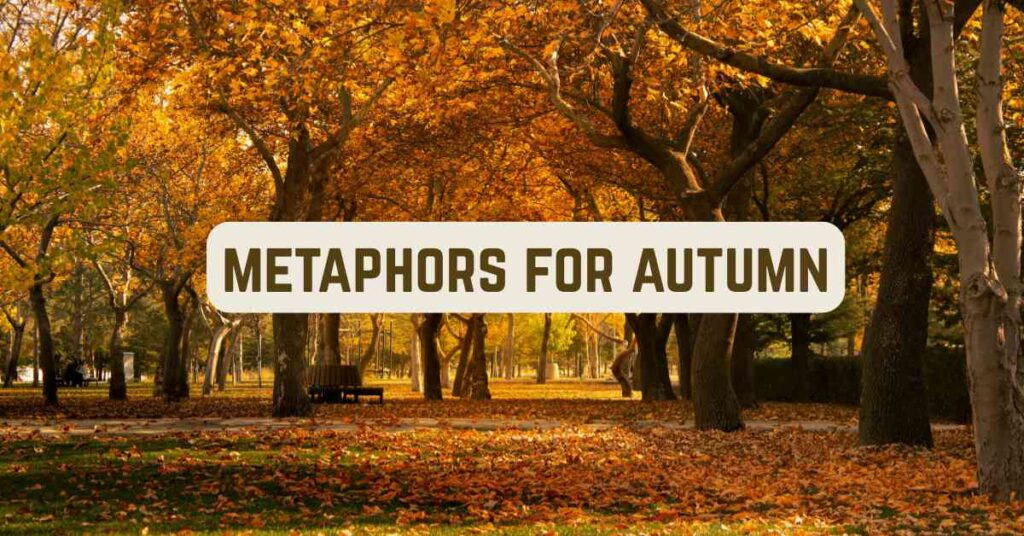

Autumn, with its vibrant colors and crisp air, is a season that inspires rich and evocative language. Understanding the metaphors we use to describe autumn not only deepens our appreciation of the season but also enhances our comprehension of figurative language in general. This article explores the various types of metaphors associated with autumn, providing numerous examples and practical exercises to help you master this fascinating aspect of English grammar. Whether you are an English language learner, a student of literature, or simply someone who enjoys the beauty of words, this guide will offer valuable insights and tools for understanding and using autumn metaphors effectively.
Table of Contents
- Introduction
- Definition of Metaphor
- Autumn as a Metaphor
- Structural Breakdown of Autumn Metaphors
- Types of Autumn Metaphors
- Examples of Autumn Metaphors
- Usage Rules for Autumn Metaphors
- Common Mistakes with Autumn Metaphors
- Practice Exercises
- Advanced Topics: Extended Metaphors and Symbolism
- Frequently Asked Questions
- Conclusion
Definition of Metaphor
A metaphor is a figure of speech that directly compares two unlike things without using “like” or “as.” It asserts that one thing is another, creating a vivid and imaginative connection between them. The purpose of a metaphor is to enhance understanding, evoke emotion, or add stylistic flair to writing and speech. Metaphors are essential tools in poetry, literature, and everyday communication.
In essence, a metaphor transfers qualities or characteristics from one thing (the source) to another (the target). This transfer allows us to see the target in a new light, gaining a deeper understanding of its nature or significance. For example, saying “He is a lion” doesn’t mean the person is literally a lion, but rather that they possess qualities associated with lions, such as courage and strength.
Metaphors can be classified into several types, including:
- Standard Metaphors: These are common and easily recognizable metaphors, such as “time is money.”
- Extended Metaphors: These metaphors are developed over several lines or even throughout an entire work, exploring the comparison in greater depth.
- Mixed Metaphors: These are combinations of two or more incompatible metaphors, often creating a humorous or confusing effect (usually unintentionally).
- Dead Metaphors: These are metaphors that have become so commonplace that they are no longer recognized as figurative language, such as “the foot of the mountain.”
Autumn as a Metaphor
Autumn, more than just a season, serves as a powerful and versatile metaphor in literature, poetry, and everyday language. Its natural characteristics – the changing leaves, the cooling weather, and the sense of impending winter – lend themselves to a variety of symbolic interpretations. Autumn is frequently used to represent aging, decline, beauty, harvest, and transition. The specific meaning of the metaphor depends on the context in which it is used, as well as the author’s or speaker’s intention.
The use of autumn as a metaphor allows writers and speakers to convey complex ideas and emotions in a concise and evocative manner. By drawing parallels between the season and other aspects of life, they can create a deeper connection with their audience and enhance the overall impact of their message. The rich imagery associated with autumn makes it a particularly effective metaphor for exploring themes of mortality, change, and the cyclical nature of life.
The cultural significance of autumn also contributes to its effectiveness as a metaphor. In many societies, autumn is associated with traditions such as harvest festivals and Thanksgiving, further reinforcing its connection to themes of abundance, gratitude, and preparation for the future. This cultural context adds layers of meaning to autumn metaphors, making them resonate more deeply with readers and listeners.
Structural Breakdown of Autumn Metaphors
Understanding the structure of autumn metaphors involves recognizing the key components that contribute to their meaning and impact. These components include the tenor (the subject being described), the vehicle (the autumn imagery used to describe the subject), and the ground (the shared characteristics between the tenor and the vehicle). Identifying these elements helps to analyze and interpret the metaphor effectively.
For example, in the metaphor “His life was the autumn of his years,” the tenor is “his life,” the vehicle is “autumn,” and the ground is the shared characteristic of decline or nearing the end. The structure can be further broken down by examining the specific aspects of autumn that are being emphasized, such as the falling leaves, the shorter days, or the cooler temperatures. Each of these elements contributes to the overall meaning of the metaphor.
The effectiveness of an autumn metaphor also depends on the clarity and vividness of the imagery used. Strong metaphors employ specific and evocative details that help the reader or listener visualize the comparison. For example, instead of simply saying “She felt like autumn,” a more effective metaphor might be “She felt like the last days of autumn, brittle and ready to crumble.” This provides a more concrete and compelling image, enhancing the impact of the metaphor.
Types of Autumn Metaphors
Autumn metaphors can be categorized based on the specific aspects of the season they emphasize. These categories include autumn as aging, autumn as decline, autumn as beauty, autumn as harvest, and autumn as transition. Each category offers a unique perspective on the season and its symbolic significance.
Autumn as Aging
Autumn is often used as a metaphor for the aging process. Just as the leaves change color and eventually fall from the trees, so too do people experience physical and mental changes as they grow older. This type of metaphor often evokes feelings of nostalgia, reflection, and acceptance of mortality. The mellowing of the landscape mirrors the mellowing of character and experiences.
Autumn as Decline
Similar to aging, autumn can also represent decline, decay, and the fading of vitality. The withering of plants and the shortening of days symbolize the loss of strength, energy, and beauty. This type of metaphor can be used to express feelings of sadness, regret, or resignation. The sense of impending winter reinforces the idea of an ending or a finality.
Autumn as Beauty
Despite its association with decline, autumn is also celebrated for its unique and vibrant beauty. The colorful foliage, the crisp air, and the golden light create a picturesque landscape that can evoke feelings of awe, wonder, and appreciation. This type of metaphor highlights the beauty that can be found even in the midst of change and decay. It emphasizes the transient nature of beauty and the importance of cherishing it while it lasts.
Autumn as Harvest
Autumn is the time of harvest, when crops are gathered and stored for the winter. This makes it a natural metaphor for the culmination of effort, the reaping of rewards, and the gathering of experiences. This type of metaphor often evokes feelings of gratitude, satisfaction, and abundance. It can also represent the idea of preparing for the future and making the most of what one has earned.
Autumn as Transition
Autumn is a transitional season, bridging the gap between the warmth of summer and the cold of winter. This makes it a powerful metaphor for periods of change, uncertainty, and transformation. This type of metaphor can be used to express feelings of anticipation, anxiety, or hope. It emphasizes the idea of moving from one state to another and the challenges and opportunities that come with change.
Examples of Autumn Metaphors
To further illustrate the different types of autumn metaphors, here are several examples organized by category. These examples demonstrate how autumn can be used to represent a variety of concepts and emotions.
Aging Metaphors
The following table provides examples of autumn metaphors used to represent aging. Each example includes a sentence using the metaphor and an explanation of its meaning.
| Metaphor | Example Sentence | Explanation |
|---|---|---|
| Autumn of life | He was in the autumn of his life, reflecting on his past accomplishments. | Represents the later years of life, a time for reflection and contemplation. |
| Fading leaves | Her smile was like fading leaves, beautiful but tinged with melancholy. | Symbolizes the gradual decline of youth and beauty. |
| Golden years | They enjoyed their golden years, traveling and spending time with family. | Represents the rewarding and fulfilling aspects of old age. |
| September years | In her September years, she found peace in gardening. | Similar to “autumn of life,” indicating the later stages of life. |
| Harvest time | His career was at its harvest time, reaping the benefits of years of hard work. | Suggests that he is enjoying the results of his past efforts. |
| Late bloom | She was a late bloom, finding her passion in her autumn years. | Implies that she found success or fulfillment later in life. |
| Withering vine | His body felt like a withering vine, losing its strength with each passing day. | Represents the physical decline associated with aging. |
| Crisp air | The crisp air of his age brought a sense of clarity and wisdom. | The “crisp air” symbolizes the clear-headedness and insight that can come with age. |
| Dwindling daylight | His energy felt like dwindling daylight, slowly fading away. | Represents the diminishing energy and vitality of old age. |
| Falling leaves | Memories fell like leaves in autumn, a constant reminder of the past. | Symbolizes the abundance of memories that come with age, both joyful and sorrowful. |
| Bare branches | His life felt like bare branches, stripped of the leaves of youth. | Represents the loss of vitality and the stark reality of aging. |
| Frosty mornings | The frosty mornings of his life brought aches and pains. | Symbolizes the physical discomfort and challenges of old age. |
| Quiet evenings | Her quiet evenings were like autumn sunsets, peaceful and serene. | Represents the tranquility and contentment that can be found in old age. |
| Ripe fruit | He was like ripe fruit, full of wisdom and experience. | Symbolizes the maturity and richness that come with age. |
| Seasoned wood | Her character was like seasoned wood, strong and resilient. | Represents the strength and resilience that are developed over a lifetime. |
| Tapestry of years | His life was a tapestry of years, woven with joys and sorrows. | Symbolizes the richness and complexity of a long life. |
| Twilight years | They spent their twilight years in quiet contemplation. | Represents the final years of life, a time for reflection and peace. |
| Waning moon | His strength was like a waning moon, gradually diminishing. | Symbolizes the gradual decline of physical strength and vitality. |
| Winter’s approach | He felt winter’s approach, a sense of finality drawing near. | Represents the nearness of death and the end of life. |
| Yielding harvest | Her wisdom was the yielding harvest of a life well-lived. | Symbolizes the wisdom and knowledge gained through experience. |
| Amber glow | The amber glow of his wisdom illuminated the path for others. | Symbolizes the warm and gentle guidance that elders provide. |
| Falling temperature | Her spirit felt like a falling temperature, chilling her from within. | Represents the emotional and spiritual decline that can accompany aging. |
| Gathering shadows | The gathering shadows of age brought moments of introspection. | Symbolizes the increasing awareness of mortality and the past. |
| Nearing dusk | He felt like nearing dusk, the end of his day approaching. | Represents the final stages of life, as the day draws to a close. |
Decline Metaphors
This table illustrates how autumn metaphors are used to represent decline, decay, or loss.
| Metaphor | Example Sentence | Explanation |
|---|---|---|
| Withered hopes | Her withered hopes lay scattered like fallen leaves. | Represents the loss of dreams and aspirations. |
| Fading glory | The city’s fading glory was evident in its crumbling buildings. | Symbolizes the decline of a once-great entity. |
| Skeletal trees | The skeletal trees stood as a reminder of the harsh winter to come. | Represents the stark and desolate nature of decline. |
| Rusting gates | The rusting gates were a symbol of the estate’s neglect. | Symbolizes the deterioration and abandonment of something once valued. |
| Decaying leaves | His memories were like decaying leaves, crumbling into dust. | Represents the fading and loss of memories over time. |
| Empty fields | The empty fields mirrored the emptiness in his heart. | Symbolizes the loss of joy and fulfillment. |
| Barren landscape | The barren landscape reflected the desolation of her spirit. | Represents the emotional emptiness and lack of vitality. |
| Falling empires | Like the falling leaves, empires can crumble and fall. | Symbolizes the inevitable decline and collapse of powerful entities. |
| Frostbitten dreams | Her dreams were frostbitten, unable to bloom in the cold reality. | Represents the destruction of hopes and aspirations by harsh circumstances. |
| Ghostly branches | The ghostly branches reached towards the sky, a haunting reminder of what was lost. | Symbolizes the lingering presence of past losses. |
| Hollow winds | Hollow winds whispered through the abandoned house, carrying tales of sorrow. | Represents the emptiness and sadness associated with decline. |
| Icy grip | The icy grip of despair tightened around her heart. | Symbolizes the overwhelming and destructive power of negative emotions. |
| Jaundiced light | The jaundiced light of autumn cast a sickly pall over the landscape. | Represents a distorted and unpleasant view of reality. |
| Killing frost | The killing frost silenced the vibrant colors of summer. | Symbolizes the abrupt and complete end of something beautiful. |
| Lost vitality | The city’s lost vitality was a stark contrast to its former glory. | Represents the decline in energy and vibrancy. |
| Misty shroud | A misty shroud enveloped the town, obscuring its former beauty. | Symbolizes the obscuring of positive qualities by negativity or decay. |
| Naked trees | The naked trees stood as a testament to the winter’s impending harshness. | Represents vulnerability and exposure in the face of adversity. |
| Overripe fruit | Their relationship was like overripe fruit, decaying from within. | Symbolizes the internal decay and eventual collapse of something. |
| Pale sunlight | The pale sunlight offered little warmth, reflecting the coldness of her heart. | Represents a diminished sense of hope and joy. |
| Quenched fires | The quenched fires of passion left only ashes behind. | Symbolizes the extinguishing of strong emotions. |
| Ravaged fields | The ravaged fields spoke of a battle lost to time and nature. | Represents the destruction and devastation caused by decline. |
| Shadowed valleys | Their future was shadowed valleys, filled with uncertainty. | Symbolizes the unknown and potentially difficult path ahead. |
| Tarnished dreams | Her tarnished dreams reflected the harsh realities of life. | Represents the damaging effects of disappointment and hardship. |
| Unkind winds | Unkind winds carried away the last vestiges of summer’s warmth. | Symbolizes the forces that contribute to decline and loss. |
| Vacant eyes | Vacant eyes stared out from the old photograph, reflecting a life drained of joy. | Represents the emptiness and lack of emotion associated with decline. |
Beauty Metaphors
The following table provides examples of autumn metaphors used to represent beauty.
| Metaphor | Example Sentence | Explanation |
|---|---|---|
| Crimson tapestry | The forest was a crimson tapestry, woven with fiery hues. | Represents the rich and vibrant colors of autumn foliage. |
| Golden glow | The fields were bathed in a golden glow, radiating warmth and beauty. | Symbolizes the warm and inviting light of autumn. |
| Amber light | The amber light of the setting sun painted the landscape with magic. | Represents the soft and enchanting light of autumn evenings. |
| Fiery sunset | The fiery sunset mirrored the passion in her heart. | Symbolizes the intense and vibrant beauty of autumn skies. |
| Painted leaves | The painted leaves danced in the breeze, a kaleidoscope of colors. | Represents the diverse and stunning colors of autumn foliage. |
| Russet hues | Russet hues dominated the landscape, creating a scene of rustic beauty. | Symbolizes the earthy and warm colors of autumn. |
| Scarlet blaze | The scarlet blaze of the maple trees was breathtaking. | Represents the intense and vibrant red colors of autumn foliage. |
| Autumn’s embrace | She felt autumn’s embrace, a comforting and beautiful transition. | Symbolizes the gentle and inviting nature of the season. |
| Bronze shimmer | The bronze shimmer of the leaves caught the sunlight, creating a dazzling effect. | Symbolizes the metallic and lustrous quality of autumn colors. |
| Copper glow | The copper glow of the birch trees added warmth to the cool air. | Represents the warm and inviting colors of autumn foliage. |
| Crimson cascade | The crimson cascade of leaves created a breathtaking spectacle. | Symbolizes the abundance and beauty of falling leaves. |
| Embered fields | The embered fields glowed softly in the evening light. | Represents the warm and glowing colors of autumn fields. |
| Flaming forest | The flaming forest was a sight to behold, a symphony of colors. | Symbolizes the intense and vibrant colors of autumn foliage. |
| Gilded trees | The gilded trees stood majestically against the clear blue sky. | Represents the golden and precious beauty of autumn. |
| Honeyed light | The honeyed light of autumn softened the edges of the world. | Symbolizes the warm and gentle light of autumn. |
| Iridescent leaves | The iridescent leaves shimmered with every color imaginable. | Represents the vibrant and diverse colors of autumn foliage. |
| Jeweled landscape | The jeweled landscape sparkled with autumnal beauty. | Symbolizes the precious and vibrant colors of autumn. |
| Kaleidoscopic forest | The kaleidoscopic forest was a feast for the eyes. | Represents the diverse and stunning colors of autumn foliage. |
| Luminous leaves | The luminous leaves glowed with an inner light. | Symbolizes the radiant and vibrant colors of autumn. |
| Mosaic of colors | The mosaic of colors created a breathtaking panorama. | Represents the diverse and harmonious colors of autumn. |
| Opaline skies | The opaline skies reflected the soft beauty of the season. | Symbolizes the gentle and serene beauty of autumn skies. |
| Painted canvas | The landscape was a painted canvas, a masterpiece of nature. | Represents the artistic and beautiful quality of autumn scenery. |
| Quilted hills | The quilted hills were a patchwork of vibrant colors. | Symbolizes the diverse and varied colors of autumn landscapes. |
| Radiant hues | The radiant hues of autumn filled the air with warmth. | Represents the bright and vibrant colors of the season. |
| Saffron glow | The saffron glow of the fields added a touch of magic to the scene. | Symbolizes the warm and inviting colors of autumn landscapes. |
Harvest Metaphors
This table illustrates how autumn metaphors are used to represent harvest, reaping rewards, and culmination.
| Metaphor | Example Sentence | Explanation |
|---|---|---|
| Reaping rewards | After years of hard work, he was finally reaping the rewards of his efforts. | Represents the culmination of effort and the receiving of benefits. |
| Gathering crops | She was gathering crops of knowledge, enriching her mind. | Symbolizes the accumulation of knowledge and experience. |
| Harvesting dreams | They were harvesting dreams, bringing their visions to fruition. | Represents the realization of goals and aspirations. |
| Abundant yield | His creativity produced an abundant yield of ideas. | Symbolizes a plentiful and successful outcome. |
| Ample harvest | Her efforts resulted in an ample harvest of success. | Represents a large and satisfying reward. |
| Autumn of success | This project marked the autumn of their success, a crowning achievement. | Symbolizes the peak of a successful period. |
| Bounty of experience | He shared the bounty of his experience with younger colleagues. | Represents the rich and valuable knowledge gained over time. |
| Collected wisdom | Her collected wisdom was a treasure to those who sought her advice. | Symbolizes the accumulation of knowledge and understanding. |
| Culmination of efforts | The event was the culmination of months of hard work and planning. | Represents the final and successful outcome of a project. |
| Fruitful endeavors | Their fruitful endeavors brought prosperity to the community. | Symbolizes successful and productive activities. |
| Gathered achievements | He looked back on his gathered achievements with pride. | Represents the collection of accomplishments over time. |
| Harvest of memories | She cherished the harvest of memories from her childhood. | Symbolizes the collection of valuable and meaningful memories. |
| Mature fruits | Their relationship bore mature fruits of love and understanding. | Represents the positive outcomes of a strong and healthy relationship. |
| Plentiful reward | Their dedication earned them a plentiful reward. | Symbolizes a generous and satisfying outcome. |
| Ripe opportunities | Autumn brought ripe opportunities for new beginnings. | Symbolizes the favorable conditions for success and growth. |
| Season of fulfillment | This was the season of fulfillment, after years of striving. | Represents a period of satisfaction and achievement. |
| Successful gathering | The conference was a successful gathering of brilliant minds. | Symbolizes a productive and rewarding meeting of individuals. |
| Triumph of labor | The completed project was a triumph of labor and dedication. | Represents the successful outcome of hard work. |
| Valuable yield | Their research produced a valuable yield of new insights. | Symbolizes the significant and beneficial results of a study. |
| Wealth of experience | He brought a wealth of experience to the team. | Symbolizes the rich and valuable knowledge gained over time. |
| Autumns bounty | The awards ceremony was autumn’s bounty for the actors. | Represents the rich rewards and recognition received. |
| Garnered acclaim | The artist garnered acclaim for his autumn-themed paintings. | Symbolizes the praise and recognition received for creative work. |
| Harvested potential | The mentor helped him harvest the potential within himself. | Represents the realization and development of one’s abilities. |
| Reaped benefits | The company reaped the benefits of its innovative strategies. | Symbolizes the positive outcomes resulting from smart decisions. |
| Season of returns | For investors, this was the season of returns and profits. | Represents a period of financial gains and positive results. |
Transition Metaphors
This table illustrates how autumn metaphors are used to represent transition, change, and transformation.
| Metaphor | Example Sentence | Explanation |
|---|---|---|
| Changing seasons | Life is like changing seasons, constantly evolving. | Represents the continuous cycle of change and transformation. |
| Bridging the gap | Autumn is bridging the gap between summer’s warmth and winter’s cold. | Symbolizes the role of transition between two distinct states. |
| Entering a new phase | She was entering a new phase of her life, filled with uncertainty and excitement. | Represents the beginning of a different chapter or period. |
| Autumn of change | The election marked the autumn of change for the country. | Symbolizes a significant period of transformation. |
| Between two worlds | He felt like he was between two worlds, unsure of where he belonged. | Represents the feeling of being in a state of transition. |
| Crossing the threshold | They were crossing the threshold into a new era. | Symbolizes the beginning of a new and significant period. |
| Embracing the unknown | She was embracing the unknown, ready for whatever the future held. | Represents the acceptance of uncertainty and change. |
| Evolving landscape | The political landscape was an evolving landscape, constantly shifting. | Symbolizes the dynamic and changing nature of situations. |
| From old to new | They were moving from old to new, leaving the past behind. | Represents the transition from a previous state to a new one. |
| Gateway to winter | Autumn is the gateway to winter, a time of preparation and reflection. | Symbolizes the transition into a new and different season. |
| Holding the balance | Autumn is holding the balance between warmth and cold. | Symbolizes the equilibrium during a period of transition. |
| In-between time | This was the in-between time, waiting for the next chapter to begin. | Represents the period of uncertainty between two events. |
| Journey of transformation | His life was a journey of transformation, constantly evolving. | Symbolizes the continuous process of change and growth. |
| Kindling new beginnings | Autumn was kindling new beginnings, despite the fading light. | Symbolizes the start of new opportunities during a transitional period. |
| Liminal space | She found herself in a liminal space, between what was and what would be. | Represents the state of being in a transitional phase. |
| Moving forward | They were moving forward, leaving the past behind. | Symbolizes progress and transition from one state to another. |
| New horizons | Autumn brought new horizons, full of possibilities. | Symbolizes the opportunities and prospects that come with change. |
| On the cusp | They were on the cusp of a new adventure. | Represents the point of transition just before a new experience. |
| Passing season | This was a passing season, making way for something new. | Symbolizes a temporary period leading to a different state. |
| Quest for change | Their quest for change led them to uncharted territories. | Symbolizes the pursuit of transformation and new opportunities. |
| Riding the wave | She was riding the wave of change, embracing the uncertainty. | Symbolizes adapting to and navigating through a period of transformation. |
| Shifting sands | Life felt like shifting sands during the relocation process. | Symbolizes instability and the need to adapt to new circumstances. |
| Transitional phase | The company was in a transitional phase, adapting to new technologies. | Symbolizes a period of adjustment and change in an organization. |
| Unfolding future | They looked forward to the unfolding future with hope. | Symbolizes anticipation and optimism about what lies ahead. |
| Voyage of discovery | His life was a voyage of discovery, with new challenges and adventures. | Symbolizes a journey of personal growth and exploration. |
Usage Rules for Autumn Metaphors
When using autumn metaphors, it’s important to consider the following rules to ensure clarity and effectiveness:
- Context is key: The meaning of an autumn metaphor depends heavily on the context in which it is used. Be sure to provide enough information for your audience to understand the intended comparison.
- Avoid clichés: While some common autumn metaphors can be effective, try to avoid overused phrases that have lost their impact. Strive for originality and creativity in your comparisons.
- Be consistent: If you are using an extended metaphor, maintain consistency throughout your writing or speech. Avoid mixing incompatible images or ideas.
- Consider your audience: Tailor your metaphors to your audience’s knowledge and understanding. Avoid using obscure or unfamiliar references that may confuse or alienate them.
- Use vivid imagery: Strong metaphors employ specific and evocative details that help the reader or listener visualize the comparison. Use sensory language to create a more compelling image.
One important aspect is to ensure the metaphor aligns with the overall tone and purpose of your writing. A metaphor that is too dramatic or sentimental may be inappropriate for a formal or academic context. Conversely, a metaphor that is too subtle or understated may fail to capture the reader’s attention in a more creative or
artistic piece.
Common Mistakes with Autumn Metaphors
Even with a good understanding of autumn metaphors, it’s easy to make mistakes. Here are some common errors to avoid:
- Overuse: Using too many autumn metaphors in a single piece of writing can become repetitive and tiresome. Use them sparingly and strategically.
- Inconsistency: Mixing different types of autumn metaphors or using them inconsistently can create confusion and weaken the overall effect.
- Lack of clarity: If the connection between the tenor and the vehicle is not clear, the metaphor will fail to communicate its intended meaning.
- Inappropriate tone: Using an autumn metaphor that is inconsistent with the overall tone of the writing can be jarring and ineffective.
- Clichés: Relying on overused autumn metaphors can make your writing sound unoriginal and uninspired.
Here are some examples of common mistakes and how to correct them:
-
Mistake: “His career was a falling leaf, and he felt withered.” (Inconsistent imagery)
Correct: “His career was in its autumn, a time of reflection and winding down.” (Consistent imagery)
-
Mistake: “Life is autumn.” (Too vague)
Correct: “Life is like autumn, a season of change, reflection, and preparing for what’s to come.” (More specific and clear)
-
Mistake: “She was autumn.” (Lacks context)
Correct: “She was like a late autumn afternoon, beautiful, serene, and tinged with a hint of melancholy.” (Provides context and vivid imagery)
Practice Exercises
To reinforce your understanding of autumn metaphors, try the following exercises:
Exercise 1: Identifying Metaphors
Read the following sentences and identify the autumn metaphors used:
- Her smile was the golden glow of an autumn afternoon.
- His strength was like a tree shedding its leaves in autumn.
- Their love was a harvest of shared moments.
- Life had entered its autumn, with quiet days and long nights.
- The project reached its autumn, nearing completion.
Answers:
- Golden glow of an autumn afternoon
- Tree shedding its leaves in autumn
- Harvest of shared moments
- Life had entered its autumn
- Project reached its autumn
Exercise 2: Completing Metaphors
Complete the following sentences using an appropriate autumn metaphor:
- His memories were like __________.
- The old house felt like __________.
- Her wisdom was __________.
- Their relationship was going through __________.
- The city’s decline was __________.
Possible Answers:
- …falling leaves, scattered by the wind.
- …a skeletal tree, bare and exposed.
- …the harvest of a lifetime.
- …its autumn, preparing for winter.
- …the fading light of autumn.
Exercise 3: Creating Your Own Metaphors
Create your own autumn metaphors to describe the following concepts:
- A difficult challenge
- A moment of joy
- A feeling of loss
- A new opportunity
- A lasting friendship
Example Answers:
- A difficult challenge: A barren field after harvest, hard to replant.
- A moment of joy: The vibrant colors of the autumn leaves, breathtaking and fleeting.
- A feeling of loss: The chilling wind of late autumn, stripping away warmth and comfort.
- A new opportunity: A freshly plowed field in autumn, ready for new seeds to be sown.
- A lasting friendship: A sturdy oak tree in autumn, its roots deep and its branches strong.
Advanced Topics: Extended Metaphors and Symbolism
Beyond simple comparisons, autumn metaphors can be extended throughout an entire piece of writing, creating a rich and complex tapestry of meaning. An extended metaphor is a metaphor that is developed over several lines or even throughout an entire work. It allows for a deeper exploration of the comparison, revealing multiple layers of meaning and creating a more profound impact on the reader.
For example, a poem might use the image of an autumn forest to represent the stages of a relationship, with the changing leaves symbolizing different emotions and experiences. The poem could follow the forest through the season, from the first signs of color to the final shedding of leaves, mirroring the evolution of the relationship from its vibrant beginnings to its eventual end.
Symbolism is another important aspect of autumn metaphors. Autumn is often associated with specific symbols, such as pumpkins, cornucopias, and Thanksgiving. These symbols can be used to reinforce the meaning of the metaphor and add depth to the writing. For example, a story about a family gathering might use the symbol of a Thanksgiving feast to represent abundance, gratitude, and the importance of connection.
Furthermore, consider how cultural contexts influence the interpretation of autumn metaphors. In some cultures, autumn is primarily associated with harvest and abundance, while in others, it is more strongly linked to themes of decline and mortality. Understanding these cultural nuances can help you use autumn metaphors more effectively and avoid unintended misinterpretations.
Frequently Asked Questions
What is the difference between a metaphor and a simile?
A metaphor directly compares two unlike things without using “like” or “as,” while a simile uses “like” or “as” to make the comparison. For example, “He is a lion” is a metaphor, while “He is like a lion” is a simile.
How can I make my autumn metaphors more original?
Avoid clichés and try to find unique and unexpected connections between autumn and the concept you are trying to describe. Use vivid imagery and sensory language to create a more compelling comparison.
What are some common autumn symbols?
Pumpkins, cornucopias, falling leaves, bare trees, and Thanksgiving are all common autumn symbols.
How do I know if an autumn metaphor is appropriate for my writing?
Consider the context, tone, and purpose of your writing. Make sure the metaphor aligns with the overall message and is appropriate for your audience.
Can autumn metaphors be used in other languages?
Yes, but the specific metaphors and symbols associated with autumn may vary depending on the culture and language. It’s important to be aware of these differences when using autumn metaphors in a non-English context.
Conclusion
Autumn metaphors offer a rich and versatile way to express complex ideas and emotions. By understanding the different types of autumn metaphors, their structural components, and the rules for using them effectively, you can enhance your writing and communication skills. Remember to avoid clichés, use vivid imagery, and consider your audience when crafting your own autumn metaphors. With practice and creativity, you can harness the power of autumn to add depth, beauty, and meaning to your words.