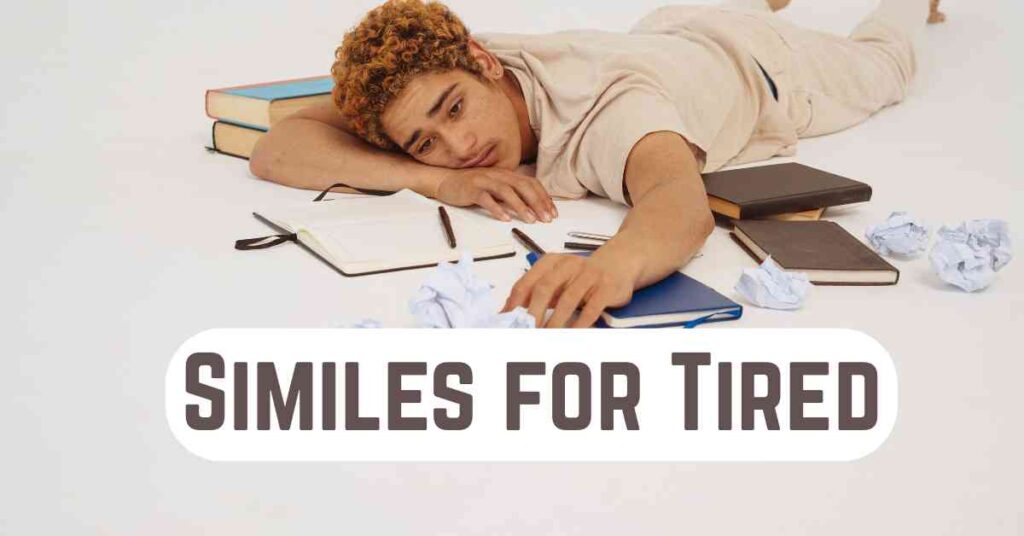

Expressing tiredness effectively goes beyond simply saying “I am tired.” Similes offer a vivid and engaging way to convey the depth and nuances of fatigue. This article explores a wide range of similes for “tired,” providing detailed explanations, examples, and practice exercises. Whether you’re a student, writer, or language enthusiast, this guide will equip you with the tools to articulate your exhaustion with creativity and precision. Understanding these similes enhances your vocabulary and improves your ability to communicate effectively in both written and spoken English.
This comprehensive guide is designed for English language learners of all levels, from beginners to advanced speakers. It breaks down complex concepts into easily digestible parts, ensuring that everyone can benefit from the wealth of information provided. By the end of this article, you’ll have a strong grasp of how to use similes to describe tiredness in a variety of contexts.
Table of Contents
- Introduction
- Definition of Simile and Its Role in Describing Tiredness
- Structural Breakdown of Similes
- Types of Similes for Tired
- Examples of Similes for Tired
- Usage Rules for Similes
- Common Mistakes When Using Similes
- Practice Exercises
- Advanced Topics: Nuances and Variations
- Frequently Asked Questions (FAQs)
- Conclusion
Definition of Simile and Its Role in Describing Tiredness
A simile is a figure of speech that compares two unlike things using the words “like” or “as.” It is a powerful tool for creating vivid imagery and conveying complex emotions or sensations in a relatable way. In the context of describing tiredness, similes allow us to go beyond a simple statement of fatigue and paint a picture of the specific type and intensity of exhaustion being experienced.
Similes help readers or listeners understand the feeling of tiredness through association. By comparing the feeling of being tired to something familiar, such as a heavy object, a wilted flower, or a deflated balloon, we can create a more impactful and memorable description. This is particularly useful in creative writing, where the goal is to evoke a strong emotional response in the audience.
The function of a simile is to enhance understanding and create a more engaging and descriptive narrative. Without similes (and metaphors), our language would be much more literal and far less interesting. They add color, depth, and emotional resonance to our communication. They allow us to convey not just *that* we are tired, but *how* tired we feel.
Structural Breakdown of Similes
The basic structure of a simile is quite simple. It consists of two main components: the subject being described (in this case, tiredness) and the object to which it is being compared. These two components are connected by either “like” or “as.” Let’s break down the structure:
Subject + “like” or “as” + Object of Comparison
For example:
- “I feel as heavy as a lead weight.” (Subject: I; Object: lead weight)
- “She was sleeping like a log.” (Subject: She; Object: log)
The success of a simile depends on the relevance and clarity of the comparison. The object of comparison should be something that the audience can easily understand and relate to. Furthermore, the comparison should highlight a specific characteristic or quality that is shared by both the subject and the object. In the first example above, the feeling of heaviness is the shared characteristic; in the second example, deep, motionless sleep is the shared characteristic.
Understanding this structure allows you to create your own similes effectively. By identifying the specific aspect of tiredness you want to convey and then selecting an object that embodies that quality, you can craft powerful and evocative descriptions.
Types of Similes for Tired
Tiredness is not a monolithic experience. It can manifest in different ways, affecting the body, mind, and emotions. Therefore, it is helpful to categorize similes for tired based on the specific type of fatigue they describe.
Physical Tiredness
Physical tiredness refers to the exhaustion of the body. This type of fatigue often results from physical exertion, lack of sleep, or illness. Similes for physical tiredness often involve comparisons to heavy objects, worn-out machines, or depleted resources.
Mental Tiredness
Mental tiredness, also known as mental fatigue, refers to the exhaustion of the mind. This can be caused by prolonged concentration, stress, or lack of mental stimulation. Similes for mental tiredness often involve comparisons to foggy weather, blank screens, or tangled wires.
Emotional Tiredness
Emotional tiredness, also called emotional exhaustion, refers to the feeling of being drained and depleted emotionally. This can be caused by prolonged stress, trauma, or emotional labor. Similes for emotional tiredness often involve comparisons to deflated balloons, empty wells, or withered plants.
Examples of Similes for Tired
The following sections provide extensive examples of similes for the three different types of tiredness discussed above. Each section includes a table with numerous examples to illustrate the variety and versatility of similes.
Physical Tiredness Examples
This table contains examples of similes that describe physical tiredness. These similes often evoke a sense of heaviness, weakness, and depletion of energy.
| Simile | Explanation |
|---|---|
| I felt as heavy as a ton of bricks. | Describes extreme physical heaviness and exhaustion. |
| My legs were like lead. | Indicates heavy and difficult-to-move legs. |
| She moved as slowly as a snail. | Implies extreme slowness due to fatigue. |
| He was lying as still as a corpse. | Suggests complete stillness and exhaustion. |
| I felt like I’d been run over by a truck. | Conveys a sense of being completely battered and exhausted. |
| My body felt like a worn-out machine. | Describes a feeling of mechanical breakdown due to overuse. |
| I was as weak as a kitten. | Indicates extreme physical weakness. |
| She was as limp as a dishrag. | Describes a lack of energy and muscle tone. |
| He felt like he was dragging himself through mud. | Suggests a difficult and exhausting effort. |
| I was as drained as a battery. | Implies a complete lack of energy. |
| My arms felt like they were full of concrete. | Describes heavy, immobile arms. |
| She walked as if she were wading through thick soup. | Suggests slow, labored movement. |
| He felt like his bones were made of sand. | Indicates a feeling of weakness and instability. |
| I was as exhausted as a marathon runner at the finish line. | Conveys a sense of extreme exhaustion after intense physical exertion. |
| My muscles felt like they were tied in knots. | Describes tense and painful muscles due to fatigue. |
| She slept like a log. | Indicates deep, undisturbed sleep. |
| He was as sluggish as molasses. | Describes slow and lethargic movement. |
| I felt like I had aged ten years overnight. | Conveys a sense of being physically worn down. |
| My energy was as low as a flickering candle. | Implies a minimal amount of energy remaining. |
| She was as weary as an old traveler. | Suggests a deep and profound sense of physical tiredness. |
| He felt like every step was a monumental effort. | Describes the difficulty of even simple movements. |
| I was as beat as an old drum. | Conveys a sense of being worn out and depleted. |
| My body felt like it was made of stone. | Describes a heavy, immobile feeling. |
| She moved with the grace of a tired elephant. | Suggests clumsy and labored movement. |
| He was as stiff as a board. | Indicates muscle stiffness and soreness. |
Mental Tiredness Examples
The following table provides examples of similes that describe mental tiredness. These similes often evoke a sense of fogginess, confusion, and lack of focus.
| Simile | Explanation |
|---|---|
| My mind felt as foggy as a winter morning. | Describes a lack of mental clarity and focus. |
| His thoughts were like tangled wires. | Indicates a confused and disorganized mental state. |
| She stared blankly, like a deer in headlights. | Suggests a lack of comprehension and mental processing. |
| My brain felt like it was full of cotton. | Describes a feeling of mental slowness and dullness. |
| He was as absent-minded as a professor. | Implies a tendency to forget things due to mental preoccupation. |
| My concentration was as thin as ice. | Indicates a fragile and easily broken ability to focus. |
| She felt like her brain was short-circuiting. | Describes a sense of mental overload and malfunction. |
| He was as clueless as a newborn baby. | Suggests a complete lack of understanding. |
| My memory was like a sieve. | Indicates a difficulty in retaining information. |
| She felt like her brain had turned to mush. | Describes a feeling of mental softness and lack of sharpness. |
| His thoughts were as slow as a dripping faucet. | Implies a sluggish and delayed mental process. |
| She felt like she was thinking underwater. | Describes a feeling of mental pressure and difficulty. |
| My mind was as blank as a whiteboard. | Indicates a complete lack of thoughts or ideas. |
| He was as disoriented as a tourist in a foreign city. | Suggests a feeling of confusion and uncertainty. |
| She felt like her brain was running on fumes. | Describes a minimal amount of mental energy remaining. |
| His ideas were as scattered as leaves in the wind. | Implies a lack of coherence and organization. |
| She felt like her mind was a maze. | Describes a feeling of confusion and disorientation. |
| His thoughts were as muddled as a muddy puddle. | Indicates a lack of clarity and precision. |
| She felt like her brain was stuck in slow motion. | Describes a delayed and sluggish mental process. |
| His attention span was as short as a goldfish’s. | Implies a difficulty in maintaining focus. |
| She felt like her mind was a broken record. | Describes repetitive and unproductive thoughts. |
| His thoughts were as hazy as a dream. | Indicates a lack of clarity and realism. |
| She felt like her brain was buffering. | Describes a delayed and unresponsive mental process. |
| His ideas were as fragile as glass. | Implies a lack of robustness and resilience. |
| She felt like her mind was a cluttered attic. | Describes a feeling of mental overload and disorganization. |
Emotional Tiredness Examples
This table contains examples of similes that describe emotional tiredness. These similes often evoke a sense of emptiness, sadness, and hopelessness.
| Simile | Explanation |
|---|---|
| I felt as empty as a hollow shell. | Describes a lack of emotional substance and vitality. |
| Her heart was as heavy as a stone. | Indicates a deep sense of sadness and sorrow. |
| He was as numb as a block of ice. | Suggests a lack of emotional feeling and responsiveness. |
| I felt like I was running on empty. | Describes a lack of emotional resources and energy. |
| She was as deflated as a punctured balloon. | Implies a loss of enthusiasm and hope. |
| He felt like his soul was withering like a plant without water. | Describes a gradual loss of emotional vitality. |
| I was as hopeless as a castaway on a desert island. | Indicates a feeling of despair and isolation. |
| She felt like her spirit was crushed like a flower underfoot. | Describes a feeling of emotional damage and vulnerability. |
| He was as fragile as a butterfly’s wing. | Suggests emotional sensitivity and vulnerability. |
| I felt like my emotions were a tangled ball of yarn. | Describes a confused and disorganized emotional state. |
| She was as drained as a well after a long drought. | Implies a complete lack of emotional resources. |
| He felt like his heart was a lead weight in his chest. | Describes a heavy and oppressive emotional burden. |
| I was as lost as a ship without a rudder. | Indicates a lack of direction and purpose. |
| She felt like her emotions were a storm raging inside her. | Describes a turbulent and overwhelming emotional state. |
| He was as vulnerable as a newborn bird. | Suggests emotional fragility and defenselessness. |
| I felt like my spirit was a flickering candle in the wind. | Describes a fragile and easily extinguished emotional state. |
| She was as weary as a soldier returning from war. | Implies a deep and profound sense of emotional exhaustion. |
| He felt like his soul was an empty room. | Describes a lack of emotional warmth and connection. |
| I was as broken as a shattered mirror. | Indicates a feeling of emotional damage and fragmentation. |
| She felt like her emotions were a heavy chain dragging her down. | Describes an oppressive and restrictive emotional burden. |
| He was as resigned as a prisoner awaiting execution. | Suggests a feeling of hopelessness and acceptance. |
| I felt like my heart was a barren wasteland. | Describes a lack of emotional fertility and growth. |
| She was as empty as a discarded bottle. | Implies a lack of emotional value and purpose. |
| He felt like his emotions were a heavy fog clouding his judgment. | Describes a lack of clarity and perspective. |
| I was as isolated as a lighthouse keeper. | Indicates a feeling of loneliness and disconnection. |
Usage Rules for Similes
While similes are a creative and expressive tool, there are some usage rules to keep in mind to ensure clarity and effectiveness:
- Clarity: The comparison should be clear and easily understood by the audience. Avoid obscure or overly complex comparisons.
- Relevance: The object of comparison should be relevant to the subject being described. The shared characteristic should be obvious and meaningful.
- Originality: While common similes can be effective, strive for originality to make your writing more engaging and memorable.
- Context: Consider the context in which the simile is being used. The appropriateness of the simile will depend on the tone and style of the writing.
- Avoid Clichés: Steer clear of overused similes (clichés) such as “as busy as a bee” or “as quiet as a mouse.” Try to come up with your own fresh comparisons.
Example of a clear and relevant simile: “He was as tired as a dog after a long hike.”
Example of an unclear or irrelevant simile: “He was as tired as a quantum physicist.” (Unless the audience understands quantum physics, the comparison will be meaningless.)
It’s also important to consider the emotional impact of your similes. Some similes can be humorous, while others can be serious or even disturbing. Choose similes that are appropriate for the overall tone and message of your writing.
Common Mistakes When Using Similes
Even experienced writers can make mistakes when using similes. Here are some common errors to watch out for:
| Mistake | Incorrect Example | Correct Example | Explanation |
|---|---|---|---|
| Using metaphors instead of similes. | He was a tired dog. | He was as tired as a dog. | Metaphors directly state that something *is* something else, while similes use “like” or “as” to make a comparison. |
| Using clichés. | He was as tired as a log. | He was as tired as a lumberjack after a long day of work. | Clichés are overused and lack originality. Opt for fresh, creative comparisons. |
| Creating illogical comparisons. | She was as tired as a car. | She was as tired as a car running on empty. | The comparison should be logical and make sense in the context. |
| Using too many similes in a short space. | He was as tired as a dog, as heavy as lead, and as slow as a snail. | He was as tired as a dog, his movements sluggish. | Overusing similes can make your writing feel cluttered and overwhelming. |
| Using complicated or obscure comparisons. | He was as tired as the entropy of the universe. | He was as tired as an old man after climbing a mountain. | Similes should be easy to understand and relate to. |
| Misusing “like” and “as”. | He felt as he was tired. | He felt as if he was tired. (or He felt like he was tired.) | Ensure correct usage of these comparison words for grammatical accuracy. |
By being aware of these common mistakes, you can avoid them and use similes more effectively in your writing.
Practice Exercises
Test your understanding of similes for tired with these practice exercises.
Exercise 1: Fill in the Blanks
Complete the following sentences with appropriate similes for tired.
| Question | Answer |
|---|---|
| 1. After the long day of hiking, I felt __________. | as tired as a dog after a long hike. |
| 2. Her mind was ________ after studying for hours. | as foggy as a winter morning. |
| 3. He was ________ after dealing with the difficult clients. | as emotionally drained as a well after a drought. |
| 4. The old car sounded __________. | like a tired old man coughing. |
| 5. After the argument, she felt __________. | as empty as a hollow shell. |
| 6. The runner crossed the finish line, looking __________. | as exhausted as a marathon runner. |
| 7. My motivation was ________ after the setback. | as deflated as a punctured balloon. |
| 8. After working a double shift, he moved __________. | as slowly as a snail. |
| 9. The student felt ________ after the exam. | like his brain had turned to mush. |
| 10. Following the stressful meeting, her spirit felt __________. | as fragile as a butterfly’s wing. |
Exercise 2: Create Your Own Similes
Write your own similes for the following scenarios:
| Scenario | Possible Simile |
|---|---|
| 1. Describing physical tiredness after moving furniture. | I felt as heavy as the furniture I was moving. |
| 2. Describing mental tiredness after a long meeting. | My mind felt as tangled as a ball of yarn after the long meeting. |
| 3. Describing emotional tiredness after a difficult conversation. | I felt as emotionally drained as a deflated tire after that difficult conversation. |
| 4. Describing the feeling of waking up tired. | I woke up feeling as stiff as a board. |
| 5. Describing the feeling of mental exhaustion from overthinking. | My thoughts were as scattered as leaves in the wind. |
| 6. Describing the feeling of emotional exhaustion from constant worry. | My heart felt as heavy as a stone. |
| 7. Describing the feeling of complete exhaustion after a crisis. | I felt as empty as a hollow shell. |
| 8. Describing the feeling of physical exhaustion after hard labor. | My muscles felt like they were tied in knots. |
| 9. Describing the feeling of mental exhaustion from constant interruptions. | My concentration was as thin as ice. |
| 10. Describing the feeling of emotional exhaustion after a long period of grief. | I felt as numb as a block of ice. |
Exercise 3: Identify the Type of Tiredness
Identify whether the following similes describe physical, mental, or emotional tiredness.
| Simile | Type of Tiredness |
|---|---|
| I felt as heavy as a ton of bricks. | Physical |
| My mind felt as foggy as a winter morning. | Mental |
| She felt as empty as a hollow shell. | Emotional |
| His legs were like lead. | Physical |
| His thoughts were like tangled wires. | Mental |
| She was as deflated as a punctured balloon. | Emotional |
| My brain felt like it was full of cotton. | Mental |
| He was as weak as a kitten. | Physical |
| I felt like I was running on empty. | Emotional |
| She moved as slowly as a snail. | Physical |
Advanced Topics: Nuances and Variations
For advanced learners, exploring the nuances and variations of similes can add depth and sophistication to their writing. This includes understanding how cultural context can influence the effectiveness of a simile, and how to create similes that are both original and meaningful.
For example, a simile that relies on a specific cultural reference may not be understood by all audiences. Similarly, a simile that is too abstract or philosophical may be difficult for some readers to grasp.
Another advanced concept is the use of extended similes, which involve developing a comparison over several sentences or even paragraphs. This can create a more vivid and detailed image in the reader’s mind, but it also requires careful planning and execution.
Consider the following extended simile:
“Her emotional tiredness was like a garden overgrown with weeds. The flowers, once vibrant and colorful, were now choked and hidden. The soil, once rich and fertile, was now dry and barren. The sunlight, once warm and nurturing, was now blocked by the dense foliage. Only by carefully tending to the garden could she restore it to its former glory.”
This extended simile creates a powerful and evocative image of emotional tiredness, and it also suggests a path towards recovery.
Frequently Asked Questions (FAQs)
Here are some frequently asked questions about similes for tired:
- What is the difference between a simile and a metaphor?
A simile compares two things using “like” or “as,” while a metaphor directly states that one thing *is* another. For example, “He is as tired as a dog” (simile) vs. “He is a tired dog” (metaphor).
- Why are similes useful in writing?
Similes add vividness, clarity, and emotional impact to writing. They help readers understand complex concepts and create memorable images.
- How can I create original similes?
Think about the specific qualities you want to convey and brainstorm objects or situations that share those qualities. Avoid clichés and strive for fresh, creative comparisons.
- What are some common mistakes to avoid when using similes?
Avoid using metaphors instead of similes, using clichés, creating illogical comparisons, and overusing similes in a short space.
- How does context affect the effectiveness of a simile?
The appropriateness of a simile depends on the tone, style, and audience of the writing. Consider the cultural context and emotional impact of your similes.
- Can a simile be too complex?
Yes, if the comparison is too obscure or philosophical, it may be difficult for some readers to grasp. Aim for clarity and relevance.
- What is an extended simile?
An extended simile involves developing a comparison over several sentences or even paragraphs, creating a more vivid and detailed image.
- How can I improve my use of similes?
Practice writing similes regularly, read widely to expose yourself to different styles, and get feedback from others on your writing.
Conclusion
Mastering the art of using similes to describe tiredness can significantly enhance your communication skills. By understanding the different types of tiredness, learning the structural elements of similes, and practicing their application, you can effectively convey the nuances of fatigue in a way that resonates with your audience. Remember to be clear, relevant, and original in your comparisons, and avoid common mistakes that can detract from the impact of your writing.
Continue to explore the world of similes and other figures of speech to expand your vocabulary and improve your ability to express yourself with creativity and precision. With practice and attention to detail, you can become a master of language and communicate your thoughts and feelings with greater clarity and impact. So go forth, and paint vivid pictures with your words!