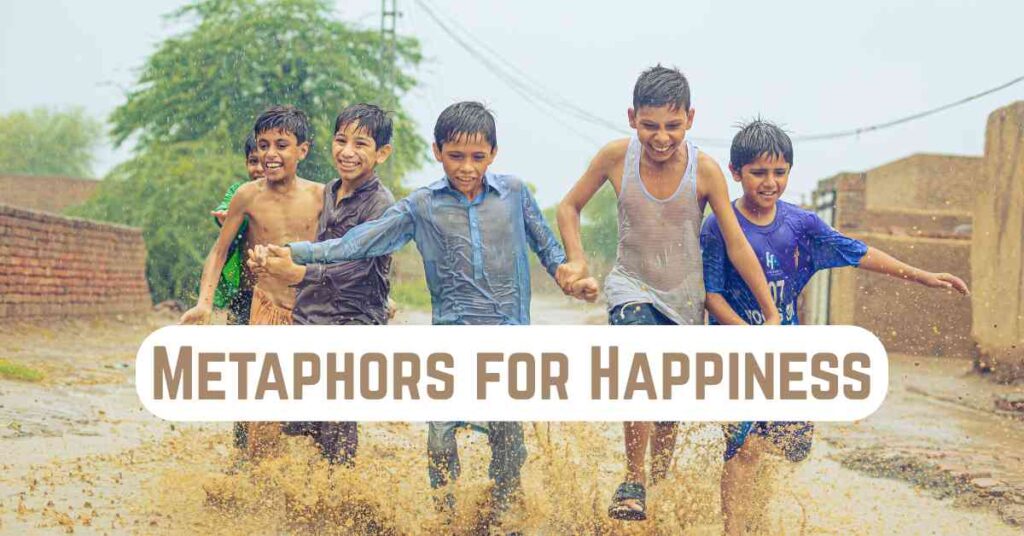

Understanding how we use metaphors to describe happiness can significantly enhance our comprehension of both language and emotion. Metaphors aren’t just literary devices; they are fundamental to how we conceptualize abstract concepts like happiness. This article delves into the rich world of metaphors for happiness, exploring their various types, structures, and usage. Whether you’re an English language learner, a seasoned writer, or simply curious about the power of language, this guide will provide you with valuable insights and practical examples to enrich your understanding and use of English.
By mastering the art of recognizing and using metaphors for happiness, you can communicate more effectively, express yourself more vividly, and gain a deeper appreciation for the nuances of the English language. This article is crafted to be accessible to learners of all levels, providing clear explanations, numerous examples, and engaging exercises to solidify your understanding.
Table of Contents
- Definition of Metaphors for Happiness
- Structural Breakdown
- Types and Categories of Happiness Metaphors
- Examples of Metaphors for Happiness
- Usage Rules for Metaphors of Happiness
- Common Mistakes When Using Happiness Metaphors
- Practice Exercises
- Advanced Topics
- Frequently Asked Questions
- Conclusion
Definition of Metaphors for Happiness
A metaphor, in its simplest form, is a figure of speech that directly compares two unrelated things, asserting that one is the other. It’s a powerful tool used to convey complex ideas and emotions in a vivid and relatable manner. When we talk about “metaphors for happiness,” we’re referring to the ways in which we use language to describe this abstract emotion by relating it to something more concrete and easily understood. These metaphors often draw on sensory experiences, physical states, or common objects to give happiness a tangible quality.
Metaphors for happiness fall under the broader category of conceptual metaphors, which are cognitive structures that shape how we think and reason. These metaphors are not merely decorative; they influence our understanding and experience of happiness. For example, if we conceptualize happiness as “light,” we might associate it with clarity, hope, and enlightenment. The function of these metaphors is to make the intangible emotion of happiness more accessible and comprehensible.
These metaphors are used in various contexts, from everyday conversation to literature, poetry, and even psychological studies. Understanding these metaphors allows us to better interpret and appreciate the richness of human expression and to gain insights into the cultural values and beliefs surrounding happiness.
Structural Breakdown
Metaphors for happiness, like all metaphors, consist of two key elements: the source domain and the target domain. The target domain is the abstract concept we’re trying to understand – in this case, happiness. The source domain is the concrete concept we’re using to understand it – such as light, warmth, or a journey. The metaphor works by mapping aspects of the source domain onto the target domain.
The basic structure can be represented as: HAPPINESS IS [SOURCE DOMAIN]. For instance, in the metaphor “Happiness is a ray of sunshine,” happiness (the target domain) is understood in terms of sunshine (the source domain). This mapping allows us to attribute qualities of sunshine, such as warmth, brightness, and positivity, to happiness.
The effectiveness of a metaphor depends on the relevance and clarity of the mapping between the source and target domains. A good metaphor for happiness should resonate with our experiences and evoke a vivid image or feeling that helps us better grasp the nature of happiness. Furthermore, cultural context plays a significant role; a metaphor that is effective in one culture may not be as resonant in another.
Types and Categories of Happiness Metaphors
Metaphors for happiness can be categorized based on the source domain they draw from. Here are some common categories:
Happiness is Light
This is one of the most prevalent metaphors, associating happiness with brightness, clarity, and enlightenment. Light dispels darkness, and similarly, happiness dispels negativity and sadness.
Happiness is Warmth
This metaphor connects happiness with feelings of comfort, security, and affection. Warmth is associated with positive emotions and a sense of well-being.
Happiness is Up
This spatial metaphor links happiness with elevation, high spirits, and a sense of upliftment. Feeling “up” or “on top of the world” are common expressions of happiness.
Happiness is a Journey
This metaphor frames happiness as a process or path, with its own challenges and rewards. It emphasizes the idea that happiness is not a destination but an ongoing experience.
Happiness is Possession
This category includes metaphors where happiness is something that can be held, owned, or acquired. It highlights the idea that happiness can be a tangible or intangible asset.
Happiness is a Physical Sensation
This type connects happiness with bodily experiences such as butterflies in the stomach, lightness, or a feeling of being energized.These metaphors emphasize the visceral and embodied nature of happiness
Happiness is Freedom
This metaphor relates happiness to liberation, independence, and the absence of constraints. It emphasizes the idea that happiness comes from being free to pursue one’s desires and live authentically.
Examples of Metaphors for Happiness
The following tables provide extensive examples of metaphors for happiness, categorized by the source domain they utilize. Each example illustrates how happiness is conceptualized through different lenses, offering a rich tapestry of linguistic expressions.
This first table focuses on the concept of happiness as light. Notice how each example uses words associated with brightness, clarity, and illumination to convey the feeling of happiness.
| Metaphor | Explanation |
|---|---|
| Happiness is a ray of sunshine. | Happiness brings warmth and light into one’s life. |
| Her laughter was a beacon of happiness. | Her laughter was a guiding light, showing happiness to others. |
| His smile lit up the room. | His smile made the room brighter and more cheerful. |
| She is the sunshine of my life. | She brings constant happiness and joy into my life. |
| Their joy was a bright flame. | Their joy was intense and radiant. |
| A spark of happiness ignited within her. | A small event caused a sudden burst of happiness. |
| The news cast a glow of happiness over them. | The news made them feel radiant with happiness. |
| Her eyes shone with happiness. | Her happiness was visible in her bright eyes. |
| His success illuminated his path to happiness. | His success made his journey to happiness clear and bright. |
| She basked in the light of his happiness. | She enjoyed and absorbed his happiness. |
| Their love was a guiding star of happiness. | Their love provided direction and hope for their happiness. |
| His presence was a burst of sunlight. | His presence brought immediate joy and happiness. |
| Her heart was filled with the glow of happiness. | She felt a warm and radiant happiness inside. |
| A glimmer of happiness appeared in his eyes. | A small sign of happiness became visible. |
| Their future was illuminated by happiness. | Their future looked bright and promising with happiness. |
| He radiated happiness like the sun. | He projected happiness to everyone around him. |
| Her happiness was a shining example to others. | Her happiness inspired others to find their own. |
| A flash of happiness crossed her face. | A brief moment of happiness was visible. |
| The day dawned with happiness. | The day started with a feeling of joy and optimism. |
| Her spirit glowed with happiness. | Her inner self was radiant with happiness. |
| Happiness is the sun after the rain. | Happiness follows difficult times, bringing light and warmth. |
| His words were a beam of happiness. | His words brought a clear and direct sense of joy. |
| She carries the light of happiness within her. | She has an inner source of joy that shines through. |
| Happiness is the spark that ignites life. | Happiness is the essential element that makes life vibrant. |
This second table explores happiness through the lens of warmth. The examples highlight feelings of comfort, security, and affection, all associated with warmth. These metaphors often evoke a sense of closeness and emotional well-being.
| Metaphor | Explanation |
|---|---|
| Happiness is a warm blanket on a cold day. | Happiness provides comfort and security. |
| Her love was a warm embrace. | Her love was comforting and affectionate. |
| His words were a warm fire on a winter’s night. | His words provided comfort and solace. |
| She felt a warmth of happiness in her heart. | She experienced a comforting and joyful feeling. |
| Their friendship was a source of warmth and happiness. | Their friendship provided comfort and joy. |
| He basked in the warm glow of her happiness. | He enjoyed and absorbed her comforting happiness. |
| Her smile was a warm ray of sunshine. | Her smile was both bright and comforting. |
| His laughter brought a warmth to the room. | His laughter made the room feel cozy and joyful. |
| She wrapped herself in the warmth of her memories. | She found comfort and happiness in her memories. |
| Their love was a warm, comforting fire. | Their love provided constant comfort and security. |
| He felt the warm embrace of happiness. | He experienced a comforting and joyful feeling. |
| Her presence was a warm, comforting presence. | Her presence brought comfort and happiness. |
| The warmth of happiness spread through her body. | She felt a comforting and joyful feeling throughout. |
| His heart was filled with the warmth of happiness. | He felt a comforting and joyful feeling inside. |
| She radiated the warmth of happiness. | She projected a comforting and joyful feeling. |
| Their home was filled with the warmth of happiness. | Their home felt cozy and joyful. |
| He found warmth and happiness in simple things. | He found comfort and joy in everyday moments. |
| Her kindness was a warm and comforting gesture. | Her kindness brought comfort and happiness to others. |
| The atmosphere was filled with the warmth of happiness. | The atmosphere felt cozy and joyful. |
| Their bond was a warm and comforting connection. | Their connection brought comfort and happiness. |
| Happiness is a warm cup of cocoa on a snowy day. | Happiness provides comfort and satisfaction in difficult times. |
| Her voice was a warm, soothing melody of happiness. | Her voice brought comfort and joy to those who heard it. |
| He nurtured the warmth of happiness within his soul. | He cultivated a comforting and joyful feeling deep inside. |
| She shared the warmth of her happiness with everyone she met. | She spread her comforting and joyful feeling to others. |
This third table presents metaphors that conceptualize happiness as “up.” These metaphors often use spatial language to describe happiness, associating it with feelings of elevation, high spirits, and a sense of upliftment. Consider how each example suggests a sense of rising above negativity.
| Metaphor | Explanation |
|---|---|
| Happiness lifted her spirits. | Happiness made her feel more cheerful and energetic. |
| He was on top of the world. | He felt extremely happy and successful. |
| Her joy soared to new heights. | Her joy reached an unprecedented level. |
| His happiness elevated his mood. | His happiness made him feel more positive. |
| She felt uplifted by his kindness. | His kindness made her feel happier and more positive. |
| Their spirits rose with happiness. | They felt happier and more energetic together. |
| He floated on a cloud of happiness. | He felt extremely happy and carefree. |
| Her heart leaped with joy. | She felt a sudden burst of happiness. |
| His mood climbed with each success. | His mood improved with every achievement. |
| She was flying high after the good news. | She felt extremely happy and excited. |
| Their happiness reached its peak. | They experienced the highest level of happiness. |
| He felt a surge of happiness. | He experienced a sudden and powerful feeling of happiness. |
| Her spirits were buoyed by the good news. | The good news made her feel happier and more optimistic. |
| His happiness knew no bounds. | His happiness was limitless and unbounded. |
| She was walking on air. | She felt extremely happy and lighthearted. |
| Their happiness was sky-high. | Their happiness was extremely great. |
| He felt elevated by her presence. | Her presence made him feel happier and more positive. |
| Her joy ascended with each passing day. | Her joy increased steadily over time. |
| His spirits ascended to new heights. | He felt happier and more energetic than ever before. |
| She felt a lift in her heart. | She experienced a feeling of happiness and joy. |
| Happiness is climbing the mountain of success. | Happiness comes from achieving goals and overcoming challenges. |
| His laughter was a rising tide of happiness. | His laughter steadily increased the feeling of joy. |
| She felt her spirits take flight with happiness. | She experienced a sense of freedom and joy. |
| Happiness is the upward spiral of positive energy. | Happiness is a growing and uplifting force in life. |
This fourth table illustrates the metaphor of happiness as a journey. These metaphors highlight that happiness is not a destination, but an ongoing process, with challenges and rewards along the way. They emphasize the importance of the path itself, rather than just the end goal.
| Metaphor | Explanation |
|---|---|
| Happiness is a journey, not a destination. | Happiness is found in the experiences along the way, not just the end result. |
| He was on the road to happiness. | He was actively pursuing happiness in his life. |
| She navigated the path to happiness with grace. | She overcame obstacles and found her way to happiness. |
| Their journey to happiness was filled with love and laughter. | They found happiness through their shared experiences. |
| He stumbled upon happiness unexpectedly. | He found happiness in an unforeseen way. |
| Her life was a quest for happiness. | She dedicated her life to finding happiness. |
| Their relationship was a journey towards happiness. | They worked together to build a happy relationship. |
| He found happiness by following his own path. | He achieved happiness by being true to himself. |
| She charted her course to happiness. | She planned and pursued her own happiness. |
| Their adventure led them to happiness. | They found happiness through exciting experiences. |
| He traveled the road of life seeking happiness. | He pursued happiness throughout his life’s experiences. |
| Her pursuit of happiness was a lifelong journey. | She dedicated her entire life to finding happiness. |
| Their voyage was one of discovery and happiness. | They found happiness through exploration and learning. |
| He embarked on a journey to find his happiness. | He started a quest to discover his own happiness. |
| She found happiness along the winding road of life. | She found happiness in the unexpected moments of life. |
| Their destination was a state of pure happiness. | They aimed to achieve a state of complete joy. |
| He navigated the ups and downs of the journey to happiness. | He managed the challenges and rewards on his path to happiness. |
| Her expedition led her to a treasure of happiness. | She found great joy through her adventurous experiences. |
| Their quest for happiness took them to new horizons. | They discovered new opportunities for happiness. |
| Happiness is like climbing a mountain; the view from the top is worth the effort. | Happiness is earned through hard work and perseverance. |
| Life’s journey is a pathway paved with moments of happiness. | Everyday experiences contribute to overall happiness. |
| The road to happiness is often bumpy, but the scenery is beautiful. | The challenges in life can be overcome with a positive perspective. |
| Every step forward is a step closer to happiness. | Progress, even small, contributes to overall well-being. |
This fifth table focuses on metaphors that describe happiness as something that can be possessed, held, or acquired. These examples highlight the idea that happiness can be a tangible or intangible asset, something to be cherished and protected.
| Metaphor | Explanation |
|---|---|
| Happiness is a treasure to be cherished. | Happiness is valuable and should be appreciated. |
| She held happiness in her heart. | She felt happiness deeply and cherished it. |
| He possessed the key to happiness. | He knew the secret or way to find happiness. |
| Their love was a source of shared happiness. | Their love provided mutual joy and contentment. |
| She captured a moment of pure happiness. | She experienced and preserved a perfect moment of joy. |
| He owned his happiness, despite the challenges. | He maintained his happiness regardless of difficulties. |
| Their home was filled with happiness. | Their home was a place of joy and contentment. |
| She carried happiness with her wherever she went. | She always maintained a joyful and positive attitude. |
| He guarded his happiness fiercely. | He protected his happiness from negativity. |
| Their memories were filled with happiness. | Their memories were a source of joy and nostalgia. |
| Happiness is a gift to be unwrapped each day. | Happiness is a daily opportunity to find joy. |
| She clutched onto her happiness tightly. | She held onto her joy with great determination. |
| He accumulated moments of happiness over time. | He built up a collection of joyful experiences. |
| Their lives were rich with happiness. | Their lives were full of joy and contentment. |
| She stored happiness in the chambers of her heart. | She kept her joy safe and secure within herself. |
| He invested in his happiness by pursuing his passions. | He put effort into activities that brought him joy. |
| Their relationship was built on a foundation of happiness. | Their bond was based on mutual joy and contentment. |
| She harvested happiness from the seeds of kindness. | She reaped joy from acts of generosity. |
| He collected moments of happiness like precious gems. | He treasured joyful experiences as valuable items. |
| Their family was a haven of happiness. | Their family provided a safe and joyful environment. |
| Happiness is the greatest wealth one can possess. | Happiness is more valuable than material possessions. |
| She carried the weight of happiness lightly in her heart. | She embraced her joy without feeling burdened by it. |
| He found happiness not in what he had, but in what he cherished. | True joy comes from appreciating what one already possesses. |
Usage Rules for Metaphors of Happiness
Using metaphors effectively requires a sensitivity to context and audience. Here are some guidelines:
- Clarity: The metaphor should be easily understood. Avoid obscure or overly complex comparisons.
- Relevance: The source domain should have a clear and logical connection to happiness.
- Originality: While common metaphors can be effective, using fresh and creative metaphors can make your writing more engaging.
- Consistency: Avoid mixing metaphors within the same sentence or paragraph, as this can create confusion.
- Cultural Sensitivity: Be aware that some metaphors may not translate well across cultures.
For example, saying “Happiness is a warm puppy” is a clear and relevant metaphor because puppies are commonly associated with joy and affection. However, saying “Happiness is a quantum entanglement” would be confusing for most people because the connection is not immediately apparent.
Common Mistakes When Using Happiness Metaphors
Even experienced writers can sometimes stumble when using metaphors. Here are some common mistakes to watch out for:
| Mistake | Incorrect Example | Correct Example |
|---|---|---|
| Mixed Metaphor | Her happiness was a ray of sunshine that climbed the corporate ladder. | Her happiness was a ray of sunshine. OR Her ambition helped her climb the corporate ladder. |
| Clichéd Metaphor | Happiness is a warm blanket. | Happiness is a cozy, hand-knitted scarf on a winter’s day. |
| Inappropriate Metaphor | Happiness is a sharp knife. | Happiness is a soothing balm. |
| Unclear Metaphor | Happiness is a verbose paradox. | Happiness is a quiet moment of reflection. |
A mixed metaphor combines two or more incompatible metaphors, creating a nonsensical image. A clichéd metaphor is an overused metaphor that has lost its impact. An inappropriate metaphor uses a source domain that is not logically connected to happiness. An unclear metaphor is difficult to understand due to vagueness or obscurity.
Practice Exercises
Test your understanding of metaphors for happiness with these exercises:
Exercise 1: Identify the Metaphor
Identify the metaphor for happiness in each sentence and explain its meaning.
| Question | Answer |
|---|---|
| 1. Her smile was a sunrise on a cloudy day. | Metaphor: Smile is a sunrise. Meaning: Her smile brought light and joy, dispelling sadness. |
| 2. Happiness is a gentle breeze on a summer afternoon. | Metaphor: Happiness is a gentle breeze. Meaning: Happiness is light, refreshing, and calming. |
| 3. He carried happiness like a precious jewel. | Metaphor: Happiness is a precious jewel. Meaning: He valued and protected his happiness. |
| 4. Their laughter was a melody of pure happiness. | Metaphor: Laughter is a melody. Meaning: Their laughter was harmonious and joyful. |
| 5. She danced through life on a wave of happiness. | Metaphor: Life is a wave. Meaning: She experienced life with joy and enthusiasm. |
| 6. Happiness is the warm embrace of a loved one. | Metaphor: Happiness is a warm embrace. Meaning: Happiness is comforting and loving. |
| 7. He found happiness in the simple moments of life. | Metaphor: Happiness is found (like an object). Meaning: Happiness can be discovered in everyday experiences. |
| 8. Her heart was a garden of happiness. | Metaphor: Heart is a garden. Meaning: Her heart was full of growing and blossoming happiness. |
| 9. Happiness is the sweet taste of success. | Metaphor: Happiness is a sweet taste. Meaning: Happiness is enjoyable and satisfying. |
| 10. He climbed the mountain of happiness with determination. | Metaphor: Happiness is climbing a mountain. Meaning: Achieving happiness requires effort and perseverance. |
Exercise 2: Complete the Metaphor
Complete the following sentences with an appropriate metaphor for happiness.
| Question | Answer |
|---|---|
| 1. Her happiness was __________. | Her happiness was a bright, shining star. |
| 2. To him, happiness is __________. | To him, happiness is a quiet walk in the woods. |
| 3. Their love was __________. | Their love was a warm, crackling fireplace on a cold night. |
| 4. She felt happiness __________. | She felt happiness bubbling up inside her like a refreshing spring. |
| 5. For them, happiness is __________. | For them, happiness is a shared adventure. |
| 6. His laughter was __________. | His laughter was a cascade of pure joy. |
| 7. Her smile is __________. | Her smile is a beacon of hope. |
| 8. Their friendship is __________. | Their friendship is a sturdy bridge to happiness. |
| 9. He found happiness __________. | He found happiness blooming in unexpected places. |
| 10. Her life is __________. | Her life is a tapestry woven with threads of happiness. |
Exercise 3: Create Your Own Metaphor
Write your own original metaphor for happiness and explain its meaning in a short paragraph.
Example: Happiness is a well-tended garden. Just as a garden requires constant care and attention to thrive, so too does happiness. We must nurture our minds, bodies, and relationships to cultivate a life filled with joy and contentment. Neglecting these aspects can lead to weeds of negativity and sorrow, choking the flowers of happiness.
Advanced Topics
For advanced learners, consider exploring the following:
- The role of culture in shaping metaphors for happiness. Different cultures may have different conceptualizations of happiness, which are reflected in their metaphors.
- The use of extended metaphors for happiness in literature. Some authors use a single metaphor throughout an entire work to explore the complexities of happiness.
- The connection between metaphors for happiness and positive psychology. Positive psychology studies the science of happiness and well-being, and metaphors can provide valuable insights into this field.
- The impact of metaphors on our perception and experience of happiness. Metaphors are not just linguistic devices; they can influence how we think and feel about happiness.
Frequently Asked Questions
Here are some frequently asked questions about metaphors for happiness:
- What is the difference between a metaphor and a simile?
A metaphor directly equates two things (e.g., “Happiness is sunshine”), while a simile uses “like” or “as” to make a comparison (e.g., “Happiness is like sunshine”).
- Why are metaphors important for understanding abstract concepts like happiness?
Metaphors make abstract concepts more concrete and relatable by connecting them to familiar experiences and objects. This helps us to grasp their meaning more easily.
- Can metaphors for happiness vary across cultures?
Yes, cultural values and beliefs can influence the metaphors used to describe happiness. For example, some cultures may emphasize communal happiness, while others prioritize individual happiness.
- How can I improve my ability to create effective metaphors for happiness?
Practice observing the world around you and making connections between different things. Read widely and pay attention to how other writers use metaphors. Experiment with different source domains to find fresh and original comparisons.
- What are some common pitfalls to avoid when using metaphors?
Avoid using mixed metaphors, clichéd metaphors, inappropriate metaphors, and unclear metaphors. Ensure that your metaphors are clear, relevant, and consistent.
- How do metaphors influence our perception of happiness?
Metaphors can shape our understanding of happiness by highlighting certain aspects and downplaying others. For example, if we think of happiness as a journey, we may focus on the process of pursuing happiness rather than the end result.
- Are there any metaphors for happiness that are universally understood?
Some metaphors, such as “Happiness is light” or “Happiness is warmth,” are widely understood across cultures due to the universal human experiences associated with light and warmth.
- How can understanding metaphors for happiness help me in my writing?
Understanding metaphors can help you to express your ideas more vividly and effectively, engage your readers, and add depth and nuance to your writing.
Conclusion
Metaphors for happiness are powerful tools that shape our understanding and expression of this fundamental human emotion. By recognizing and utilizing these metaphors effectively, we can enrich our communication, deepen our appreciation for language, and gain valuable insights into the cultural and psychological dimensions of happiness. Mastering the art of metaphor is an ongoing journey, but the rewards are well worth the effort.
Continue to explore and experiment with different metaphors for happiness, and pay attention to how they resonate with you and others. Remember that the best metaphors are those that are both clear and evocative, capturing the essence of happiness in a fresh and memorable way. With practice and attention, you can unlock the full potential of metaphors to enhance your understanding and experience of happiness.