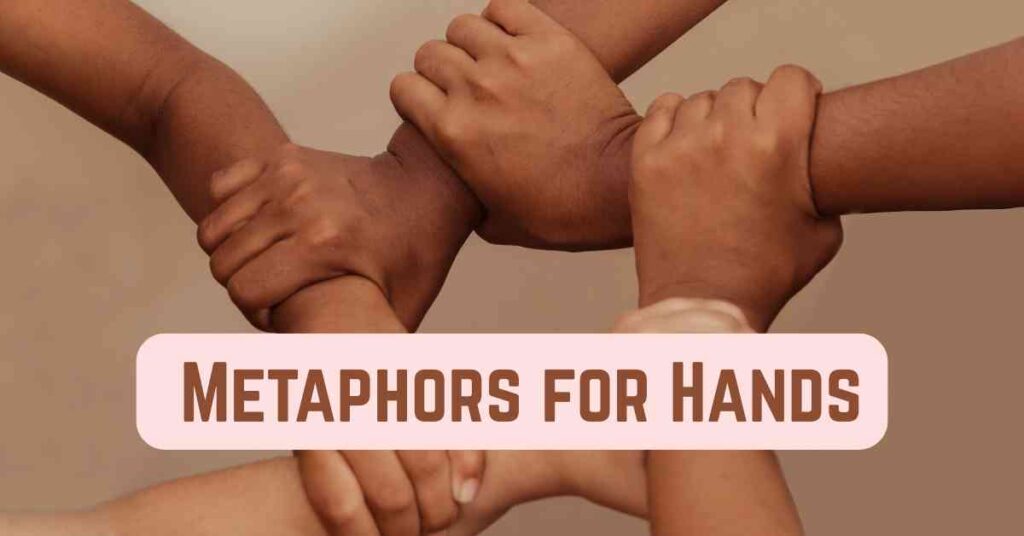

Metaphors are powerful tools in the English language, allowing us to convey complex ideas and emotions in vivid and relatable ways. One of the most frequently used subjects for metaphorical expression is the human body, and among these, hands stand out prominently. Understanding the various metaphors for hands enhances our comprehension of literature, everyday conversations, and even our own creative writing. This article explores the multifaceted world of hand metaphors, providing definitions, examples, usage rules, and practice exercises to help you master this fascinating linguistic device. Whether you are an English language learner, a student of literature, or simply someone interested in improving your communication skills, this guide will offer valuable insights and practical knowledge.
Table of Contents
- Introduction
- Definition: Metaphors for Hands
- Structural Breakdown of Hand Metaphors
- Types and Categories of Hand Metaphors
- Examples of Hand Metaphors
- Usage Rules for Hand Metaphors
- Common Mistakes with Hand Metaphors
- Practice Exercises
- Advanced Topics: Nuances and Subtleties
- Frequently Asked Questions (FAQ)
- Conclusion
Definition: Metaphors for Hands
A metaphor is a figure of speech that directly compares two unlike things without using “like” or “as.” When we talk about “metaphors for hands,” we’re referring to instances where the word “hand” or actions associated with hands are used to represent something else, typically an abstract concept, a quality, or a different kind of action. These metaphors leverage our understanding of hands as tools, instruments, and expressions of human capability to convey meaning in a more evocative and concise manner.
The function of hand metaphors is to enrich language, add layers of meaning, and create vivid imagery. They allow writers and speakers to connect with their audience on a deeper level by tapping into universal experiences and associations related to the use of hands. These metaphors operate in various contexts, from literature and poetry to everyday conversations and business communications. Understanding them is crucial for effective communication and interpretation.
Structural Breakdown of Hand Metaphors
The structure of a hand metaphor typically involves the following elements:
- The Source Domain: This is the literal meaning associated with hands – their physical capabilities, actions they perform, and the roles they play in our daily lives.
- The Target Domain: This is the abstract concept or idea that the metaphor is intended to represent.
- The Connection: This is the underlying similarity or shared characteristic between the source and target domains that makes the metaphor effective.
For example, in the phrase “He has a heavy hand in the company’s decisions,” the source domain is the physical act of applying pressure with one’s hand. The target domain is the level of influence or control someone has. The connection is the idea of forceful or significant impact. This structure allows for a concise and powerful expression of influence.
Types and Categories of Hand Metaphors
Hand metaphors can be categorized based on the specific aspect of hands that they emphasize and the type of meaning they convey.
Hands as Instruments of Action
These metaphors focus on the physical actions that hands perform, using them to represent broader activities or processes. They highlight the instrumental nature of hands, extending their actions to other domains.
Hands as Symbols of Skill and Craft
These metaphors draw on the idea that hands are essential for creating and manipulating objects, representing skill, expertise, and craftsmanship. The dexterity and precision associated with skilled hands are transferred to the target domain.
Hands Expressing Emotions
Hands can also be used to express emotions, either through gestures or actions. These metaphors leverage the emotional associations of hand movements to convey feelings and attitudes. A clenched fist, for example, symbolizes anger or determination.
Hands as Symbols of Control and Power
The ability to hold, grasp, and manipulate objects makes hands potent symbols of control and power. These metaphors use hands to represent authority, influence, and the ability to direct events. The phrase “in his hands” often implies responsibility and control.
Hands as Symbols of Assistance and Support
Hands are often associated with giving, helping, and supporting others. These metaphors use the image of hands offering assistance to represent acts of kindness, generosity, and solidarity. The phrase “lend a hand” is a classic example.
Examples of Hand Metaphors
The following tables provide extensive examples of hand metaphors, categorized by type. Each example is accompanied by an explanation of its meaning and the connection between the source and target domains.
Action Metaphors Examples
This table illustrates how hands are used metaphorically to describe general actions or activities, emphasizing their instrumental role.
| Metaphor | Meaning | Explanation |
|---|---|---|
| He has a hand in every project. | He is involved in every project. | “Hand” represents involvement or participation. |
| She had a hand in the decision-making process. | She influenced the decision-making process. | “Hand” signifies influence or impact. |
| The company extended its hand into new markets. | The company expanded into new markets. | “Hand” symbolizes outreach and expansion. |
| He played a hand in the negotiations. | He participated in the negotiations. | “Hand” suggests involvement or contribution. |
| The government lent a hand to the struggling industry. | The government provided assistance to the struggling industry. | “Hand” represents aid or support. |
| She keeps her hand in the business. | She maintains her involvement in the business. | “Hand” signifies continued participation. |
| He showed his hand too early. | He revealed his plans too early. | “Hand” represents one’s intentions or strategies. |
| The artist’s hand is evident in the painting. | The artist’s style is noticeable in the painting. | “Hand” signifies the artist’s unique touch. |
| He took matters into his own hands. | He took control of the situation himself. | “Hands” represent personal control and initiative. |
| The situation is in good hands. | The situation is being handled by capable people. | “Hands” signify capable management and care. |
| He wrung his hands in despair. | He expressed his despair through a physical gesture. | “Hands” represent a physical manifestation of emotion. |
| She washed her hands of the whole affair. | She disassociated herself from the whole affair. | “Hands” signify involvement and responsibility, which she is rejecting. |
| He has blood on his hands. | He is responsible for someone’s death or harm. | “Hands” symbolize guilt and accountability. |
| He gave her a free hand to decorate the room. | He gave her complete freedom to decorate the room. | “Hand” represents control and authority, which he is relinquishing. |
| The project is still in its early stages. | The project is still in the initial phases. | “Hands” represent initial effort. |
| They joined hands in solidarity. | They united in solidarity. | “Hands” represent unity and support. |
| The evidence fell into the wrong hands. | The evidence ended up with the wrong people. | “Hands” represent possession and control. |
| He has his hands full with the new baby. | He is very busy with the new baby. | “Hands” represent tasks and responsibilities. |
| She handled the situation with grace. | She managed the situation skillfully. | “Hands” represent management and skill. |
| The future is in our hands. | We have the power to shape the future. | “Hands” represent power and responsibility. |
Skill and Craft Metaphors Examples
This table explores how hands symbolize skill, expertise, and the ability to create and manipulate things effectively.
| Metaphor | Meaning | Explanation |
|---|---|---|
| He has a steady hand as a surgeon. | He is skilled and precise as a surgeon. | “Hand” represents skill and precision. |
| She has a deft hand with pottery. | She is skilled and graceful with pottery. | “Hand” signifies skill and artistry. |
| The chef has a light hand with spices. | The chef uses spices delicately and skillfully. | “Hand” represents skill and control. |
| He showed his hand as a master craftsman. | He demonstrated his skill as a master craftsman. | “Hand” signifies expertise and craftsmanship. |
| She has a good hand at gardening. | She is skilled at gardening. | “Hand” represents gardening skill. |
| He has a sure hand in negotiations. | He is confident and skilled in negotiations. | “Hand” signifies confidence and skill. |
| She has a delicate hand when painting. | She paints with precision and care. | “Hand” represents precision. |
| He applied a firm hand to the problem. | He addressed the problem decisively. | “Hand” signifies a decisive approach. |
| She has a free hand in designing the project. | She has the freedom to design the project as she wishes. | “Hand” represents freedom and control. |
| He has a heavy hand in editing the manuscript. | He makes significant and possibly excessive changes to the manuscript. | “Hand” signifies significant impact. |
| She has a quick hand at knitting. | She knits quickly and efficiently. | “Hand” represents speed and efficiency. |
| He has a skilled hand in carpentry. | He is skillful in carpentry. | “Hand” represents expertise. |
| She has a gentle hand when dealing with children. | She is kind and patient when dealing with children. | “Hand” signifies gentleness and care. |
| He has a practiced hand in playing the piano. | He is skilled at playing the piano due to practice. | “Hand” represents practiced skill. |
| She has a light hand in applying makeup. | She applies makeup subtly and skillfully. | “Hand” signifies subtlety and skill. |
| He has a steady hand when drawing. | He draws with precision and control. | “Hand” represents precision and control. |
| She has a firm hand in managing the team. | She manages the team effectively and decisively. | “Hand” signifies effective management. |
| He has a creative hand in designing websites. | He is creative in designing websites. | “Hand” represents creativity. |
| She has a fine hand in writing poetry. | She writes poetry with great skill and artistry. | “Hand” signifies artistry. |
| He has a deft hand at solving complex problems. | He solves complex problems skillfully and efficiently. | “Hand” represents problem-solving skill. |
Emotional Metaphors Examples
This table demonstrates how hands are used to express emotions, either through symbolic gestures or actions associated with emotional states.
| Metaphor | Meaning | Explanation |
|---|---|---|
| His hands trembled with fear. | He was very afraid. | “Trembled hands” represent fear and anxiety. |
| She wrung her hands in despair. | She was extremely distressed. | “Wringing hands” signifies anxiety and helplessness. |
| He clenched his fists in anger. | He was very angry. | “Clenched fists” symbolize anger and aggression. |
| She reached out her hand in friendship. | She offered friendship. | “Reaching out a hand” represents offering kindness. |
| He extended a hand of forgiveness. | He offered forgiveness. | “Extending a hand” symbolizes forgiveness and reconciliation. |
| Her hands flew to her mouth in shock. | She was very shocked. | “Hands to mouth” signify surprise. |
| He held her hand tightly for comfort. | He comforted her. | “Holding hands” represents support and comfort. |
| She covered her face with her hands in shame. | She was ashamed. | “Covering face” signifies shame. |
| He threw up his hands in frustration. | He was frustrated and gave up. | “Throwing up hands” represents frustration. |
| She kept her hands to herself. | She remained calm and didn’t interfere. | “Keeping hands to oneself” signifies restraint. |
| He washed his hands of the situation. | He disassociated himself from the situation. | “Washing hands” signifies disassociation and guilt. |
| Her hands were tied. | She was powerless to act. | “Tied hands” represent helplessness. |
| He had blood on his hands. | He was responsible for harm. | “Blood on hands” signifies guilt. |
| She gave him a warm hand. | She gave him a warm applause. | “Warm hand” represents enthusiasm. |
| He played into her hands. | He unintentionally helped her. | “Played into hands” signifies unintended help. |
| She had the upper hand. | She had the advantage. | “Upper hand” represents advantage. |
| He showed his hand. | He revealed his intentions. | “Showed his hand” signifies revealed intentions. |
| She had a hand in it. | She was involved. | “Had a hand in it” signifies involvement. |
| He tried his hand at painting. | He attempted to paint. | “Tried his hand” signifies attempt. |
| The situation is out of my hands. | I cannot control the situation. | “Out of my hands” signifies lack of control. |
Control and Power Metaphors Examples
This table illustrates how the concept of hands is used to represent power, authority, and the ability to control or influence situations and people.
| Metaphor | Meaning | Explanation |
|---|---|---|
| The company is in his hands. | He is in control of the company. | “Hands” represent control and management. |
| She has the upper hand in the negotiation. | She has the advantage in the negotiation. | “Upper hand” signifies dominance and control. |
| He held the power in his hands. | He had the authority and control. | “Hands” represent authority and power. |
| The fate of the project is in their hands. | They are responsible for the project’s success. | “Hands” signify responsibility and control over the outcome. |
| She had a firm hand in managing the team. | She managed the team effectively and decisively. | “Hand” represents control and effective management. |
| He ruled with an iron hand. | He governed strictly and severely. | “Iron hand” signifies strict and harsh control. |
| She keeps a tight hand on the budget. | She manages the budget very carefully. | “Tight hand” represents careful control. |
| The decision is out of my hands. | I do not have the authority to make the decision. | “Hands” signify the ability to control decisions. |
| He has a free hand to design the project. | He has complete freedom to design the project. | “Hand” represents freedom and control. |
| She has a heavy hand in the company’s policies. | She has a significant influence on the company’s policies. | “Hand” signifies influence and control. |
| The future is in our hands. | We have the power to shape the future. | “Hands” represent power and agency. |
| He took matters into his own hands. | He took control of the situation himself. | “Hands” signify personal control and initiative. |
| She played into his hands. | She unintentionally helped him gain control. | “Hands” represent control that is gained. |
| The project fell into the wrong hands. | The project ended up under the control of the wrong people. | “Hands” signify possession and control by inappropriate individuals. |
| He had his hands tied by the regulations. | He was restricted by the regulations. | “Hands tied” represent restricted control. |
| She gave him a free hand to manage the department. | She allowed him complete freedom to manage the department. | “Hand” represents freedom and control. |
| He kept his hand in the business. | He maintained his control and involvement in the business. | “Hand” signifies continued control. |
| She ruled the country with a velvet glove. | She ruled the country gently, but with firm control. | “Velvet glove” signifies gentle yet firm control. |
| He had the situation well in hand. | He had the situation under control. | “Well in hand” signifies effective control. |
| The responsibility lies in your hands. | You are responsible for it. | “Hands” represent responsibility and control. |
Helping Metaphors Examples
This table demonstrates how hands are used to symbolize assistance, support, and acts of kindness and generosity.
| Metaphor | Meaning | Explanation |
|---|---|---|
| Can you lend me a hand with this? | Can you help me with this? | “Hand” represents assistance. |
| He extended a helping hand to the needy. | He offered assistance to the needy. | “Helping hand” signifies aid and support. |
| She gave him a hand up in his career. | She helped him advance in his career. | “Hand up” represents support and advancement. |
| The community joined hands to rebuild the park. | The community united to rebuild the park. | “Joined hands” signifies unity and cooperation. |
| He reached out a hand to comfort her. | He offered her comfort and support. | “Reaching out a hand” signifies comfort and empathy. |
| She gave a hand to the new employee. | She assisted and guided the new employee. | “Gave a hand” represents assistance and guidance. |
| He lent a hand to the struggling business. | He provided support to the struggling business. | “Lent a hand” signifies support and aid. |
| She offered a hand of friendship. | She offered friendship and support. | “Hand of friendship” represents goodwill and support. |
| He reached out his hand to pull her up. | He helped her rise and succeed. | “Hand to pull her up” signifies assistance and elevation. |
| She gave a generous hand to the charity. | She donated generously to the charity. | “Generous hand” represents generous giving. |
| He offered a hand to help with the chores. | He offered assistance with the chores. | “Hand to help” signifies willingness to assist. |
| She gave a helping hand to the elderly neighbor. | She provided assistance to the elderly neighbor. | “Helping hand” signifies support and care. |
| He lent a hand to the community project. | He supported the community project. | “Lent a hand” signifies community support. |
| She gave a hand to organize the event. | She assisted in organizing the event. | “Gave a hand” represents assistance and organization. |
| He offered a hand to clean up the mess. | He offered assistance in cleaning up the mess. | “Hand to clean up” signifies willingness to assist. |
| She gave a hand to pack the boxes. | She assisted in packing the boxes. | “Gave a hand” represents assistance. |
| He lent a hand to move the furniture. | He helped move the furniture. | “Lent a hand” signifies physical assistance. |
| She offered a hand of support during the crisis. | She provided support during the crisis. | “Hand of support” represents emotional support. |
| He gave a hand to write the report. | He assisted in writing the report. | “Gave a hand” represents writing assistance. |
| She lent a hand to plan the party. | She helped plan the party. | “Lent a hand” signifies planning assistance. |
Usage Rules for Hand Metaphors
Using hand metaphors effectively requires an understanding of the following rules:
- Context is Key: The meaning of a hand metaphor depends heavily on the context in which it is used. Consider the surrounding words and the overall situation to ensure that the metaphor is interpreted as intended.
- Clarity: While metaphors add richness to language, they should not be so obscure that they confuse the reader. Ensure that the connection between the source and target domains is clear.
- Consistency: Avoid mixing metaphors or using them in a way that creates conflicting images. Maintain a consistent tone and imagery throughout your writing.
- Appropriateness: Choose metaphors that are appropriate for your audience and the purpose of your communication. Some metaphors may be more suitable for informal settings, while others are better suited for formal contexts.
- Originality: While common hand metaphors are useful, try to create your own original metaphors to add a unique flair to your writing.
Common Mistakes with Hand Metaphors
Here are some common mistakes to avoid when using hand metaphors:
| Incorrect | Correct | Explanation |
|---|---|---|
| He has his hands full of water. | He has his hands full with responsibilities. | The literal image doesn’t connect to the intended meaning. |
| She gave him a foot instead of a hand. | She gave him a hand. | Using the wrong body part changes the meaning. |
| The company extended its leg into new markets. | The company extended its hand into new markets. | Using “leg” doesn’t convey the idea of outreach as effectively. |
| He played a head in the negotiations. | He played a hand in the negotiations. | “Head” doesn’t signify involvement as well as “hand”. |
| He washed his face of the whole affair. | He washed his hands of the whole affair. | Washing face doesn’t signify disassociation. |
Practice Exercises
Test your understanding of hand metaphors with the following exercises. Identify the meaning of each metaphor and categorize it based on the types discussed earlier.
Exercise 1: Identifying Metaphorical Meaning
| Question | Answer |
|---|---|
| 1. The project is in good hands. | The project is being handled by capable people. |
| 2. Can you give me a hand with this heavy box? | Can you help me with this heavy box? |
| 3. She has a steady hand as a surgeon. | She is skilled and precise as a surgeon. |
| 4. He clenched his fists in anger. | He was very angry. |
| 5. The company extended its hand into new markets. | The company expanded into new markets. |
| 6. The evidence fell into the wrong hands. | The evidence ended up with the wrong people. |
| 7. He has blood on his hands. | He is responsible for someone’s death or harm. |
| 8. She has the upper hand in the negotiation. | She has the advantage in the negotiation. |
| 9. He took matters into his own hands. | He took control of the situation himself. |
| 10. She washed her hands of the whole affair. | She disassociated herself from the whole affair. |
Exercise 2: Categorizing Hand Metaphors
| Question | Category |
|---|---|
| 1. He has a hand in every project. | Action Metaphor |
| 2. She has a deft hand with pottery. | Skill Metaphor |
| 3. His hands trembled with fear. | Emotional Metaphor |
| 4. The company is in his hands. | Control Metaphor |
| 5. Can you lend me a hand with this? | Helping Metaphor |
| 6. He has a heavy hand in the company’s policies. | Control Metaphor |
| 7. She has a good hand at gardening. | Skill Metaphor |
| 8. He wrung his hands in despair. | Emotional Metaphor |
| 9. The government lent a hand to the struggling industry. | Helping Metaphor |
| 10. He showed his hand too early. | Action Metaphor |
Exercise 3: Fill in the Blanks
| Question | Answer |
|---|---|
| 1. The future is in our __________. | hands |
| 2. She has a __________ hand when painting. | delicate |
| 3. He took matters into his own ___________. | hands |
| 4. Can you __________ me a hand with this? | lend |
| 5. The project is in good ___________. | hands |
| 6. She has the __________ hand in the negotiation. | upper |
| 7. He washed his ________ of the whole affair. | hands |
| 8. He ruled with an ________ hand. | iron |
| 9. He extended a __________ hand to the needy. | helping |
| 10. She had her _______ tied by the regulations. | hands |
Advanced Topics: Nuances and Subtleties
At a more advanced level, understanding the cultural and historical contexts of hand metaphors becomes crucial. Different cultures may have unique associations with hands, leading to variations in metaphorical meanings. Furthermore, the evolution of language can influence how hand metaphors are interpreted over time. Exploring these nuances requires a deeper engagement with literature, history, and cultural studies.
Additionally, consider the use of hand metaphors in specific fields, such as business and politics. In these contexts, hand metaphors often convey ideas of control, power, and strategic maneuvering. Analyzing how these metaphors are employed can provide insights into the underlying dynamics of these fields.
Frequently Asked Questions (FAQ)
- What is the difference between a metaphor and a simile?
A metaphor directly compares two unlike things without using “like” or “as,” while a simile uses “like” or “as” to make the comparison. For example, “He is a lion” is a metaphor, while “He is like a lion” is a simile.
- Why are hand metaphors so common in English?
Hands are fundamental tools for human interaction and action, making them a natural source of metaphorical expression. Their versatility and association with various activities make them ideal for representing abstract concepts.
- How can I improve my understanding of hand metaphors?
Read widely, pay attention to how hands are used metaphorically in literature and everyday conversations, and practice creating your own metaphors. The more you engage with the language, the better you will understand its nuances.
- Are there any hand metaphors that should be avoided?
Avoid metaphors that are clichéd, confusing, or culturally insensitive. Choose metaphors that are clear, appropriate, and add value to your communication.
- How do hand metaphors vary across different cultures?
Different cultures may have unique associations with hands, leading to variations in metaphorical meanings. Researching cultural contexts can provide a deeper understanding of these variations.
- Can hand gestures be considered metaphors?
Yes, hand gestures can function as metaphors by representing abstract ideas or emotions through physical movements. For example, a raised hand can symbolize authority or a beckoning hand can symbolize invitation.
- How can I use hand metaphors in my own writing?
Start by identifying the concept you want to convey and then brainstorm actions or qualities associated with hands that could represent that concept. Experiment with different metaphors and choose the one that best captures your intended meaning.
- What role do hand metaphors play in literature?
Hand metaphors add depth and richness to literary works by creating vivid imagery, conveying complex emotions, and exploring themes of control, power, and human connection. They enhance the reader’s understanding and engagement with the text.
Conclusion
Mastering the use of metaphors for hands is a valuable skill for anyone seeking to improve their understanding and expression in English. By recognizing the different types of hand metaphors
, understanding their structural components, and practicing their usage, you can enhance your communication skills and add depth to your writing. Whether you’re analyzing literature, crafting a speech, or simply engaging in everyday conversation, a keen awareness of hand metaphors will enrich your understanding and expression. Remember to consider context, clarity, and appropriateness when using these metaphors, and strive for originality to make your communication truly stand out. The power is now in your hands to use these metaphors effectively and creatively.