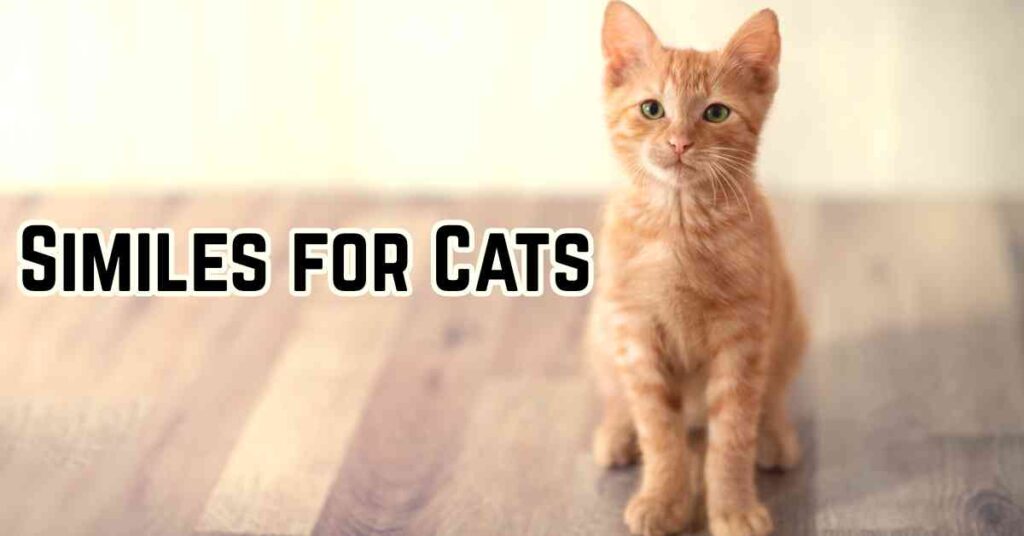

Similes are powerful tools in the English language, allowing us to create vivid comparisons and enhance our writing. When it comes to describing the unique characteristics and behaviors of cats, similes can be particularly effective. This article will explore the world of similes for cats, providing a comprehensive guide to understanding, identifying, and using them correctly. Whether you’re a student, writer, or simply a cat lover, this guide will help you master the art of crafting compelling similes to capture the essence of feline charm.
Table of Contents
- Introduction
- Definition of Simile
- Structural Breakdown of Similes
- Types of Similes
- Examples of Similes for Cats
- Usage Rules for Similes
- Common Mistakes with Similes
- Practice Exercises
- Advanced Topics
- FAQ
- Conclusion
Definition of Simile
A simile is a figure of speech that compares two unlike things using the words “like” or “as.” Similes are used to create vivid imagery and enhance understanding by drawing a parallel between something familiar and something less known. In essence, a simile states that one thing is similar to another, highlighting specific qualities or characteristics they share. This comparison helps the reader or listener visualize and comprehend the subject more effectively.
Similes are classified as a type of figurative language, specifically belonging to the category of comparisons. Their primary function is to add descriptive depth and emotional impact to writing or speech. They are commonly found in literature, poetry, and everyday conversation, serving to enrich our understanding and appreciation of the world around us. The context in which a simile is used significantly impacts its effectiveness; a well-chosen simile can transform a mundane description into something memorable and engaging.
Structural Breakdown of Similes
The basic structure of a simile includes three key components:
- The Subject: The thing being described or compared. In the context of this article, the subject will always be a cat or a characteristic of a cat.
- The Comparison Word: Either “like” or “as.” These words explicitly signal that a comparison is being made.
- The Object of Comparison: The thing to which the subject is being compared. This object should share a relevant characteristic with the subject to make the simile effective.
The general formula for a simile is: Subject + Comparison Word + Object of Comparison. For example, “The cat is as quiet as a mouse.” Here, the cat is the subject, “as” is the comparison word, and “a mouse” is the object of comparison. This structure provides a framework for creating clear and understandable comparisons.
Variations in this structure can occur, but the core elements remain the same. For instance, you might find similes with slightly altered wording, such as “He purrs like a well-oiled machine.” The key is that the comparison between the subject and object is explicitly stated using “like” or “as.” Understanding this structural foundation is crucial for both identifying and crafting effective similes.
Types of Similes
While all similes share the same basic structure, they can be categorized based on the type of comparison they make or the effect they create. Here are a few common types:
Descriptive Similes
These similes focus on describing the physical attributes or qualities of the subject. They aim to create a vivid image in the reader’s mind by comparing the subject to something with similar characteristics. For instance, “Her fur was as white as snow” is a descriptive simile that emphasizes the cat’s fur color.
Behavioral Similes
Behavioral similes describe the actions, habits, or mannerisms of the subject. They highlight specific behaviors by comparing them to those of something else. An example would be, “The cat stalked its prey like a seasoned hunter,” which illustrates the cat’s hunting skills.
Emotional Similes
Emotional similes convey the feelings or emotional state of the subject. They use comparisons to express the emotional impact or inner experience of the subject. For example, “He was as content as a cat in a sunbeam” suggests a feeling of deep satisfaction and comfort.
Exaggerated Similes (Hyperbole)
These similes use exaggeration to emphasize a particular characteristic. While all similes involve some degree of comparison, exaggerated similes take it to the extreme for dramatic effect. An example is, “The cat slept like a log,” implying a very deep and undisturbed sleep.
Examples of Similes for Cats
This section provides a comprehensive collection of similes specifically tailored to describing cats. These examples are organized into categories to help you understand the different ways similes can be used to capture the essence of feline characteristics.
Similes Describing Appearance
These similes focus on the physical attributes of cats, such as their fur, eyes, and overall build. They aim to create a visual image of the cat’s appearance by comparing it to something familiar and descriptive. The table below provides 30 examples of similes used to describe a cat’s appearance.
| Simile | Explanation |
|---|---|
| Her fur was as black as midnight. | Emphasizes the deep, dark color of the cat’s fur. |
| His eyes were like emeralds, shining brightly. | Compares the cat’s eyes to precious green gems. |
| She moved as gracefully as a panther. | Highlights the cat’s elegant and fluid movements. |
| He was as fluffy as a cloud. | Describes the cat’s soft and voluminous fur. |
| Her tail swayed like a metronome. | Compares the rhythmic movement of the tail to a musical instrument. |
| His coat was as smooth as silk. | Highlights the soft and luxurious texture of the cat’s fur. |
| She was as petite as a kitten. | Emphasizes the cat’s small and delicate size. |
| He looked as regal as a lion. | Compares the cat’s dignified and majestic appearance to a lion. |
| Her whiskers were like delicate antennae. | Describes the fine and sensitive nature of the cat’s whiskers. |
| His paws were as soft as velvet. | Highlights the gentle and plush texture of the cat’s paws. |
| She was as sleek as a sports car. | Compares the cat’s streamlined and polished appearance to a vehicle. |
| He was as round as a beach ball. | Describes the cat’s plump and spherical shape. |
| Her ears were as pointed as arrows. | Highlights the sharp and angular shape of the cat’s ears. |
| His fur shimmered like gold. | Compares the reflective quality of the cat’s fur to the precious metal. |
| She was as white as a ghost. | Emphasizes the pale and ethereal color of the cat’s fur. |
| He was as striped as a zebra. | Describes the cat’s distinctive striped pattern. |
| Her eyes sparkled like diamonds. | Compares the brilliant and radiant quality of the cat’s eyes to gems. |
| He was as long as a loaf of bread. | Describes the cat’s elongated body shape. |
| Her nose was as pink as a rose petal. | Highlights the delicate and rosy color of the cat’s nose. |
| He was as furry as a teddy bear. | Compares the cat’s soft and cuddly fur to a toy. |
| She was as slender as a willow tree. | Emphasizes the cat’s slim and graceful build. |
| He was as spotted as a leopard. | Describes the cat’s distinctive spotted pattern. |
| Her claws were as sharp as needles. | Highlights the pointed and piercing nature of the cat’s claws. |
| He was as solid as a rock. | Describes the cat’s sturdy and robust physique. |
| Her tail was as bushy as a squirrel’s. | Compares the full and voluminous nature of the cat’s tail to a squirrel. |
| He was as orange as a pumpkin. | Emphasizes the vibrant and warm color of the cat’s fur. |
| Her coat was as patchy as a quilt. | Describes the cat’s fur with irregular patterns and colors. |
| He was as muscular as a gymnast. | Compares the cat’s strong and toned physique to an athlete. |
| Her face was as expressive as a human’s. | Highlights the cat’s ability to convey emotions through facial expressions. |
| He was as elegant as a statue. | Compares the cat’s refined and graceful posture to a work of art. |
Similes Describing Behavior
These similes focus on the actions, habits, and mannerisms of cats. They aim to capture the unique behavioral traits of cats by comparing them to familiar actions or behaviors. The table below presents 30 examples of similes used to describe a cat’s behavior.
| Simile | Explanation |
|---|---|
| He slept like a log. | Describes the cat’s deep and undisturbed sleep. |
| She stalked her prey like a seasoned hunter. | Highlights the cat’s skillful and experienced hunting behavior. |
| He purred like a motor. | Compares the cat’s continuous and soothing purr to a machine. |
| She played with the toy like a child. | Illustrates the cat’s playful and enthusiastic interaction with toys. |
| He watched the birds like a hawk. | Compares the cat’s intense and focused observation to a bird of prey. |
| She pounced like a spring. | Highlights the cat’s sudden and energetic leaps. |
| He ate his food like a vacuum cleaner. | Describes the cat’s rapid and thorough consumption of food. |
| She stretched like a rubber band. | Compares the cat’s flexible and extended stretching to an elastic material. |
| He groomed himself like a perfectionist. | Illustrates the cat’s meticulous and thorough self-cleaning habits. |
| She climbed the curtains like a monkey. | Compares the cat’s agile and adept climbing to a primate. |
| He batted at the dust bunnies like a boxer. | Highlights the cat’s playful and energetic swiping motions. |
| She hid like a ninja. | Compares the cat’s stealth and concealment to a skilled warrior. |
| He begged for treats like a puppy. | Illustrates the cat’s persistent and endearing requests for food. |
| She explored the house like an adventurer. | Compares the cat’s curious and thorough exploration to an explorer. |
| He napped like a king. | Highlights the cat’s relaxed and luxurious sleep. |
| She jumped like an acrobat. | Compares the cat’s agile and impressive leaps to a performer. |
| He scratched the post like a guitarist. | Illustrates the cat’s rhythmic and purposeful scratching motions. |
| She purred when petted like an engine. | Compares the cat’s contented purr to a mechanical sound. |
| He ignored commands like a stubborn mule. | Illustrates the cat’s independent and unresponsive behavior. |
| She played with yarn like a conductor leading an orchestra. | Compares the cat’s playful manipulation of yarn to a conductor’s movements. |
| He chased shadows like a madman. | Highlights the cat’s erratic and unpredictable pursuit of light. |
| She watched the rain like a philosopher. | Compares the cat’s contemplative and observant behavior to a thinker. |
| He begged for attention like an orphan. | Illustrates the cat’s endearing and persistent requests for affection. |
| She chased her tail like a dizzy dancer. | Compares the cat’s circular pursuit to a spinning performer. |
| He kneaded the blanket like a baker. | Highlights the cat’s rhythmic and comforting paw movements. |
| She greeted visitors like a celebrity. | Compares the cat’s confident and charming interaction with guests to a star. |
| He investigated new objects like a detective. | Illustrates the cat’s curious and thorough examination of unfamiliar items. |
| She sharpened her claws like a knife grinder. | Compares the cat’s purposeful claw sharpening to a craftsman’s work. |
| He perched on high places like a gargoyle. | Illustrates the cat’s preference for elevated positions. |
| She adapted to new environments like a chameleon. | Compares the cat’s ability to adjust to changes to an adaptable reptile. |
Similes Describing Personality
These similes focus on the character traits, temperament, and emotional qualities of cats. They aim to capture the unique personality of a cat by comparing it to familiar human or animal characteristics. The table below offers 20 examples of similes used to describe a cat’s personality.
| Simile | Explanation |
|---|---|
| He was as independent as a lone wolf. | Highlights the cat’s self-reliant and solitary nature. |
| She was as curious as a child. | Compares the cat’s inquisitive and exploratory nature to a young person. |
| He was as aloof as a celebrity. | Illustrates the cat’s detached and reserved demeanor. |
| She was as playful as a kitten. | Compares the cat’s energetic and joyful nature to a young cat. |
| He was as grumpy as an old man. | Highlights the cat’s irritable and cantankerous disposition. |
| She was as affectionate as a teddy bear. | Compares the cat’s loving and cuddly nature to a toy. |
| He was as clever as a fox. | Illustrates the cat’s intelligent and cunning nature. |
| She was as gentle as a lamb. | Compares the cat’s mild and peaceful nature to a young sheep. |
| He was as brave as a lion. | Highlights the cat’s courageous and fearless nature. |
| She was as mysterious as a sphinx. | Compares the cat’s enigmatic and inscrutable nature to a monument. |
| He was as loyal as a dog. | Illustrates the cat’s faithful and devoted nature. |
| She was as sweet as honey. | Compares the cat’s charming and delightful nature to a sweet substance. |
| He was as cautious as a surgeon. | Highlights the cat’s careful and deliberate approach to new situations. |
| She was as graceful as a ballerina. | Compares the cat’s elegant and fluid movements to a dancer. |
| He was as stubborn as a mule. | Illustrates the cat’s unyielding and resistant nature. |
| She was as comforting as a warm fire. | Compares the cat’s soothing and relaxing presence to a heat source. |
| He was as regal as a pharaoh. | Highlights the cat’s dignified and commanding presence. |
| She was as mischievous as a gremlin. | Compares the cat’s playful and troublesome behavior to a mythical creature. |
| He was as watchful as a sentinel. | Illustrates the cat’s vigilant and observant nature. |
| She was as adaptable as water. | Compares the cat’s ability to adjust to changes to a fluid substance. |
Similes Describing Movement
These similes describe how cats move, capturing their agility, grace, and speed. The comparisons often involve animals known for similar movements or objects that resemble the way cats navigate their environment. The table below contains 20 examples of similes that illustrate a cat’s movement.
| Simile | Explanation |
|---|---|
| He moved like a shadow. | Describes the cat’s silent and stealthy movement. |
| She jumped like a coiled spring. | Highlights the cat’s explosive and powerful leaps. |
| He climbed like a squirrel up a tree. | Compares the cat’s agile and adept climbing skills to a squirrel. |
| She darted like a hummingbird. | Illustrates the cat’s quick and erratic movements. |
| He stalked like a panther in the jungle. | Compares the cat’s patient and stealthy hunting movements to a panther. |
| She slinked like a snake through the grass. | Highlights the cat’s smooth and sinuous movements. |
| He ran like the wind. | Describes the cat’s incredible speed. |
| She floated like a feather in the breeze. | Compares the cat’s light and graceful movements to a feather. |
| He leaped like a salmon upstream. | Illustrates the cat’s determined and powerful jumps. |
| She balanced like a tightrope walker. | Compares the cat’s steady and precise movements to a performer. |
| He pounced like a tiger on its prey. | Highlights the cat’s sudden and aggressive hunting movements. |
| She crept like a mouse across the floor. | Compares the cat’s quiet and cautious movements to a rodent. |
| He glided like a skater on ice. | Illustrates the cat’s smooth and effortless movements. |
| She tumbled like a leaf in the fall. | Compares the cat’s playful and erratic movements to a leaf. |
| He scrambled like a rock climber up the bookshelf. | Highlights the cat’s agile and determined climbing skills. |
| She spun like a top when playing. | Compares the cat’s whirling and energetic movements to a toy. |
| He dashed like a bullet from a gun. | Illustrates the cat’s rapid and sudden movements. |
| She swayed like a palm tree in the storm. | Compares the cat’s fluid and rhythmic movements to a tree. |
| He hopped like a rabbit in the garden. | Highlights the cat’s bouncy and playful movements. |
| She bounded like a deer through the meadow. | Compares the cat’s graceful and powerful leaps to a deer. |
Similes Describing Sounds
These similes capture the various sounds cats make, such as purring, meowing, hissing, and growling. The comparisons often involve objects or animals that produce similar sounds, helping to create a vivid auditory image. The table below provides 20 examples of similes that illustrate the sounds a cat makes.
| Simile | Explanation |
|---|---|
| He purred like a well-oiled machine. | Compares the cat’s smooth and continuous purr to a mechanical sound. |
| She meowed like a crying baby. | Highlights the cat’s plaintive and attention-seeking vocalizations. |
| He hissed like a snake when startled. | Compares the cat’s defensive sound to a reptile. |
| She growled like a dog protecting its bone. | Illustrates the cat’s aggressive and territorial vocalizations. |
| He chirped like a bird when hunting. | Compares the cat’s soft and high-pitched sounds to a bird. |
| She yowled like a banshee in the night. | Highlights the cat’s loud and mournful vocalizations. |
| He caterwauled like a lovesick teenager. | Compares the cat’s drawn-out and wailing sounds to a person. |
| She trilled like a songbird when happy. | Illustrates the cat’s melodious and cheerful vocalizations. |
| He snored like a lumberjack after a long day. | Compares the cat’s loud and rhythmic breathing to a person. |
| She whispered like a secret when content. | Highlights the cat’s soft and gentle vocalizations. |
| He screeched like a rusty hinge. | Compares the cat’s high-pitched and grating sound to a mechanical object. |
| She cooed like a dove when cuddling. | Illustrates the cat’s gentle and soothing sounds. |
| He grumbled like an old engine starting up. | Compares the cat’s low and rumbling sounds to a machine. |
| She chattered like teeth in the cold. | Highlights the cat’s rapid and repetitive sounds. |
| He roared like a lion when threatened. | Compares the cat’s loud and powerful sound to a predator. |
| She murmured like a stream when relaxed. | Illustrates the cat’s soft and continuous sounds. |
| He rasped like sandpaper when grooming. | Compares the cat’s rough and abrasive sound to a material. |
| She squeaked like a toy mouse when surprised. | Highlights the cat’s high-pitched and sudden vocalizations. |
| He groaned like a zombie when waking up. | Compares the cat’s low and mournful sound to a creature. |
| She hummed like a bee when contented. | Illustrates the cat’s soft and vibrating sounds. |
Usage Rules for Similes
Using similes effectively involves understanding a few key rules to ensure clarity and impact:
- Choose Relevant Comparisons: The object of comparison should share a clear and relevant characteristic with the subject. The comparison should make sense and enhance understanding.
- Avoid Clichés: Overused similes can sound unoriginal and weaken your writing. Strive for fresh and creative comparisons.
- Maintain Clarity: The simile should be easy to understand. Avoid obscure or overly complex comparisons that might confuse the reader.
- Use Sparingly: While similes can enhance your writing, overuse can make it feel forced and unnatural. Use them strategically to add emphasis and imagery.
- Consider the Context: The appropriateness of a simile depends on the context of your writing. Consider the tone, audience, and purpose of your message.
Exceptions and Special Cases: While the basic structure of a simile is straightforward, there can be variations in wording and emphasis. For example, you might use a simile to create irony or humor. In such cases, the comparison might be unexpected or even absurd, but it should still serve a purpose within the context of your writing. The key is to ensure that the simile, even if unconventional, contributes to the overall message and effect you’re trying to achieve.
Common Mistakes with Similes
Several common mistakes can undermine the effectiveness of similes. Being aware of these errors can help you avoid them in your own writing.
- Using Metaphors Instead of Similes: A metaphor states that something is something else, while a simile states that something is like or as something else. Confusing the two can lead to grammatically incorrect and unclear comparisons.
- Creating Illogical Comparisons: The comparison should be logical and make sense. Comparing a cat to something that has no relevant similarity will only confuse the reader.
- Overusing Clichés: Relying on overused similes can make your writing sound unoriginal and uninspired. Strive for fresh and creative comparisons.
- Using Too Many Similes: Overdoing it with similes can make your writing feel forced and unnatural. Use them sparingly and strategically.
Correct vs. Incorrect Examples:
| Incorrect | Correct | Explanation |
|---|---|---|
| The cat is a ninja. | The cat is like a ninja. | Incorrect: This is a metaphor, not a simile. Correct: This is a simile using “like.” |
| He was as tall as a television. | He was as tall as a skyscraper. | Incorrect: The comparison is illogical. Correct: The comparison is logical and relevant. |
| She was as cute as a button, as happy as a clam, and as busy as a bee. | She was as radiant as the morning sun. | Incorrect: This overuses clichés. Correct: This uses a fresh and original comparison. |
| Every sentence was like a simile. | Her description included a simile, “He was as stealthy as a shadow.” | Incorrect: This overuses similes. Correct: This uses a simile strategically. |
Practice Exercises
Test your understanding of similes with these practice exercises. Each exercise focuses on different aspects of simile usage, from identifying similes to creating your own.
Exercise 1: Identifying Similes
Instructions: Identify the similes in the following sentences.
| No. | Sentence | Answer |
|---|---|---|
| 1 | The cat’s fur was as soft as velvet. | as soft as velvet |
| 2 | He stalked his prey like a seasoned hunter. | like a seasoned hunter |
| 3 | Her eyes were emeralds, shining brightly. | (No simile) |
| 4 | The kitten played like a child with its toys. | like a child |
| 5 | He slept like a log after a long day. | like a log |
| 6 | She purred; it was a soothing sound. | (No simile) |
| 7 | He was as independent as a lone wolf. | as independent as a lone wolf |
| 8 | The cat moved with the grace of a dancer. | (No simile) |
| 9 | She was as quiet as a mouse. | as quiet as a mouse |
| 10 | He ate his food like a vacuum cleaner. | like a vacuum cleaner |
Exercise 2: Completing Similes
Instructions: Complete the following similes with an appropriate comparison.
| No. | Sentence | Answer |
|---|---|---|
| 1 | The cat’s eyes shone like __________. | stars |
| 2 | He was as fluffy as __________. | a cloud |
| 3 | She moved as gracefully as __________. | a panther |
| 4 | His fur was as black as __________. | midnight |
| 5 | She was as petite as __________. | a kitten |
| 6 | He slept like __________. | a log |
| 7 | She was as curious as __________. | a child |
| 8 | His purr was as loud as __________. | a motor |
| 9 | She was as gentle as __________. | a lamb |
| 10 | He climbed as quickly as __________. | a monkey |
Exercise 3: Creating Similes
Instructions: Create your own similes to describe the following characteristics of a cat.
| No. | Characteristic | Answer |
|---|---|---|
| 1 | The cat’s agility | He moved like a shadow. |
| 2 | The cat’s curiosity | She was as curious as a child. |
| 3 | The cat’s independence | He was as independent as a lone wolf. |
| 4 | The cat’s affection | She was as affectionate as a teddy bear. |
| 5 | The cat’s sleep | He slept like a log. |
| 6 | The cat’s stealth | She moved as silently as a ghost. |
| 7 | The cat’s eyes | His eyes sparkled like diamonds. |
| 8 | The cat’s fur | Her fur was as soft as silk. |
| 9 | The cat’s claws | His claws were as sharp as needles. |
| 10 | The cat’s appetite | She ate like a horse. |
Advanced Topics
For advanced learners, exploring the nuances and complexities of similes can further enhance their understanding and usage. This includes delving into the use of similes in literature, understanding the cultural context of comparisons, and experimenting with unconventional or metaphorical similes.
Similes in Literature: Literary works often employ similes to create rich imagery, convey complex emotions, and develop deeper themes. Analyzing how
literary masters use similes can provide valuable insights into their craft. For example, Shakespeare’s “Shall I compare thee to a summer’s day?” is a famous simile that explores themes of beauty and transience. Similarly, understanding how similes are used in different genres, such as poetry, novels, and plays, can help you appreciate their versatility and impact.
Cultural Context of Comparisons: The effectiveness of a simile can be influenced by cultural context. Comparisons that resonate in one culture may not have the same impact in another. For example, a simile referencing snow might not be effective in a tropical region where snow is unfamiliar. Being mindful of cultural differences can help you create similes that are relevant and meaningful to your target audience. Additionally, exploring similes in different languages can broaden your understanding of how cultures perceive and describe the world.
Unconventional or Metaphorical Similes: While traditional similes involve straightforward comparisons, experimenting with unconventional or metaphorical similes can add depth and complexity to your writing. These similes may involve abstract concepts or unexpected pairings, challenging the reader to think more deeply about the comparison. For instance, “His silence was like a heavy blanket” uses a metaphorical comparison to convey a sense of oppression or discomfort. The key is to ensure that the unconventional simile still serves a clear purpose and enhances the overall message.
FAQ
What is the difference between a simile and a metaphor?
A simile uses “like” or “as” to compare two things, while a metaphor directly equates one thing to another without using those words. For example, “He is like a lion” (simile) vs. “He is a lion” (metaphor).
Why are similes useful in writing?
Similes enhance writing by creating vivid imagery, making descriptions more engaging, and helping readers understand complex ideas through familiar comparisons.
How can I avoid using clichés in my similes?
To avoid clichés, focus on creating original comparisons that are specific to the subject you are describing. Think about unique qualities and find fresh ways to relate them to something else.
Can a simile be too complex?
Yes, a simile can be too complex if it uses obscure or confusing comparisons that the reader cannot easily understand. Aim for clarity and relevance in your comparisons.
Is it okay to use multiple similes in one paragraph?
While it’s acceptable to use multiple similes, use them sparingly to avoid overwhelming the reader. Make sure each simile adds value and doesn’t feel forced.
How do I choose the right object of comparison for a simile?
Choose an object of comparison that shares a relevant characteristic with the subject you are describing. The comparison should make sense and enhance the reader’s understanding.
Are similes only for descriptive writing?
No, similes can be used in various types of writing, including narrative, persuasive, and expository writing. They can add depth, emotion, and clarity to your message.
Conclusion
Similes are a valuable tool for enhancing descriptive writing and communication. By understanding their structure, types, and usage rules, you can effectively employ similes to create vivid imagery and engaging comparisons. Whether you’re describing a cat’s appearance, behavior, personality, movement, or sounds, similes can help you capture the essence of feline characteristics in a memorable way. As you continue to practice and experiment with similes, you’ll develop a greater appreciation for their power and versatility in the English language. Remember to avoid common mistakes, strive for originality, and consider the context of your writing to create similes that resonate with your audience and elevate your message.