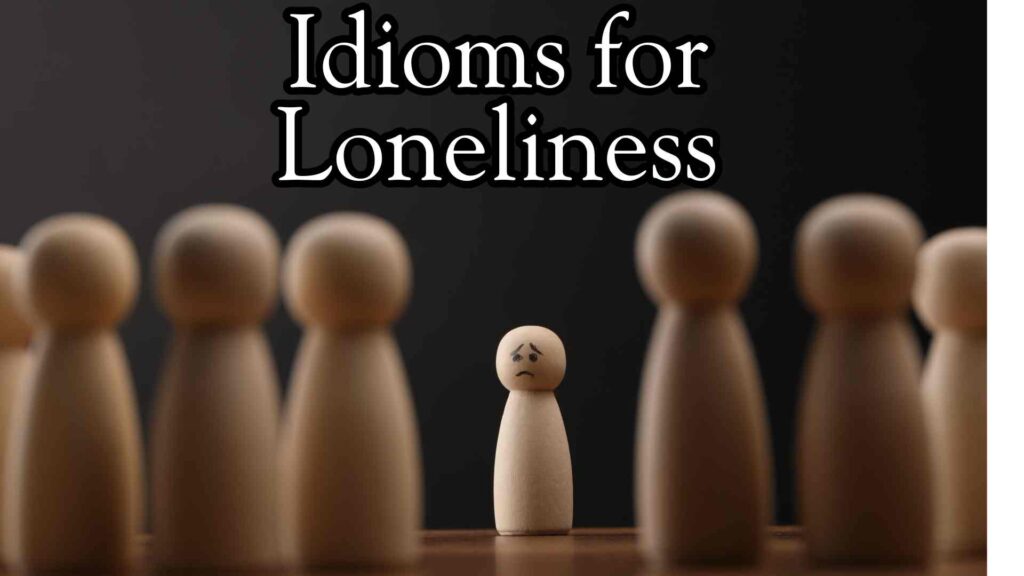

Loneliness is a universal human experience, and the English language offers a rich tapestry of idioms to express this feeling. Understanding these idioms not only enhances your vocabulary but also provides a deeper insight into the nuances of emotional expression. This article explores a wide range of idioms related to loneliness, their meanings, origins, and how to use them effectively. Whether you’re an English language learner or a native speaker, this guide will help you articulate feelings of isolation with greater precision and color.
Table of Contents
- Introduction
- Definition of Idioms for Loneliness
- Structural Breakdown of Loneliness Idioms
- Types and Categories of Loneliness Idioms
- Examples of Loneliness Idioms
- Usage Rules for Loneliness Idioms
- Common Mistakes When Using Loneliness Idioms
- Practice Exercises
- Advanced Topics
- Frequently Asked Questions
- Conclusion
Introduction
Idioms are phrases or expressions whose meanings cannot be understood from the literal meanings of the individual words. They are a crucial part of mastering English, particularly when discussing abstract concepts like emotions. Loneliness, a complex and deeply personal emotion, is often best conveyed through colorful and evocative idioms. This article aims to provide a comprehensive overview of idioms related to loneliness, making it easier for learners to understand and use them correctly. By the end of this guide, you’ll be equipped with a broader vocabulary to express feelings of isolation, solitude, and being alone.
Definition of Idioms for Loneliness
Idioms for loneliness are expressions that describe the state of feeling isolated, alone, or disconnected from others. These idioms often use figurative language to convey the emotional weight of loneliness, going beyond simple descriptions of being physically alone. Understanding these idioms requires recognizing that their meaning is not derived from the literal definitions of the words they contain. Instead, the entire phrase carries a specific, often culturally influenced, meaning. These phrases enrich communication by adding depth and emotional resonance to discussions about feelings of isolation and solitude.
Classification of Loneliness Idioms
Loneliness idioms can be classified based on the imagery they evoke or the aspect of loneliness they emphasize. Some focus on physical isolation, while others highlight emotional disconnection. Others might depict a feeling of being unwanted or excluded. Here’s a breakdown:
- Physical Isolation: These idioms describe being physically separated from others.
- Emotional Disconnection: These idioms describe feeling emotionally distant from others, even when physically present.
- Social Exclusion: These idioms describe feeling excluded or unwanted by a group or society.
- General Loneliness: These idioms broadly describe feelings of loneliness without specifying the cause.
Function of Loneliness Idioms
The primary function of loneliness idioms is to express the feeling of being alone or isolated in a vivid and relatable way. They also serve to:
- Add Emotional Depth: Idioms can convey the intensity of loneliness more effectively than literal language.
- Enhance Communication: Using idioms makes your language more engaging and expressive.
- Reflect Cultural Understanding: Idioms often reflect cultural perspectives on loneliness and isolation.
Contexts for Using Loneliness Idioms
Loneliness idioms can be used in various contexts, including:
- Personal Conversations: Describing your own feelings of loneliness to friends or family.
- Literature and Writing: Adding emotional depth to characters or narratives.
- Academic Discussions: Analyzing themes of isolation in literature or social sciences.
- Everyday Communication: Expressing empathy or understanding towards someone experiencing loneliness.
Structural Breakdown of Loneliness Idioms
Loneliness idioms, like other idioms, don’t follow standard grammatical rules for interpreting their meaning. Their structure is often fixed, meaning the words cannot be changed or rearranged without altering or destroying the idiom’s meaning. The individual words contribute little to the overall meaning, which is derived from the phrase as a whole. They often employ metaphors, similes, and other figures of speech to convey the feeling of loneliness.
Many idioms related to loneliness use prepositions to indicate a sense of separation or exclusion, such as “left out” or “on the fringes.” Others use verbs that suggest isolation, such as “languish” or “pine.” Adjectives like “forlorn” and “isolated” frequently appear in these expressions to emphasize the state of being alone.
Types and Categories of Loneliness Idioms
Loneliness idioms can be categorized based on the specific aspect of loneliness they represent:
Physical Isolation
These idioms describe situations where someone is physically alone or separated from others.
- All alone in the world: Feeling like you have no one to rely on.
- In the middle of nowhere: Being in a remote, isolated place.
- Miles away: Being far from others, both physically and emotionally.
Emotional Disconnection
These idioms describe feeling emotionally distant from others, even in their presence.
- A world apart: Feeling very different or distant from someone.
- Like a fish out of water: Feeling uncomfortable and out of place in a new environment.
- Feeling blue: Feeling sad or depressed, often due to loneliness.
Social Exclusion
These idioms describe feeling excluded or unwanted by a group or society.
- Left out in the cold: Being ignored or excluded by others.
- On the fringes: Being on the edge of a group or society, not fully accepted.
- An outcast: Someone who is rejected or excluded by society.
General Loneliness
These idioms broadly describe feelings of loneliness without specifying the cause.
- Down in the dumps: Feeling sad and without energy.
- Languishing: Suffering from prolonged loneliness or neglect.
- Pining away: Longing for someone or something that is absent.
Examples of Loneliness Idioms
The following tables provide a variety of examples of loneliness idioms, categorized by their specific meaning.
Physical Isolation Idioms
This table lists idioms that describe situations where someone is physically alone or separated from others. Each idiom is provided with its meaning and example sentences to illustrate its usage.
| Idiom | Meaning | Example Sentence |
|---|---|---|
| All alone in the world | Feeling like you have no one to rely on. | After her family passed away, she felt all alone in the world. |
| In the middle of nowhere | Being in a remote, isolated place. | They decided to build their cabin in the middle of nowhere, far from the city. |
| Miles away | Being far from others, both physically and emotionally. | He felt miles away from his friends after moving to a new country. |
| Out in the sticks | Living in a rural, isolated area. | They moved out in the sticks to escape the hustle and bustle of city life, but she felt very lonely. |
| A lone wolf | Someone who prefers to be alone and independent. | He’s always been a lone wolf, preferring his own company to social gatherings. |
| A one-man band | Someone who does everything themselves, often due to lack of support. | As a freelancer, she was a one-man band, handling all aspects of her business. |
| Lost in the wilderness | Feeling isolated and disconnected from society. | After losing his job, he felt lost in the wilderness, unsure of where to turn. |
| Isolated incident | An event that occurs alone and is not part of a larger pattern. | The robbery was considered an isolated incident and not indicative of a rise in crime. |
| Keep to oneself | To avoid socializing and stay alone. | He tends to keep to himself and rarely participates in group activities. |
| Live like a hermit | To live a solitary life, away from society. | After retiring, he decided to live like a hermit in a cabin in the woods. |
| Off the beaten path | In a remote or secluded location. | They found a hidden beach off the beaten path where they could be alone. |
| Secluded spot | A place that is private and away from others. | They found a secluded spot in the park to have a picnic. |
| Solitary confinement | Being kept alone in a prison cell as a punishment. | He was placed in solitary confinement for violating prison rules. |
| Stand alone | To be separate and independent from others. | The new building will stand alone without any connecting structures. |
| Stuck in the boondocks | Being in a remote, rural area. | They felt stuck in the boondocks with nothing to do. |
| Alone at the top | Feeling isolated despite achieving great success. | She realized that being CEO meant being alone at the top, with few people understanding her challenges. |
| A world of one’s own | Living in a private, solitary world. | He often retreated into a world of his own, filled with books and imagination. |
| Castle in the air | Living in a dream world, detached from reality. | She spent her days building castles in the air, dreaming of a life that would never be. |
| Cut off from the world | Being isolated and unable to communicate with others. | The storm left the village cut off from the world, without power or phone service. |
| In the back of beyond | In a very remote and isolated place. | They decided to open a restaurant in the back of beyond, hoping to attract tourists. |
| Off the grid | Living independently without relying on public utilities or social structures. | They chose to live off the grid, generating their own electricity and growing their own food. |
| Out of touch | Lacking contact with or awareness of current events or trends. | He felt out of touch with his old friends after moving to a new city. |
| Remote location | A place that is far away from other people and services. | The research station was located in a remote location in Antarctica. |
| Secluded retreat | A place that is private and peaceful, away from others. | They booked a secluded retreat in the mountains to escape the stress of city life. |
Emotional Disconnection Idioms
This table provides idioms that express feelings of emotional distance and disconnection, even when physically around others. The table includes the meaning and example sentences for each idiom.
| Idiom | Meaning | Example Sentence |
|---|---|---|
| A world apart | Feeling very different or distant from someone. | Even though they were married, they felt like they lived a world apart. |
| Like a fish out of water | Feeling uncomfortable and out of place in a new environment. | Moving to the big city made him feel like a fish out of water. |
| Feeling blue | Feeling sad or depressed, often due to loneliness. | She’s been feeling blue since her best friend moved away. |
| At arm’s length | Maintaining a distance from someone, either physically or emotionally. | She kept him at arm’s length, afraid of getting hurt again. |
| Behind a mask | Hiding one’s true feelings or emotions. | He always wore a smile, but he was behind a mask, hiding his sadness. |
| Cold shoulder | Ignoring someone or treating them in an unfriendly way. | She gave him the cold shoulder after their argument. |
| Cut off ties | Ending a relationship or connection with someone. | He decided to cut off ties with his toxic friends. |
| Drift apart | Gradually becoming less close to someone over time. | They started to drift apart after going to different colleges. |
| Empty nest | The feeling of loneliness when children leave home. | She was experiencing empty nest syndrome after her youngest child moved out. |
| Glass wall | A barrier that prevents genuine connection or understanding. | There was a glass wall between them, preventing them from truly connecting. |
| Heart of stone | Lacking empathy or compassion. | He seemed to have a heart of stone, showing no sympathy for others. |
| Keep one’s distance | To avoid becoming too close or involved with someone. | She decided to keep her distance from him to avoid getting hurt. |
| Lost connection | Feeling disconnected from someone or something. | He felt he had lost connection with his family after moving abroad. |
| Miles apart | Being emotionally distant from someone. | They were miles apart emotionally, despite living under the same roof. |
| On different wavelengths | Not understanding or agreeing with someone. | They were always on different wavelengths and struggled to communicate effectively. |
| A closed book | Someone who doesn’t easily reveal their thoughts or feelings. | She was a closed book, making it difficult to know what she was thinking. |
| A hollow feeling | A sense of emptiness or sadness. | She had a hollow feeling after her best friend moved away. |
| A lump in one’s throat | A feeling of sadness or emotion that makes it difficult to speak. | He had a lump in his throat as he said goodbye to his family. |
| A sinking feeling | A sense of dread or unease. | She had a sinking feeling that something bad was about to happen. |
| A void in one’s life | A feeling of emptiness or lack of something important. | There was a void in her life after her children left home. |
| Behind closed doors | Happening privately and hidden from public view. | They argued behind closed doors, trying to keep their problems secret. |
| Build a wall | To create an emotional barrier to protect oneself. | She had built a wall around her heart after being hurt in the past. |
| Carry a heavy heart | To feel deeply sad or burdened by sorrow. | He carried a heavy heart after the loss of his loved one. |
| Distance oneself | To create emotional or physical separation from someone. | She decided to distance herself from the toxic environment at work. |
| Emotionally unavailable | Unable or unwilling to form emotional connections. | He was emotionally unavailable and struggled to form meaningful relationships. |
Social Exclusion Idioms
This table highlights idioms that describe feelings of being excluded or unwanted by a group or society. Meanings and example sentences are provided.
| Idiom | Meaning | Example Sentence |
|---|---|---|
| Left out in the cold | Being ignored or excluded by others. | She felt left out in the cold when her friends went to the party without her. |
| On the fringes | Being on the edge of a group or society, not fully accepted. | He was always on the fringes of the group, never quite fitting in. |
| An outcast | Someone who is rejected or excluded by society. | He was treated as an outcast because of his unconventional beliefs. |
| Black sheep | A member of a family or group who is considered different or disgraceful. | He was the black sheep of the family because he chose a different career path. |
| Bottom of the pile | Being in the lowest position or rank. | New recruits often start at the bottom of the pile in the company. |
| Cast aside | To be rejected or abandoned. | She felt cast aside after being replaced by a younger colleague. |
| Excluded from the loop | Not being included in important information or decisions. | She felt excluded from the loop when her colleagues made plans without her. |
| Frozen out | Being deliberately excluded from a group or activity. | He was frozen out by his teammates after making a mistake. |
| Out of favor | No longer being liked or supported by someone. | He fell out of favor with the boss after disagreeing with his decisions. |
| Pariah status | Being treated as an outcast or undesirable person. | The country was given pariah status due to its human rights violations. |
| Second fiddle | Playing a supporting role to someone else, often feeling undervalued. | She always played second fiddle to her more ambitious sister. |
| Shut out | Being prevented from participating or being involved. | He felt shut out of the conversation because he didn’t know the topic. |
| Sit on the sidelines | Not being actively involved in something. | He had to sit on the sidelines due to his injury. |
| Social pariah | Someone who is rejected by society. | He became a social pariah after being accused of dishonesty. |
| The odd one out | Someone who is different from the rest of the group. | She always felt like the odd one out in her family. |
| A square peg in a round hole | Someone who doesn’t fit in a particular situation or environment. | He felt like a square peg in a round hole in his new job. |
| Banished from one’s sight | Being forced to leave or stay away from someone. | He was banished from her sight after betraying her trust. |
| Cut off from society | Being isolated from the rest of the world. | The remote island was cut off from society for months due to the storm. |
| Exiled from one’s land | Being forced to leave one’s home country. | He was exiled from his land for speaking out against the government. |
| In the wilderness | Being in a state of confusion or uncertainty. | He was wandering in the wilderness after losing his job and his home. |
| Left behind | Being abandoned or forgotten by others. | She felt left behind when her friends moved on with their lives. |
| Out in the cold | Being ignored or excluded from something. | He was out in the cold when the company made decisions without consulting him. |
| Relegated to the sidelines | Being moved to a less important position. | She was relegated to the sidelines after the new manager took over. |
| Sent to Coventry | Being deliberately ignored by a group of people. | He was sent to Coventry by his colleagues after making a controversial statement. |
| The black sheep of the family | The one who is different and doesn’t fit in. | She was always the black sheep of the family because she had different values. |
General Loneliness Idioms
This table lists idioms that broadly describe feelings of loneliness without specifying the cause. The meaning and example sentences are provided.
| Idiom | Meaning | Example Sentence |
|---|---|---|
| Down in the dumps | Feeling sad and without energy. | She’s been down in the dumps since she failed her exam. |
| Languishing | Suffering from prolonged loneliness or neglect. | He was languishing in his small apartment, with no one to talk to. |
| Pining away | Longing for someone or something that is absent. | She’s been pining away for her boyfriend who’s serving overseas. |
| A broken heart | Experiencing intense emotional pain due to loss or rejection. | She had a broken heart after her relationship ended. |
| A dark cloud | A feeling of sadness or gloom. | There was a dark cloud hanging over her after the bad news. |
| A long face | Looking sad or unhappy. | He had a long face after getting a bad grade. |
| A lost soul | Someone who feels confused and without direction in life. | He wandered around like a lost soul after losing his job. |
| A sad sack | A person who is always sad or unlucky. | He felt like a sad sack after a series of unfortunate events. |
| All by one’s lonesome | Being completely alone. | He spent the evening all by his lonesome, watching TV. |
| Cry one’s heart out | To cry very intensely. | She cried her heart out after the loss of her pet. |
| Drown one’s sorrows | To try to forget one’s troubles by drinking alcohol. | He tried to drown his sorrows after getting fired. |
| Feel sorry for oneself | To feel excessively sad about one’s own problems. | She started to feel sorry for herself after failing the test. |
| Inconsolable grief | Extreme sadness that cannot be comforted. | She was in inconsolable grief after the death of her husband. |
| Lonely as a cloud | Feeling extremely lonely. | He felt as lonely as a cloud floating in the sky. |
| Mourning period | A time of sadness and grief after a loss. | She was in a mourning period after the death of her mother. |
| A shadow of one’s former self | Being weaker or less capable than before due to sadness or illness. | After the accident, he was just a shadow of his former self. |
| At loose ends | Having nothing to do and feeling restless or bored. | She was at loose ends after finishing her project. |
| Come to grief | Experiencing trouble or failure. | He came to grief after making a series of bad decisions. |
| Empty inside | Feeling emotionally hollow or devoid of feelings. | She felt empty inside after her children moved away. |
| Hangdog expression | Looking sad, ashamed, or defeated. | He had a hangdog expression after admitting his mistake. |
| In a funk | Being in a low or depressed mood. | She was in a funk after receiving bad news. |
| In low spirits | Feeling sad or depressed. | He was in low spirits after the breakup. |
| On a downer | Feeling depressed or pessimistic. | She was on a downer after the disappointing result. |
| Wallowing in self-pity | Indulging in excessive sadness about one’s own problems. | She was wallowing in self-pity after losing her job. |
| Wear one’s heart on one’s sleeve | Openly displaying one’s emotions. | She wore her heart on her sleeve, making her vulnerable to criticism. |
Usage Rules for Loneliness Idioms
Using idioms correctly requires understanding their specific meanings and the contexts in which they are appropriate. Here are some general rules:
- Understand the Meaning: Always ensure you know the precise meaning of an idiom before using it.
- Consider the Context: Idioms are not always suitable for formal writing or professional settings.
- Pay Attention to Tone: Some idioms are more informal or humorous than others.
- Use Correct Grammar: While idioms themselves are fixed, the surrounding grammar should be correct.
For example, you can’t say “I am feeling a fish out of water” – the correct phrase is “I feel like a fish out of water.” Also, avoid overusing idioms, as it can make your language sound unnatural or forced.
Common Mistakes When Using Loneliness Idioms
One of the most common mistakes is misinterpreting the meaning of an idiom. Another frequent error is using an idiom in an inappropriate context. Here are some specific examples of common mistakes:
| Incorrect | Correct | Explanation |
|---|---|---|
| He is all alone in his world. | He is all alone in the world. | The idiom is “all alone in the world,” not “in his world.” |
| She feels like a fish from water. | She feels like a fish out of water. | The correct idiom is “a fish out of water.” |
| They left him in the cold. | They left him out in the cold. | The correct idiom is “left out in the cold.” |
| He has a heart of rock. | He has a heart of stone. | The idiom is “heart of stone,” not “heart of rock.” |
| She gave him the warm shoulder. | She gave him the cold shoulder. | The idiom is “cold shoulder,” meaning to ignore someone. |
| He is on the edge. | He is on the fringes. | The correct idiom is “on the fringes,” meaning not fully accepted. |
| She’s feeling blue sky. | She’s feeling blue. | The idiom is simply “feeling blue,” meaning sad. |
| He’s in the drains. | He’s down in the dumps. | The correct idiom is “down in the dumps,” meaning sad and without energy. |
Practice Exercises
Test your understanding of loneliness idioms with these exercises.
Exercise 1: Fill in the Blanks
Complete the following sentences with the correct idiom from the list below.
Idiom List: all alone in the world, a fish out of water, left out in the cold, down in the dumps, pining away
| Question | Answer |
|---|---|
| 1. After her divorce, she felt __________. | 1. all alone in the world |
| 2. Moving to a new school made him feel like __________. | 2. a fish out of water |
| 3. They __________ when their friends didn’t invite them to the party. | 3. felt left out in the cold |
| 4. He’s been __________ since he lost his job. | 4. down in the dumps |
| 5. She’s been __________ for her childhood sweetheart who moved to another country. | 5. pining away |
| 6. After his parents passed away, he felt like he was __________. | 6. all alone in the world |
| 7. She felt like __________ at the fancy gala. | 7. a fish out of water |
| 8. The team __________ when they weren’t informed about the new strategy. | 8. felt left out in the cold |
| 9. He’s been __________ ever since his pet dog died. | 9. down in the dumps |
| 10. She’s been __________ for her homeland ever since she emigrated. | 10. pining away |
Exercise 2: Matching
Match the idiom with its correct meaning.
| Idiom | Meaning |
|---|---|
| 1. A world apart | A. Feeling excluded or unwanted |
| 2. On the fringes | B. Feeling emotionally distant |
| 3. Languishing | C. Suffering from prolonged loneliness |
| 4. Black sheep | D. A disgrace to the family |
| 5. Lost soul | E. Confused and without direction |
Answer Key:
- 1. B
- 2. A
- 3. C
- 4. D
- 5. E
Exercise 3: Sentence Completion
Choose the best idiom to complete each sentence.
- After the argument, she gave him the __________.
- a) warm shoulder
- b) cold shoulder
- c) hot shoulder
Answer: b) cold shoulder
- He felt like __________ when he tried to join their conversation about technology.
- a) a fish in the sea
- b) a fish out of water
- c) a bird in the sky
Answer: b) a fish out of water
- Since her best friend moved away
- Since her best friend moved away, she’s been __________.
- a) on the top of the world
- b) down in the dumps
- c) in high spirits
Answer: b) down in the dumps
Advanced Topics
For advanced learners, exploring the cultural and historical contexts of loneliness idioms can provide deeper insights. Many idioms have origins in specific historical events, social customs, or literary works. Understanding these backgrounds can enrich your appreciation of the language and improve your ability to use idioms effectively.
Additionally, consider the variations of loneliness idioms across different English-speaking regions. Some idioms are more common in British English, while others are more prevalent in American English or Australian English. Being aware of these regional differences can help you communicate more effectively with diverse audiences.
Frequently Asked Questions
What is the difference between an idiom and a proverb?
An idiom is a phrase whose meaning is different from the literal meaning of its words, while a proverb is a short saying that expresses a general truth or piece of advice. Idioms are more about figurative language, whereas proverbs are about imparting wisdom.
How can I improve my understanding of idioms?
The best way to improve your understanding of idioms is through exposure. Read widely, listen to native speakers, and make a habit of looking up unfamiliar idioms. Practice using them in your own speech and writing to solidify your knowledge.
Are idioms universal across languages?
No, idioms are not universal. Each language has its own unique set of idioms that reflect its culture and history. While some idioms may have similar concepts across languages, the specific wording and imagery are usually different.
Can I create my own idioms?
While you can certainly be creative with language, idioms are generally established phrases that are widely recognized and understood. Creating your own idioms is unlikely to be effective unless they catch on and become adopted by a larger community of speakers.
How do I know when to use an idiom?
Consider your audience and the context of your communication. Idioms are generally appropriate in informal settings, such as conversations with friends or creative writing. They may not be suitable for formal writing or professional presentations where clarity and precision are paramount.
Conclusion
Idioms for loneliness offer a vivid and nuanced way to express feelings of isolation and disconnection. By understanding the meanings, origins, and usage rules of these idioms, you can enhance your vocabulary and communicate more effectively about this complex emotion. Whether you’re describing your own experiences or empathizing with others, mastering loneliness idioms can add depth and color to your language. Keep practicing, and you’ll find yourself using these expressions with confidence and precision.