
Understanding metaphors is crucial for mastering English because they add depth, color, and nuance to our language. Metaphors allow us to express complex ideas in relatable ways, making communication more engaging and effective. This article delves into the fascinating world of metaphors for “home,” exploring how this concept is portrayed through figurative language. Whether you’re an English language learner, a student of literature, or simply someone who loves language, this guide will enhance your understanding and appreciation of metaphorical expressions.
Table of Contents
- Introduction
- What is a Metaphor for Home?
- Structural Breakdown of Home Metaphors
- Types of Metaphors for Home
- Examples of Metaphors for Home
- Usage Rules for Metaphors of Home
- Common Mistakes with Home Metaphors
- Practice Exercises
- Advanced Topics in Metaphors for Home
- Frequently Asked Questions
- Conclusion
What is a Metaphor for Home?
A metaphor is a figure of speech that directly compares two unlike things without using “like” or “as.” Instead of saying something *is like* something else (a simile), a metaphor states that something *is* something else. When we use metaphors for “home,” we’re not just talking about a physical structure. We are using figurative language to describe home as something else, imbuing it with deeper meaning and emotional resonance. Metaphors for home can encompass ideas of comfort, security, belonging, identity, and more.
The function of a metaphor for home is to create a vivid or imaginative connection between the concept of “home” and other, often abstract, concepts. This allows the speaker or writer to convey a richer understanding of what “home” means to them. The context in which these metaphors are used can vary widely, from literature and poetry to everyday conversations and personal reflections. Understanding these metaphors helps us to appreciate the diverse and deeply personal meanings people attach to the idea of home.
Structural Breakdown of Home Metaphors
Metaphors, in general, consist of two key elements: the tenor and the vehicle. The tenor is the subject being described (in our case, “home”), and the vehicle is the object or concept used to describe the subject. The connection between the tenor and the vehicle creates the metaphorical meaning.
For example, in the metaphor “Home is a sanctuary,” the tenor is “home,” and the vehicle is “sanctuary.” The shared characteristics of safety, refuge, and peace create the metaphorical meaning. The effectiveness of a metaphor depends on how well the audience understands the connection between the tenor and the vehicle. A strong metaphor will resonate with the audience and create a deeper understanding of the subject.
The structure of a home metaphor often takes the form of a simple statement: “Home is [vehicle].” However, more complex metaphors can be woven into narratives or descriptions, gradually revealing the metaphorical connection. Understanding this basic structure helps in both interpreting and creating effective metaphors for home.
Types of Metaphors for Home
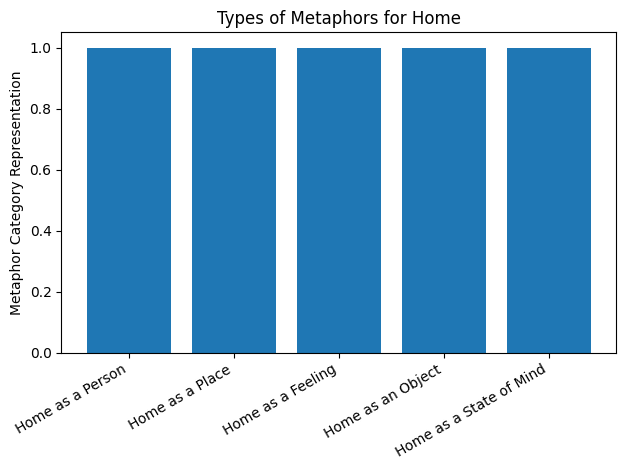
Metaphors for home can be categorized based on what aspect of home they emphasize. These categories are not mutually exclusive, and a single metaphor can often fall into multiple categories.
Home as a Person
These metaphors personify home, attributing human qualities or characteristics to it. This type of metaphor often emphasizes the nurturing, protective, or comforting aspects of home. By giving home human qualities, it becomes more relatable and emotionally resonant.
Home as a Place
This category focuses on describing home by comparing it to other places. These places could be real or imagined, and they often highlight specific characteristics of home, such as safety, comfort, or familiarity. Using another place as a vehicle helps to paint a vivid picture of what home represents.
Home as a Feeling
These metaphors equate home with a particular emotion or state of mind. This type of metaphor emphasizes the emotional connection to home, highlighting feelings of happiness, peace, belonging, or security. By associating home with a feeling, the metaphor taps into the personal and subjective experience of home.
Home as an Object
Here, home is described by comparing it to a tangible object. This object can symbolize different aspects of home, such as stability, protection, or comfort. The choice of object is crucial in conveying the intended meaning of the metaphor.
Home as a State of Mind
This is a more abstract category where home is not a physical place but rather a mental or emotional state. It emphasizes the idea that home is something you carry within you, regardless of your physical location. This type of metaphor often reflects a sense of inner peace, belonging, or self-acceptance.
Examples of Metaphors for Home
Here are several examples of metaphors for home, categorized to illustrate the different types discussed above. Each example is designed to show how the metaphor functions and what aspects of “home” it emphasizes. The tables below provide a variety of examples to deepen your understanding.
The following table provides examples of metaphors where home is compared to a person, highlighting qualities such as nurturing, protection, and comfort.
| Metaphor | Explanation |
|---|---|
| Home is a mother’s embrace. | Implies home offers comfort, warmth, and unconditional love. |
| Home is a watchful guardian. | Suggests home provides safety and protection from the outside world. |
| Home is a wise old friend. | Implies home offers familiarity, comfort, and a sense of belonging. |
| Home is a gentle healer. | Suggests home provides solace and helps to mend emotional wounds. |
| Home is a patient listener. | Implies home is a place where you can be yourself and share your thoughts without judgment. |
| Home is a warm hug. | Suggests home is comforting and welcoming. |
| Home is a guiding hand. | Implies home provides support and direction. |
| Home is a cheerful host. | Suggests home is welcoming and inviting. |
| Home is a silent confidant. | Implies home is a place where you can keep your secrets safe. |
| Home is a loving parent. | Suggests home provides care, support, and guidance. |
| Home is an understanding shoulder. | Implies home is a place to lean on during difficult times. |
| Home is a comforting presence. | Suggests home provides a sense of security and well-being. |
| Home is an encouraging mentor. | Implies home inspires growth and self-improvement. |
| Home is a playful companion. | Suggests home is a place for joy and laughter. |
| Home is a steadfast ally. | Implies home is a reliable source of support. |
| Home is a forgiving soul. | Suggests home is a place where mistakes are understood and forgiven. |
| Home is a nurturing spirit. | Implies home fosters growth and development. |
| Home is a protective shield. | Suggests home offers defense against external threats. |
| Home is a welcoming smile. | Implies home is inviting and friendly. |
| Home is a constant friend. | Suggests home offers unwavering companionship and support. |
This table shows metaphors that compare home to various places, highlighting aspects of comfort, safety, and familiarity.
| Metaphor | Explanation |
|---|---|
| Home is a sanctuary. | Implies home is a place of refuge and peace. |
| Home is an oasis in the desert. | Suggests home provides relief and rejuvenation from a harsh environment. |
| Home is a cozy harbor. | Implies home offers shelter and safety from life’s storms. |
| Home is a warm hearth. | Suggests home provides warmth, comfort, and a sense of belonging. |
| Home is a safe haven. | Implies home is a secure and protected place. |
| Home is my happy place. | Suggests home is a source of joy and contentment. |
| Home is a peaceful retreat. | Implies home is a place to relax and unwind. |
| Home is a familiar landscape. | Suggests home provides a sense of comfort and predictability. |
| Home is a childhood playground. | Implies home is a place of joy, freedom, and innocence. |
| Home is a quiet corner of the world. | Suggests home is a peaceful and secluded place. |
| Home is a bustling marketplace of love. | Implies home is full of activity, connection, and affection. |
| Home is a serene mountaintop. | Suggests home is a place of peace and tranquility. |
| Home is a vibrant garden. | Implies home is a place where growth and beauty flourish. |
| Home is a comforting cocoon. | Suggests home is a place of safety and protection. |
| Home is a welcoming inn. | Implies home is a place of hospitality and warmth. |
| Home is a sunlit meadow. | Suggests home is a place of happiness and freedom. |
| Home is a starry sky. | Implies home is vast, beautiful, and full of wonder. |
| Home is a hidden cove. | Suggests home is a place of privacy and security. |
| Home is a rustic cabin in the woods. | Implies home is simple, peaceful, and connected to nature. |
| Home is a bustling city street. | Suggests home is full of energy, excitement, and connection. |
| Home is a grand castle. | Implies home is strong, secure, and a place of great importance. |
| Home is a quiet library. | Suggests home is a place of peace, knowledge, and reflection. |
This table presents metaphors that equate home with feelings or states of mind, emphasizing the emotional connection to home.
| Metaphor | Explanation |
|---|---|
| Home is happiness. | Implies home is the source of joy and contentment. |
| Home is peace. | Suggests home is a place of tranquility and serenity. |
| Home is belonging. | Implies home provides a sense of connection and acceptance. |
| Home is security. | Suggests home is a place of safety and protection. |
| Home is love. | Implies home is filled with affection, care, and connection. |
| Home is contentment. | Suggests home provides a sense of satisfaction and fulfillment. |
| Home is a warm memory. | Implies home evokes positive feelings from the past. |
| Home is a sense of self. | Suggests home is integral to one’s identity and understanding of who they are. |
| Home is a feeling of freedom. | Implies home is a place where you can be yourself without constraints. |
| Home is comfort. | Suggests home provides a sense of ease and relaxation. |
| Home is a foundation of strength. | Implies home provides stability and resilience. |
| Home is a wellspring of hope. | Suggests home is a source of optimism and positive expectation. |
| Home is a beacon of light in the darkness. | Implies home provides guidance and hope during difficult times. |
| Home is a song in my heart. | Suggests home fills one with joy and happiness. |
| Home is a quiet whisper of peace. | Implies home evokes a sense of calm and tranquility. |
| Home is a dance of joy. | Suggests home is a place of celebration and happiness. |
| Home is a warm embrace for the soul. | Implies home is comforting and nurturing. |
| Home is a deep breath of relief. | Suggests home provides a sense of relaxation and ease. |
| Home is a gentle smile on my face. | Implies home brings happiness and contentment. |
| Home is a haven for my spirit. | Suggests home provides refuge and peace for the inner self. |
This table provides examples of metaphors that describe home as an object, symbolizing stability, protection, or comfort.
| Metaphor | Explanation |
|---|---|
| Home is an anchor. | Implies home provides stability and keeps you grounded. |
| Home is a compass. | Suggests home guides you and provides direction in life. |
| Home is a sturdy bridge. | Implies home connects you to your past and helps you navigate the present. |
| Home is a warm blanket. | Suggests home provides comfort and security. |
| Home is a treasure chest. | Implies home holds precious memories and experiences. |
| Home is a solid foundation. | Suggests home provides a strong base for building your life. |
| Home is a protective fortress. | Implies home offers safety and security from external threats. |
| Home is a comforting quilt. | Suggests home is made up of many different experiences and memories that come together to provide warmth and comfort. |
| Home is a well-worn path. | Implies home is familiar, comfortable, and easy to navigate. |
| Home is a sturdy oak. | Suggests home is strong, resilient, and long-lasting. |
| Home is a glowing lantern. | Implies home provides light and guidance in the darkness. |
| Home is a gentle stream. | Suggests home provides a sense of peace and tranquility. |
| Home is a vibrant tapestry. | Implies home is rich, colorful, and full of diverse experiences. |
| Home is a reliable map. | Suggests home provides guidance and helps you navigate life’s challenges. |
| Home is a timeless clock. | Implies home is a constant presence and a reminder of the passage of time. |
| Home is a sturdy shield. | Suggests home provides protection and defense against harm. |
| Home is a cozy nest. | Implies home provides comfort, warmth, and security. |
| Home is a reliable rudder. | Suggests home provides direction and helps you stay on course. |
| Home is a strong pillar. | Implies home provides support and stability. |
| Home is a cherished keepsake. | Suggests home is a precious reminder of the past and a source of fond memories. |
This table illustrates metaphors that portray home as a state of mind, emphasizing inner peace, belonging, and self-acceptance.
| Metaphor | Explanation |
|---|---|
| Home is where my heart is. | Implies home is wherever you feel most connected and loved. |
| Home is a state of grace. | Suggests home is a place of inner peace and contentment. |
| Home is where I can be myself. | Implies home is a place of authenticity and self-acceptance. |
| Home is a feeling, not a place. | Suggests that the essence of home is emotional rather than physical. |
| Home is the comfort of my own skin. | Implies home is about being comfortable and accepting of who you are. |
| Home is my inner sanctuary. | Suggests home is a place of peace and refuge within oneself. |
| Home is the freedom to dream. | Implies home is a place where you can be creative and imaginative without constraints. |
| Home is the quiet understanding within. | Suggests home is a sense of inner peace and self-awareness. |
| Home is the acceptance of my journey. | Implies home is about embracing your experiences and personal growth. |
| Home is the love I carry with me. | Suggests home is the affection and connection that you bring wherever you go. |
| Home is the peace I find in solitude. | Implies home is about finding comfort and contentment in your own company. |
| Home is the joy I feel in simple moments. | Suggests home is about appreciating the small pleasures in life. |
| Home is the strength I draw from within. | Implies home is about resilience and inner fortitude. |
| Home is the hope that guides my path. | Suggests home is about optimism and a positive outlook on the future. |
| Home is the courage to face my fears. | Implies home is about bravery and overcoming challenges. |
| Home is the gratitude I feel for my blessings. | Suggests home is about appreciation and thankfulness. |
| Home is the compassion I show to others. | Implies home is about empathy and kindness. |
| Home is the forgiveness I offer myself. | Suggests home is about self-acceptance and letting go of mistakes. |
| Home is the wisdom I gain from experience. | Implies home is about learning and growing from life’s lessons. |
| Home is the love that binds us together. | Suggests home is about connection, family, and shared experiences. |
Usage Rules for Metaphors of Home
While metaphors are inherently creative and flexible, there are some guidelines to ensure their effective use. The primary rule is to ensure that the connection between the tenor (home) and the vehicle is clear and logical. An effective metaphor should resonate with the audience and enhance their understanding of the subject.
Another important rule is to avoid mixed metaphors. This occurs when two or more metaphors are combined in a way that is illogical or contradictory. For example, “Home is a sanctuary and a roaring ocean” is a mixed metaphor because a sanctuary is typically a place of peace, while a roaring ocean is chaotic. Choose metaphors that align in their imagery and meaning.
Finally, consider your audience. The effectiveness of a metaphor depends on the audience’s understanding of the vehicle. A metaphor that is clear and meaningful to one audience may be confusing to another. Tailor your metaphors to your audience’s knowledge and experiences.
Common Mistakes with Home Metaphors
One common mistake is using clichéd metaphors. These are overused metaphors that have lost their impact. While they are not necessarily incorrect, they lack originality and can make your writing or speech sound uninspired. Examples include “Home is where the heart is” (although used above as an example) and “Home is a castle.” Try to come up with fresh and original metaphors that will capture your audience’s attention.
Another mistake is using metaphors that are too abstract or obscure. If the connection between the tenor and the vehicle is not clear, the metaphor will be confusing and ineffective. Ensure that your metaphors are easily understood and that they contribute to the overall meaning of your message.
The table below shows examples of common mistakes and corrections when using metaphors for home.
| Incorrect | Correct | Explanation |
|---|---|---|
| Home is a castle and a jungle. | Home is a castle. | Avoid mixed metaphors that combine contradictory images. |
| Home is like home. | Home is a sanctuary. | A metaphor should compare home to something different to enhance understanding. |
| Home is a feeling of blarg. | Home is a feeling of warmth. | Ensure the vehicle (blarg) is understandable and relevant to the audience. |
| Home is where the heart is, like a broken record. | Home is where the heart is, a constant source of joy. | Avoid clichés and try to come up with original metaphors. |
| Home is a quantum entanglement. | Home is an anchor. | Use metaphors that are easily understood by your audience. |
Practice Exercises
Test your understanding of metaphors for home with the following exercises. Identify the type of metaphor used in each sentence and explain its meaning. Then, create your own metaphors for home, using different categories.
Exercise 1: Identify the Type of Metaphor
| Sentence | Type of Metaphor | Explanation |
|---|---|---|
| Home is a warm blanket on a cold night. | ||
| Home is where I can finally exhale. | ||
| Home is a gentle parent. | ||
| Home is an oasis in the chaos of the world. | ||
| Home is the song my heart sings. | ||
| Home is my solid ground. | ||
| Home is where I can be my authentic self. | ||
| Home is a comforting embrace. | ||
| Home is a treasure chest of memories. | ||
| Home is my quiet corner of the universe. |
Exercise 2: Create Your Own Metaphors
Create five original metaphors for home, one for each category discussed earlier: home as a person, home as a place, home as a feeling, home as an object, and home as a state of mind. Provide a brief explanation of each metaphor.
| Category | Your Metaphor | Explanation |
|---|---|---|
| Home as a Person | ||
| Home as a Place | ||
| Home as a Feeling | ||
| Home as an Object | ||
| Home as a State of Mind |
Answer Key for Exercise 1:
| Sentence | Type of Metaphor | Explanation |
|---|---|---|
| Home is a warm blanket on a cold night. | Home as an Object | Home is compared to a blanket, emphasizing comfort and security. |
| Home is where I can finally exhale. | Home as a Feeling | Home is equated with the feeling of relief and relaxation. |
| Home is a gentle parent. | Home as a Person | Home is personified as a parent, emphasizing care and nurturing. |
| Home is an oasis in the chaos of the world. | Home as a Place | Home is compared to an oasis, emphasizing refuge and peace. |
| Home is the song my heart sings. | Home as a Feeling | Home is associated with the feeling of joy and happiness. |
| Home is my solid ground. | Home as an Object | Home is compared to solid ground, emphasizing stability and security. |
| Home is where I can be my authentic self. | Home as a State of Mind | Home is equated with the state of being genuine and true to oneself. |
| Home is a comforting embrace. | Home as a Person | Home is personified as an embrace, emphasizing warmth and comfort. |
| Home is a treasure chest of memories. | Home as an Object | Home is compared to a treasure chest, emphasizing the value of memories. |
| Home is my quiet corner of the universe. | Home as a Place | Home is compared to a quiet corner, emphasizing peace and seclusion. |
Advanced Topics in Metaphors for Home
For advanced learners, consider exploring the use of extended metaphors for home. An extended metaphor is a metaphor that is developed over several lines or paragraphs, allowing for a more detailed and nuanced comparison. This technique is often used in literature and poetry to create a powerful and lasting impression.
Another advanced topic is the use of mixed metaphors for stylistic effect. While generally avoided, mixed metaphors can be used intentionally to create humor or to convey a sense of confusion or disorientation. However, this technique should be used sparingly and with careful consideration.
Furthermore, analyze how different cultures and languages use metaphors for home. This can provide insights into the diverse ways in which people perceive and experience the concept of home. Comparing and contrasting these metaphors can enhance your understanding of both language and culture.
Frequently Asked Questions
Q1: What is the difference between a metaphor and a simile?
A: Both metaphors and similes are figures of speech that compare two unlike things. However, a simile uses “like” or “as” to make the comparison (e.g., “Home is *like* a sanctuary”), while a metaphor directly states that something *is* something else (e.g., “Home is a sanctuary”).
Q2: Why are metaphors important in language?
A: Metaphors add depth, color, and nuance to language. They allow us to express complex ideas in relatable ways, making communication more engaging and effective. They also help us to see the world in new and imaginative ways.
Q3: How can I create effective metaphors for home?
A: To create effective metaphors, consider what aspects of home you want to emphasize (e.g., comfort, security, belonging). Then, think of objects, places, or feelings that share those characteristics. Ensure that the connection between home and the vehicle is clear and logical.
Q4: What is a mixed metaphor, and why should I avoid it?
A: A mixed metaphor combines two or more metaphors in a way that is illogical or contradictory. This can create confusion and undermine the effectiveness of your message. It’s best to choose metaphors that align in their imagery and meaning.
Q5: Can a metaphor be too abstract?
A: Yes, if the connection between the tenor and the vehicle is not clear, the metaphor will be confusing and ineffective. Ensure that your metaphors are easily understood and that they contribute to the overall meaning of your message.
Q6: How do cultural differences affect metaphors for home?
A: Different cultures may associate different meanings and values with the concept of home. This can influence the types of metaphors that are used to describe home. For example, some cultures may emphasize the importance of family and community, while others may focus on individual freedom and independence.
Q7: What are some common cliches for “home?”
A: Some common cliches for “home” include “Home is where the heart is,” “Home is a castle,” and “There’s no place like home.” While these phrases are familiar, they have lost much of their impact due to overuse. Try to come up with more original and creative metaphors.
Q8: How can I tell if a metaphor is effective?
A: An effective metaphor should resonate with your audience and enhance their understanding of the subject. It should create a vivid and memorable image in their minds and help them to see the world in a new way. If your metaphor is confusing or unclear, it is likely not effective.
Conclusion
Understanding metaphors for “home” enriches our comprehension of figurative language and provides insights into the diverse meanings people attach to this fundamental concept. By recognizing the different types of metaphors, avoiding common mistakes, and practicing their creation, you can enhance your communication skills and deepen your appreciation for the power of language. The key is to be creative, thoughtful, and mindful of your audience.
Remember that metaphors are a powerful tool for expressing complex ideas in relatable ways. By mastering the art of using metaphors for home, you can add depth, color, and nuance to your writing and speech. So, embrace the challenge, explore the possibilities, and let your imagination soar!