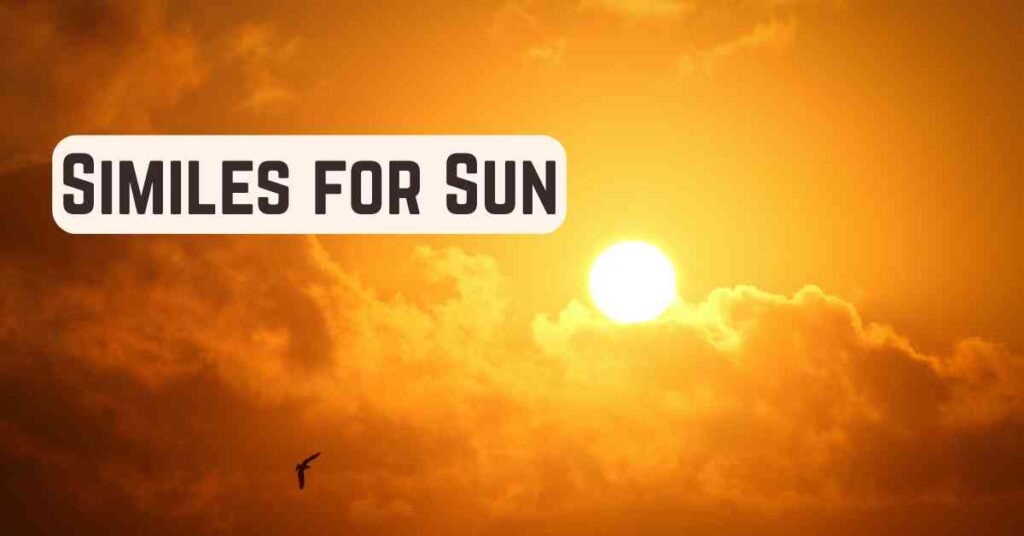

The sun, a celestial body of immense power and beauty, has inspired poets, writers, and artists for centuries. One of the most effective ways to capture its essence in language is through the use of similes. Similes, by comparing the sun to other familiar objects or concepts using words like “like” or “as,” allow us to create vivid and memorable imagery. Understanding how to craft and use similes effectively can greatly enhance your writing and communication skills. This article delves into the art of creating similes for the sun, exploring various examples, rules, and exercises to help you master this literary device. Whether you’re a student, a writer, or simply someone who appreciates the beauty of language, this guide will provide you with the tools and knowledge to paint stunning verbal pictures of the sun.
This comprehensive guide is designed for English language learners of all levels, from beginners to advanced speakers. By the end of this article, you’ll be able to confidently identify, analyze, and create your own sun-related similes, enriching your vocabulary and improving your overall writing proficiency.
Table of Contents
- Defining Similes: A Comprehensive Overview
- Structural Breakdown of Similes
- Types of Similes
- Extensive Examples of Similes for the Sun
- Similes Describing the Sun’s Light
- Similes Describing the Sun’s Heat
- Similes Describing the Sun’s Color
- Similes Describing the Sun’s Shape
- Similes Describing the Feeling of the Sun
- Usage Rules for Similes
- Common Mistakes When Using Similes
- Practice Exercises
- Identifying Similes
- Completing Similes
- Creating Similes
- Advanced Topics: Extended Similes and Metaphors
- Frequently Asked Questions
- Conclusion
Defining Similes: A Comprehensive Overview
A simile is a figure of speech that compares two unlike things using the words “like” or “as.” The purpose of a simile is to create a vivid image or to emphasize a particular quality of one of the things being compared. Similes are powerful tools for writers because they allow them to make abstract concepts more concrete and relatable. They add depth and color to language, making descriptions more engaging and memorable.
The core function of a simile is to draw a parallel between two distinct entities, highlighting a shared characteristic or quality. This comparison helps the reader or listener understand the subject more fully by relating it to something already familiar. For instance, saying “the sun is like a giant spotlight” helps the audience immediately grasp the sun’s intense, focused light.
Similes are commonly used in various contexts, including literature, poetry, everyday conversation, and advertising. They are particularly effective in descriptive writing, where the goal is to paint a picture with words. In poetry, similes can add layers of meaning and emotional resonance. Even in casual conversation, similes can make your speech more expressive and engaging.
Structural Breakdown of Similes
The structure of a simile is relatively straightforward, typically consisting of three key elements: the subject being described, the linking word (“like” or “as”), and the object or concept to which the subject is being compared. Understanding this structure is essential for creating effective and grammatically correct similes.
The basic formula for a simile is: Subject + Linking Word + Object of Comparison
- Subject: This is the thing being described. In our case, it will often be the sun or a quality of the sun (e.g., its light, heat, or color).
- Linking Word: This is the word that establishes the comparison. The most common linking words are “like” and “as.”
- Object of Comparison: This is the thing to which the subject is being compared. It should share a quality with the subject that you want to emphasize.
For example, in the simile “The sun is like a golden coin,” the subject is “the sun,” the linking word is “like,” and the object of comparison is “a golden coin.” This simile highlights the sun’s color and shape, suggesting that it is bright, round, and valuable.
The order of the elements can sometimes be varied for stylistic effect, but the core components remain the same. For instance, you could say “As bright as a diamond, the sun shone,” which still conveys the same comparison but with a different emphasis.
Types of Similes
While all similes share the same basic structure, they can be categorized based on the type of comparison they make. Understanding these different types can help you choose the most effective simile for your specific purpose.
- Descriptive Similes: These similes focus on describing the physical attributes of the subject, such as its appearance, color, or texture.
Example: The sun was as red as a ripe tomato.
- Comparative Similes: These similes compare the subject to something that shares a similar quality or characteristic.
Example: The sun’s heat was like a furnace.
- Exaggerative Similes: These similes use exaggeration to emphasize a particular quality of the subject.
Example: The sun was as big as a house.
- Understated Similes: These similes use understatement to create a subtle or ironic effect.
Example: The sun was about as warm as a cool summer breeze (used ironically).
The choice of simile type depends on the specific effect you want to achieve. Descriptive similes are useful for creating vivid imagery, while comparative similes are effective for highlighting similarities. Exaggerative and understated similes can add humor or irony to your writing.
Extensive Examples of Similes for the Sun
The following sections provide a comprehensive collection of similes for the sun, categorized by the quality or characteristic being emphasized. These examples will help you understand how similes can be used to describe the sun in various ways.
Similes Describing the Sun’s Light
The sun’s light is one of its most defining characteristics, and there are countless ways to describe it using similes. The following table provides numerous examples, ranging from simple comparisons to more creative and imaginative ones.
This table showcases similes focused on the sun’s radiant light, using comparisons that evoke brightness, clarity, and intensity.
| Simile | Explanation |
|---|---|
| The sun’s light was like a spotlight on a stage. | Emphasizes the focused and intense nature of the sunlight. |
| The sun shone as bright as a diamond. | Compares the sun’s brilliance to the sparkle of a diamond. |
| The sunlight was like liquid gold pouring over the landscape. | Creates a vivid image of the sun’s golden hue and flowing quality. |
| The sun’s rays were like golden threads weaving through the clouds. | Highlights the delicate and intricate nature of the sunlight. |
| The sun’s glow was as warm as a loving embrace. | Connects the sun’s light to feelings of comfort and affection. |
| The sun’s gleam was like a beacon in the darkness. | Illustrates the sun’s guiding and illuminating presence. |
| The light of the sun was as pure as a newborn’s soul. | Compares the sun’s light to something innocent and untainted. |
| The sun’s radiance was like a thousand candles burning at once. | Emphasizes the intensity and power of the sunlight. |
| The sun’s light felt like a gentle kiss on my skin. | Describes the soft and pleasant sensation of the sunlight. |
| The sun’s luminance was as captivating as a work of art. | Compares the sun’s light to something beautiful and inspiring. |
| The sun’s light sliced through the clouds like a hot knife through butter. | Highlights the sharp and penetrating quality of the sunlight. |
| The sun’s light was as blinding as a flash of lightning. | Emphasizes the overwhelming intensity of the sunlight. |
| The sun’s rays spilled across the horizon like a painter’s vibrant strokes. | Creates a visual image of the sun’s light spreading across the sky. |
| The sun’s light filtered through the leaves like shimmering emeralds. | Describes the dappled and colorful effect of sunlight through foliage. |
| The sun’s light danced on the water like a playful sprite. | Personifies the sunlight, giving it a lively and energetic quality. |
| The sun’s light was as clear as crystal. | Emphasizes the purity and clarity of the sunlight. |
| The sun’s light was like a celestial firework display. | Suggests a grand and spectacular burst of light. |
| The sun’s light was as unwavering as a mother’s love. | Connects the sun’s light to feelings of constancy and devotion. |
| The sun’s light was as inviting as a warm hearth on a cold day. | Highlights the comforting and welcoming nature of the sunlight. |
| The sun’s light was like a god’s smile upon the earth. | Gives the sunlight a divine and benevolent quality. |
| The sun’s light was as energizing as a strong cup of coffee. | Connects the sun’s light to feelings of invigoration and alertness. |
| The sun’s light was like a painter’s palette of warm colors. | Highlights the variety and richness of the sun’s light. |
| The sun’s light was as relentless as the march of time. | Emphasizes the constant and unyielding nature of the sunlight. |
| The sun’s light was like a warm blanket on a chilly morning. | Describes the comforting and enveloping sensation of the sunlight. |
| The sun’s light was as hopeful as the first bloom of spring. | Connects the sun’s light to feelings of optimism and renewal. |
| The sun’s light was like a guiding star in the vast universe. | Highlights the sun’s role as a source of direction and inspiration. |
| The sun’s light was as cleansing as a refreshing rain shower. | Compares the sun’s light to something purifying and revitalizing. |
| The sun’s light was like a warm, inviting hug from nature. | Describes the comforting and affectionate sensation of the sunlight. |
Similes Describing the Sun’s Heat
The sun’s heat is another prominent characteristic that can be effectively described using similes. These similes often evoke feelings of warmth, intensity, and even discomfort.
This table focuses on similes that capture the sun’s heat, using comparisons that range from gentle warmth to intense, scorching sensations.
| Simile | Explanation |
|---|---|
| The sun’s heat was like a warm blanket on a cold day. | Emphasizes the comforting and enveloping nature of the sun’s warmth. |
| The sun beat down like a hammer on the tin roof. | Highlights the intense and relentless nature of the sun’s heat. |
| The heat of the sun was like standing in front of a furnace. | Compares the sun’s heat to the intense heat of a furnace. |
| The sun’s warmth was as gentle as a mother’s touch. | Connects the sun’s heat to feelings of comfort and affection. |
| The sun’s rays felt like needles pricking my skin. | Describes the sharp and stinging sensation of the sun’s heat. |
| The sun’s heat shimmered off the asphalt like a mirage. | Creates a visual image of the heat distorting the air. |
| The sun’s warmth was as inviting as a crackling fire. | Compares the sun’s heat to the cozy warmth of a fire. |
| The sun baked the earth like a giant oven. | Emphasizes the intense and all-encompassing nature of the sun’s heat. |
| The sun’s heat was like a tangible force pressing down on me. | Suggests the heavy and oppressive feeling of the sun’s heat. |
| The sun’s warmth spread through my body like a soothing balm. | Describes the relaxing and comforting effect of the sun’s heat. |
| The sun’s heat was as oppressive as a heavy wool coat in summer. | Highlights the uncomfortable and suffocating nature of the heat. |
| The sun’s rays burned like a thousand tiny embers. | Emphasizes the intense and fiery quality of the sun’s heat. |
| The sun’s heat settled over the land like a suffocating blanket. | Creates a visual image of the heat weighing down on everything. |
| The sun’s warmth was as welcome as a hot bath after a long day. | Compares the sun’s heat to the comforting relief of a hot bath. |
| The sun scorched the earth like a dragon’s fiery breath. | Emphasizes the destructive and intense nature of the sun’s heat. |
| The sun’s heat was like a physical manifestation of summer itself. | Connects the sun’s heat to the essence of the summer season. |
| The sun’s heat was as relentless as a desert wind. | Highlights the constant and unyielding nature of the heat. |
| The sun’s rays warmed my face like a gentle caress. | Describes the soft and pleasing sensation of the sun’s heat. |
| The sun’s heat was like a tangible reminder of life’s energy. | Connects the sun’s heat to the vitality and power of nature. |
| The sun’s rays beat down on the parched earth like a relentless drumbeat. | Emphasizes the constant and rhythmic nature of the sun’s heat. |
| The sun’s heat was as intense as the glare of a spotlight. | Compares the sun’s heat to the focused intensity of a spotlight. |
| The sun’s warmth enveloped me like a comforting hug. | Describes the soothing and embracing sensation of the sun’s heat. |
| The sun’s heat was like a simmering pot about to boil over. | Suggests the intensity and potential for the heat to become overwhelming. |
| The sun’s rays kissed my skin like a warm summer breeze. | Describes the gentle and pleasant sensation of the sun’s heat. |
| The sun’s heat was as pervasive as the scent of blooming flowers. | Highlights the all-encompassing and immersive nature of the heat. |
| The sun’s rays felt like tiny fingers tapping on my head. | Describes the light and persistent sensation of the sun’s heat. |
| The sun’s heat was like a constant reminder of the earth’s fiery core. | Connects the sun’s heat to the underlying power of the planet. |
| The sun’s warmth was as comforting as a cup of hot tea on a rainy day. | Compares the sun’s heat to the soothing and familiar comfort of tea. |
Similes Describing the Sun’s Color
The sun’s color can vary depending on the time of day and atmospheric conditions. Similes can be used to capture these different hues, from the bright yellow of midday to the fiery orange of sunset.
This table showcases similes that describe the different colors the sun can exhibit, from golden yellows to fiery oranges and reds, depending on the time of day and atmospheric conditions.
| Simile | Explanation |
|---|---|
| The sun was like a golden coin in the sky. | Emphasizes the sun’s bright yellow color and round shape. |
| The setting sun was as red as a ripe tomato. | Compares the sun’s color to the deep red of a tomato. |
| The sun’s color was like molten gold. | Highlights the sun’s bright and shimmering golden hue. |
| The sunrise was as orange as a freshly peeled tangerine. | Compares the sun’s color to the vibrant orange of a tangerine. |
| The sun glowed like a giant amber jewel. | Describes the sun’s warm and translucent golden-brown color. |
| The sun’s hue was as pale as a lemon in the morning mist. | Highlights the sun’s subtle and delicate yellow color. |
| The setting sun blazed like a fiery inferno. | Emphasizes the sun’s intense red and orange colors at sunset. |
| The sun shone like a brass ornament in the clear sky. | Compares the sun’s color to the metallic yellow of brass. |
| The sun was as white as a pearl at its zenith. | Describes the sun’s bright and almost colorless appearance at midday. |
| The sun’s color was like a painter’s stroke of cadmium yellow. | Highlights the sun’s bright and intense yellow hue. |
| The setting sun was as crimson as a drop of blood. | Compares the sun’s color to the deep red of blood. |
| The sun’s glow was like a warm, honeyed light. | Describes the sun’s sweet and golden-yellow color. |
| The sunrise painted the sky as peach-colored as a ripe apricot. | Compares the sun’s color to the soft orange-pink of an apricot. |
| The sun’s color was like a field of golden sunflowers. | Highlights the sun’s vibrant and cheerful yellow hue. |
| The setting sun faded into a rose-gold hue like a vintage locket. | Describes the sun’s delicate and romantic pinkish-gold color. |
| The sun’s color was as brilliant as a flash of gold. | Emphasizes the sun’s radiant and precious yellow hue. |
| The rising sun was as pink as a flamingo’s feathers. | Compares the sun’s color to the soft pink of a flamingo. |
| The sun’s glow was like a splash of saffron on a canvas. | Describes the sun’s rich and exotic yellow-orange color. |
| The sun’s color was as warm as a cup of chamomile tea. | Connects the sun’s color to feelings of comfort and relaxation. |
| The setting sun was as fiery as a dragon’s breath. | Emphasizes the sun’s intense red and orange colors at sunset. |
| The sun’s color was like a butterscotch candy melting in the sky. | Describes the sun’s sweet and golden-brown color. |
| The sun was as bronze as an ancient statue. | Compares the sun’s color to the metallic brown of bronze. |
| The sun’s hue was like a glass of aged whiskey. | Highlights the sun’s rich and warm amber color. |
| The setting sun was as scarlet as a poppy in a field. | Compares the sun’s color to the vibrant red of a poppy. |
| The sun’s glow was like a warm terracotta pot. | Describes the sun’s earthy and reddish-brown color. |
| The sun was as copper as a newly minted penny. | Compares the sun’s color to the metallic reddish-brown of copper. |
| The sun’s color was like a freshly baked gingerbread cookie. | Highlights the sun’s warm and inviting golden-brown color. |
| The sunrise was as roseate as a blooming garden. | Compares the sun’s color to the soft pinks and reds of flowers. |
Similes Describing the Sun’s Shape
While the sun is generally perceived as round, its shape can appear to change depending on atmospheric conditions and perspective. Similes can capture these variations, from a perfect circle to a flattened oval.
This table presents similes that describe the sun’s shape, ranging from perfect circles to flattened or distorted forms due to atmospheric effects.
| Simile | Explanation |
|---|---|
| The sun was like a perfect circle in the sky. | Emphasizes the sun’s round and symmetrical shape. |
| The setting sun was as flat as a pancake on the horizon. | Describes the sun’s flattened appearance at sunset. |
| The sun looked like a giant orange eye watching over the world. | Compares the sun’s shape to a large, circular eye. |
| The sun resembled a golden disc suspended in the heavens. | Highlights the sun’s flat and round shape. |
| The sun was as round as a beach ball in the summer sky. | Compares the sun’s shape to the familiar roundness of a beach ball. |
| The setting sun looked like a deflated balloon on the horizon. | Describes the sun’s flattened and distorted appearance. |
| The sun was like a gleaming button on the vast fabric of the sky. | Emphasizes the sun’s small and round shape in relation to the sky. |
| The sun looked like a molten coin slowly sinking into the earth. | Compares the sun’s shape to a round, metallic object. |
| The sun seemed as spherical as a Christmas ornament. | Highlights the sun’s round and festive shape. |
| The sun was like a celestial globe hanging in space. | Compares the sun’s shape to a three-dimensional sphere. |
| The setting sun was as squashed as a pumpkin near Halloween. | Describes the sun’s flattened and distorted appearance at sunset. |
| The sun looked like a cosmic egg in the early morning sky. | Compares the sun’s shape to an oval and slightly elongated form. |
| The sun was like a giant marble rolling across the heavens. | Emphasizes the sun’s round and smooth shape. |
| The sun resembled a massive orange lollipop in the sky. | Highlights the sun’s round and colorful shape. |
| The sun was as circular as a target in the vast expanse of space. | Compares the sun’s shape to a precise and defined circle. |
| The setting sun appeared as oval as a river stone. | Describes the sun’s elongated and smooth shape at sunset. |
| The sun looked like a golden doorknob on the entrance to a new day. | Compares the sun’s shape to a small and round object. |
| The sun was like a gigantic eye peering down from above. | Emphasizes the sun’s large and circular shape. |
| The sun resembled a bright penny in the cosmic piggy bank. | Highlights the sun’s small and round shape. |
| The sun was as round as a clock face telling the time of day. | Compares the sun’s shape to a familiar circular object. |
| The setting sun was as squeezed as an orange being juiced. | Describes the sun’s flattened and distorted appearance at sunset. |
| The sun looked like a floating yellow beach ball in the sky. | Compares the sun’s shape to a large and round inflatable. |
| The sun was like a giant light bulb illuminating the world. | Emphasizes the sun’s round and radiant shape. |
| The sun resembled a huge yellow balloon rising into the sky. | Highlights the sun’s round and airy shape. |
| The sun was as circular as a dinner plate in the celestial kitchen. | Compares the sun’s shape to a common household object. |
| The setting sun was as flattened as a cookie under a rolling pin. | Describes the sun’s extremely flattened appearance at sunset. |
| The sun looked like a golden compass guiding us through life. | Compares the sun’s shape to a navigational tool. |
Similes Describing the Feeling of the Sun
The sun can evoke a range of feelings, from warmth and comfort to energy and invigoration. Similes can be used to capture these emotional and sensory experiences.
This table focuses on similes that evoke the feelings associated with the sun, such as warmth, comfort, energy, and even intensity, capturing the emotional and sensory experiences related to the sun.
| Simile | Explanation |
|---|---|
| The sun felt like a warm embrace on my skin. | Emphasizes the comforting and affectionate feeling of the sun. |
| The sun’s energy was like a jolt of electricity coursing through me. | Compares the sun’s energy to a sudden burst of power. |
| The sun felt as invigorating as a morning swim in the ocean. | Highlights the refreshing and revitalizing feeling of the sun. |
| The sun’s warmth was like a soothing balm on my tired muscles. | Compares the sun’s heat to something that relieves pain and tension. |
| The sun felt as oppressive as a heavy weight on my shoulders. | Describes the burdensome and uncomfortable feeling of the sun. |
| The sun’s rays were like a gentle caress on my face. | Emphasizes the soft and pleasant feeling of the sun. |
| The sun felt as uplifting as a cheerful melody. | Compares the sun’s effect to something joyful and inspiring. |
| The sun’s energy was like a fuel that propelled me forward. | Highlights the motivating and empowering feeling of the sun. |
| The sun felt as comforting as a cup of hot cocoa on a winter day. | Compares the sun’s warmth to a familiar and cozy sensation. |
| The sun’s intensity was like a challenge to be overcome. | Describes the demanding and stimulating feeling of the sun. |
| The sun felt as revitalizing as a deep breath of fresh air. | Emphasizes the refreshing and life-giving feeling of the sun. |
| The sun’s warmth was like a gentle nudge to awaken from slumber. | Compares the sun’s heat to something that encourages activity. |
| The sun felt as energizing as a brisk walk in the countryside. | Highlights the stimulating and invigorating feeling of the sun. |
| The sun’s rays were like a warm invitation to embrace the day. | Emphasizes the welcoming and encouraging feeling of the sun. |
| The sun felt as soothing as a quiet afternoon in a hammock. | Compares the sun’s warmth to a relaxing and peaceful sensation. |
| The sun’s intensity was as overwhelming as a stadium crowd. | Describes the intense and powerful feeling of the sun. |
| The sun felt as liberating as a bird soaring through the sky. | Emphasizes the freeing and uplifting feeling of the sun. |
| The sun’s rays were like a warm hug from an old friend. | Compares the sun’s warmth to a comforting and familiar embrace. |
| The sun felt as rejuvenating as a weekend getaway. | Highlights the restorative and revitalizing feeling of the sun. |
| The sun’s energy was as motivating as a pep talk. | Describes the encouraging and empowering feeling of the sun. |
| The sun felt as grounding as bare feet on the earth. | Emphasizes the stable and connected feeling of the sun. |
| The sun’s warmth was like a gentle hand guiding me forward. | Compares the sun’s heat to something that provides direction and support. |
| The sun felt as inspiring as a masterpiece of art. | Highlights the uplifting and creative feeling of the sun. |
| The sun’s rays were like a warm blanket of protection. | Describes the safe and secure feeling of the sun. |
| The sun felt as peaceful as a quiet walk in nature. | Compares the sun’s warmth to a calming and serene experience. |
| The sun’s energy was as infectious as a contagious smile. | Emphasizes the uplifting and positive feeling of the sun. |
Usage Rules for Similes
While similes are relatively simple to create, there are some rules and guidelines to follow to ensure that they are effective and grammatically correct.
- Use “like” or “as”: Always use one of these words to establish the comparison.
- Compare unlike things: The two things being compared should be different in nature but share a common quality.
- Be clear and specific: The comparison should be easy to understand and should highlight the specific quality you want to emphasize.
- Avoid clichés: Try to avoid overused similes that have lost their impact. Instead, strive for originality and creativity.
For example, “The sun is like a star” is technically correct but lacks originality. A more effective simile would be “The sun is like a giant spotlight in the sky,” which is more specific and vivid.
Common Mistakes When Using Similes
One common mistake is confusing similes with metaphors. A simile uses “like” or “as” to make a comparison, while a metaphor states that one thing *is* another thing.
Incorrect (Metaphor): The sun is a golden coin.
Correct (Simile): The sun is like a golden coin.
Another mistake is using similes that are too vague or unclear. The comparison should be specific and easy to understand.
Incorrect (Vague): The sun is like something bright.
Correct (Specific): The sun is like a giant light bulb.
Also, avoid mixing metaphors and similes within the same sentence. Maintain consistency in your figurative language.
Incorrect (Mixed): The sun is a fiery ball, like a spotlight in the sky.
Correct (Consistent): The sun is like a fiery ball, a spotlight in the sky.
Practice Exercises
The following exercises will help you practice
creating and identifying similes related to the sun. These exercises are designed to reinforce your understanding of similes and improve your ability to use them effectively in your writing.
Identifying Similes
Read the following sentences and identify the similes. Underline the simile and identify the two things being compared.
- The sun was as hot as a furnace on a summer day.
- Her smile was like sunshine after a long rain.
- The sun’s rays felt like needles on my skin.
- He is as bright as the sun.
- The sun, a blazing star, scorched the earth.
Answer Key:
- The sun was as hot as a furnace on a summer day. (Sun, furnace)
- Her smile was like sunshine after a long rain. (Smile, sunshine)
- The sun’s rays felt like needles on my skin. (Sun’s rays, needles)
- He is as bright as the sun. (He, sun)
- The sun, a blazing star, scorched the earth. (No simile present – this is a metaphor.)
Completing Similes
Complete the following similes by filling in the missing word or phrase.
- The sun was as bright as a __________.
- The sun’s heat felt like __________.
- The sun looked like __________ in the sky.
- The sun set as red as __________.
- The sun shone as warm as __________.
Possible Answer Key:
- The sun was as bright as a diamond.
- The sun’s heat felt like a furnace.
- The sun looked like a golden coin in the sky.
- The sun set as red as blood.
- The sun shone as warm as a loving embrace.
Creating Similes
Create your own similes for the sun based on the following prompts.
- Describe the sun’s light using a simile.
- Describe the sun’s heat using a simile.
- Describe the sun’s color using a simile.
- Describe the sun’s shape using a simile.
- Describe the feeling of the sun on your skin using a simile.
Example Answers:
- The sun’s light was like a spotlight illuminating the stage of the world.
- The sun’s heat felt like a warm blanket on a chilly morning.
- The sun’s color was as golden as a field of ripe wheat.
- The sun’s shape resembled a giant orange in the sky.
- The feeling of the sun on my skin was like a gentle kiss.
Advanced Topics: Extended Similes and Metaphors
Once you’ve mastered the basic use of similes, you can explore more advanced techniques, such as extended similes and metaphors. These techniques involve developing a comparison over several sentences or even an entire paragraph, creating a more complex and nuanced image.
An extended simile continues the comparison for more than one sentence, adding more details and layers of meaning. For example:
The sun was like a painter, splashing vibrant colors across the morning sky. First, he brushed the horizon with strokes of rose and gold, then added touches of lavender and peach. The clouds became his canvas, each one a unique masterpiece illuminated by his radiant palette.
A metaphor, on the other hand, directly equates two unlike things without using “like” or “as.” While this article focuses on similes, understanding metaphors can help you appreciate the broader range of figurative language.
The sun was a molten coin, slowly sinking into the inky sea. Its fiery glow painted the water with streaks of gold, as the world held its breath, awaiting the darkness.
Experimenting with extended similes and metaphors can greatly enhance your writing, allowing you to create richer and more evocative descriptions.
Frequently Asked Questions
What is the difference between a simile and a metaphor?
A simile compares two things using “like” or “as,” while a metaphor directly equates two things without using those words. For example, “The sun is like a golden coin” is a simile, while “The sun is a golden coin” is a metaphor.
Can a simile be too long?
Yes, a simile can be too long if it becomes convoluted or distracts from the main point. Aim for clarity and conciseness, even when using extended similes.
How can I avoid using clichés in my similes?
Strive for originality by thinking of unique and unexpected comparisons. Consider the specific qualities you want to emphasize and brainstorm objects or concepts that share those qualities in a fresh way.
Is it okay to use similes in formal writing?
Yes, similes can be used in formal writing, but use them judiciously. Ensure that they enhance your message and do not detract from the overall tone and clarity.
How do I choose the right simile for my writing?
Consider the specific effect you want to achieve and the audience you are writing for. Choose a simile that is clear, vivid, and appropriate for the context.
Conclusion
Mastering the art of crafting similes for the sun can significantly enhance your descriptive writing and communication skills. By understanding the structure, types, and usage rules of similes, you can create vivid and memorable images that capture the essence of this celestial body. Remember to practice regularly, experiment with different comparisons, and strive for originality in your writing. With dedication and creativity, you can harness the power of similes to paint stunning verbal pictures of the sun and enrich your language.