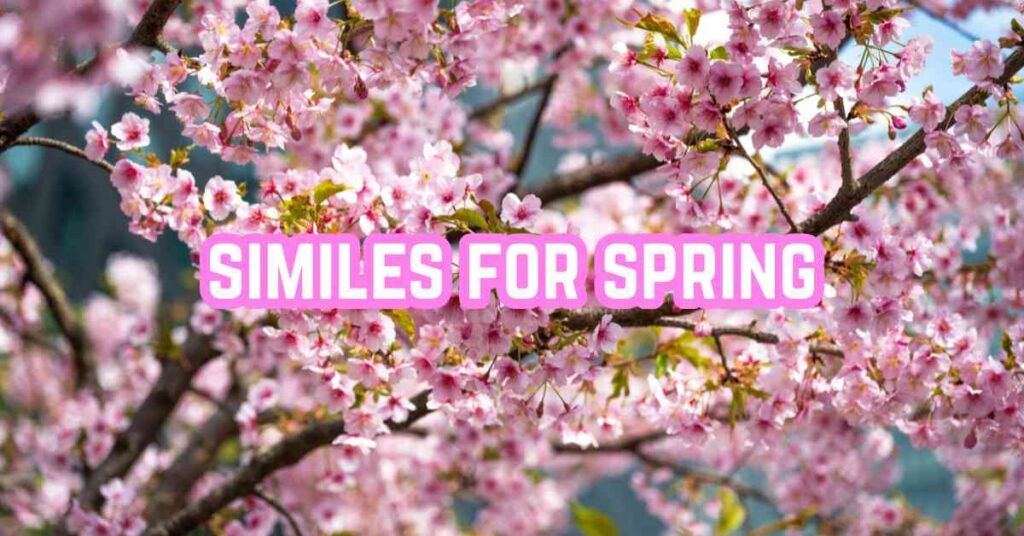

Spring, a season of renewal and vibrant change, provides a rich tapestry of imagery that lends itself beautifully to the art of simile. Understanding and utilizing similes effectively can dramatically enhance your descriptive writing and speaking, making your language more vivid and engaging. This article explores the world of similes specifically related to spring, offering a comprehensive guide suitable for English language learners, writers looking to refine their craft, and anyone interested in the nuances of figurative language.
By mastering the techniques outlined in this guide, you will be able to craft compelling descriptions that capture the essence of spring, adding depth and color to your communication. Whether you are a student, a writer, or simply an enthusiast of the English language, this article will provide you with the tools and knowledge you need to confidently use similes to describe the wonders of spring.
Table of Contents
- What is a Simile?
- Structural Breakdown of Spring Similes
- Types of Spring Similes
- Examples of Spring Similes
- Usage Rules for Spring Similes
- Common Mistakes with Spring Similes
- Practice Exercises
- Advanced Topics in Spring Similes
- Frequently Asked Questions
- Conclusion
What is a Simile?
A simile is a figure of speech that compares two unlike things using the words “like” or “as.” Its primary function is to create a vivid image or convey a deeper understanding of the subject being described. Similes are a powerful tool in writing and speech, allowing you to draw connections between seemingly disparate concepts and evoke specific emotions or sensations in your audience. They are essential for adding color, depth, and clarity to your descriptions. Similes are particularly useful when describing abstract or complex ideas by relating them to something more concrete and familiar.
Unlike metaphors, which directly equate two things, similes acknowledge the difference between the two things being compared, highlighting their similarities. This distinction is crucial, as it allows for a more nuanced and precise comparison. Similes are found in various forms of literature, poetry, and everyday conversation, making them a fundamental aspect of the English language. The effective use of similes can significantly enhance the impact and memorability of your writing and speaking.
Structural Breakdown of Spring Similes
The basic structure of a simile consists of three key components: the subject, the comparison word (“like” or “as”), and the object of comparison. The subject is the thing you are describing, and the object of comparison is the thing you are using to describe it. The comparison word acts as the bridge between the two, indicating that you are drawing a parallel rather than stating an identity. Understanding this structure is essential for creating clear and effective similes.
For example, in the simile “The flowers bloomed like a painter’s palette,” the subject is “the flowers,” the comparison word is “like,” and the object of comparison is “a painter’s palette.” This structure allows you to create a vivid image of the flowers in bloom, suggesting a burst of colors and artistic arrangement. By mastering this structure, you can craft similes that are both creative and easily understood.
The order of these components can sometimes be varied for stylistic effect, but the core elements remain the same. For instance, you could say, “Like a painter’s palette, the flowers bloomed,” which emphasizes the object of comparison first. However, the clarity of the simile should always be prioritized, ensuring that the comparison is easily recognizable.
Types of Spring Similes
Spring similes can be categorized based on the sense they appeal to or the aspect of spring they describe. This categorization helps in understanding the diverse ways in which similes can be used to capture the essence of the season. Common types include similes that describe appearance, sound, feeling, smell, and growth. Each type offers a unique perspective on the qualities of spring.
Similes Describing Appearance
These similes focus on the visual aspects of spring, such as the vibrant colors of flowers, the lush greenery of trees, and the clear blue of the sky. They often use vivid imagery to paint a picture of the season’s beauty. For example, “The grass was as green as an emerald” is a simile that evokes a strong visual image of lush, vibrant grass.
Similes Describing Sound
These similes capture the auditory experiences of spring, such as the chirping of birds, the buzzing of bees, and the gentle rustling of leaves. They help to bring the sounds of the season to life. An example is “The birds sang like a chorus of angels,” which creates a beautiful and harmonious auditory image.
Similes Describing Feeling
These similes focus on the tactile and emotional sensations of spring, such as the warmth of the sun, the gentle breeze, and the feeling of renewal. They help to convey the emotional impact of the season. For example, “The air felt as soft as a baby’s breath” is a simile that evokes a sense of gentleness and tenderness.
Similes Describing Smell
These similes capture the olfactory experiences of spring, such as the sweet scent of flowers, the fresh smell of rain, and the earthy aroma of newly turned soil. They help to bring the scents of the season to life. An example is “The air smelled like a garden in full bloom,” which creates a fragrant and inviting olfactory image.
Similes Describing Growth
These similes focus on the burgeoning life and rapid growth that characterize spring, such as the sprouting of seeds, the budding of trees, and the blossoming of flowers. They convey the sense of vitality and renewal that defines the season. For instance, “The plants grew as quickly as a child’s imagination” conveys a sense of boundless and rapid growth.
Examples of Spring Similes
The following tables provide a comprehensive collection of spring similes, organized by category. These examples offer a variety of ways to describe the season, showcasing the versatility and power of simile in capturing the essence of spring.
Similes Describing Appearance
This table features similes that focus on the visual aspects of spring, creating vivid images of the season’s beauty through descriptive comparisons.
| Simile | Explanation |
|---|---|
| The sky was as blue as a robin’s egg. | Describes the clear, bright blue color of the spring sky. |
| The flowers were as colorful as a rainbow. | Emphasizes the vibrant and diverse colors of spring flowers. |
| The leaves were as green as emeralds. | Highlights the lush, deep green color of new spring leaves. |
| The cherry blossoms looked like pink snow. | Compares the delicate, falling blossoms to soft, pink snow. |
| The tulips stood as tall as toy soldiers. | Describes the upright and vibrant appearance of tulips. |
| The daffodils shone like golden trumpets. | Emphasizes the bright yellow color and trumpet-like shape of daffodils. |
| The grass was as soft as velvet. | Describes the smooth, plush texture of new spring grass. |
| The garden looked like a painter’s canvas. | Compares the colorful and varied arrangement of a garden to an artist’s work. |
| The sun was as bright as a spotlight. | Highlights the intense and illuminating quality of the spring sun. |
| The new buds were as small as tiny pearls. | Describes the diminutive size and precious appearance of new buds. |
| The fields stretched out like a green carpet. | Compares the expansive, green fields to a soft, continuous carpet. |
| The petals were as delicate as butterfly wings. | Emphasizes the fragile and beautiful nature of flower petals. |
| The trees were adorned like Christmas trees. | Describes trees covered in blossoms, resembling decorated Christmas trees. |
| The meadows were as vibrant as a tapestry. | Highlights the rich and varied colors of spring meadows. |
| The water in the stream was as clear as glass. | Describes the purity and transparency of water flowing in spring. |
| The morning dew sparkled like diamonds. | Compares the glistening dew drops to precious diamonds. |
| The blooming trees looked like cotton candy. | Describes the fluffy and sweet appearance of trees in full bloom. |
| The hills were as green as a golfer’s dream. | Highlights the perfectly green and manicured appearance of hills in spring. |
| The ivy climbed like a verdant waterfall. | Compares the cascading growth of ivy to a flowing waterfall. |
| The garden gnomes stood like silent sentinels. | Describes the still and watchful presence of garden gnomes. |
| The newly painted houses shone like beacons. | Emphasizes the fresh, bright appearance of houses in spring. |
| The budding leaves unfurled like tiny flags. | Compares the opening of new leaves to the unfurling of flags. |
| The freshly mown lawn was as neat as a pin. | Describes the tidy and well-maintained appearance of a lawn. |
| The garden path wound like a ribbon through the flowers. | Compares the winding path to a decorative ribbon. |
| The colorful kites soared like painted birds. | Describes the vibrant kites flying high in the spring sky. |
Similes Describing Sound
This table features similes that capture the auditory experiences of spring, bringing the sounds of the season to life through descriptive comparisons.
| Simile | Explanation |
|---|---|
| The birds chirped like a symphony orchestra. | Describes the harmonious and varied sounds of birds singing. |
| The bees buzzed like tiny motors. | Compares the sound of bees to the hum of small machines. |
| The rain fell like a gentle lullaby. | Describes the soothing and calming sound of spring rain. |
| The wind whispered through the trees like secrets. | Emphasizes the soft and mysterious sound of wind in the trees. |
| The stream gurgled like a happy baby. | Compares the sound of flowing water to the joyful sounds of a baby. |
| The leaves rustled like silk. | Describes the soft and delicate sound of leaves moving in the breeze. |
| The frogs croaked like rusty hinges. | Compares the croaking sound of frogs to the sound of old, stiff hinges. |
| The crickets chirped like a chorus of tiny bells. | Highlights the delicate and repetitive sound of crickets chirping. |
| The thunder rumbled like a bowling alley in the sky. | Compares the loud, echoing sound of thunder to the sound of bowling. |
| The lawnmower hummed like an angry giant. | Describes the loud and persistent sound of a lawnmower. |
| The children laughed like tinkling chimes. | Compares the joyful laughter of children to the pleasant sound of chimes. |
| The garden fountain splashed like a gentle applause. | Describes the soft, rhythmic sound of water splashing in a fountain. |
| The wind chimes rang like fairy bells. | Emphasizes the delicate and magical sound of wind chimes. |
| The distant train whistled like a mournful cry. | Compares the sound of a train whistle to a sad and longing sound. |
| The robin sang like a seasoned opera singer. | Highlights the melodic and skilled singing of a robin. |
| The sprinklers hissed like angry snakes. | Compares the sound of sprinklers to the hissing of snakes. |
| The butterflies fluttered like silent whispers. | Describes the soft, almost inaudible sound of butterfly wings. |
| The church bells chimed like a joyful announcement. | Emphasizes the celebratory and uplifting sound of church bells. |
| The woodpecker pecked like a persistent drummer. | Compares the rhythmic pecking of a woodpecker to the sound of drumming. |
| The dog barked like a town crier. | Describes the loud and attention-grabbing bark of a dog. |
| The leaves danced like maracas in the breeze. | Compares the rattling sound of leaves to the sound of maracas. |
| The bubbling brook sang like a soprano. | Highlights the clear and high-pitched sound of a brook. |
| The buzzing of the hummingbird sounded like a tiny propeller. | Compares the buzzing sound to the sound of a propeller. |
| The cicadas buzzed like electric saws cutting through the air. | Emphasizes the loud and persistent buzzing of cicadas. |
| The garden party sounded like a hive of happy chatter. | Describes the lively conversation at a garden party. |
Similes Describing Feeling
This table features similes that focus on the tactile and emotional sensations of spring, conveying the emotional impact of the season through descriptive comparisons.
| Simile | Explanation |
|---|---|
| The air felt as soft as a baby’s breath. | Describes the gentle and tender feeling of the spring air. |
| The sun felt like a warm embrace. | Compares the warmth of the sun to a comforting hug. |
| The breeze was as gentle as a lover’s touch. | Emphasizes the delicate and affectionate feeling of the spring breeze. |
| The earth felt as fertile as a mother’s womb. | Compares the nurturing quality of the earth to a mother’s womb. |
| The day felt as fresh as a new beginning. | Describes the sense of renewal and opportunity that spring brings. |
| The garden felt like a peaceful sanctuary. | Compares the tranquility of a garden to a place of refuge and calm. |
| The rain felt like a cleansing shower. | Describes the purifying and refreshing feeling of spring rain. |
| The flowers felt as cheerful as a child’s smile. | Compares the uplifting feeling of flowers to the joy of a child’s smile. |
| The sunlight felt like liquid gold on my skin. | Emphasizes the luxurious and warm feeling of sunlight. |
| The ground felt as springy as a trampoline. | Describes the soft and yielding feeling of the earth in spring. |
| The air felt as light as a feather. | Compares the airy and weightless feeling of the spring air to a feather. |
| The warmth of the day felt like a comforting blanket. | Describes the cozy and reassuring feeling of warmth. |
| The anticipation of summer felt like a simmering pot. | Compares the growing excitement for summer to a pot about to boil. |
| The joy of spring felt like a bubbling fountain. | Emphasizes the overflowing and energetic feeling of spring. |
| The freshness of the morning felt like a cold plunge into a pool. | Describes the invigorating and awakening feeling of a spring morning. |
| The earth felt as alive as a beating heart. | Compares the vibrant and energetic feeling of the earth to a heartbeat. |
| The relief from winter felt like shedding a heavy coat. | Describes the freeing and liberating feeling of spring after winter. |
| The promise of new growth felt like a seed of hope. | Compares the potential for new life to a small but significant seed. |
| The garden felt as inviting as an open book. | Compares the welcoming nature of a garden to the allure of a good book. |
| The day felt as optimistic as a sunrise. | Describes the hopeful and positive feeling of a spring day. |
| The gentle rain felt like a soothing balm on parched land. | Compares the rain’s effect to a healing ointment. |
| The first bloom felt like a victory after a long winter. | Emphasizes the sense of triumph with the arrival of spring. |
| The new blossoms felt as delicate as a whispered secret. | Describes the fragile and intimate feeling of spring’s first blossoms. |
| The season’s energy felt as infectious as a contagious laugh. | Compares the spreading joy of spring to contagious laughter. |
| The returning wildlife felt as comforting as old friends. | Describes the familiar and welcome feeling of seeing returning animals. |
Similes Describing Smell
This table features similes that capture the olfactory experiences of spring, bringing the scents of the season to life through descriptive comparisons.
| Simile | Explanation |
|---|---|
| The air smelled like a garden in full bloom. | Describes the fragrant and inviting scent of a garden. |
| The rain smelled as fresh as a clean slate. | Compares the clean smell of rain to the idea of a fresh start. |
| The earth smelled as rich as dark chocolate. | Emphasizes the deep and earthy aroma of newly turned soil. |
| The flowers smelled like a sweet perfume. | Compares the fragrance of flowers to a pleasant perfume. |
| The lilac bushes smelled as intoxicating as fine wine. | Describes the strong and captivating scent of lilac blossoms. |
| The meadow smelled like a mixture of herbs and sunshine. | Highlights the natural and pleasant scents of a spring meadow. |
| The breeze smelled as clean as freshly laundered linen. | Compares the fresh smell of the breeze to the scent of clean laundry. |
| The honeysuckle smelled like liquid gold in the air. | Emphasizes the sweet and precious scent of honeysuckle. |
| The forest floor smelled as damp as an old cellar. | Describes the moist and earthy smell of the forest floor. |
| The apple blossoms smelled like a promise of future fruit. | Compares the scent of blossoms to the anticipation of future harvests. |
| The cut grass smelled as sharp as a new pencil. | Describes the distinct and clean smell of freshly cut grass. |
| The fragrant breeze smelled like a bouquet of roses. | Compares the pleasant scent of the breeze to a beautiful bouquet. |
| The garden after the rain smelled as vibrant as a watercolor painting. | Emphasizes the intensified scents of the garden after rainfall. |
| The spring air smelled as sweet as cotton candy. | Compares the sweet scent of spring to the sugary treat. |
| The blooming herbs smelled as potent as a witch’s brew. | Describes the strong and complex scent of blooming herbs. |
| The newly turned soil smelled as fertile as a farmer’s dream. | Compares the rich scent of soil to the hopes of a farmer. |
| The blooming jasmine smelled as exotic as a faraway land. | Describes the unique and captivating scent of jasmine. |
| The hyacinths smelled as luxurious as a royal garden. | Compares the rich scent to the opulence of a royal garden. |
| The daffodil field smelled as cheerful as a parade. | Emphasizes the bright and uplifting scent of daffodils. |
| The blossoming fruit trees smelled as promising as a new venture. | Compares the scent to the potential of a new beginning. |
| The petunias smelled as bright as a summer day. | Describes the vibrant and cheerful scent of petunias. |
| The lily of the valley smelled as delicate as a fairy’s whisper. | Emphasizes the subtle and enchanting scent of the flowers. |
| The blooming sage smelled as earthy as an ancient forest. | Compares the scent of sage to the depth of an old forest. |
| The spring morning smelled as invigorating as a mountain breeze. | Describes the fresh and energizing scent of the morning. |
| The flowering thyme smelled as comforting as a home-cooked meal. | Compares the scent to the warmth of a familiar meal. |
Similes Describing Growth
This table features similes that focus on the burgeoning life and rapid growth that characterize spring, conveying the sense of vitality and renewal through descriptive comparisons.
| Simile | Explanation |
|---|---|
| The plants grew as quickly as a child’s imagination. | Conveys the boundless and rapid pace of growth. |
| The vines climbed as eagerly as a child reaching for candy. | Emphasizes the enthusiastic and determined growth of vines. |
| The seedlings sprouted as fast as rumors spreading through town. | Compares the rapid emergence of seedlings to the speed of gossip. |
| The grass grew as relentlessly as time marching forward. | Describes the unstoppable and continuous growth of grass. |
| The flowers bloomed as abundantly as stars in the night sky. | Emphasizes the profusion and beauty of blooming flowers. |
| The trees budded as eagerly as students awaiting summer break. | Compares the eager budding of trees to the anticipation of students. |
| The garden transformed as dramatically as a caterpillar into a butterfly. | Describes the significant and beautiful transformation of a garden. |
| The leaves unfurled as gracefully as dancers on a stage. | Compares the elegant opening of leaves to the movements of dancers. |
| The new shoots emerged as persistently as hope in a difficult time. | Emphasizes the resilient and determined emergence of new growth. |
| The garden blossomed as vibrantly as a painter’s masterpiece. | Compares the colorful and beautiful blossoming of a garden to a painting. |
| The plants reached for the sun as eagerly as hands reaching for warmth. | Describes the plants growing towards the sun. |
| The blossoms opened as gently as a newborn’s eyes. | Compares the delicate and gradual opening of blossoms to a newborn’s eyes. |
| The garden expanded as generously as a loving heart. | Emphasizes the abundant and giving nature of a growing garden. |
| The vines crept along the walls as stealthily as a secret being told. | Describes the quiet and subtle growth of vines along walls. |
| The flowers multiplied as quickly as rabbits in springtime. | Compares the rapid reproduction of flowers to the breeding of rabbits. |
| The saplings grew taller as steadily as a child growing up. | Describes the consistent and gradual growth of young trees. |
| The bulbs sprouted as surprisingly as magic tricks unfolding. | Compares the unexpected emergence of bulbs to the wonder of magic. |
| The garden thrived as energetically as a bustling city. | Emphasizes the lively and vibrant growth of a garden. |
| The new growth spread as contagiously as a happy smile. | Compares the spreading growth to the contagious nature of smiles. |
| The seeds germinated as hopefully as dreams taking root. | Describes the hopeful beginning of seeds sprouting. |
| The plants stretched toward the light like students reaching for knowledge. | Compares plant growth to students seeking education. |
| The leaves unfolded like maps to new adventures. | Describes the opening of leaves as an invitation to explore. |
| The garden transformed like a blank canvas coming to life. | Emphasizes the artistic and vibrant transformation of a garden. |
| The new growth emerged as tentatively as a shy greeting. | Compares the hesitant beginnings of new growth. |
| The plants took root as firmly as beliefs taking hold. | Describes the strong establishment of roots in the ground. |
Usage Rules for Spring Similes
When using similes, several rules should be followed to ensure clarity and effectiveness. First, the two things being compared should be distinct enough to create a meaningful comparison. If the similarities are too obvious, the simile will lack impact. Second, the comparison should be relevant and logical, highlighting a specific shared characteristic. Third, avoid clichés and overused similes, as they can make your writing sound unoriginal and uninspired. Instead, strive for fresh and creative comparisons that capture the essence of spring in a unique way.
Furthermore, consider the context in which you are using the simile. The tone and style of your writing or speech should guide your choice of comparison. A formal setting may require more sophisticated similes, while a casual setting may allow for more playful and informal comparisons. Pay attention to the rhythm and flow of your language, ensuring that the simile integrates seamlessly into your sentence structure. Effective similes should enhance, not disrupt, the overall flow of your writing.
Finally, be mindful of your audience. Consider their background, knowledge, and expectations when choosing a simile. A comparison that resonates with one audience may not be as effective with another. Tailor your similes to suit the specific needs and interests of your readers or listeners, ensuring that your message is clear, engaging, and impactful.
Common Mistakes with Spring Similes
One common mistake is using similes that are clichés or overused. For example, “as busy as a bee” is a common simile, but it lacks originality and impact. Instead, try to create a fresh and unique comparison, such as “The bees buzzed like tiny, tireless engines.” Another common mistake is making comparisons that are illogical or unclear. The connection between the two things being compared should be easily understood. For example, comparing the sound of rain to the color blue would be confusing and ineffective.
Another mistake is using similes that are too complex or convoluted. The purpose of a simile is to clarify and enhance understanding, not to confuse or obfuscate. Keep your similes simple and straightforward, focusing on the key shared characteristic. Avoid using overly technical or obscure language that may alienate your audience. Strive for clarity and precision in your comparisons.
Finally, avoid mixing metaphors and similes. While both are figures of speech, they function differently. A simile uses “like” or “as” to compare two things, while a metaphor directly equates them. Mixing the two can create confusion and weaken the impact of your writing. Be consistent in your use of figurative language, choosing either similes or metaphors, but not both.
Correct vs. Incorrect Examples:
| Incorrect | Correct | Explanation |
|---|---|---|
| The flowers were as pretty as flowers. | The flowers were as pretty as a watercolor painting. | Avoid stating the obvious; make a meaningful comparison. |
| The rain was like blue. | The rain fell like a gentle lullaby. | Ensure the comparison is logical and appeals to the senses. |
| The spring air was a warm blanket, like a hug. | The spring air felt like a warm blanket. | Avoid mixing metaphors and similes. |
| The grass grew as fast as something. | The grass grew as fast as a child’s imagination. | Be specific and descriptive in your comparison. |
| The bees were as busy as bees. | The bees were as busy as air traffic controllers. | Avoid clichés; create a fresh and original comparison. |
Practice Exercises
Test your understanding of spring similes with the following practice exercises. These exercises will help you to identify and create effective similes, enhancing your descriptive writing skills.
Exercise 1: Identify the Simile
In each sentence, identify the simile and explain what two things are being compared.
| Question | Answer |
|---|---|
| 1. The sun shone like a spotlight on the new blossoms. | Simile: “like a spotlight”; comparing the sun to a spotlight, emphasizing its brightness. |
| 2. The breeze was as gentle as a whisper. | Simile: “as gentle as a whisper”; comparing the breeze to a whisper, emphasizing its softness. |
| 3. The grass was as green as an emerald. | Simile: “as green as an emerald”; comparing the grass to an emerald, emphasizing its vibrant color. |
| 4. The birds sang like a chorus of angels. | Simile: “like a chorus of angels”; comparing the birds’ singing to a choir of angels, emphasizing its harmony. |
| 5. The rain fell like tears from the sky. | Simile: “like tears from the sky”; comparing the rain to tears, emphasizing its gentle falling. |
| 6. The leaves rustled like silk in the breeze. | Simile: “like silk in the breeze”; comparing leaves rustling to silk, emphasizing softness. |
| 7. The flowers swayed like dancers in the wind. | Simile: “like dancers in the wind”; comparing flowers to dancers, emphasizing grace. |
| 8. The garden looked like a painter’s palette. | Simile: “like a painter’s palette”; comparing the garden to a palette, emphasizing color. |
| 9. The bees buzzed like tiny motors. | Simile: “like tiny motors”; comparing bees to motors, emphasizing sound. |
| 10. The stream gurgled like a happy baby. | Simile: “like a happy baby”; comparing stream to baby, emphasizing happy sound. |
Exercise 2: Complete the Simile
Complete each sentence with an appropriate simile.
| Question | Answer |
|---|---|
| 1. The spring air felt ____________________. | The spring air felt as fresh as a mountain breeze. |
| 2. The flowers bloomed ____________________. | The flowers bloomed as vibrantly as a rainbow. |
| 3. The new leaves unfolded ____________________. | The new leaves unfolded as gently as a butterfly’s wings. |
| 4. The bees buzzed around the garden ____________________. | The bees buzzed around the garden like busy little workers. |
| 5. The rain fell on the roof ____________________. | The rain fell on the roof like a soft, rhythmic drumbeat. |
| 6. The sun shone ____________________. | The sun shone as brightly as a summer day. |
| 7. The wind whispered through the trees ____________________. | The wind whispered through the trees like secrets being shared. |