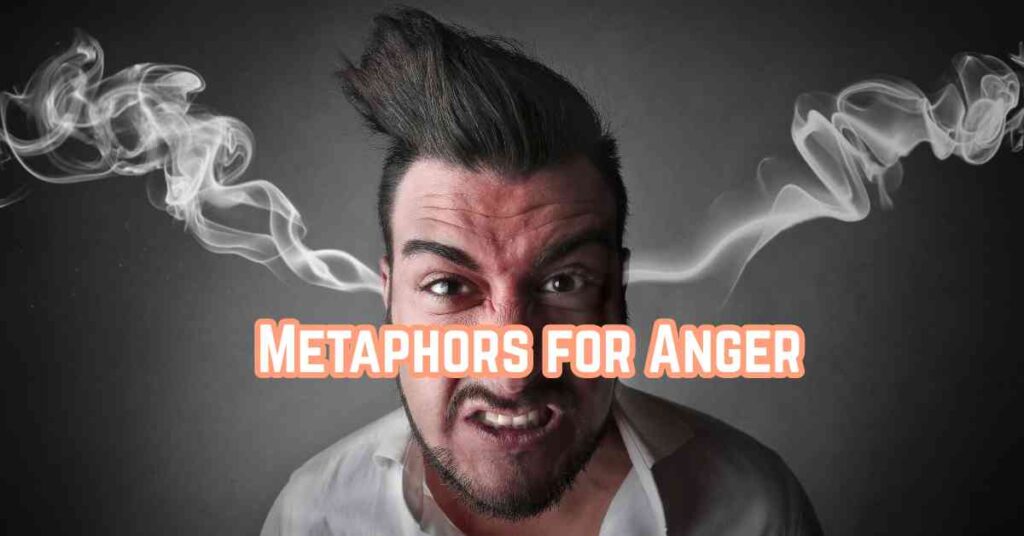

Anger, a powerful and complex emotion, often defies simple description. To truly capture its intensity and multifaceted nature, we frequently turn to metaphors. Understanding these metaphors not only enriches our vocabulary but also deepens our comprehension of how we perceive and express anger. This article provides a comprehensive exploration of metaphors for anger, examining their structure, types, and usage. Whether you’re an English language learner, a writer seeking vivid imagery, or simply curious about the nuances of emotional expression, this guide offers valuable insights into the art of describing anger through figurative language.
This exploration will benefit anyone wishing to better understand the English language’s rich tapestry of figurative expressions, particularly those related to intense emotions. From students learning to write more expressively to professionals needing to communicate complex feelings effectively, this guide helps unlock the power of metaphorical language.
Table of Contents
- Introduction
- Definition of Metaphor and Its Role in Describing Anger
- Structural Breakdown of Anger Metaphors
- Types of Anger Metaphors
- Examples of Anger Metaphors
- Usage Rules for Anger Metaphors
- Common Mistakes When Using Anger Metaphors
- Practice Exercises
- Advanced Topics: Cultural Variations in Anger Metaphors
- Frequently Asked Questions
- Conclusion
Definition of Metaphor and Its Role in Describing Anger
A metaphor is a figure of speech that directly compares two unrelated things, asserting that one thing is another. Unlike similes, which use “like” or “as” to make comparisons, metaphors create a more direct and implicit connection. For instance, saying “He is a lion in battle” is a metaphor, while “He fights like a lion” is a simile.
Metaphors play a crucial role in describing abstract concepts like anger. Anger, being an internal emotional state, is often difficult to articulate directly. By using metaphors, we can make anger more tangible and relatable, drawing on concrete experiences to express its intensity, effects, and underlying causes. These metaphors enable us to convey the subjective experience of anger in a vivid and impactful way, allowing both the speaker and the listener to better understand the emotion being described. They give us a shared language to discuss something intensely personal and often overwhelming.
Structural Breakdown of Anger Metaphors
Anger metaphors, like all metaphors, consist of two main elements: the tenor and the vehicle. The tenor is the subject being described (in this case, anger), and the vehicle is the object or concept used to describe it. The effectiveness of a metaphor hinges on the relationship between the tenor and the vehicle. The vehicle should possess qualities that resonate with the experience of anger, such as intensity, uncontrollability, or destructiveness.
For example, in the metaphor “He was boiling with rage,” the tenor is “his anger,” and the vehicle is “boiling.” The connection lies in the shared quality of intense heat and pressure. Analyzing the structure of anger metaphors helps us understand how these figurative expressions create meaning and evoke emotional responses. Understanding this structure is key to crafting effective and evocative descriptions of anger.
Types of Anger Metaphors
Anger metaphors can be categorized based on the types of vehicles used to describe the emotion. Here are some common categories:
Anger as Heat
One of the most common ways to describe anger is through metaphors of heat. This stems from the physiological sensations associated with anger, such as increased heart rate, flushed skin, and a feeling of internal combustion. Heat metaphors often convey the intensity and suddenness of anger.
Anger as a Container
Container metaphors depict anger as something that can be held within a person, building up pressure until it eventually explodes or overflows. These metaphors highlight the idea of anger as something that needs to be managed or controlled.
Anger as a Wild Animal
Comparing anger to a wild animal emphasizes its untamed and destructive nature. These metaphors often suggest a loss of control and the potential for violence.
Anger as a Natural Disaster
Natural disaster metaphors illustrate the overwhelming and destructive power of anger. They often convey the idea that anger can cause widespread damage and leave lasting scars.
Anger as Illness
This type of metaphor depicts anger as a disease or ailment that can infect and corrupt a person’s mind and body. It suggests that anger is something unhealthy and detrimental to well-being.
Anger as Color
Using color to describe anger is a synesthetic metaphor, appealing to our visual sense to convey an emotional state. Typically, red is associated with anger due to its connection with blood, heat, and intensity.
Examples of Anger Metaphors
To illustrate the different types of anger metaphors, here are some examples categorized by their vehicle:
Heat Metaphors
Heat metaphors are a staple when describing anger’s intensity. They effectively convey the feeling of rising internal pressure and the potential for explosive outbursts. The following table provides numerous examples of how heat metaphors are used to describe anger.
| Metaphor | Explanation |
|---|---|
| He was boiling with rage. | His anger was building up to a critical point. |
| She was steaming mad. | She was visibly angry and on the verge of an outburst. |
| His temper flared. | His anger erupted suddenly. |
| She was burning with resentment. | She felt a deep, smoldering anger. |
| He felt his blood boil. | He experienced a sudden surge of intense anger. |
| Her anger simmered beneath the surface. | Her anger was present but not yet expressed. |
| He was red-hot with fury. | He was extremely angry. |
| The argument heated up quickly. | The argument became more intense and angry. |
| He was fuming over the injustice. | He was seething with anger about something unfair. |
| Her words were fiery. | Her words were delivered with intense anger. |
| He erupted in anger. | He suddenly exploded with anger. |
| She felt a hot surge of anger. | She experienced a sudden and intense feeling of anger. |
| His face was flushed with anger. | His face turned red due to anger. |
| He was seething with anger. | He was internally boiling with anger. |
| She was about to blow her top. | She was on the verge of an angry outburst. |
| His anger was a slow burn. | His anger was gradually increasing over time. |
| He felt a wave of heat wash over him. | He experienced a sudden rush of anger. |
| She was incandescent with rage. | She was glowing with intense anger. |
| His anger was at a fever pitch. | His anger had reached its highest intensity. |
| He was scorching everyone with his words. | He was using angry words to hurt others. |
Container Metaphors
Container metaphors illustrate the build-up and release of anger, portraying it as something that can be contained and eventually explodes. These metaphors often focus on the internal experience of managing anger. The following table showcases various container metaphors used to describe anger.
| Metaphor | Explanation |
|---|---|
| He exploded with anger. | His anger suddenly burst out of control. |
| She bottled up her anger. | She suppressed her anger instead of expressing it. |
| He unleashed his fury. | He released his anger in a powerful way. |
| She was filled with rage. | She was completely consumed by anger. |
| He vented his anger. | He released his anger through words or actions. |
| She had a reservoir of anger. | She had a large amount of pent-up anger. |
| He poured out his anger. | He expressed his anger freely. |
| She contained her anger with great effort. | She tried hard to control her anger. |
| He was a pressure cooker about to burst. | He was on the verge of an explosive outburst of anger. |
| She let loose her anger. | She allowed her anger to be expressed without restraint. |
| He was bursting with anger. | He was full of anger and about to explode. |
| She had a well of anger inside her. | She had a deep and seemingly endless supply of anger. |
| He disgorged his anger upon them. | He released his anger in a forceful and unpleasant way. |
| She was choking with anger. | She was overwhelmed by anger and unable to express it properly. |
| He spewed his anger at everyone. | He projected his anger onto others in a harsh manner. |
| She had a vessel full of anger. | She was holding a significant amount of anger within her. |
| He spilled his anger all over the place. | He expressed his anger indiscriminately. |
| She held back her anger. | She restrained herself from expressing her anger. |
| He was a volcano ready to erupt. | He was on the verge of a major angry outburst. |
| She unloaded her anger on him. | She directed her anger towards him. |
Wild Animal Metaphors
Wild animal metaphors highlight the untamed and primal nature of anger, emphasizing its potential for aggression and destructiveness. These metaphors often portray anger as a force beyond rational control. The table below provides examples of wild animal metaphors for anger.
| Metaphor | Explanation |
|---|---|
| He roared with anger. | He expressed his anger in a loud and aggressive manner. |
| She was a cornered tiger. | She was fiercely defensive and ready to attack. |
| His anger was a raging beast. | His anger was uncontrollable and destructive. |
| She snapped at him. | She spoke to him in a sharp and angry tone. |
| He was growling with fury. | He was expressing his anger in a low and menacing way. |
| Her anger clawed at her insides. | Her anger was tearing her apart from within. |
| He was foaming at the mouth with rage. | He was extremely angry and irrational. |
| She was a viper ready to strike. | She was poised to lash out with her anger. |
| His anger was unleashed like a predator. | His anger was released with a predatory and destructive force. |
| She bared her teeth in anger. | She showed her anger in a fierce and aggressive way. |
| He was prowling with anger. | He was moving about restlessly, fueled by anger. |
| She was a ferocious lioness protecting her cubs. | She was fiercely protective and angry. |
| His anger was a wildcat ready to pounce. | His anger was unpredictable and ready to attack. |
| She hissed with anger. | She expressed her anger in a sharp, sibilant tone. |
| He was a rattlesnake ready to strike. | He was deceptively calm but ready to unleash his anger. |
| Her anger was like a pack of wolves tearing her apart. | Her anger was a collective force consuming her. |
| He charged at them in a fit of anger. | He moved aggressively towards them, driven by anger. |
| She was an angry hornet ready to sting. | She was quick to anger and inflict pain. |
| His anger was a shark circling its prey. | His anger was a menacing and relentless force. |
| She lashed out like a wounded animal. | She reacted aggressively due to her pain and anger. |
Natural Disaster Metaphors
Natural disaster metaphors emphasize the overwhelming and destructive impact of anger, often portraying it as an uncontrollable force that leaves devastation in its wake. These metaphors highlight the scale and intensity of the emotion. The following table presents examples of natural disaster metaphors used to describe anger.
| Metaphor | Explanation |
|---|---|
| He was a hurricane of anger. | His anger was powerful, destructive, and all-encompassing. |
| She was caught in a tsunami of rage. | She was overwhelmed by a massive wave of anger. |
| His anger was an earthquake that shook the room. | His anger caused a sudden and dramatic upheaval. |
| She was a volcano of pent-up anger. | She had a large amount of suppressed anger that was about to erupt. |
| His anger was a wildfire spreading rapidly. | His anger was quickly escalating and affecting everything around him. |
| She was a storm of fury. | She was displaying intense and turbulent anger. |
| His anger was a blizzard of harsh words. | His anger was expressed through a barrage of cutting remarks. |
| She was in the eye of the storm, trying to stay calm. | She was attempting to remain composed amidst the chaos of anger. |
| His anger was a landslide of accusations. | His anger was expressed through a torrent of accusations. |
| She was drowning in a flood of anger. | She was overwhelmed by a vast amount of anger. |
| His anger was a tornado tearing through their relationship. | His anger was causing significant damage to their relationship. |
| She was weathering a thunderstorm of criticism. | She was enduring a barrage of angry criticism. |
| His anger was a tidal wave of resentment. | His anger was a massive and overwhelming surge of resentment. |
| She was caught in the crosswinds of his anger. | She was affected by the unpredictable and chaotic nature of his anger. |
| His anger was a mudslide of insults. | His anger was expressed through a flow of demeaning insults. |
| She was facing a deluge of anger. | She was confronted with an overwhelming amount of anger. |
| His anger was an avalanche of accusations. | His anger was expressed through a sudden and overwhelming barrage of accusations. |
| She was navigating a minefield of his anger. | She was carefully trying to avoid triggering his anger. |
| His anger was a dust storm obscuring his judgment. | His anger was clouding his ability to think clearly. |
| She was trying to rebuild after the earthquake of his anger. | She was attempting to recover from the devastating impact of his anger. |
Illness Metaphors
Illness metaphors portray anger as a disease or ailment that can corrupt and harm an individual, emphasizing its unhealthy and destructive nature. These metaphors often suggest that anger is something that needs to be cured or managed. The table below provides several examples of illness metaphors used to describe anger.
| Metaphor | Explanation |
|---|---|
| He was consumed by anger. | His anger was completely taking over his thoughts and actions. |
| She was infected with resentment. | She was deeply affected by feelings of bitterness and anger. |
| His anger was a poison in his heart. | His anger was causing him emotional and spiritual harm. |
| She had a disease of anger. | She was suffering from a chronic and debilitating anger problem. |
| His anger was a cancer eating away at him. | His anger was gradually destroying him from within. |
| She was recovering from a bout of anger. | She was trying to heal and move on after an angry episode. |
| His anger was a plague on their relationship. | His anger was causing widespread damage and suffering in their relationship. |
| She was suffering from chronic anger. | She was experiencing persistent and long-lasting anger issues. |
| His anger was a virus spreading through his family. | His anger was affecting and infecting the people around him. |
| She was diagnosed with anger issues. | She had been identified as having a problem managing her anger. |
| His anger was a tumor growing inside him. | His anger was an unhealthy and destructive force that was getting worse over time. |
| She was seeking a cure for her anger. | She was looking for ways to overcome her anger problems. |
| His anger was a parasite feeding off his happiness. | His anger was consuming and destroying his joy and well-being. |
| She was battling her inner demons of anger. | She was fighting against her own internal struggles with anger. |
| His anger was a contagion affecting everyone he met. | His anger was spreading to and influencing the people he interacted with. |
| She was immunizing herself against his anger. | She was developing strategies to protect herself from the impact of his anger. |
| His anger was a malady afflicting his soul. | His anger was a deep-seated problem causing him spiritual and emotional distress. |
| She was trying to quarantine her anger. | She was attempting to isolate and contain her anger to prevent it from spreading. |
| His anger was a syndrome of unresolved issues. | His anger was a complex problem stemming from underlying emotional issues. |
| She was seeking therapy to treat her anger. | She was seeking professional help to address and manage her anger issues. |
Color Metaphors
Color metaphors use visual associations to convey the emotional intensity of anger, with red being the most common color linked to this emotion due to its associations with blood, heat, and intensity. These metaphors provide a vivid and immediate way to describe the feeling of anger. The table below lists several examples of color metaphors used to describe anger.
| Metaphor | Explanation |
|---|---|
| He saw red. | He became extremely angry. |
| She was purple with rage. | She was extremely angry, possibly to the point of being physically affected. |
| His face turned scarlet with anger. | His face became flushed and red due to intense anger. |
| She felt a crimson tide of anger rising within her. | She experienced a strong and overwhelming surge of anger. |
| He was seeing crimson. | He was experiencing intense anger that was clouding his judgment. |
| Her anger was a red flag. | Her anger was a warning sign of potential problems. |
| He painted the town red with his anger. | He expressed his anger in a public and dramatic way. |
| She had a fiery red temper. | She was known for her quick and intense anger. |
| His words were tinged with red. | His words were marked by anger and hostility. |
| She felt a wash of red consume her vision. | She experienced a sudden and overwhelming feeling of anger. |
| He was red in the face with fury. | His face was visibly flushed and red due to intense anger. |
| She had a red-hot rage. | She possessed an extreme and intense level of anger. |
| His anger cast a red shadow over the room. | His anger created a tense and hostile atmosphere. |
| She was burning red with indignation. | She was intensely angry and indignant. |
| He saw the world through red-tinted glasses. | His anger was influencing his perception of everything around him. |
| Her anger was a red stain on their relationship. | Her anger had left a lasting and negative impact on their relationship. |
| He was seeing red everywhere he looked. | His anger was pervasive and affecting all aspects of his life. |
| She had a red-alert level of anger. | She was experiencing an extremely high level of anger. |
| His anger was a red light flashing in his mind. | His anger was a warning sign that he needed to control himself. |
| She was red with frustration. | She was visibly angry and frustrated. |
Usage Rules for Anger Metaphors
When using metaphors for anger, it’s important to consider the following rules:
- Clarity: The metaphor should be easily understood and relatable. Avoid obscure or overly complex metaphors that might confuse the reader.
- Consistency: Maintain a consistent tone and imagery throughout your description. Mixing different types of metaphors can create a jarring effect.
- Context: Choose metaphors that are appropriate for the context and audience. A metaphor that works well in a novel might not be suitable for a formal report.
- Originality: While common metaphors can be effective, try to create original metaphors that offer a fresh perspective on anger.
- Impact: Ensure the metaphor effectively conveys the intensity and nuances of the anger you are trying to describe.
Common Mistakes When Using Anger Metaphors
Here are some common mistakes to avoid when using metaphors for anger:
- Mixed Metaphors: Combining unrelated metaphors that create contradictory imagery.
- Incorrect: “He was boiling with anger, but he kept a lid on it like a roaring lion.”
- Correct: “He was boiling with anger, struggling to keep a lid on it.”
- Clichés: Overusing common metaphors that have lost their impact.
- Cliché: “He was mad as a hornet.”
- Better: “His anger was a swarm of hornets, each sting sharper than the last.”
- Inappropriate Tone: Using metaphors that are too lighthearted or humorous for the context.
- Inappropriate: “He was as angry as a wet kitten.” (Unless used ironically)
- Better: “He was consumed by a dark and brooding anger.”
- Overuse: Relying too heavily on metaphors, which can make your writing seem forced or artificial.
- Overuse: “His anger was a volcano, erupting with fiery rage. It was a storm that threatened to drown everything in its path. He was a raging beast, ready to tear apart anyone who crossed him.”
- Better: “His anger was a volcano, erupting with fiery rage.” (Followed by more direct descriptions of his behavior)
Practice Exercises
Test your understanding of anger metaphors with these exercises:
Exercise 1: Identify the Type of Metaphor
Identify the type of anger metaphor used in each sentence (Heat, Container, Wild Animal, Natural Disaster, Illness, Color).
| Sentence | Type of Metaphor | Answer |
|---|---|---|
| 1. She was seething with anger. | Heat | |
| 2. He unleashed his fury on them. | Container | |
| 3. His anger roared through the room. | Wild Animal | |
| 4. She was a storm of anger. | Natural Disaster | |
| 5. He was consumed by resentment. | Illness | |
| 6. She saw red when she heard the news. | Color | |
| 7. He was boiling over with rage. | Heat | |
| 8. She bottled up her anger for years. | Container | |
| 9. His anger snapped like a cornered wolf. | Wild Animal | |
| 10. The argument erupted like a volcano. | Natural Disaster |
Exercise 2: Complete the Metaphor
Complete the following sentences with an appropriate metaphor for anger.
| Sentence | Answer |
|---|---|
| 1. His anger was like a __________ ready to strike. | rattlesnake |
| 2. She was a __________ of pent-up rage. | volcano |
| 3. He felt his blood __________ with anger. | boil |
| 4. Her anger was a __________ eating away at her soul. | poison/cancer |
| 5. He saw __________ when he heard the insult. | red |
| 6. She __________ her anger at him. | unleashed |
| 7. His anger was a __________ spreading through the team. | wildfire |
| 8. She was __________ with resentment. | filled |
| 9. He __________ at the injustice of the situation. | fumed |
| 10. Her anger was a __________ waiting to explode. | bomb |
Exercise 3: Create Your Own Metaphors
Write three original metaphors for anger, using different types of vehicles (e.g., technology, weather, etc.).
- Answer: His anger was a malfunctioning server, crashing the entire system of their relationship.
- Answer: Her anger was a dense fog, obscuring any chance of clear communication.
- Answer: His anger was a virus scan running endlessly, constantly flagging minor issues as critical threats.
Advanced Topics: Cultural Variations in Anger Metaphors
Metaphors for anger can vary significantly across cultures. While some metaphors, like heat metaphors, are relatively universal, others are culturally specific and reflect unique beliefs and experiences. For instance, some cultures may associate anger with specific animals or natural phenomena that are particularly relevant to their environment. Understanding these cultural variations is crucial for effective cross-cultural communication and avoiding misunderstandings. Researching and appreciating these differences can greatly enhance your understanding of language and culture.
Furthermore, the acceptability and intensity of anger expression also vary across cultures. Some cultures value emotional restraint, while others are more expressive. These cultural norms can influence the types of metaphors used to describe anger and the situations in which they are considered appropriate. Therefore, it’s essential to be mindful of cultural context when interpreting and using anger metaphors.
Frequently Asked Questions
- What is the difference between a metaphor and a simile?
A metaphor directly equates two unrelated things, stating that one is the other (e.g., “He is a lion”). A simile, on the other hand, uses “like” or “as” to make a comparison (e.g., “He fights like a lion”). Metaphors are more implicit and create a stronger connection, while similes are more explicit and offer a gentler comparison.
- Why are heat metaphors so commonly used to describe anger?
Heat metaphors resonate with the physiological sensations associated with anger, such as increased heart rate, flushed skin, and a feeling of
internal heat. This direct physical connection makes heat a natural and intuitive way to express the intensity of anger.
- How can I avoid using clichés when describing anger?
To avoid clichés, try to think beyond the obvious comparisons. Consider unique aspects of anger, such as its impact on your senses, your thoughts, or your behavior. Use vivid and specific language to create a fresh and original image. Brainstorm a list of potential vehicles and choose the one that best captures the specific nuance of anger you want to convey.
- Are some metaphors for anger more appropriate in certain contexts?
Yes, the appropriateness of an anger metaphor depends heavily on the context. In formal writing or professional settings, it’s best to use more restrained and subtle metaphors. In creative writing, you have more freedom to use intense and dramatic metaphors. Consider your audience and the overall tone of your communication when choosing a metaphor.
- How can understanding anger metaphors help me manage my own anger?
By recognizing the metaphors you use to describe your own anger, you can gain insight into how you perceive and experience the emotion. For example, if you often use container metaphors, you might realize that you tend to suppress your anger. This awareness can help you develop healthier coping mechanisms and communication strategies.
Conclusion
Metaphors are powerful tools for expressing the complex emotion of anger. By understanding the different types of anger metaphors and how to use them effectively, you can enhance your communication skills and gain a deeper appreciation for the nuances of language. Whether you’re a writer, a student, or simply someone interested in exploring the richness of emotional expression, mastering the art of anger metaphors will undoubtedly enrich your understanding of both language and the human experience. So, embrace the power of figurative language and let your words ignite with the vivid imagery of well-crafted metaphors.