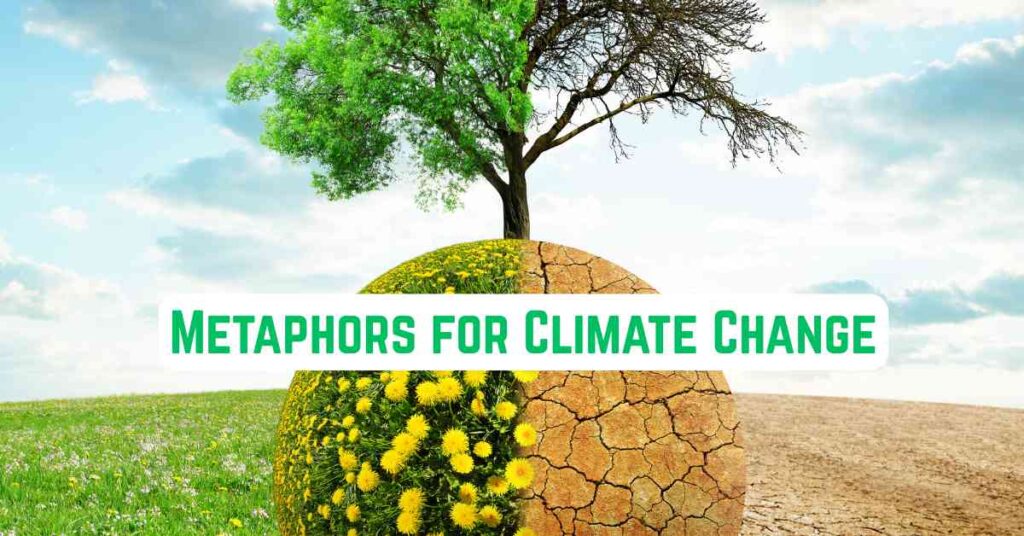

Climate change is a complex and often overwhelming issue, making it challenging to communicate effectively. Metaphors play a crucial role in helping us understand and discuss this global crisis by framing abstract concepts in relatable terms. This article explores the use of metaphors in the context of climate change, examining their structure, types, and impact on our understanding and perception. This guide is beneficial for English language learners, environmental communication professionals, and anyone interested in how language shapes our understanding of complex issues.
By understanding how metaphors function in this context, we can become more critical consumers of information and more effective communicators about climate change. This exploration will enhance your comprehension of English grammar and figurative language, and equip you with the tools to analyze and interpret metaphorical expressions related to one of the most pressing issues of our time.
Table of Contents
- Introduction
- Definition of Metaphor and Climate Change Metaphors
- What is a Metaphor?
- Defining Climate Change Metaphors
- Function and Classification
- Structural Breakdown of Climate Change Metaphors
- Source Domain
- Target Domain
- Mapping
- Types and Categories of Climate Change Metaphors
- War Metaphors
- Economic Metaphors
- Natural Disaster Metaphors
- Health Metaphors
- Journey Metaphors
- Examples of Climate Change Metaphors
- War Metaphor Examples
- Economic Metaphor Examples
- Natural Disaster Metaphor Examples
- Health Metaphor Examples
- Journey Metaphor Examples
- Usage Rules for Climate Change Metaphors
- Consistency and Clarity
- Avoiding Misinterpretation
- Considering Emotional Impact
- Common Mistakes When Using Climate Change Metaphors
- Overuse of Metaphors
- Mixed Metaphors
- Inappropriate Metaphors
- Practice Exercises
- Exercise 1: Identifying Metaphors
- Exercise 2: Creating Metaphors
- Exercise 3: Analyzing Metaphors
- Advanced Topics in Climate Change Metaphors
- Cultural Differences in Metaphorical Understanding
- Framing Effects of Metaphors
- Metaphorical Reasoning and Climate Policy
- Frequently Asked Questions
- Conclusion
Definition of Metaphor and Climate Change Metaphors
What is a Metaphor?
A metaphor is a figure of speech that directly compares two unrelated things, asserting that one *is* the other to suggest a likeness or analogy. Unlike similes, which use “like” or “as” to make a comparison, metaphors create a more forceful identification. The strength of a metaphor lies in its ability to transfer qualities from one concept to another, creating new understanding and insights. Metaphors are essential tools in language, allowing us to understand abstract or complex ideas in more concrete and relatable terms.
Consider the example, “Time is a thief.” This metaphor doesn’t literally mean that time steals objects. Instead, it suggests that time, like a thief, takes something valuable away from us – our youth, opportunities, or moments. This metaphorical comparison helps us grasp the abstract concept of time’s passage and its impact on our lives. The power of metaphor resides in its capacity to evoke emotions, shape perceptions, and influence actions through subtle yet potent linguistic connections.
Defining Climate Change Metaphors
Climate change metaphors are figurative expressions that frame the complex reality of climate change in more accessible and understandable terms. They use familiar concepts to explain the abstract and often overwhelming aspects of global warming, greenhouse gas emissions, and their consequences. These metaphors are pivotal in shaping public perception, influencing policy decisions, and motivating action on climate change. They help bridge the gap between scientific data and public understanding by providing relatable analogies.
For example, referring to climate change as a “slow-motion catastrophe” helps people grasp the potential severity and long-term impact of the issue, even though the effects may not be immediately apparent. Similarly, describing the Earth as having a “fever” makes the abstract idea of rising global temperatures more tangible and relatable to personal experience. Effective climate change metaphors can cut through the complexity and communicate the urgency and scale of the problem to diverse audiences.
Function and Classification
Climate change metaphors serve several important functions. Primarily, they simplify complex information, making it easier for the public to understand the science behind climate change. They also evoke emotional responses, which can motivate action and engagement. Furthermore, metaphors frame the issue in specific ways, influencing how people perceive the causes, consequences, and potential solutions to climate change. The classification of these metaphors can be based on the source domains they draw from, such as war, economics, health, or natural disasters.
The effectiveness of a climate change metaphor depends on its ability to resonate with the audience and accurately convey the intended message. For instance, using war metaphors can emphasize the urgency and severity of the situation, but it might also create a sense of hopelessness or polarization. Economic metaphors can highlight the costs and benefits of different climate policies, but they might also reduce the issue to a purely financial calculation. Therefore, the careful selection and use of metaphors are crucial in climate change communication.
Structural Breakdown of Climate Change Metaphors
Source Domain
The source domain is the familiar concept or area of experience that is used to understand the target domain. In the context of climate change metaphors, the source domain could be anything from war and economics to health and natural disasters. The characteristics and attributes of the source domain are then mapped onto the target domain to create a metaphorical understanding.
For instance, if we use “war” as the source domain, we might talk about “fighting” climate change or “battling” emissions. The characteristics of war, such as conflict, urgency, and the need for strategic action, are transferred to our understanding of climate change. Choosing an appropriate and relatable source domain is crucial for the metaphor to be effective.
Target Domain
The target domain is the abstract or complex concept that we are trying to understand. In the case of climate change metaphors, the target domain is climate change itself, with all its associated complexities and uncertainties. The metaphor helps to make the target domain more accessible by relating it to the more familiar source domain.
Climate change encompasses a wide range of phenomena, including rising temperatures, sea-level rise, extreme weather events, and ecosystem disruption. These are complex and interconnected issues that can be difficult for the general public to grasp. By using metaphors, we can simplify these concepts and make them more relatable. For example, instead of talking about “global average temperature increase,” we might say the Earth has a “fever,” making the concept more immediate and understandable.
Mapping
Mapping is the process of transferring characteristics and attributes from the source domain to the target domain. This involves identifying the similarities and connections between the two domains and using them to create a coherent and meaningful metaphorical understanding. Effective mapping is essential for a successful metaphor.
For example, when we use the metaphor “climate change is a marathon,” we are mapping the attributes of a marathon (long duration, endurance, gradual progress) onto the challenges of addressing climate change. This mapping suggests that tackling climate change requires long-term commitment, sustained effort, and patience, as opposed to a quick fix. The effectiveness of this metaphor depends on how well the audience understands the attributes of a marathon and how relevant they are to the challenges of climate change.
Types and Categories of Climate Change Metaphors
War Metaphors
War metaphors frame climate change as a battle or conflict, often emphasizing the urgency and severity of the situation. Terms like “fighting climate change,” “battling emissions,” and “front lines of climate change” are common examples. These metaphors can be effective in mobilizing action and creating a sense of shared purpose, but they can also be polarizing and create a sense of hopelessness.
A war metaphor can be powerful in conveying the need for immediate and decisive action. It highlights the idea that climate change is an enemy that must be defeated. However, it’s important to consider the potential negative consequences of using war metaphors, such as promoting a sense of division and conflict rather than cooperation and collaboration.
Economic Metaphors
Economic metaphors frame climate change in terms of costs, benefits, and investments. Phrases like “carbon tax,” “green economy,” and “investing in renewable energy” are characteristic of this category. These metaphors can be useful for highlighting the financial implications of climate change and the economic opportunities associated with sustainable solutions.
Economic metaphors can help policymakers and the public evaluate the costs and benefits of different climate policies. They can also emphasize the potential for economic growth and job creation in the green sector. However, it’s important to avoid reducing climate change to a purely financial calculation and to consider the ethical and social dimensions of the problem.
Natural Disaster Metaphors
Natural disaster metaphors compare climate change to events like hurricanes, floods, and droughts, emphasizing the destructive potential of a changing climate. Phrases like “climate catastrophe,” “environmental disaster,” and “rising tides” are typical examples. These metaphors can be effective in conveying the severity and urgency of the situation, but they can also create a sense of fear and fatalism.
By linking climate change to tangible and devastating events, these metaphors can make the abstract consequences of climate change more real and immediate. However, it’s important to avoid sensationalizing the issue and to focus on solutions and adaptation strategies rather than simply dwelling on the negative impacts.
Health Metaphors
Health metaphors frame climate change as a disease or illness affecting the planet. Examples include “Earth’s fever,” “sick planet,” and “environmental health.” These metaphors can help people understand the interconnectedness of environmental and human well-being, and they can also motivate action by appealing to our instinct to protect our health.
Health metaphors can be particularly effective because they resonate with personal experiences and concerns. They can also highlight the idea that climate change is a systemic problem that requires a holistic approach to treatment and prevention. However, it’s important to avoid oversimplifying the issue and to recognize the complex social and environmental factors that contribute to climate change.
Journey Metaphors
Journey metaphors frame addressing climate change as a path or voyage, emphasizing the need for progress and direction. Phrases like “path to sustainability,” “transition to a green economy,” and “climate action journey” are common examples. These metaphors can be useful for conveying a sense of hope and progress, and they can also highlight the importance of setting goals and tracking progress.
Journey metaphors can help people visualize the process of addressing climate change as a collective effort with a clear destination. They can also emphasize the importance of learning from our mistakes and adapting our strategies along the way. However, it’s important to avoid portraying the journey as a linear or easy one and to acknowledge the challenges and setbacks that we will inevitably encounter.
Examples of Climate Change Metaphors
Here are several examples of climate change metaphors, categorized by type, to illustrate their usage and impact.
War Metaphor Examples
The following table provides examples of war metaphors used in the context of climate change, along with explanations of their intended meaning and impact.
| Metaphor | Explanation | Impact |
|---|---|---|
| “Fighting climate change” | Treating climate change as an enemy to be defeated. | Mobilizes action, creates a sense of urgency. |
| “Battling emissions” | Reducing emissions like fighting an opponent. | Emphasizes the need for aggressive action. |
| “Front lines of climate change” | Areas most affected by climate change are like battlefields. | Highlights the immediate and severe impacts. |
| “Climate change is our biggest enemy” | Positions climate change as the primary threat. | Focuses attention and resources on the issue. |
| “We must win the war against climate change” | Framing action as a necessary victory. | Instills a sense of determination and resolve. |
| “Deploying renewable energy technologies” | Using renewable energy like deploying troops. | Suggests a strategic and organized approach. |
| “Attacking the root causes of climate change” | Addressing the fundamental drivers of climate change. | Emphasizes the need for systemic change. |
| “A climate change arms race” | Countries competing to reduce emissions. | Highlights the competitive aspect of climate action. |
| “Climate change is a battle for survival” | Positions climate action as essential for existence. | Conveys the high stakes of the issue. |
| “The climate change resistance” | Efforts to fight climate change are framed as resistance. | Inspires collective action and defiance. |
| “Climate change is an all-out assault on our planet” | Emphasizing the aggressive and destructive nature of climate change. | Creates a sense of urgency and alarm. |
| “Carbon emissions are the enemy’s weapons” | Framing carbon emissions as the tools of destruction. | Highlights the need to reduce emissions aggressively. |
| “We need a climate change defense strategy” | Suggesting a comprehensive plan to protect against climate impacts. | Emphasizes preparedness and resilience. |
| “Climate change is a war we cannot afford to lose” | Highlighting the catastrophic consequences of inaction. | Motivates action by emphasizing the stakes. |
| “The battle against rising sea levels” | Framing efforts to mitigate sea-level rise as a fight. | Conveys the scale and urgency of the challenge. |
| “Climate change is a silent killer” | Comparing climate change to a stealthy and deadly adversary. | Raises awareness of the hidden dangers of climate change. |
| “We must launch an offensive against deforestation” | Suggesting aggressive action to combat deforestation. | Emphasizes the need for proactive measures. |
| “Climate change is a war of attrition” | Highlighting the long-term and persistent nature of the challenge. | Stresses the importance of sustained effort. |
| “We are on a war footing against climate change” | Suggesting that society should mobilize as if at war. | Conveys the seriousness and urgency of the situation. |
| “Climate change is an existential threat” | Positioning climate change as a danger to our very existence. | Motivates action by emphasizing the ultimate stakes. |
| “We are in a climate crisis” | Treating climate change as an emergency requiring immediate action. | Conveys the severity and urgency of the situation. |
| “The fight for a sustainable future” | Framing efforts to achieve sustainability as a struggle. | Inspires dedication and perseverance. |
| “We must defend our planet against climate change” | Positioning climate action as a protective measure. | Appeals to a sense of responsibility and stewardship. |
| “Climate change is a constant threat” | Highlighting the ongoing and pervasive nature of the challenge. | Stresses the need for vigilance and continuous effort. |
| “We are losing ground in the fight against climate change” | Expressing concern about the lack of progress. | Motivates renewed effort and determination. |
This table demonstrates how war metaphors are used to create a sense of urgency and importance around the issue of climate change. The use of words like “fighting,” “battle,” and “enemy” aims to mobilize action and convey the seriousness of the threat.
Economic Metaphor Examples
The following table provides examples of economic metaphors used in the context of climate change.
| Metaphor | Explanation | Impact |
|---|---|---|
| “Carbon tax” | Taxing carbon emissions to disincentivize pollution. | Highlights the economic cost of pollution. |
| “Green economy” | An economy based on sustainable practices. | Emphasizes the economic benefits of sustainability. |
| “Investing in renewable energy” | Allocating resources to develop renewable energy sources. | Highlights the financial aspect of climate solutions. |
| “Climate change is a market failure” | The market is not accounting for the environmental costs. | Highlights the need for government intervention. |
| “The cost of inaction” | The economic consequences of not addressing climate change. | Emphasizes the financial risks of inaction. |
| “Carbon credits” | Allowances to emit a certain amount of carbon. | Creates a market-based approach to reducing emissions. |
| “Green bonds” | Bonds used to finance environmental projects. | Encourages investment in sustainable initiatives. |
| “Sustainable investment” | Investing in companies with environmentally responsible practices. | Promotes ethical and environmentally conscious investing. |
| “The price of pollution” | The economic cost of environmental damage. | Highlights the financial burden of pollution. |
| “Energy efficiency is a cost-saving measure” | Reducing energy consumption to save money. | Emphasizes the economic benefits of efficiency. |
| “Divesting from fossil fuels” | Selling off investments in fossil fuel companies. | Highlights the financial risks of fossil fuel investments. |
| “The economic burden of climate change” | The financial strain caused by climate impacts. | Emphasizes the economic challenges of climate change. |
| “A carbon bubble” | The overvaluation of fossil fuel assets. | Highlights the financial risks of fossil fuel investments. |
| “The return on investment in climate action” | The economic benefits of taking action on climate change. | Emphasizes the financial rewards of sustainability. |
| “A green stimulus package” | Government spending to promote green industries. | Highlights the potential for economic growth through climate action. |
| “The business case for sustainability” | The economic reasons for adopting sustainable practices. | Emphasizes the financial benefits of sustainability. |
| “A carbon market” | A system for trading carbon emissions permits. | Creates a market-based approach to reducing emissions. |
| “The financial risks of climate change” | The potential economic losses caused by climate impacts. | Emphasizes the financial dangers of inaction. |
| “A low-carbon economy” | An economy with minimal carbon emissions. | Highlights the need for a transition to sustainable energy sources. |
| “The economic incentives for renewable energy” | Financial benefits that encourage the use of renewable energy. | Promotes the adoption of sustainable energy sources. |
| “The cost-effectiveness of climate solutions” | The economic efficiency of climate action measures. | Emphasizes the affordability of climate solutions. |
| “The financial opportunities in the green sector” | The potential for profit and growth in environmentally friendly industries. | Encourages investment and innovation in sustainable technologies. |
| “The economic impact of extreme weather events” | The financial losses caused by climate-related disasters. | Highlights the economic consequences of climate change. |
| “A sustainable business model” | A business approach that balances profit with environmental responsibility. | Promotes ethical and environmentally conscious business practices. |
| “The economic benefits of energy conservation” | The financial savings from reducing energy consumption. | Emphasizes the economic advantages of energy efficiency. |
This table illustrates the use of economic metaphors to frame climate change in terms of financial costs, benefits, and investments. These metaphors are often used to appeal to policymakers and business leaders who are concerned about the economic implications of climate change.
Natural Disaster Metaphor Examples
The following table provides examples of natural disaster metaphors used to describe climate change.
| Metaphor | Explanation | Impact |
|---|---|---|
| “Climate catastrophe” | Comparing climate change to a catastrophic event. | Emphasizes the severity and urgency of the situation. |
| “Environmental disaster” | Framing climate change as a major environmental crisis. | Highlights the destructive impact on the environment. |
| “Rising tides” | Referring to sea-level rise as an impending flood. | Conveys the threat of coastal inundation. |
| “A climate tsunami” | Comparing climate change to a sudden and overwhelming disaster. | Emphasizes the potential for rapid and devastating impacts. |
| “The drought of climate action” | Describing the lack of progress in addressing climate change. | Highlights the need for more urgent and effective measures. |
| “A climate heatwave” | Referring to periods of extreme heat caused by climate change. | Conveys the dangers of rising temperatures. |
| “The storm of climate change” | Comparing climate change to a destructive and chaotic force. | Emphasizes the disruptive potential of climate change. |
| “A climate wildfire” | Referring to the spread of environmental degradation. | Highlights the rapid and uncontrolled nature of climate impacts. |
| “The floodgates are open” | Suggesting that climate impacts are now unstoppable. | Conveys a sense of urgency and potential for irreversible damage. |
| “A climate landslide” | Comparing climate change to a sudden and catastrophic collapse. | Emphasizes the potential for widespread and devastating consequences. |
| “The earthquake of climate change” | Highlighting the sudden and disruptive nature of climate impacts. | Emphasizes the potential for unexpected and severe consequences. |
| “A climate hurricane” | Comparing climate change to a powerful and destructive storm. | Conveys the intensity and potential for widespread damage. |
| “The ice age of inaction” | Describing the consequences of failing to address climate change. | Highlights the potential for severe and long-lasting impacts. |
| “A climate avalanche” | Comparing climate change to a sudden and overwhelming force. | Emphasizes the potential for rapid and catastrophic consequences. |
| “The desertification of our planet” | Highlighting the spread of arid and barren landscapes. | Conveys the threat of environmental degradation and loss of biodiversity. |
| “A climate inferno” | Comparing climate change to a raging and destructive fire. | Emphasizes the potential for widespread devastation. |
| “The plague of pollution” | Describing the pervasive and harmful effects of pollution. | Highlights the need for urgent action to protect environmental health. |
| “A climate vortex” | Comparing climate change to a swirling and chaotic force. | Emphasizes the unpredictable and destructive nature of climate impacts. |
| “The breaking point of our planet” | Suggesting that the Earth is nearing its capacity to withstand climate impacts. | Conveys a sense of urgency and potential for irreversible damage. |
| “A climate implosion” | Comparing climate change to a sudden and catastrophic collapse. | Emphasizes the potential for widespread and devastating consequences. |
| “The unraveling of ecosystems” | Highlighting the disintegration of natural environments. | Conveys the threat of biodiversity loss and environmental degradation. |
| “A climate desert” | Describing the consequences of failing to address climate change. | Highlights the potential for severe and long-lasting impacts. |
| “The climate breaking point” | Suggesting that the Earth is nearing its capacity to withstand climate impacts. | Conveys a sense of urgency and potential for irreversible damage. |
| “A weather apocalypse” | Comparing climate change to a catastrophic event. | Emphasizes the severity and urgency of the situation. |
| “Environmental unraveling” | Highlighting the disintegration of natural environments. | Conveys the threat of biodiversity loss and environmental degradation. |
This table showcases how natural disaster metaphors are used to convey the destructive potential of climate change, making the abstract concept more tangible and alarming.
Health Metaphor Examples
The following table provides examples of health metaphors used in the context of climate change.
| Metaphor | Explanation | Impact |
|---|---|---|
| “Earth’s fever” | Comparing rising global temperatures to a fever. | Makes the concept of global warming more relatable. |
| “Sick planet” | Framing the Earth as being ill due to climate change. | Emphasizes the need for healing and restoration. |
| “Environmental health” | Relating the well-being of the environment to human health. | Highlights the interconnectedness of environmental and human health. |
| “Climate change is a disease” | Comparing climate change to a harmful illness affecting the planet. | Emphasizes the need for a cure and preventative measures. |
| “The planet is on life support” | Suggesting that the Earth is in a critical condition. | Conveys a sense of urgency and the need for immediate intervention. |
| “Climate change is a chronic illness” | Highlighting the long-term and persistent nature of climate impacts. | Stresses the importance of sustained effort and ongoing management. |
| “The Earth is suffering from a respiratory illness” | Comparing air pollution to a disease affecting the planet’s ability to breathe. | Emphasizes the need for clean air and reduced emissions. |
| “Climate change is a global pandemic” | Comparing climate change to a widespread and devastating disease. | Highlights the need for collective action and international cooperation. |
| “The Earth needs intensive care” | Suggesting that the planet requires immediate and comprehensive treatment. | Conveys a sense of urgency and the need for drastic measures. |
| “Climate change is a silent killer” | Comparing climate change to a stealthy and deadly adversary. | Raises awareness of the hidden dangers and long-term impacts. |
| “The planet is experiencing organ failure” | Highlighting the degradation of essential ecosystems and natural resources. | Emphasizes the severity and interconnectedness of environmental problems. |
| “Climate change is a spreading infection” | Comparing the impacts of climate change to the spread of a disease. | Highlights the need for containment and preventative measures. |
| “The Earth is in critical condition” | Suggesting that the planet is nearing a point of irreversible damage. | Conveys a sense of urgency and the need for immediate action. |
| “Climate change is a toxin” | Comparing the harmful effects of climate change to a poisonous substance. | Emphasizes the need for detoxification and clean-up efforts. |
| “The planet needs a check-up” | Suggesting that we need to assess the health of the Earth and identify problems. | Highlights the importance of monitoring and evaluation. |
| “Climate change is a debilitating condition” | Comparing climate change to a disease that weakens and impairs the planet. | Emphasizes the need for rehabilitation and resilience-building. |
| “The Earth is showing symptoms of climate change” | Highlighting the visible signs and impacts of climate change. | Raises awareness of the observable effects of climate change. |
| “Climate change is a self-inflicted wound” | Suggesting that our actions are causing harm to the planet. | Emphasizes the need for personal responsibility and behavioral change. |
| “The planet needs a transfusion of green energy” | Comparing the need for renewable energy to a life-saving medical procedure. | Highlights the importance of transitioning to sustainable energy sources. |
| “Climate change is a genetic mutation” | Comparing climate change to a fundamental alteration of the planet’s systems. | Emphasizes the far-reaching and irreversible nature of climate impacts. |
| “The Earth is in a coma” | Suggesting that the planet is unresponsive and in need of resuscitation. | Conveys a sense of urgency and the need for dramatic intervention. |
| “Climate change is a parasitic infection” | Comparing the impacts of climate change to a harmful organism feeding off the planet. | Highlights the need for eradication and restoration. |
| “The planet needs a transplant of sustainable practices” | Comparing the need for sustainable solutions to a life-saving medical procedure. | Emphasizes the importance of adopting environmentally responsible behaviors. |
| “Climate change is a terminal illness” | Comparing climate change to a disease that will ultimately lead to death. | Conveys a sense of urgency and the need for immediate action. |
| “The Earth is showing signs of organ failure” | Highlighting the degradation of essential ecosystems and natural resources. | Emphasizes the severity and interconnectedness of environmental problems. |
This table demonstrates how health metaphors are used to make climate change more relatable by comparing it to illnesses and health conditions that people are familiar with. This approach can help to humanize the issue and motivate action by appealing to our instinct to protect our health.
Journey Metaphor Examples
The following table provides examples of journey metaphors used in the context of climate change.
| Metaphor | Explanation | Impact | |
|---|---|---|---|
| “Path to sustainability” | Framing sustainability as a destination. | Conveys a sense of direction and progress. | |
| “Transition to a green economy” | Describing the shift to a sustainable economic system. | Highlights the process and direction of change. | |
| “Climate action journey” | Referring to the collective efforts to address climate change. | Emphasizes the ongoing nature of the work. | |
| “The | “The road to a sustainable future” | Framing sustainability as a destination. | Conveys a sense of direction and progress toward a positive outcome. |
| “Navigating the climate crisis” | Comparing addressing climate change to steering a ship through a storm. | Emphasizes the challenges and the need for skillful guidance. | |
| “The climate change marathon” | Highlighting the long-term and enduring nature of the effort. | Stresses the importance of perseverance and sustained commitment. | |
| “Embarking on a climate action voyage” | Framing climate action as an adventurous and purposeful journey. | Inspires a sense of exploration and discovery. | |
| “The climb towards a greener world” | Comparing the effort to achieve sustainability to a challenging ascent. | Emphasizes the difficulty and the rewards of reaching the goal. | |
| “The climate change expedition” | Framing climate action as a collective and exploratory endeavor. | Inspires a sense of shared purpose and discovery. | |
| “Charting a course for a sustainable future” | Comparing the effort to plan and implement sustainable practices to navigation. | Emphasizes the need for strategic planning and direction. | |
| “The climate action pilgrimage” | Framing climate action as a meaningful and transformative journey. | Inspires a sense of dedication and spiritual purpose. | |
| “The voyage towards a carbon-neutral economy” | Comparing the transition to a carbon-neutral economy to a long and challenging journey. | Emphasizes the scale and complexity of the undertaking. | |
| “Blazing a trail for future generations” | Suggesting that current efforts are creating new opportunities for future generations. | Inspires a sense of legacy and responsibility. | |
| “The climate action trek” | Framing climate action as a challenging and rewarding journey. | Emphasizes the need for perseverance and resilience. | |
| “Sailing towards a sustainable horizon” | Comparing the pursuit of sustainability to a journey towards a distant goal. | Inspires a sense of hope and optimism. | |
| “The climate action quest” | Framing climate action as a noble and important mission. | Inspires a sense of purpose and determination. | |
| “The journey of a thousand miles begins with a single step” | Emphasizing the importance of taking initial actions. | Encourages individuals to start making small changes. | |
| “The climate action pilgrimage” | Framing climate action as a meaningful and transformative journey. | Inspires a sense of spiritual purpose and dedication. | |
| “The path to a resilient future” | Highlighting the importance of developing adaptive capacity. | Emphasizes the need for preparedness and flexibility. | |
| “The voyage towards a carbon-free world” | Comparing the transition to a carbon-free world to a long and challenging journey. | Emphasizes the scale and complexity of the undertaking. | |
| “The climb to a sustainable summit” | Suggesting that achieving sustainability is a difficult but worthwhile goal. | Inspires a sense of ambition and determination. | |
| “The climate action roadmap” | Comparing a plan for climate action to a detailed map. | Emphasizes the need for strategic planning and guidance. | |
| “The path of least resistance” | Suggesting that certain actions are easier and more effective. | Encourages individuals to adopt simple and practical solutions. | |
| “The long and winding road to sustainability” | Highlighting the challenges and complexities of achieving sustainability. | Emphasizes the need for patience and perseverance. | |
| “The journey to a cleaner, greener world” | Framing the pursuit of environmental quality as a transformative journey. | Inspires a sense of hope and optimism. | |
| “The climate action express” | Suggesting that rapid progress is possible with concerted effort. | Emphasizes the need for urgent and decisive action. |
This table illustrates how journey metaphors are used to convey a sense of progress, direction, and collective effort in addressing climate change. These metaphors can be particularly effective in inspiring hope and motivating long-term commitment.
Usage Rules for Climate Change Metaphors
To effectively use climate change metaphors, it’s important to follow certain guidelines. These rules ensure that the metaphors are clear, consistent, and appropriate for the intended audience. By adhering to these principles, communicators can avoid confusion and maximize the impact of their message.
Consistency and Clarity
Consistency and clarity are crucial when using climate change metaphors. A metaphor should be maintained consistently throughout a discussion to avoid confusing the audience. Clarity ensures that the metaphor is easily understood and accurately conveys the intended meaning. Inconsistent or unclear metaphors can undermine the message and create misunderstandings.
For example, if you start by using the “war” metaphor, stick to terms and concepts related to war. Avoid mixing it with health metaphors, which could create a mixed and confusing message. Ensure that the attributes you are mapping from the source domain to the target domain are clear and easily recognizable by your audience.
Avoiding Misinterpretation
It’s crucial to choose metaphors that are less likely to be misinterpreted. Consider the audience’s background, culture, and prior knowledge when selecting a metaphor. A metaphor that resonates with one group may be confusing or even offensive to another. To avoid misinterpretation, test the metaphor with a sample audience and gather feedback.
Also, be aware of the potential negative connotations of certain metaphors. For example, war metaphors can be polarizing and may not be appropriate for audiences who are sensitive to violence or conflict. Ensure that the metaphor aligns with the overall tone and objectives of your communication.
Considering Emotional Impact
Metaphors can evoke strong emotional responses, so it’s important to consider the emotional impact of your chosen metaphor. A metaphor that is too alarming or pessimistic can create a sense of hopelessness and discourage action. Conversely, a metaphor that is too optimistic or dismissive can downplay the severity of the issue. Strive for a balance that informs and motivates without overwhelming the audience.
For example, using health metaphors can evoke empathy and concern, but it’s important to avoid sensationalizing the issue or creating unnecessary fear. Frame the metaphor in a way that inspires hope and highlights the potential for healing and recovery. Be mindful of the emotional well-being of your audience and tailor your message accordingly.
Common Mistakes When Using Climate Change Metaphors
Several common mistakes can undermine the effectiveness of climate change metaphors. These errors can lead to confusion, misinterpretation, or even alienation of the audience. By being aware of these pitfalls, communicators can avoid them and use metaphors more effectively.
Overuse of Metaphors
While metaphors can be powerful tools, overuse can diminish their impact and make communication seem contrived. Too many metaphors in a short span can overwhelm the audience and obscure the underlying message. Use metaphors sparingly and strategically, reserving them for key points or complex concepts that need clarification.
Instead of relying solely on metaphors, balance them with concrete data, examples, and explanations. This approach will provide a more well-rounded and persuasive message. Remember that the goal is to enhance understanding, not to impress with linguistic flair.
Mixed Metaphors
A mixed metaphor combines elements of different metaphors that are incongruous or illogical. This can create a confusing and often humorous effect, undermining the credibility of the communicator. Avoid mixing metaphors that clash or create nonsensical images.
For example, saying “We must fight the rising tide of climate change to heal the Earth’s fever” mixes a war metaphor (“fight”), a natural disaster metaphor (“rising tide”), and a health metaphor (“heal the Earth’s fever”). This creates a confused and ineffective image. Instead, choose one consistent metaphor and stick to it.
Inappropriate Metaphors
An inappropriate metaphor is one that is insensitive, offensive, or irrelevant to the audience or the context. This can damage the communicator’s credibility and alienate the audience. Consider the cultural, social, and emotional context when choosing a metaphor. Avoid metaphors that trivialize the issue or exploit sensitive topics.
For example, using metaphors that reference specific cultural or historical events that the audience may not be familiar with can lead to confusion or misinterpretation. Similarly, using metaphors that make light of serious consequences can be seen as insensitive and disrespectful. Choose metaphors that are universally relatable and appropriate for the intended audience.
Practice Exercises
To reinforce your understanding of climate change metaphors, try these practice exercises. These activities will help you identify, create, and analyze metaphors in different contexts.
Exercise 1: Identifying Metaphors
Read the following sentences and identify the climate change metaphors used in each. Explain the source and target domains, and describe the mapping between them.
- “Climate change is a ticking time bomb.”
- “We need to build a bridge to a sustainable future.”
- “The Earth is gasping for breath.”
- “Climate change is derailing our progress.”
- “We are at a crossroads in the fight against climate change.”
Answer Key:
-
Metaphor: “Climate change is a ticking time bomb.”
Source Domain: Ticking time bomb (danger, urgency)
Target Domain: Climate change (imminent threat)
Mapping: The impending explosion of the bomb maps onto the potential catastrophic consequences of climate change if not addressed promptly. -
Metaphor: “We need to build a bridge to a sustainable future.”
Source Domain: Building a bridge (connection, progress)
Target Domain: Achieving a sustainable future (transition, solution)
Mapping: The bridge represents the actions and strategies needed to transition from our current unsustainable practices to a sustainable future. -
Metaphor: “The Earth is gasping for breath.”
Source Domain: Gasping for breath (suffocation, distress)
Target Domain: Environmental degradation (pollution, depletion of resources)
Mapping: The Earth’s inability to “breathe” maps onto the degradation of air quality and ecosystems due to pollution and climate change. -
Metaphor: “Climate change is derailing our progress.”
Source Domain: Derailing a train (disruption, setback)
Target Domain: Societal and economic advancement (progress, development)
Mapping: The train being derailed represents how climate change is hindering and reversing the progress made in various sectors. -
Metaphor: “We are at a crossroads in the fight against climate change.”
Source Domain: Crossroads (decision, choice)
Target Domain: Climate action (critical juncture)
Mapping: The crossroads represent the critical decisions and choices we must make now to determine the future course of climate action.
Exercise 2: Creating Metaphors
Choose three of the following source domains and create a climate change metaphor for each. Explain the intended meaning and impact of each metaphor.
- Sports
- Gardening
- Cooking
- Music
- Architecture
Sample Answers:
-
Source Domain: Sports
Metaphor: “Climate action is a team sport; we all need to play our part.”
Explanation: Climate change requires collective effort and collaboration, just like a sports team working together to achieve a common goal.
Impact: Encourages participation and emphasizes the importance of teamwork. -
Source Domain: Gardening
Metaphor: “We need to cultivate a sustainable future by planting the seeds of change today.”
Explanation: Achieving sustainability requires nurturing and tending to environmental efforts, just like a gardener cultivates plants.
Impact: Highlights the need for long-term care and attention to environmental issues. -
Source Domain: Cooking
Metaphor: “Climate change is a recipe for disaster if we don’t change the ingredients.”
Explanation: The current unsustainable practices are leading to negative outcomes, and we need to change the way we do things to avoid catastrophe.
Impact: Emphasizes the need for change and highlights the potential consequences of inaction.
Exercise 3: Analyzing Metaphors
Find three examples of climate change metaphors used in news articles, speeches, or other media. Analyze each metaphor based on the following criteria:
- Source and target domains
- Mapping between the domains
- Intended meaning and impact
- Effectiveness of the metaphor
Note: The answers to this exercise will vary depending on the specific examples you find. The key is to apply the concepts and principles discussed in this article to analyze the metaphors critically.
Advanced Topics in Climate Change Metaphors
Beyond the basic understanding and usage of climate change metaphors, there are several advanced topics that delve deeper into their impact and implications. These include cultural differences in metaphorical understanding, framing effects of metaphors, and the role of metaphorical reasoning in climate policy.
Cultural Differences in Metaphorical Understanding
Metaphorical understanding is often influenced by cultural background and experiences. A metaphor that resonates strongly in one culture may not have the same impact or meaning in another. Cultural differences can affect the interpretation of source domains, the mapping process, and the emotional associations with certain metaphors. Therefore, it’s important to be aware of cultural nuances when communicating about climate change across different regions or communities.
For example, metaphors related to nature and the environment may have different connotations in cultures that have a close relationship with the land compared to those that are more urbanized. Similarly, metaphors related to health and well-being may be interpreted differently based on cultural beliefs about illness and healing. To effectively communicate across cultures, it’s essential to research and understand the prevailing metaphorical frameworks and adapt your message accordingly.
Framing Effects of Metaphors
Metaphors can significantly influence how people perceive and understand climate change by framing the issue in specific ways. The choice of metaphor can shape attitudes, beliefs, and behaviors related to climate action. Framing effects occur when different but logically equivalent ways of presenting information lead to different judgments or decisions. Metaphors are powerful framing devices that can emphasize certain aspects of the issue while downplaying others.
For example, using a war metaphor can frame climate change as a battle that requires aggressive action, while using a journey metaphor can frame it as a long-term process that requires patience and perseverance. The choice between these metaphors can influence whether people feel a sense of urgency or a sense of hope. By understanding the framing effects of different metaphors, communicators can strategically shape the narrative around climate change and influence public opinion.
Metaphorical Reasoning and Climate Policy
Metaphorical reasoning plays a significant role in shaping climate policy and decision-making. Policymakers often rely on metaphors to understand complex scientific information and to communicate their policy proposals to the public. Metaphors can influence the way policymakers frame the problem, identify potential solutions, and justify their actions. However, metaphorical reasoning can also lead to biases and limitations in policy-making.
For example, using economic metaphors can frame climate change as a market failure that requires economic solutions, such as carbon taxes or emissions trading schemes. While these solutions may be effective, they may also overlook other important aspects of the issue, such as social justice or environmental ethics. By being aware of the influence of metaphors on policy-making, stakeholders can critically evaluate the assumptions and implications of different policy proposals and advocate for more comprehensive and equitable solutions.
Frequently Asked Questions
Here are some frequently asked questions about climate change metaphors to help clarify common points of confusion.
Q: Why are metaphors important in climate change communication?
A: Metaphors make complex and abstract concepts more understandable and relatable to the general public. They help bridge the gap between scientific data and personal experience, making the issue more tangible and motivating action.
Q: Can metaphors be misleading?
A: Yes, if they are poorly chosen, inconsistent, or culturally inappropriate. It’s important to use metaphors carefully and ensure they accurately convey the intended message without oversimplifying or distorting the issue.
Q: How do I choose the right metaphor for my audience?
A: Consider your audience’s background, culture, and prior knowledge. Test the metaphor with a sample group and gather feedback to ensure it resonates and is easily understood. Be mindful of potential negative connotations and emotional impacts.
Q: What are some common types of climate change metaphors?
A: Common types include war metaphors, economic metaphors, natural disaster metaphors, health metaphors, and journey metaphors. Each type frames the issue in a different way and evokes different emotional responses.
Q: How can I avoid mixing metaphors?
A: Choose one consistent metaphor and stick to it throughout your communication. Avoid combining elements from different metaphors that are incongruous or illogical.
Q: What is metaphorical reasoning?
A: Metaphorical reasoning is the process of using metaphors to understand complex issues and make decisions. It plays a significant role in shaping climate policy and decision-making.
Q: How do cultural differences affect metaphorical understanding?
A: Metaphorical understanding is often influenced by cultural background and experiences. A metaphor that resonates strongly in one culture may not have the same impact or meaning in another.
Conclusion
Metaphors are powerful tools for communicating the complexities of climate change in accessible and engaging ways. By understanding the structure, types, and usage rules of climate change metaphors, communicators can effectively shape public perception, influence policy decisions, and motivate action on this critical issue. While metaphors can be incredibly useful, it is important to use them thoughtfully, consistently, and with consideration for the audience’s background and potential emotional responses. Avoiding common mistakes like overuse, mixed metaphors, and inappropriate choices will further enhance the effectiveness of climate change communication. As you continue to explore and use metaphors in your communication, remember that the goal is to clarify, inspire, and drive meaningful action towards a sustainable future.