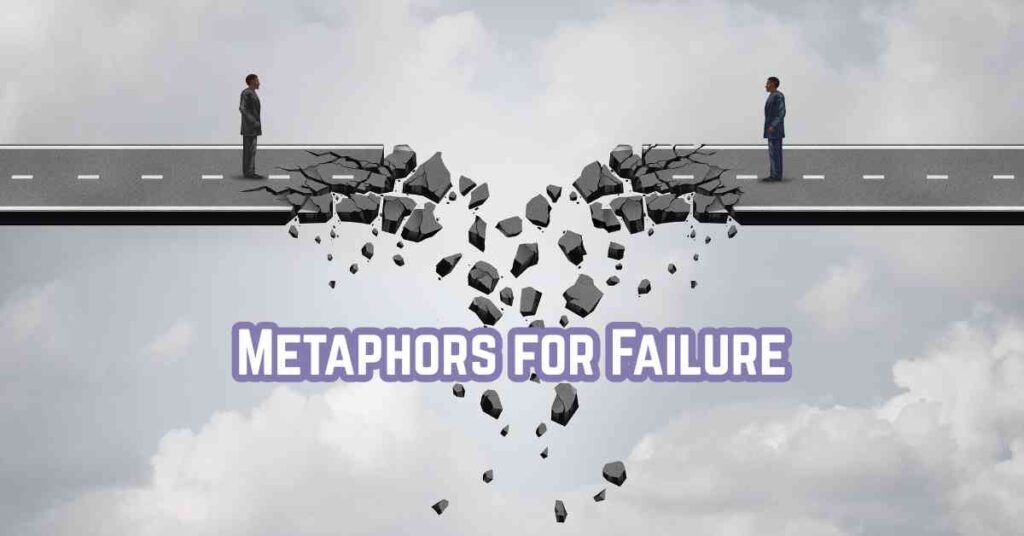

Understanding how we talk about failure is crucial for navigating both personal and professional life. Metaphors shape our perceptions, influencing how we approach challenges and setbacks. This article delves into the rich landscape of metaphors used to describe failure in English, exploring their meanings, origins, and appropriate usage. Whether you’re an English language learner, a writer seeking vivid imagery, or simply someone interested in the nuances of language, this guide will equip you with a deeper understanding of how to articulate and interpret failure.
Table of Contents
- Introduction
- Definition of Metaphor and Failure
- Structural Breakdown of Metaphors
- Types of Metaphors for Failure
- Examples of Metaphors for Failure
- Usage Rules for Metaphors
- Common Mistakes with Metaphors
- Practice Exercises
- Advanced Topics in Metaphorical Language
- Frequently Asked Questions
- Conclusion
Introduction
Metaphors are powerful tools that allow us to understand abstract concepts by relating them to more concrete experiences. When discussing failure, a concept often laden with emotional weight, metaphors provide a way to express its impact and implications. By understanding the different types of metaphors used to describe failure, we can gain a richer appreciation of the English language and improve our ability to communicate effectively about challenging situations. This article will explore various metaphors for failure, offering detailed explanations and examples to enhance your understanding and usage.
Definition of Metaphor and Failure
A metaphor is a figure of speech that directly compares two unrelated things, asserting that one thing *is* another. It’s not a literal comparison like a simile (which uses “like” or “as”), but rather an implied one, designed to create a vivid and often emotional connection. Metaphors enrich language, making it more expressive and engaging. They invite the audience to see something in a new light. For example, saying “He is a lion on the battlefield” doesn’t mean he’s literally a lion, but that he possesses lion-like qualities such as bravery and strength.
Failure, on the other hand, is the state or condition of not meeting a desired or intended objective. It can range from minor setbacks to complete collapses. The concept of failure is often viewed negatively, carrying connotations of disappointment, frustration, and regret. However, failure can also be a valuable learning experience, providing opportunities for growth and improvement. How we perceive and discuss failure greatly impacts our resilience and ability to overcome challenges.
Structural Breakdown of Metaphors
Understanding the structure of a metaphor helps in both its interpretation and creation. A metaphor typically consists of two key elements: the tenor and the vehicle. The tenor is the subject being described, while the vehicle is the object or concept used to describe the tenor. The vehicle provides new insights into the tenor, shaping our understanding of it.
For example, in the metaphor “The project was a train wreck,” the tenor is “the project,” and the vehicle is “a train wreck.” The metaphor suggests that the project was chaotic, destructive, and ultimately unsuccessful, drawing on the negative connotations associated with train wrecks. The effectiveness of a metaphor depends on the strength of the connection between the tenor and the vehicle and the resonance it creates with the audience. A strong metaphor evokes a clear image and conveys the intended meaning effectively.
Types of Metaphors for Failure
Metaphors for failure can be categorized based on the specific imagery they evoke and the aspects of failure they emphasize. Here are several common types:
Failure as Falling
These metaphors depict failure as a descent or loss of stability. They often imply a sudden and dramatic decline.
Failure as Destruction
These metaphors highlight the damaging or ruinous consequences of failure, emphasizing the loss and devastation it can cause.
Failure as Sickness
These metaphors portray failure as a disease or ailment that weakens and debilitates, suggesting a gradual decline or corruption.
Failure as Stumbling
These metaphors present failure as a temporary setback or misstep, implying that recovery is possible and that the overall journey can continue.
Failure as Drowning
These metaphors convey a sense of being overwhelmed and unable to cope, suggesting a loss of control and a struggle for survival.
Failure as Losing Direction
These metaphors describe failure as a deviation from the intended path, implying a lack of clarity or purpose.
Failure as Inadequacy
These metaphors highlight the lack of necessary skills, resources, or qualities needed to succeed, emphasizing feelings of inadequacy and unworthiness.
Examples of Metaphors for Failure
Here are examples of metaphors for failure, categorized by type, to illustrate their varied usage:
Table 1: Failure as Falling
This table showcases examples of metaphors that describe failure as a form of falling, emphasizing a loss of status or position.
| Metaphor | Explanation | Example Sentence |
|---|---|---|
| Took a tumble | Experienced a sudden decline or setback. | After the scandal, his career took a tumble. |
| Went downhill | Deteriorated or declined in quality or condition. | The company’s performance went downhill after the merger. |
| Plummeted | Fell or dropped sharply and quickly. | The stock price plummeted after the negative earnings report. |
| Crashed and burned | Failed spectacularly and completely. | The startup crashed and burned due to mismanagement. |
| Nosedived | Declined rapidly and dramatically. | Her popularity nosedived after the controversial statement. |
| Hit rock bottom | Reached the lowest possible point. | After losing his job and his house, he hit rock bottom. |
| Slipped up | Made a mistake or error that led to failure. | He slipped up during the presentation and lost the client. |
| Lost footing | Lost stability or control. | The politician lost his footing after the accusations surfaced. |
| Fell from grace | Lost favor or status. | The once-beloved celebrity fell from grace after the scandal. |
| Went to pieces | Broke down emotionally or mentally. | She went to pieces after the project failed. |
| Hit the skids | Started to decline or fail. | The team hit the skids after losing their star player. |
| Took a dive | Experienced a sudden and significant decline. | Sales took a dive during the economic recession. |
| Went under | Failed financially or went bankrupt. | The business went under after years of struggling. |
| Collapsed | Failed suddenly and completely. | The building collapsed due to structural flaws. |
| Crumbled | Fell apart gradually. | Their relationship crumbled under the pressure. |
| Stumbled | Made a mistake or error. | He stumbled during his speech, causing some embarrassment. |
| Skydived to disaster | Failed spectacularly and rapidly. | The marketing campaign skydived to disaster due to poor planning. |
| Tumbled down the stairs | Experienced a series of unfortunate events. | After the initial setback, his career tumbled down the stairs. |
| Crashed to earth | Failed abruptly and with significant impact. | His ambitious plans crashed to earth when funding was withdrawn. |
| Lost altitude | Declined in status or performance. | The company lost altitude in the market due to increased competition. |
| Fell flat | Failed to achieve the desired effect or result. | The joke fell flat with the audience. |
| Went belly up | Failed financially; went bankrupt. | The restaurant went belly up after only six months in business. |
Table 2: Failure as Destruction
This table includes metaphors that use imagery of destruction to describe the impact of failure.
| Metaphor | Explanation | Example Sentence |
|---|---|---|
| A complete demolition | A total and utter failure. | The project was a complete demolition of our initial goals. |
| Reduced to ashes | Destroyed completely, leaving nothing behind. | His reputation was reduced to ashes after the scandal. |
| A train wreck | A disastrous and chaotic failure. | The presentation was a train wreck from start to finish. |
| Imploded | Collapsed inward violently. | The company imploded under the weight of its debt. |
| Went up in flames | Failed spectacularly and publicly. | Their relationship went up in flames after the argument. |
| Shattered | Broken into many pieces; destroyed. | His dreams were shattered when he didn’t get the job. |
| Ruined | Destroyed or damaged irreparably. | The scandal ruined his career. |
| Annihilated | Completely destroyed or defeated. | Their hopes were annihilated when the funding was cut. |
| Wrecked | Severely damaged or destroyed. | The storm wrecked their plans for the outdoor event. |
| Bombed | Failed completely, especially in performance. | The comedian’s jokes bombed with the audience. |
| Blown to smithereens | Completely destroyed or shattered. | Their business plan was blown to smithereens by the new regulations. |
| Devastated | Completely destroyed or ruined. | The town was devastated by the hurricane. |
| Demolished | Completely destroyed or knocked down. | His arguments were demolished by the opposing lawyer. |
| Obliterated | Completely destroyed; wiped out. | Their chances of winning were obliterated after the first round. |
| Crushed | Severely damaged or suppressed. | His spirits were crushed by the rejection. |
| Burned to the ground | Completely destroyed by fire; utterly ruined. | The old theater burned to the ground, taking with it a piece of history. |
| Razed to the ground | Completely destroyed, leaving no trace. | The village was razed to the ground during the war. |
| Left in tatters | Badly damaged or ruined. | The company’s reputation was left in tatters after the scandal. |
| Reduced to rubble | Destroyed and left as a pile of broken pieces. | The building was reduced to rubble after the earthquake. |
| Smashed to pieces | Violently broken into many fragments. | His confidence was smashed to pieces after the criticism. |
| Torn apart | Severely damaged or emotionally distressed. | The family was torn apart by the tragedy. |
| Ripped to shreds | Completely destroyed or criticized severely. | The critic ripped the movie to shreds in his review. |
Table 3: Failure as Sickness
This table provides examples of metaphors that equate failure with illness, highlighting its debilitating effects.
| Metaphor | Explanation | Example Sentence |
|---|---|---|
| A sick joke | Something that is considered a failure or a bad outcome. | The project’s results were a sick joke; nothing went right. |
| In critical condition | In a state of severe difficulty or near failure. | The company was in critical condition after the financial crisis. |
| Terminally ill | In a state of irreversible decline, leading to certain failure. | The business plan was terminally ill from the start. |
| Contracted a disease | Acquired a problem or condition that led to failure. | The project contracted a disease of bureaucracy and inefficiency. |
| A festering wound | A problem that continues to worsen over time. | The unresolved issues became a festering wound within the team. |
| In remission | Temporarily improving, but with the potential for relapse. | The economy was in remission, but the underlying problems remained. |
| Ailing | In poor health; declining. | The ailing company struggled to stay afloat. |
| In intensive care | Requiring urgent and significant intervention to avoid failure. | The project was in intensive care after the major setbacks. |
| Suffering | Experiencing hardship or difficulty. | The industry was suffering from a lack of innovation. |
| Plagued by problems | Constantly affected by difficulties or issues. | The project was plagued by technical problems. |
| Cancerous growth | A destructive and rapidly expanding problem. | The bureaucratic red tape became a cancerous growth within the organization. |
| Infected | Contaminated or affected negatively. | The team was infected with negativity after the project delays. |
| A virus | Something that spreads and causes harm. | The scandal spread like a virus throughout the company. |
| Toxic | Poisonous or harmful. | The toxic work environment led to high employee turnover. |
| Paralyzed | Unable to function or progress. | The company was paralyzed by indecision. |
| Crippled | Severely damaged or impaired. | The business was crippled by the economic downturn. |
| A debilitating condition | A condition that weakens or impairs. | The lack of funding became a debilitating condition for the research project. |
| On life support | Only surviving due to external assistance. | The business was on life support after the bankruptcy filing. |
| A chronic problem | A persistent and recurring issue. | The lack of communication was a chronic problem within the team. |
| Dying on the vine | Failing to thrive or develop. | The project was dying on the vine due to lack of support. |
Table 4: Failure as Stumbling
The following metaphors describe failure as a temporary setback or misstep, implying potential recovery.
| Metaphor | Explanation | Example Sentence |
|---|---|---|
| Hit a snag | Encountered an unexpected obstacle or difficulty. | The project hit a snag when the funding was delayed. |
| Slipped up | Made a mistake or error. | He slipped up during the presentation and misspoke. |
| Lost step | Lost rhythm or coordination. | The team lost step after the new manager took over. |
| Missed a beat | Made a slight error or misjudgment. | He missed a beat in his argument, weakening his case. |
| Stumbled | Made a mistake or misstep. | He stumbled during his speech, but recovered quickly. |
| Tripped up | Made a mistake or was caught out. | He tripped up on the details of the contract. |
| Faltered | Lost strength or momentum. | The economy faltered during the recession. |
| Hit a bump in the road | Encountered a minor setback or obstacle. | The project hit a bump in the road, but they overcame it. |
| Skidded | Slipped or lost control temporarily. | The car skidded on the ice, but the driver regained control. |
| Got derailed | Was diverted from the intended path. | The project got derailed by unforeseen circumstances. |
| Took a wrong turn | Made an incorrect decision. | They took a wrong turn in their marketing strategy. |
| Lost balance | Lost stability or equilibrium. | The company lost balance during the rapid expansion. |
| Went off track | Deviated from the planned course. | The discussion went off track during the meeting. |
| Got sidetracked | Was distracted from the main goal. | They got sidetracked by irrelevant details. |
| Hit a wall | Reached a point where progress is difficult or impossible. | The writer hit a wall and couldn’t finish the novel. |
| Ran into a roadblock | Encountered an obstacle that prevents progress. | The negotiations ran into a roadblock over the price. |
| Met with resistance | Encountered opposition or difficulty. | The new policy met with resistance from the employees. |
| Faced headwinds | Encountered opposing forces or difficulties. | The company faced headwinds due to the economic climate. |
| Hit turbulence | Experienced instability or difficulty. | The project hit turbulence during the implementation phase. |
| Slipped a gear | Made a mistake or lost momentum. | He slipped a gear in his presentation, causing some confusion. |
Table 5: Failure as Drowning
This table lists metaphors that evoke the feeling of being overwhelmed and unable to cope, using imagery of drowning.
| Metaphor | Explanation | Example Sentence |
|---|---|---|
| Drowning in debt | Overwhelmed by financial obligations. | The family was drowning in debt after the medical emergency. |
| Swamped | Overwhelmed with too much to handle. | I’m completely swamped with work right now. |
| In over one’s head | In a situation that is too difficult to handle. | He was in over his head when he took on the project. |
| Sinking | Failing or declining rapidly. | The business was sinking under the weight of its debts. |
| Going under | Failing financially or going bankrupt. | The company was going under due to mismanagement. |
| Submerged | Overwhelmed or hidden. | His voice was submerged by the noise of the crowd. |
| Lost at sea | Feeling confused and without direction. | He felt lost at sea after losing his job. |
| Floundering | Struggling or having difficulty making progress. | The team was floundering without clear leadership. |
| Struggling to stay afloat | Finding it difficult to survive or succeed. | The small business was struggling to stay afloat during the recession. |
| Sinking like a stone | Failing rapidly and completely. | The stock price was sinking like a stone after the bad news. |
| Swept away | Overwhelmed by a force or situation. | They were swept away by the enthusiasm of the crowd. |
| Drowning in paperwork | Overwhelmed by administrative tasks. | The clerk was drowning in paperwork. |
| Sinking sand | A situation that appears stable but is actually dangerous. | The new investment turned out to be sinking sand. |
| Overwhelmed by the tide | Unable to resist a strong force or trend. | Small businesses were overwhelmed by the tide of globalization. |
| Gasping for air | Struggling to survive or succeed. | The company was gasping for air after the financial crisis. |
| Adrift | Without direction or purpose. | After losing his job, he felt adrift in life. |
| Awash in problems | Completely filled with difficulties or issues. | The project was awash in problems from the beginning. |
| Submerged in difficulties | Deeply involved in problems or challenges. | The family was submerged in difficulties after the accident. |
| Lost in a sea of troubles | Overwhelmed by a large number of problems. | The manager was lost in a sea of troubles. |
| Foundering on the rocks | Failing due to insurmountable obstacles. | The negotiations were foundering on the rocks of disagreement. |
Usage Rules for Metaphors
Using metaphors effectively requires careful consideration of context, audience, and intended meaning. Here are some key usage rules:
- Clarity: Choose metaphors that are easily understood by your audience. Avoid obscure or overly complex comparisons.
- Relevance: Ensure that the metaphor is relevant to the subject matter and enhances understanding.
- Consistency: Maintain consistency within a metaphor. Avoid mixing metaphors that create contradictory images.
- Originality: Strive for fresh and original metaphors to make your writing more engaging. Avoid clichés.
- Appropriateness: Consider the tone and formality of the situation. Some metaphors may be inappropriate in certain contexts.
Common Mistakes with Metaphors
Here are some common mistakes to avoid when using metaphors:
Mixed Metaphors: Combining inconsistent images within a single comparison.
- Incorrect: “We need to nip it in the bud before it snowballs out of control.” (Mixing gardening and snowballing images)
- Correct: “We need to nip it in the bud before it becomes a major problem.”
Clichés: Using overused and unoriginal metaphors.
- Incorrect: “It’s raining cats and dogs.”
- Correct: “The rain was torrential, turning the streets into rivers.”
Inappropriate Tone: Using metaphors that are too informal or insensitive for the context.
- Incorrect: “The company’s bankruptcy was a real dumpster fire.” (Too informal for a serious business report)
- Correct: “The company’s bankruptcy was a catastrophic event.”
Practice Exercises
Test your understanding with these exercises:
Exercise 1: Identifying Metaphors
Identify the metaphor in each sentence and explain its meaning.
| Question | Answer |
|---|---|
| 1. The project was a sinking ship. | Metaphor: sinking ship. Meaning: The project was failing and likely to collapse. |
| 2. His dreams were shattered into a million pieces. | Metaphor: shattered into a million pieces. Meaning: His dreams were completely destroyed. |
| 3. The negotiations hit a brick wall. | Metaphor: hit a brick wall. Meaning: The negotiations reached an impasse. |
| 4. Her career went up in flames after the scandal. | Metaphor: went up in flames. Meaning: Her career was destroyed spectacularly. |
| 5. The business was drowning in debt. | Metaphor: drowning in debt. Meaning: The business was overwhelmed by financial obligations. |
| 6. The team’s morale plummeted after the defeat. | Metaphor: plummeted. Meaning: The team’s morale declined rapidly and significantly. |
| 7. The company was on life support, barely surviving. | Metaphor: on life support. Meaning: The company was only surviving due to external assistance. |
| 8. His arguments were demolished by the opposing lawyer. | Metaphor: demolished. Meaning: His arguments were completely destroyed or refuted. |
| 9. The project hit a snag when the funding was delayed. | Metaphor: hit a snag. Meaning: The project encountered an unexpected obstacle. |
| 10. The new policy met with resistance from the employees. | Metaphor: met with resistance. Meaning: The new policy encountered opposition or difficulty. |
Exercise 2: Creating Metaphors
Create a metaphor for each of the following scenarios:
| Question | Answer |
|---|---|
| 1. A project that is failing due to lack of resources. | The project was a plant withering without water. |
| 2. A business that is struggling to compete in a crowded market. | The business was a small boat battling a stormy sea. |
| 3. A career that is declining after a series of mistakes. | His career was a slow leak in a tire, gradually deflating. |
| 4. A team that is demoralized after a major defeat. | The team was a garden after a harsh frost. |
| 5. A plan that is unrealistic and likely to fail. | The plan was a castle built on sand. |
| 6. A company burdened by excessive regulation. | The company was a bird with clipped wings. |
| 7. An initiative that is not gaining traction. | The initiative was a car stuck in mud, spinning its wheels. |
| 8. A strategy that is proving ineffective. | The strategy was a blunt knife, unable to cut through the problem. |
| 9. A negotiation that has reached a stalemate. | The negotiation was a tug-of-war with no end in sight. |
| 10. A leader losing control of a situation. | The leader was a captain abandoning a sinking ship. |
Exercise 3: Correcting Mixed Metaphors
Rewrite the following sentences to correct the mixed metaphors:
| Question | Answer |
|---|---|
| 1. We need to nip it in the bud before it snowballs out of control. | We need to nip it in the bud before it becomes a major problem. |
| 2. He’s burning the candle at both ends and climbing the ladder of success. | He’s burning the candle at both ends, sacrificing his health for success. |
| 3. Let’s touch base and circle all the bases. | Let’s touch base to ensure we’re on the same page. |
| 4. We need to think outside the box and get all our ducks on the same page. | We need to think outside the box to come up with innovative solutions. |
| 5. She’s skating on thin ice and walking a tightrope. | She’s skating on thin ice, risking everything with her actions. |
| 6. The project is a runaway train that needs to be nipped in the bud. | The project is a runaway train that needs to be brought under control. |
| 7. Let’s put all our eggs in one basket and get the ball rolling. | Let’s get the ball rolling and pursue this opportunity vigorously. |
| 8. We need to bite the bullet and grab the bull by the horns. | We need to bite the bullet and face this difficult situation head-on. |
| 9. The company is in hot water and sinking like a stone. | The company is in hot water and struggling to stay afloat. |
| 10. We need to weather the storm and think outside the box. | We need to weather the storm and remain resilient during this challenging time. |
Advanced Topics in Metaphorical Language
For advanced learners, exploring the conceptual metaphor theory can provide a deeper understanding of how metaphors shape our thinking. This theory posits that our conceptual system is fundamentally metaphorical and that abstract concepts are understood in terms of more concrete ones. Exploring the works of linguists like George Lakoff and Mark Johnson can provide further insights into this fascinating area.
Frequently Asked Questions
Here are some frequently asked questions about metaphors for failure:
- What is the difference between a metaphor and a simile?
A metaphor directly equates two things (e.g., “He is a lion”), while a simile uses “like” or “as” to make a comparison (e.g., “He is like a lion”).
- Why are metaphors important in language?
Metaphors make language more vivid, engaging, and expressive. They allow us to understand abstract concepts by relating them to concrete experiences.
- How can I improve my use of metaphors?
Read widely, pay attention to the metaphors used by others, and practice creating your own metaphors. Focus on clarity, relevance, and originality.
- What is a mixed metaphor, and why should I avoid it?
A mixed metaphor combines inconsistent images within a single comparison, creating confusion and undermining the intended meaning. Avoid mixed metaphors by ensuring that your metaphors are logically consistent.
- Are some metaphors more effective than others?
Yes. Effective metaphors are clear, relevant, and original. They resonate with the audience and enhance understanding.
- How do cultural differences affect the interpretation of metaphors?
Metaphors are often culturally specific, and their interpretation can vary across different cultures. Be mindful of cultural differences when using metaphors in international contexts.
- Can metaphors be used in formal writing?
Yes, but use them judiciously. In formal
writing, ensure that metaphors enhance clarity and do not detract from the overall tone.
Conclusion
Metaphors for failure offer a rich and varied way to express the impact and implications of setbacks. By understanding the different types of metaphors and using them effectively, you can enhance your communication skills and gain a deeper appreciation of the English language. Whether you’re writing, speaking, or simply trying to understand the world around you, mastering the art of metaphorical language will serve you well.