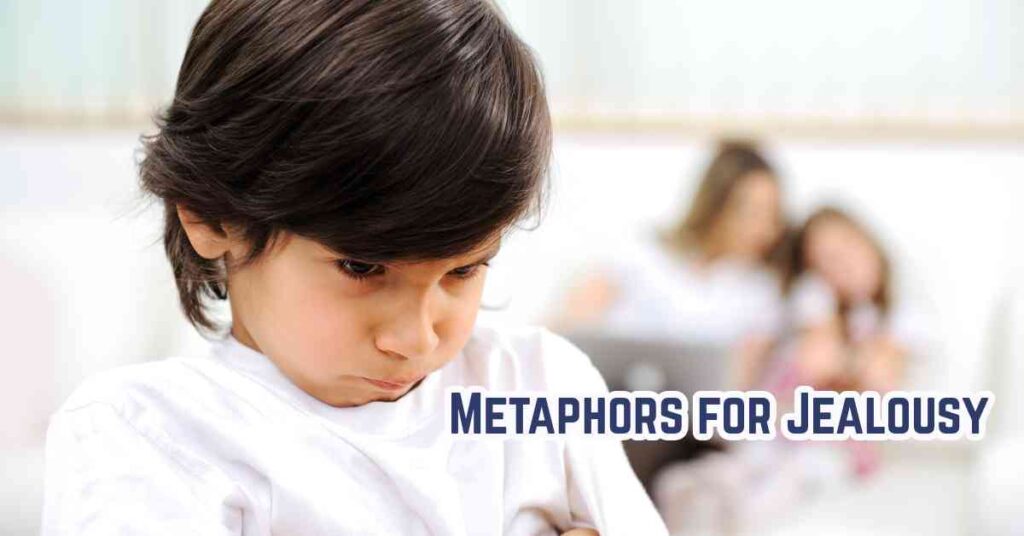

Jealousy, a powerful and complex emotion, is often described using metaphors that tap into our understanding of other experiences. Mastering the use of these metaphors not only enhances your English vocabulary but also allows you to express nuanced feelings with greater precision. This article delves into the rich world of metaphors for jealousy, exploring their meanings, structures, and usage. It is designed for English language learners, writers, and anyone interested in understanding the expressive power of language.
Whether you are preparing for an English exam, writing creatively, or simply seeking to improve your communication skills, this guide provides a comprehensive overview of jealousy metaphors. By understanding these metaphors, you can better interpret literature, engage in meaningful conversations, and articulate your own emotions more effectively.
Table of Contents
- Introduction
- Definition of Metaphor and Jealousy
- Structural Breakdown of Jealousy Metaphors
- Types of Metaphors for Jealousy
- Examples of Jealousy Metaphors
- Usage Rules for Jealousy Metaphors
- Common Mistakes with Jealousy Metaphors
- Practice Exercises
- Advanced Topics in Jealousy Metaphors
- Frequently Asked Questions
- Conclusion
Definition of Metaphor and Jealousy
A metaphor is a figure of speech that directly compares two unrelated things, asserting that one thing is another, not literally, but for rhetorical effect. It’s a way to understand and describe something by relating it to something else that is more familiar or concrete. Metaphors enhance our understanding and add depth to our language.
Jealousy, on the other hand, is a complex emotion involving feelings of insecurity, fear, and concern over a relative lack of possessions, status, or something of great personal value, particularly in the context of interpersonal relationships. It often arises from a perceived threat to one’s self-esteem or sense of belonging. Jealousy can manifest in various ways, from subtle envy to intense rage.
When we combine these two concepts, we get metaphors for jealousy, which are figurative expressions that use comparisons to convey the feeling and impact of jealousy. These metaphors help us understand and communicate the often-overwhelming experience of jealousy in a more relatable and vivid way.
Structural Breakdown of Jealousy Metaphors
Jealousy metaphors typically follow a basic structure: A is B, where A represents jealousy and B represents something else that shares characteristics with jealousy. The “something else” can be a physical sensation, an animal, a disease, or any other concept that effectively conveys the feeling of jealousy.
Consider the metaphor “Jealousy is a green-eyed monster.” Here, jealousy (A) is compared to a green-eyed monster (B). The monster represents the destructive and consuming nature of jealousy, while the green eyes symbolize envy and sickness. This structure allows us to grasp the abstract concept of jealousy through a more concrete and evocative image.
Let’s break down the components further:
- The Tenor: This is the subject being described, in this case, jealousy.
- The Vehicle: This is the object or concept to which jealousy is being compared (e.g., a monster, a fire, a disease).
- The Ground: These are the shared characteristics between the tenor and the vehicle. For example, the shared characteristics between jealousy and a monster might be destructiveness, possessiveness, and irrationality.
Understanding this structure helps you analyze and interpret different metaphors for jealousy, as well as create your own.
Types of Metaphors for Jealousy
Metaphors for jealousy can be categorized based on the type of imagery they evoke. Here are some common categories:
Animalistic Metaphors
Animalistic metaphors compare jealousy to the behavior or characteristics of animals. These metaphors often highlight the possessive, territorial, or predatory aspects of jealousy. They can be very evocative and help us understand the raw, instinctual nature of the emotion.
Physical Sensation Metaphors
These metaphors describe jealousy in terms of physical sensations, such as burning, aching, or stabbing pains. They emphasize the intense and often painful experience of jealousy, making it more relatable on a visceral level. These metaphors can convey the immediate and overwhelming nature of the emotion.
Disease Metaphors
Disease metaphors portray jealousy as an illness that consumes and weakens the individual. They highlight the destructive and debilitating effects of jealousy, suggesting that it can take over one’s mind and body. These metaphors often emphasize the uncontrollable and insidious nature of the emotion.
Possessive Metaphors
Possessive metaphors characterize jealousy as a force that seeks to control and own the object of affection. These metaphors underscore the desire to maintain exclusive access and prevent others from encroaching on what is perceived as one’s own. They illustrate the possessive and controlling aspects of jealousy.
Destructive Metaphors
Destructive metaphors represent jealousy as a force that destroys relationships, trust, and even the individual experiencing it. These metaphors emphasize the damaging consequences of unchecked jealousy, highlighting its potential to cause harm and ruin. They portray jealousy as a powerful and dangerous emotion.
Color Metaphors
Color metaphors associate jealousy with specific colors, most notably green. This association dates back to Shakespeare’s “Othello,” where jealousy is described as the “green-eyed monster.” The color green is often linked to envy, sickness, and negativity, making it a powerful symbol for jealousy.
Examples of Jealousy Metaphors
Now, let’s explore specific examples of each type of jealousy metaphor.
Animalistic Metaphor Examples
These metaphors draw parallels between jealousy and animalistic behaviors, often highlighting possessiveness and aggression. They provide a vivid way to understand the intensity of jealous feelings.
| Example | Explanation |
|---|---|
| “She was like a lioness guarding her cub, fiercely protective of her boyfriend.” | Compares her protective jealousy to a lioness guarding its young. |
| “His jealousy was a snake coiling around his heart, squeezing the joy out of him.” | Jealousy is likened to a snake, emphasizing its insidious and constricting nature. |
| “He acted like a dog marking its territory, constantly reminding everyone that she was his.” | Highlights the possessive and territorial aspect of his jealousy. |
| “Her jealousy was a hawk circling, always watching for any sign of a threat.” | Suggests a vigilant and predatory form of jealousy. |
| “He was a jealous wolf, snapping at anyone who came near his mate.” | Compares the person to a wolf, emphasizing aggression and possessiveness. |
| “She felt like a caged bird, her freedom restricted by his jealousy.” | Illustrates how jealousy can feel confining and limiting. |
| “His jealousy was a spider spinning a web, trapping her in his possessiveness.” | Portrays jealousy as a trap, ensnaring the object of affection. |
| “Like a peacock guarding its feathers, he was excessively proud and jealous.” | Highlights the vanity and possessiveness associated with jealousy. |
| “Her jealousy was a swarm of bees, stinging her with doubts and insecurities.” | Compares jealousy to a swarm of bees, emphasizing the painful and irritating nature of the emotion. |
| “He was a jealous bear, growling at anyone who dared to approach his honey.” | Highlights the possessive and aggressive aspects of jealousy. |
| “She became a protective hen, clucking and fussing over her partner’s whereabouts.” | Illustrates a nurturing yet possessive form of jealousy. |
| “His jealousy was a vulture circling, waiting for any sign of weakness in their relationship.” | Suggests a predatory and opportunistic form of jealousy. |
| “He resembled a fierce bulldog, unwilling to let go of what he considered his.” | Emphasizes the tenacious and possessive nature of his jealousy. |
| “Her jealousy was like a cat hissing, ready to lash out at any perceived threat.” | Compares her jealousy to a cat’s defensive behavior. |
| “He behaved like a territorial stallion, aggressively guarding his mare.” | Highlights the possessive and dominant aspects of his jealousy. |
| “Her jealousy was a scorpion stinging, leaving a painful mark on their relationship.” | Portrays jealousy as a venomous and harmful force. |
| “He was like a protective gorilla, fiercely defending his family from outsiders.” | Illustrates a strong and protective form of jealousy. |
| “Her jealousy was a parrot mimicking, repeating doubts and insecurities in her mind.” | Compares jealousy to a parrot, emphasizing its repetitive and intrusive nature. |
| “He acted like a jealous rat, scurrying around to find any evidence of betrayal.” | Highlights the secretive and suspicious aspects of his jealousy. |
| “She was a protective mother bear, fiercely guarding her children from harm.” | Compares the person to a protective bear, emphasizing her intense protectiveness. |
| “His jealousy was a crab pinching, causing constant irritation and discomfort.” | Portrays jealousy as a source of constant irritation and pain. |
| “Like a watchdog barking, he was always alert to any potential threats to his relationship.” | Highlights the vigilant and protective nature of his jealousy. |
| “Her jealousy was a caterpillar consuming, slowly eating away at her happiness.” | Compares jealousy to a caterpillar, emphasizing its consuming and destructive nature. |
| “He was a jealous falcon, swooping down to snatch away any perceived rival.” | Highlights the predatory and possessive aspects of his jealousy. |
Physical Sensation Metaphor Examples
These metaphors use physical sensations to describe the intense and often painful experience of jealousy.
| Example | Explanation |
|---|---|
| “Jealousy was a burning fire in his chest, consuming him from the inside.” | Compares jealousy to a fire, emphasizing its destructive and consuming nature. |
| “She felt a stabbing pain of jealousy when she saw them together.” | Jealousy is likened to a sharp, sudden pain. |
| “His jealousy was a heavy weight on his shoulders, dragging him down.” | Highlights the burden and oppressiveness of jealousy. |
| “Her jealousy was a bitter taste in her mouth, spoiling everything.” | Suggests an unpleasant and lingering sensation caused by jealousy. |
| “He felt the cold grip of jealousy tightening around his heart.” | Emphasizes the chilling and constricting nature of jealousy. |
| “Jealousy was a knot in her stomach, twisting and churning.” | Illustrates the physical discomfort and anxiety caused by jealousy. |
| “His jealousy was a prickling sensation, making him uneasy and suspicious.” | Portrays jealousy as a source of constant irritation and discomfort. |
| “Like a throbbing headache, her jealousy was persistent and painful.” | Highlights the persistent and debilitating nature of jealousy. |
| “Jealousy was a suffocating feeling, making it hard to breathe.” | Compares jealousy to a feeling of suffocation, emphasizing its overwhelming nature. |
| “He felt the sharp sting of jealousy whenever she mentioned another man.” | Highlights the sudden and painful sensation caused by jealousy. |
| “Her jealousy was a numbing coldness, freezing her emotions.” | Illustrates how jealousy can lead to emotional detachment and isolation. |
| “His jealousy was a burning itch, driving him crazy with suspicion.” | Suggests a persistent and irritating sensation. |
| “She felt the tight squeeze of jealousy whenever he looked at another woman.” | Emphasizes the constricting and possessive nature of jealousy. |
| “Jealousy was a dull ache in her heart, a constant reminder of her insecurity.” | Compares jealousy to a persistent and underlying pain. |
| “He felt the prickly heat of jealousy rising in his face.” | Highlights the physical manifestation of jealousy as a sensation of heat. |
| “Her jealousy was a grinding pain, slowly wearing her down.” | Portrays jealousy as a source of constant and debilitating pain. |
| “Jealousy was a choking sensation, preventing her from expressing herself.” | Illustrates how jealousy can stifle communication and self-expression. |
| “He felt the raw burn of jealousy whenever he saw them laughing together.” | Compares jealousy to a painful and exposed burn. |
| “Her jealousy was a fluttering anxiety, making her heart race with fear.” | Suggests a nervous and agitated sensation caused by jealousy. |
| “Jealousy was a heavy pressure on his chest, making it hard to cope.” | Highlights the oppressive and overwhelming nature of jealousy. |
| “He felt the icy chill of jealousy creeping into his soul.” | Portrays jealousy as a cold and isolating emotion. |
| “Her jealousy was a nagging discomfort, always present in the back of her mind.” | Compares jealousy to a persistent and irritating sensation. |
| “Jealousy was a squeezing force, crushing his confidence and self-worth.” | Highlights the destructive impact of jealousy on one’s self-esteem. |
| “He felt the hot flush of jealousy spreading across his cheeks.” | Emphasizes the physical manifestation of jealousy as a sensation of heat. |
Disease Metaphor Examples
These metaphors depict jealousy as a disease, highlighting its consuming and debilitating effects.
| Example | Explanation |
|---|---|
| “Jealousy was a virus, infecting his mind and poisoning his thoughts.” | Compares jealousy to a virus, emphasizing its contagious and harmful nature. |
| “She saw jealousy as a cancer, slowly eating away at their relationship.” | Jealousy is likened to cancer, highlighting its destructive and invasive properties. |
| “His jealousy was a plague, spreading suspicion and distrust.” | Highlights the contagious and devastating effects of jealousy. |
| “Her jealousy was a parasite, feeding on her insecurities and fears.” | Suggests that jealousy thrives on and amplifies existing vulnerabilities. |
| “He felt the infection of jealousy spreading through his veins.” | Emphasizes the invasive and pervasive nature of jealousy. |
| “Jealousy was a malignant tumor, growing and threatening to destroy everything.” | Illustrates the dangerous and uncontrolled growth of jealousy. |
| “His jealousy was a slow-acting poison, gradually eroding their trust.” | Portrays jealousy as a subtle yet destructive force. |
| “Like a chronic illness, her jealousy was always present, never fully disappearing.” | Highlights the persistent and recurring nature of jealousy. |
| “Jealousy was a contagious disease, easily spread through gossip and suspicion.” | Compares jealousy to a contagious disease, emphasizing its ability to spread rapidly. |
| “He felt the symptoms of jealousy manifesting as anger and resentment.” | Highlights the outward signs and consequences of jealousy. |
| “Her jealousy was a debilitating condition, preventing her from enjoying life.” | Illustrates how jealousy can impair one’s ability to experience joy and fulfillment. |
| “His jealousy was a recurring fever, flaring up at the slightest provocation.” | Suggests a sporadic and unpredictable manifestation of jealousy. |
| “She saw jealousy as a mental disorder, distorting her perceptions and judgments.” | Emphasizes the psychological impact of jealousy on one’s thinking. |
| “Jealousy was a silent killer, slowly destroying their love from within.” | Compares jealousy to a subtle yet deadly force. |
| “He felt the outbreak of jealousy whenever she received attention from others.” | Highlights the sudden and intense onset of jealous feelings. |
| “Her jealousy was a degenerative disease, gradually worsening over time.” | Portrays jealousy as a progressive and irreversible condition. |
| “Jealousy was an epidemic, sweeping through their social circle and causing strife.” | Illustrates how jealousy can spread and affect multiple relationships. |
| “He felt the side effects of jealousy, including anxiety and paranoia.” | Compares jealousy to a harmful substance, emphasizing its negative consequences. |
| “Her jealousy was a hidden infection, festering beneath the surface of their relationship.” | Suggests a concealed and potentially dangerous presence of jealousy. |
| “Jealousy was a crippling ailment, preventing him from forming healthy attachments.” | Highlights the disabling impact of jealousy on one’s ability to connect with others. |
Possessive Metaphor Examples
These metaphors emphasize the possessive and controlling aspects of jealousy.
| Example | Explanation |
|---|---|
| “Jealousy was a chain, binding him to her and restricting her freedom.” | Compares jealousy to a chain, emphasizing its restrictive and controlling nature. |
| “She saw jealousy as a cage, trapping both of them in a cycle of possessiveness.” | Jealousy is likened to a cage, highlighting its confining and limiting effects. |
| “His jealousy was a leash, pulling her back whenever she tried to move forward.” | Highlights the controlling and manipulative aspects of jealousy. |
| “Her jealousy was a claim, asserting her ownership over him.” | Suggests that jealousy is a way of staking a claim on someone. |
| “He felt the grip of jealousy tightening around his heart, refusing to let go.” | Emphasizes the tenacious and possessive nature of jealousy. |
| “Jealousy was a fence, keeping others out and isolating them within their relationship.” | Illustrates how jealousy can create barriers and distance between people. |
| “His jealousy was a lock, sealing her off from the outside world.” | Portrays jealousy as a means of isolating and controlling someone. |
| “Like a deed, her jealousy was a declaration of ownership.” | Highlights the possessive and proprietary nature of jealousy. |
| “Jealousy was a contract, binding them to each other with mutual suspicion.” | Compares jealousy to a legal agreement, emphasizing its binding and restrictive nature. |
| “He felt the weight of jealousy pressing down on him, reminding him of his obligations.” | Highlights the burden and responsibility associated with possessiveness. |
| “Her jealousy was a prison, confining her thoughts and actions.” | Illustrates how jealousy can limit one’s freedom and autonomy. |
| “His jealousy was a rope, tying her to him and preventing her from escaping.” | Suggests a binding and inescapable form of possessiveness. |
| “She saw jealousy as a guard, protecting her territory from intruders.” | Emphasizes the protective and defensive aspects of jealousy. |
| “Jealousy was a mark, branding her as his possession.” | Compares jealousy to a symbol of ownership and control. |
| “He felt the pull of jealousy drawing him back whenever she strayed too far.” | Highlights the magnetic and controlling force of jealousy. |
Destructive Metaphor Examples
These metaphors focus on the damaging impact of jealousy on relationships and individuals.
| Example | Explanation |
|---|---|
| “Jealousy was a bomb, exploding and shattering their trust.” | Compares jealousy to a bomb, emphasizing its sudden and devastating impact. |
| “She saw jealousy as a storm, wreaking havoc on their relationship.” | Jealousy is likened to a storm, highlighting its destructive and chaotic nature. |
| “His jealousy was a poison, slowly killing their love.” | Highlights the toxic and lethal effects of jealousy. |
| “Her jealousy was a fire, consuming everything in its path.” | Suggests that jealousy is a destructive and uncontrolled force. |
| “He felt the erosion of jealousy wearing away at their bond.” | Emphasizes the gradual and destructive impact of jealousy. |
| “Jealousy was a knife, cutting deep wounds into their hearts.” | Illustrates the painful and damaging consequences of jealousy. |
| “His jealousy was a wrecking ball, demolishing their happiness.” | Portrays jealousy as a force that destroys everything in its path. |
| “Like a tornado, her jealousy left a trail of destruction.” | Highlights the chaotic and devastating nature of jealousy. |
| “Jealousy was a landmine, waiting to explode at the slightest provocation.” | Compares jealousy to a hidden danger, emphasizing its unpredictable nature. |
| “He felt the collapse of their relationship under the weight of jealousy.” | Highlights the destructive impact of jealousy on a relationship. |
| “Her jealousy was a demolition crew, tearing down the foundations of their love.” | Illustrates how jealousy can systematically dismantle a relationship. |
| “His jealousy was a volcano, erupting with anger and resentment.” | Suggests a sudden and explosive manifestation of jealousy. |
| “She saw jealousy as a curse, dooming them to unhappiness.” | Emphasizes the negative and inescapable consequences of jealousy. |
| “Jealousy was a saboteur, undermining their efforts to build a future together.” | Compares jealousy to a force that actively works against their relationship. |
| “He felt the shattering of his dreams under the force of jealousy.” | Highlights the destructive impact of jealousy on one’s hopes and aspirations. |
Color Metaphor Examples
These metaphors associate jealousy with the color green, drawing on its traditional association with envy and sickness.
| Example | Explanation |
|---|---|
| “Jealousy painted the world green, distorting his perceptions.” | Associates jealousy with the color green, emphasizing its distorting effect on reality. |
| “She felt a green tinge of envy when she saw his success.” | Jealousy is described as a faint trace of envy, symbolized by the color green. |
| “His jealousy was a green-eyed monster, consuming him with envy.” | Highlights the destructive and consuming nature of jealousy, personified as a monster with green eyes. |
| “Her jealousy cast a green shadow over their relationship.” | Suggests that jealousy is a dark and ominous presence, symbolized by the color green. |
| “He saw the world through green-tinted glasses, suspicious of everyone.” | Emphasizes how jealousy can distort one’s perspective, making them distrustful. |
| “Jealousy turned her face green with envy.” | Illustrates the physical manifestation of jealousy, as a change in complexion. |
| “His jealousy was a green fog, clouding his judgment and reason.” | Portrays jealousy as a force that obscures clear thinking, symbolized by a green fog. |
| “She felt a green wave of resentment washing over her.” | Highlights the overwhelming and consuming nature of jealousy, symbolized by a green wave. |
| “Jealousy colored his words with a green hue, making them bitter and resentful.” | Compares jealousy to a substance that taints one’s speech, making it negative and hostile. |
| “He felt the green poison of jealousy coursing through his veins.” | Highlights the toxic and debilitating effects of jealousy, symbolized by the color green. |
Usage Rules for Jealousy Metaphors
When using metaphors for jealousy, consider these guidelines:
- Context Matters: Choose metaphors that are appropriate for the context. A formal setting might call for more subtle metaphors, while a creative piece might allow for more dramatic expressions.
- Clarity is Key: Ensure that the metaphor is clear and easily understood. Avoid using obscure references that might confuse your audience.
- Consistency: Maintain consistency in your metaphorical language. Avoid mixing metaphors that clash or create illogical images.
- Originality: While common metaphors can be effective, strive for originality to make your writing more engaging and memorable.
- Overuse: Be mindful of overuse. Too many metaphors can clutter your writing and diminish their impact.
Common Mistakes with Jealousy Metaphors
Here are some common mistakes to avoid when using metaphors for jealousy:
| Incorrect | Correct | Explanation |
|---|---|---|
| “His jealousy was a sweet candy.” | “His jealousy was a bitter pill.” | Jealousy is generally a negative emotion, so a “bitter pill” is a more appropriate metaphor than “sweet candy.” |
| “She was drowning in a desert of jealousy.” | “She was drowning in a sea of jealousy.” | Deserts are dry, while seas are vast and overwhelming, making “sea” a more fitting metaphor for being overwhelmed. |
| “Jealousy was a friendly puppy.” | “Jealousy was a rabid dog.” | Jealousy is rarely friendly; a “rabid dog” better captures its destructive potential. |
| “He built a house of jealousy.” | “He built a wall of jealousy.” | “Wall” is a better metaphor emphasizing the separation and barriers caused by jealousy, rather than “house”. |
| “Her jealousy was as light as a feather.” | “Her jealousy was as heavy as a stone.” | “Heavy as a stone” better portrays the burden and oppressiveness of jealousy. |
Practice Exercises
Test your understanding with these exercises:
-
Exercise 1: Identify the type of metaphor used in each sentence.
Sentence Type of Metaphor “His jealousy was a viper striking without warning.” “She felt the icy grip of jealousy around her heart.” “Jealousy was a cancer, slowly consuming their love.” “His jealousy was a chain, binding her to him.” “Jealousy was a storm, destroying everything in its path.” “Jealousy painted his world green.” “He was like a hawk circling, always watching her.” “Her jealousy was a stabbing pain in her chest.” “Jealousy was a virus, infecting his thoughts.” “His jealousy was a leash, controlling her every move.” Answers
- Animalistic
- Physical Sensation
- Disease
- Possessive
- Destructive
- Color
- Animalistic
- Physical Sensation
- Disease
- Possessive
-
Exercise 2: Complete the following sentences using an appropriate metaphor for jealousy.
Sentence Answer “Her jealousy was like a __________, always lurking in the shadows.” “He felt the __________ of jealousy whenever she spoke to another man.” “Jealousy was a __________, slowly eroding their trust.” “His jealousy was a __________, preventing her from pursuing her dreams.” “She saw the world through __________ of jealousy.” Answers
- snake
- sting
- poison
- cage
- green-tinted glasses
-
Exercise 3: Rewrite the following sentences using a metaphor for jealousy.
Original Sentence Rewritten Sentence “He was very possessive of his girlfriend.” “She felt insecure when he talked to other women.” “His suspicion ruined their relationship.” “She was envious of her friend’s success.” “He was always worried about losing her.” Sample Answers
- He kept his girlfriend on a tight leash.
- She felt the sting of jealousy when he talked to other women.
- His jealousy was a wrecking ball that demolished their relationship.
- She saw her friend’s success through green-tinted glasses.
- He was trapped in a cage of jealousy, always fearing her departure.
Advanced Topics in Jealousy Metaphors
For advanced learners, consider exploring these topics:
- Cultural Variations: How do metaphors for jealousy differ across cultures? Are there specific symbols or images that are unique to certain regions or communities?
- Literary Analysis: Analyze how famous authors have used metaphors for jealousy in their works. Consider the impact of these metaphors on the reader’s understanding and emotional response.
- Psychological Impact: Explore the psychological effects of using metaphors for jealousy. Can these metaphors help individuals better understand and cope with their emotions?
- Creating Original Metaphors: Challenge yourself to create your own unique and evocative metaphors for jealousy. Experiment with different types of imagery and figurative language.
Frequently Asked Questions
What is the difference between a metaphor and a simile?
Both metaphors and similes are figures of speech that compare two unlike things. However, a metaphor directly equates the two things (e.g., “Jealousy is a monster”), while a simile uses “like” or “as” to make the comparison (e.g., “Jealousy is like a monster”).
Why is green associated with jealousy?
The association of green with jealousy dates back to ancient times, but it was popularized by Shakespeare in “Othello,” where jealousy is referred to as the “green-eyed monster.” The color green has long been associated with envy, sickness, and negativity.
Can metaphors for jealousy be positive?
While jealousy is generally considered a negative emotion, some metaphors can be used to express a protective or possessive form of affection. However, it’s important to use these metaphors carefully to avoid conveying a controlling or unhealthy attitude.
How can I improve my use of metaphors in English?
To improve your use of metaphors, read widely, pay attention to how metaphors are used in different contexts, and practice creating your own metaphors. Consider the connotations and implications of each metaphor to ensure that it effectively conveys your intended meaning.
Conclusion
Metaphors for jealousy provide a powerful and evocative way to express the complexities of this intense emotion. By understanding the different types of metaphors and how to use them effectively, you can enhance your communication skills and gain a deeper appreciation for the nuances of the English language. Whether you are writing creatively, analyzing literature, or simply seeking to articulate your feelings, mastering the art of jealousy metaphors will undoubtedly enrich your expressive abilities.