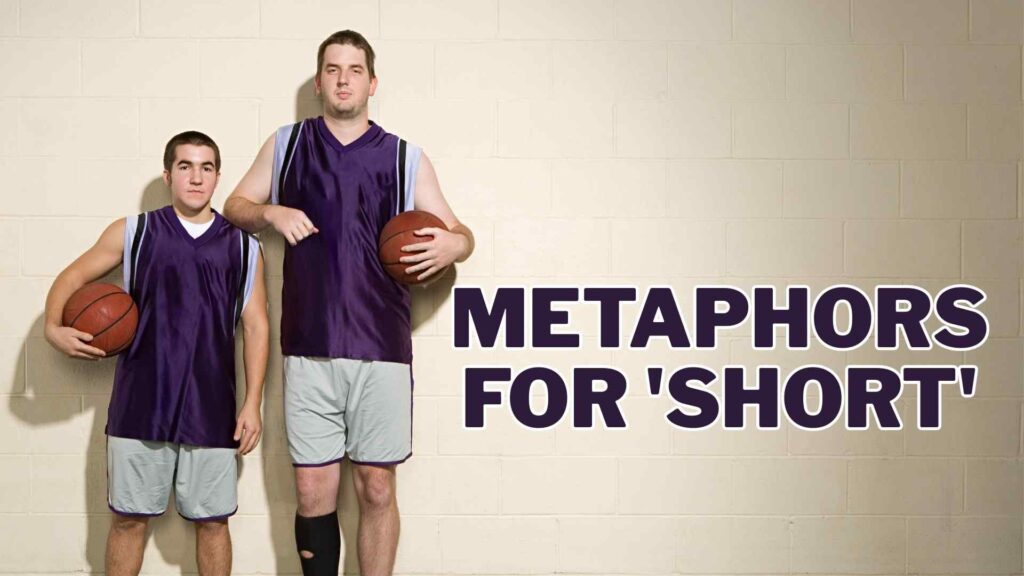

Understanding metaphors is crucial for mastering English, as they add depth and color to our language. Metaphors allow us to express complex ideas in a concise and engaging way. Specifically, exploring metaphors for simple concepts like ‘short’ reveals the rich tapestry of the English language and enhances both comprehension and expression. This article is designed for English language learners of all levels, from beginners looking to expand their vocabulary to advanced speakers aiming to refine their figurative language skills. By the end of this guide, you will be able to identify, interpret, and effectively use metaphors for ‘short’ in various contexts.
This article will equip you with the knowledge and practice necessary to confidently use metaphors for describing brevity, shortness in length, or conciseness in various contexts. Whether you are a student, a writer, or simply someone who enjoys exploring the nuances of language, this comprehensive guide will provide you with the tools to understand and appreciate the power of figurative language.
Table of Contents
- Introduction
- Definition of Metaphor and ‘Short’
- Structural Breakdown of Metaphors
- Types of Metaphors for ‘Short’
- Examples of Metaphors for ‘Short’
- Usage Rules for Metaphors
- Common Mistakes with Metaphors
- Practice Exercises
- Advanced Topics in Metaphor Usage
- Frequently Asked Questions
- Conclusion
Definition of Metaphor and ‘Short’
A metaphor is a figure of speech that directly compares two unlike things without using “like” or “as.” It asserts that one thing is another, creating a vivid image or deeper understanding. Metaphors enrich language by transferring qualities from one concept to another, allowing for more creative and impactful communication.
The word “short” can refer to various concepts including:
- Duration: Lasting a brief time.
- Length: Measuring a small distance from end to end.
- Conciseness: Expressing much in few words.
- Stature: Being of limited height.
Therefore, metaphors for “short” will aim to convey these different aspects of brevity or limited extent in a figurative manner.
Structural Breakdown of Metaphors
Metaphors typically consist of two main elements:
- Tenor: The subject to which metaphorical attributes are ascribed. In our case, this is something that is “short.”
- Vehicle: The object whose attributes are borrowed. This is the metaphorical term used to describe the “short” thing.
For example, in the metaphor “Life is a fleeting dream,” “life” is the tenor, and “fleeting dream” is the vehicle. The qualities of a fleeting dream (brief, insubstantial) are transferred to life, emphasizing its transience.
Effective metaphors create a strong connection between the tenor and the vehicle, making the comparison both meaningful and memorable. The strength of a metaphor lies in its ability to evoke images, emotions, and associations that resonate with the audience.
Types of Metaphors for ‘Short’
Metaphors for ‘short’ can be categorized based on the specific aspect of shortness they represent. Here are some key categories:
Duration
These metaphors describe something that lasts for a brief period. They often involve comparisons to transient or quickly passing phenomena.
Length
These metaphors describe something that is physically small in length. They might compare it to tiny objects or limited distances.
Conciseness
These metaphors describe something that is brief and to the point in terms of communication or expression. They often involve comparisons to summaries or abbreviated forms.
Stature
These metaphors describe someone or something that is small in height or size. They often compare it to smaller animals, plants, or objects.
Examples of Metaphors for ‘Short’
The following sections provide examples of metaphors for “short,” categorized by the type of shortness they represent. Each table includes numerous examples to illustrate the diverse ways in which metaphors can be used.
Duration Examples
The table below provides examples of metaphors used to describe something that is short in duration. These metaphors often evoke a sense of transience, brevity, or fleetingness.
| Metaphor | Explanation | Example Sentence |
|---|---|---|
| A blink of an eye | Compares the short duration to the rapid closing and opening of an eye. | The opportunity vanished in a blink of an eye. |
| A fleeting moment | Compares the duration to something that passes quickly and is easily forgotten. | Their happiness was just a fleeting moment in a sea of sorrow. |
| A heartbeat | Compares the duration to the brief time of a single heartbeat. | For a heartbeat, he hesitated before answering. |
| A summer breeze | Compares the duration to the light, quick passing of a summer breeze. | Her anger was like a summer breeze, quickly gone. |
| A shooting star | Compares the duration to the bright but brief appearance of a shooting star. | His fame was like a shooting star, brilliant but short-lived. |
| A drop in the ocean | Compares the duration to an insignificant amount of time. | His contribution was just a drop in the ocean compared to the overall effort. |
| A grain of sand | Compares the duration to something small and insignificant. | Life is a grain of sand in the vast desert of time. |
| A whisper | Compares the duration to the brief sound of a whisper. | The secret was shared in a whisper, quickly fading away. |
| A flash of lightning | Compares the duration to the sudden and brief appearance of lightning. | The idea came to him in a flash of lightning. |
| Dewdrop on a leaf | Compares the duration to the ephemeral nature of a dewdrop. | Youth is like a dewdrop on a leaf, quickly disappearing. |
| A passing cloud | Compares the duration to the transient nature of a cloud moving across the sky. | His sadness was like a passing cloud, soon to be replaced by sunshine. |
| Melted snow | Compares the duration to something that quickly disappears when exposed to heat. | Their love was like melted snow, gone as quickly as it came. |
| A firefly’s glow | Compares the duration to the brief illumination of a firefly. | Her hope was like a firefly’s glow in the darkness. |
| A butterfly’s wingbeat | Compares the duration to the quick and fleeting movement of a butterfly’s wings. | Life is as delicate as a butterfly’s wingbeat. |
| A ripple in a pond | Compares the duration to the quick spreading and fading of a ripple. | The news created a ripple in the pond of their quiet lives. |
| A spark | Compares the duration to the brief burst of light from a spark. | His anger was just a spark that quickly died out. |
| A page turn | Compares the duration to the quick action of turning a page. | The chapter of his life changed with a page turn. |
| A bird’s song | Compares the duration to the brief melody of a bird’s song. | Her joy was like a bird’s song, filling the air for a moment. |
| A soap bubble | Compares the duration to the brief existence of a soap bubble before it pops. | Their dreams were fragile, like soap bubbles in the wind. |
| A falling leaf | Compares the duration to the descent of a leaf, implying a quick and natural end. | His career was like a falling leaf, gently coming to its conclusion. |
| A quick breath | Compares the duration to the action of taking a quick breath. | He held his breath for what felt like a quick breath before diving in. |
| A single tear | Compares the duration to the short time a tear takes to fall. | A single tear rolled down her cheek as she remembered him. |
Length Examples
The table below showcases metaphors that describe something that is short in physical length. These metaphors often draw comparisons to small objects, animals, or distances.
| Metaphor | Explanation | Example Sentence |
|---|---|---|
| A sliver of moon | Compares the small size to a thin crescent of the moon. | Only a sliver of moon was visible through the clouds. |
| A pinprick | Compares the small size to the tiny mark made by a pin. | The island was just a pinprick on the vast map. |
| A grain of rice | Compares the small size to a single grain of rice. | The mistake was a grain of rice in a bowl of perfection. |
| A hair’s breadth | Compares the small distance to the width of a human hair. | They missed the collision by a hair’s breadth. |
| A flea’s jump | Compares the small distance to the short jump of a flea. | His progress was a flea’s jump forward, hardly noticeable. |
| A mouse’s footprint | Compares the small size to the tiny footprint of a mouse. | The evidence was as faint as a mouse’s footprint. |
| A dot on the horizon | Compares the small size to a tiny dot seen from a distance. | The ship appeared as a dot on the horizon. |
| A speck of dust | Compares the small size to a tiny particle of dust. | Her worries were a speck of dust compared to his. |
| A pebble on the beach | Compares the small size to an individual pebble amongst many on a beach. | His contribution felt like a pebble on the beach. |
| A bird’s feather | Compares the small size and lightness to a feather. | Her touch was as light as a bird’s feather. |
| A blade of grass | Compares the small size to a single blade of grass. | He felt insignificant, like a blade of grass in a vast field. |
| A drop of water | Compares the small size and insignificance to a single drop of water. | His efforts were just a drop of water in the desert. |
| A pinpoint of light | Compares the small size to a very small, focused point of light. | Hope was a pinpoint of light in the darkness. |
| A needle’s eye | Compares the small size to the very small opening of a needle. | The chance of success was like threading a needle’s eye. |
| A crumb | Compares the small size to a tiny piece of food. | He was grateful for every crumb of attention he received. |
| A seed | Compares the small size to a tiny seed. | The idea was just a seed in his mind. |
| A button | Compares the small size to that of a button. | The town was a button on the map. |
| A sliver of hope | Compares the small amount to a tiny sliver. | She held onto a sliver of hope. |
| A fingernail clipping | Compares the small size to a clipping from a finger nail. | The error was the size of a fingernail clipping. |
| A dash of spice | Compares the small amount to a dash of spice. | Add a dash of spice to your writing to make it more engaging. |
| A speck of pepper | Compares the small size to a speck of pepper. | The flaw was a speck of pepper in an otherwise perfect dish. |
| A single thread | Compares the small size to a single thread. | His life hung by a single thread. |
Conciseness Examples
The table below presents metaphors that describe something that is short in terms of conciseness or brevity of expression. These metaphors often involve comparisons to summaries, abbreviations, or essential elements.
| Metaphor | Explanation | Example Sentence |
|---|---|---|
| A nutshell | Compares the conciseness to the small size and completeness of a nutshell. | He summarized the entire book in a nutshell. |
| A brief | Compares the conciseness to a short, concise legal document. | The lawyer presented a brief overview of the case. |
| An outline | Compares the conciseness to a skeletal structure providing essential points. | She gave an outline of her presentation before diving into details. |
| A sketch | Compares the conciseness to a rough drawing that captures the main features. | He provided a sketch of his plan, leaving room for adjustments. |
| A summary | Compares the conciseness to a brief account of the key points. | The report included a summary of the findings. |
| An abstract | Compares the conciseness to a short summary of a research paper or article. | The abstract highlighted the main objectives and results of the study. |
| A headline | Compares the conciseness to a short title that captures the essence of a news story. | The headline screamed the latest developments in the investigation. |
| A snippet | Compares the conciseness to a small piece or excerpt. | She offered a snippet of her upcoming novel. |
| An epitome | Compares the conciseness to a perfect example or representation. | His speech was the epitome of brevity and clarity. |
| A thumbnail | Compares the conciseness to a small image representing a larger one. | The website displayed thumbnail images of the products. |
| A precis | Compares the conciseness to a summary or abstract of a text or speech. | He prepared a precis of the lengthy document for the board. |
| A Cliff’s Notes version | Compares the conciseness to summarized study guides, offering condensed information. | He gave the Cliff’s Notes version of the history lesson. |
| A tweet | Compares the conciseness to a short message on Twitter (now X). | He summarized his thoughts in a tweet. |
| An elevator pitch | Compares the conciseness to a brief, persuasive speech delivered in an elevator ride. | She perfected her elevator pitch to impress potential investors. |
| A blurb | Compares the conciseness to a short promotional description. | The book’s blurb promised a thrilling adventure. |
| A capsule review | Compares the conciseness to a very short review. | The movie received a capsule review in the newspaper. |
| A telegram | Compares the conciseness to a concise message sent via telegram. | He sent a telegram with the news of his arrival. |
| A quick read | Compares the conciseness to something that can be read quickly. | The article was a quick read, perfect for a coffee break. |
| A flash fiction piece | Compares the conciseness to a very short story. | She wrote a flash fiction piece that captured the essence of their relationship. |
| A haiku | Compares the conciseness to a short Japanese poem. | He expressed his feelings in a haiku. |
| A byte-sized piece | Compares the conciseness to the small size of digital information. | The information was presented in byte-sized pieces for easy consumption. |
| A short shrift | Compares the inadequate attention given to a topic to something that is short. | The proposal received short shrift from the committee. |
Stature Examples
The table below provides metaphors that describe something or someone that is short in stature or size. These metaphors often draw comparisons to small animals, plants, or objects.
| Metaphor | Explanation | Example Sentence |
|---|---|---|
| A shrimp | Compares the small stature to the size of a shrimp. | He was a shrimp compared to the other players on the team. |
| A runt | Compares the small stature to the smallest animal in a litter. | He was the runt of the family, always overshadowed by his siblings. |
| A peanut | Compares the small stature to the size of a peanut. | Standing next to the basketball player, he felt like a peanut. |
| A munchkin | Compares the small stature to the characters from *The Wizard of Oz*. | The children looked like a group of munchkins in their costumes. |
| A dwarf | Compares the small stature to a mythical being of short stature. | Compared to the giant sequoia, the small tree was a dwarf. |
| A pip-squeak | Compares the small stature and insignificance to a squeaking sound. | The new employee was just a pip-squeak in the corporate world. |
| A bantam | Compares the small stature to a small breed of chicken. | He was a bantam of a man, but full of energy. |
| A pygmy | Compares the small stature to a member of a group of people known for their short height. | The small statue was a pygmy compared to the monumental sculptures. |
| A half-pint | Compares the small stature and size to half of a pint. | She was a half-pint, but she had a big personality. |
| A pocket-sized edition | Compares the small size to a small, portable version of something. | He was a pocket-sized edition of his father, with the same charm. |
| A miniature | Compares the small size to a smaller version of something else. | The dollhouse was a miniature of the real house. |
| A teeny-weeny | Compares the small size to something very small. | She wore a teeny-weeny hat to the party. |
| A mite | Compares the small stature to a very small creature. | He felt like a mite compared to the giant building. |
| A speck | Compares the small stature to a tiny speck. | The island was but a speck in the ocean. |
| A crumb | Compares the small stature to a tiny crumb. | He felt like a crumb next to the powerful CEO. |
| A bean sprout | Compares the small stature to a young, small plant. | She was a bean sprout compared to the older women in her family. |
| A sapling | Compares the small stature to a young tree. | He was a sapling in the forest of experienced professionals. |
| A button mushroom | Compares the small stature to a small mushroom. | She felt like a button mushroom next to the towering skyscrapers. |
| A fairy | Compares the small stature to a mythical, small creature. | She was light and nimble, like a fairy. |
| A pixie | Compares the small stature to a small, mischievous creature. | Her small stature and playful nature made her look like a pixie. |
| A grasshopper | Compares the small stature to a grasshopper. | He was constantly hopping around, like a grasshopper. |
| A gnat | Compares the small stature to a gnat. | She felt like a gnat in the crowd of people. |
Usage Rules for Metaphors
Using metaphors effectively requires careful consideration of context and audience. Here are some key rules to follow:
- Clarity: Ensure the metaphor is understandable. The connection between the tenor and vehicle should be clear to the audience. Avoid obscure or overly complex metaphors that may confuse the reader.
- Relevance: The metaphor should be relevant to the topic and the overall message. A metaphor that feels out of place can distract from the main point.
- Originality: Strive for fresh and original metaphors. Overused metaphors can become clichés and lose their impact.
- Consistency: Maintain consistency within the metaphor. Avoid mixing metaphors or abruptly changing the comparison.
- Appropriateness: Consider the tone and style of the writing. Metaphors should be appropriate for the audience and the purpose of the communication.
A strong metaphor enhances understanding and adds depth, while a poorly chosen metaphor can detract from the message.
Common Mistakes with Metaphors
Several common mistakes can weaken the impact of metaphors. Being aware of these pitfalls can help you use metaphors more effectively.
| Mistake | Incorrect Example | Correct Example |
|---|---|---|
| Mixed Metaphor: Combining inconsistent images. | “We need to nip it in the bud to stay afloat.” | “We need to nip it in the bud to prevent further problems.” OR “We need to stay afloat during this difficult time.” |
| Cliché: Using an overused metaphor. | “The project was a piece of cake.” | “The project was surprisingly straightforward.” |
| Obscurity: Using a metaphor that is difficult to understand. | “His mind was a Byzantine labyrinth of thought.” | “His mind was a complex and intricate web of thought.” |
| Inappropriateness: Using a metaphor that is out of place in the context. | “The funeral was a real home run.” | “The funeral was a somber and respectful ceremony.” |
| Overuse: Using too many metaphors, which can overwhelm the reader. | “The sea of opportunities crashed against the shore of his dreams, but the ship of his ambition was rudderless in the storm of doubt.” | “He had many opportunities, but his doubt held him back.” |
Avoiding these common mistakes will help you create more impactful and effective metaphors.
Practice Exercises
Test your understanding of metaphors for “short” with the following exercises. Identify the type of shortness being described and, if applicable, suggest an alternative metaphor.
- Identify the type of ‘short’ described and explain the metaphor: “His patience was a fleeting summer.”
- Identify the type of ‘short’ described and explain the metaphor: “The rope was a hair’s breadth from breaking.”
- Identify the type of ‘short’ described and explain the metaphor: “The speech was a tweet compared to the original draft.”
- Identify the type of ‘short’ described and explain the metaphor: “She felt like a shrimp next to the towering athlete.”
- Rewrite the sentence using a different metaphor for ‘short duration’: “The rain lasted only a blink of an eye.”
- Rewrite the sentence using a different metaphor for ‘short length’: “The bridge was a sliver of metal spanning the chasm.”
- Rewrite the sentence using a different metaphor for ‘short conciseness’: “The summary was a nutshell version of the report.”
- Rewrite the sentence using a different metaphor for ‘short stature’: “The little girl was a peanut compared to her older brother.”
- Create your own metaphor for ‘short duration’. Use it in a sentence.
- Create your own metaphor for ‘short conciseness’. Use it in a sentence.
Answer Key:
- Duration. The metaphor compares the duration of his patience to the briefness of summer.
- Length. The metaphor compares the small distance to the width of a hair.
- Conciseness. The metaphor compares the speech’s brevity to a short message on Twitter (now X).
- Stature. The metaphor compares her small height to the size of a shrimp.
- “The rain lasted only a heartbeat.”
- “The bridge was a thread of metal spanning the chasm.”
- “The summary was a capsule version of the report.”
- “The little girl was a button mushroom compared to her older brother.”
- (Example) “The argument was a spark in the night, quickly extinguished.”
- (Example) “His explanation was a telegram, short and to the point.”
More Practice Exercises:
Exercise 1: Identifying Metaphors
For each sentence, identify whether the sentence contains a metaphor for ‘short’, and if so, what type of ‘short’ is being described.
| # | Sentence | Metaphor Present (Yes/No) | Type of ‘Short’ (if applicable) |
|---|---|---|---|
| 1 | The meeting was abruptly cut short. | No | N/A |
| 2 | His fame was a shooting star. | Yes | Duration |
| 3 | The child was short for his age. | No | N/A |
| 4 | The presentation was the epitome of brevity. | Yes | Conciseness |
| 5 | The path was a hair’s breadth from the cliff’s edge. | Yes | Length |
| 6 | He was a shrimp compared to his older brother. | Yes | Stature |
| 7 | The movie was too short. | No | N/A |
| 8 | Her temper was a summer breeze. | Yes | Duration |
| 9 | The article was a quick read. | Yes | Conciseness |
| 10 | The building was short and squat. | No | N/A |
Exercise 2: Fill in the Blanks
Complete the following sentences with an appropriate metaphor for ‘short’ from the word bank below.
Word Bank: a nutshell, a pinpoint of light, a crumb, a blink of an eye, a sliver of moon
- The opportunity disappeared in __________.
- He summarized the complex theory in __________.
- The hope was __________ in the darkness.
- The evidence was only __________ of what was needed.
- Only __________ was visible through the clouds.
Exercise 3: Matching Metaphors
Match the metaphors in Column A with the type of ‘short’ they represent in Column B.
| Column A (Metaphor) | Column B (Type of Short) |
|---|---|
| 1. A tweet | a. Duration |
| 2. A sapling | b. Length |
| 3. A flash of lightning | c. Conciseness |
| 4. A hair’s breadth | d. Stature |
Answer Key:
Exercise 1:
| # | Sentence | Metaphor Present (Yes/No) | Type of ‘Short’ (if applicable) |
|---|---|---|---|
| 1 | The meeting was abruptly cut short. | No | N/A |
| 2 | His fame was a shooting star. | Yes | Duration |
| 3 | The child was short for his age. | No | N/A |
| 4 | The presentation was the epitome of brevity. | Yes | Conciseness |
| 5 | The path was a hair’s breadth from the cliff’s edge. | Yes | Length |
| 6 | He was a shrimp compared to his older brother. | Yes | Stature |
| 7 | The movie was too short. | No | N/A |
| 8 | Her temper was a summer breeze. | Yes | Duration |
| 9 | The article was a quick read. | Yes | Conciseness |
| 10 | The building was short and squat. | No | N/A |
Exercise 2:
- The opportunity disappeared in a blink of an eye.
- He summarized the complex theory in a nutshell.
- The hope was a pinpoint of light in the darkness.
- The evidence was only a crumb of what was needed.
- Only a sliver of moon was visible through the clouds.
Exercise 3:
- 1-c
- 2-d
- 3-a
- 4-b
Advanced Topics in Metaphor Usage
For advanced learners, exploring the nuances of metaphor usage can greatly enhance their writing and communication skills. Here are some advanced topics to consider:
- Extended Metaphors: Developing a single metaphor throughout an entire piece of writing. This requires careful planning and consistent imagery.
- Submerged Metaphors: Using metaphors subtly, without explicitly stating the comparison. This can add depth and nuance to the writing.
- Dead Metaphors: Recognizing and avoiding metaphors that have become so overused that they have lost their figurative meaning.
- Cross-Modal Metaphors: Combining metaphors that appeal to different senses, creating a richer and more immersive experience for the reader.
- Cultural Sensitivity: Being aware of cultural differences in metaphor usage and avoiding metaphors that may be offensive or misunderstood.
Mastering these advanced topics will allow you to use metaphors with greater precision and impact.
Frequently Asked Questions
What is the difference between a metaphor and a simile?
A metaphor directly equates two unlike things, while a simile uses “like” or “as” to make a comparison. For example, “Life is a journey” is a metaphor, while “Life is like a journey” is a simile.
How can I improve my ability to create metaphors?
Practice regularly, read widely, and pay attention to the metaphors used by others. Experiment with different combinations of tenor and vehicle, and don’t be afraid to break the rules.
Are there any situations where I should avoid using metaphors?
In highly technical or scientific writing, where clarity and precision are paramount, metaphors may be inappropriate. Also, avoid metaphors when communicating with an audience that may have difficulty understanding figurative language.
How do I know if a metaphor is effective?
An effective metaphor is clear, relevant, original, and appropriate for the context. It should enhance understanding and add depth to the writing. Get feedback from others to see how they interpret your metaphors.
Conclusion
Metaphors are powerful tools for expressing complex ideas in a concise and engaging way. By understanding the different types of metaphors for “short” and following the usage rules outlined in this article, you can enhance your communication skills and add depth to your writing. Remember to practice regularly, experiment with different metaphors, and be mindful of your audience. With time and effort, you will become a master of figurative language and unlock the full potential of metaphors.