
Metaphors are powerful tools in language, allowing us to understand complex concepts by relating them to something more familiar. When it comes to war, a topic often shrouded in political and emotional complexities, metaphors become even more crucial. Understanding how war is metaphorically represented in English not only enhances our comprehension of the language but also provides insights into the underlying perceptions and attitudes surrounding conflict. This article will explore the various metaphors used to describe war, providing a comprehensive guide for learners of all levels to master this fascinating aspect of English grammar and rhetoric. Whether you are a student, writer, or simply someone interested in the nuances of language, this guide will equip you with the knowledge and skills to navigate the metaphorical landscape of war.
Table of Contents
- Introduction
- Defining War Metaphors
- Structural Breakdown of War Metaphors
- Types of War Metaphors
- Examples of War Metaphors
- Usage Rules for War Metaphors
- Common Mistakes with War Metaphors
- Practice Exercises
- Advanced Topics in War Metaphors
- Frequently Asked Questions
- Conclusion
Defining War Metaphors
A metaphor is a figure of speech that directly compares two unlike things without using “like” or “as.” It asserts that one thing *is* another, creating a vivid and often insightful connection. In the context of war, metaphors are used to frame and understand the complexities of conflict by relating it to something more easily grasped or emotionally resonant. These metaphors can shape public opinion, influence political discourse, and even affect the way wars are conducted. By understanding the nature and function of war metaphors, we can critically analyze the messages being conveyed and make more informed judgments.
War metaphors serve several key functions. They simplify complex realities, making them more accessible to a wider audience. They evoke emotional responses, influencing attitudes towards war and its participants. They shape perceptions of agency and responsibility, affecting how we understand the causes and consequences of conflict. Furthermore, they provide a framework for decision-making, guiding policy and strategy.
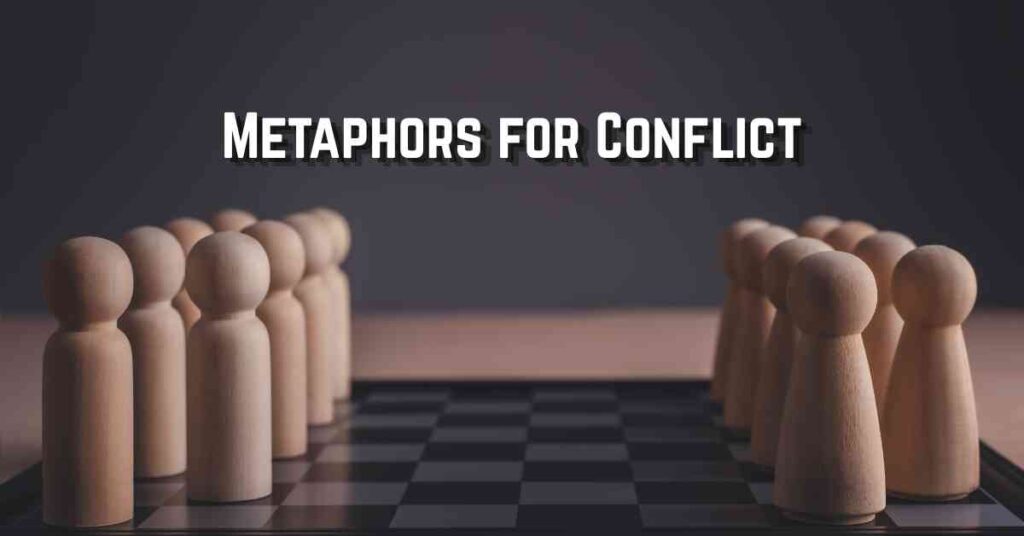
The context in which a war metaphor is used is crucial to its interpretation. The same metaphor can have different meanings depending on the speaker, the audience, and the overall situation. For example, describing a military campaign as a “chess game” might suggest strategic planning and calculated moves, but it could also imply a detached and impersonal approach to human lives.
Structural Breakdown of War Metaphors
The structure of a war metaphor typically involves two main elements: the source domain and the target domain. The source domain is the concept or image that is used to understand the target domain, which in this case is war. For instance, if we say “War is a disease,” the source domain is “disease” and the target domain is “war.”
The effectiveness of a war metaphor depends on the degree of overlap between the source and target domains. The more similarities there are between the two, the more readily the metaphor will be understood and accepted. However, it is also important to consider the potential limitations and distortions that the metaphor may introduce. No metaphor is perfect, and each one will inevitably highlight certain aspects of war while obscuring others.
Consider the metaphor “War is hell.” The source domain (hell) is associated with suffering, chaos, and destruction. These associations are then transferred to the target domain (war), creating a powerful and negative image of conflict. The structure is simple but impactful: A is B (War is Hell). This simple structure allows for immediate comprehension and emotional resonance.
Types of War Metaphors
War metaphors can be categorized based on the source domain they draw upon. Here are some of the most common types:
War as a Game
This metaphor frames war as a strategic contest with clear rules and objectives. Terms like “game plan,” “strategic move,” and “winning the battle” are common examples. This metaphor often emphasizes the intellectual and tactical aspects of war, downplaying the human cost.
War as a Disease
This metaphor portrays war as a destructive force that spreads and infects society. Phrases like “rooting out the enemy,” “containing the conflict,” and “a sick society” fall into this category. This metaphor often highlights the destructive and pervasive nature of war.
War as a Natural Disaster
This metaphor presents war as an uncontrollable and devastating event, like a hurricane or earthquake. Terms like “swept away by the conflict,” “the storm of war,” and “rebuilding after the devastation” are typical examples. This metaphor often emphasizes the overwhelming and destructive power of war.
War as Business
This metaphor views war as a calculated investment with potential gains and losses. Phrases like “cost-benefit analysis,” “return on investment,” and “cutting our losses” are common. This metaphor often highlights the economic and political motivations behind war.
War as Sport
This metaphor frames war as a competitive event with winners and losers, often focusing on the excitement and spectacle of battle. Terms like “scoring a victory,” “fighting for the championship,” and “a tough opponent” are typical. This metaphor can trivialize the seriousness of war.
War as Theater
This metaphor presents war as a staged performance with actors, scripts, and audiences. Phrases like “playing a role,” “the stage of war,” and “a dramatic confrontation” are common. This metaphor often highlights the performative and propagandistic aspects of war.
Examples of War Metaphors
The following tables provide extensive examples of war metaphors, organized by category. Each table includes numerous examples to illustrate the variety and prevalence of these metaphors in the English language.
The first table focuses on the “War as a Game” metaphor, illustrating how strategic thinking and planning are often compared to game-playing.
| Metaphor | Explanation |
|---|---|
| “A chess game of strategy” | Comparing military planning to the calculated moves of a chess game. |
| “Winning the battle, losing the war” | Highlighting the difference between tactical victories and overall strategic success. |
| “The enemy’s gambit” | Referring to a risky maneuver by the opposing side. |
| “A calculated risk” | Describing a decision made after weighing potential outcomes. |
| “Outmaneuvering the opposition” | Using superior tactics to gain an advantage. |
| “The long game” | Emphasizing the importance of long-term planning and patience. |
| “Playing our cards right” | Suggesting that success depends on making the right choices. |
| “A strategic advantage” | Having a favorable position or resource. |
| “A tactical retreat” | Withdrawing from a position to regroup or avoid losses. |
| “Gaining ground” | Making progress towards a goal. |
| “Holding our position” | Maintaining a current advantage or status. |
| “Losing ground” | Falling behind or losing an advantage. |
| “Checkmate” | A final, decisive victory. |
| “The art of war” | Emphasizing the skill and strategy involved in warfare. |
| “A master strategist” | Describing someone with exceptional planning abilities. |
| “A game changer” | Something that significantly alters the course of the conflict. |
| “Level the playing field” | Creating a more equal opportunity for success. |
| “Raising the stakes” | Increasing the risks and potential rewards. |
| “Playing defense” | Focusing on protecting against attacks. |
| “Playing offense” | Taking aggressive action to gain an advantage. |
| “The next move” | Considering the next action or decision to be made. |
| “Cornering the enemy” | Trapping the opposing force. |
| “A war of attrition” | A long, drawn-out conflict aimed at wearing down the enemy. |
| “Deploying resources” | Strategically allocating resources for maximum impact. |
| “A flanking maneuver” | Attacking the enemy from the side. |
The second table illustrates the “War as a Disease” metaphor, highlighting the destructive and pervasive nature of conflict as if it were a spreading illness.
| Metaphor | Explanation |
|---|---|
| “A cancer on society” | Comparing war to a destructive and spreading disease. |
| “Eradicating the enemy” | Treating the enemy like a disease that needs to be eliminated. |
| “Containing the spread of violence” | Attempting to limit the geographic scope of the conflict. |
| “A sick society” | Describing a society damaged by war’s effects. |
| “The infection of extremism” | Portraying extremist ideologies as a contagious disease. |
| “A festering wound” | Describing a long-standing conflict that continues to cause pain. |
| “The virus of hatred” | Comparing hatred to a contagious disease that spreads rapidly. |
| “A plague on our nation” | Describing war as a widespread and devastating affliction. |
| “Immunizing against propaganda” | Building resistance to misleading information. |
| “A relapse into conflict” | Returning to a state of war after a period of peace. |
| “Diagnosing the root cause” | Identifying the underlying reasons for the conflict. |
| “A preventative measure” | Taking action to avoid future conflict. |
| “The symptoms of war” | Describing the visible signs of conflict, such as violence and displacement. |
| “A chronic conflict” | A long-lasting and persistent war. |
| “The contagion of fear” | Describing how fear spreads rapidly during wartime. |
| “A toxic environment” | Describing the harmful effects of war on society. |
| “Fighting off the invasion” | Resisting an external threat. |
| “A diseased ideology” | Describing a harmful belief system. |
| “The pathology of violence” | Studying the causes and nature of violent behavior. |
| “A cure for conflict” | Seeking a solution to end the war. |
| “Treating the wounds of war” | Providing aid and support to those affected by the conflict. |
| “A fragile recovery” | Describing a post-war period that is vulnerable to renewed conflict. |
| “A clean bill of health” | Declaring a society free from the effects of war. |
| “Quarantining the area” | Isolating a region affected by conflict. |
| “The incubation period” | The time leading up to the outbreak of war. |
The third table presents examples of the “War as a Natural Disaster” metaphor, emphasizing the uncontrollable and devastating aspects of war.
| Metaphor | Explanation |
|---|---|
| “The storm of war” | Comparing war to a violent and destructive storm. |
| “Swept away by the conflict” | Describing people being overwhelmed by the events of war. |
| “A tsunami of violence” | Portraying violence as an overwhelming and destructive force. |
| “Rebuilding after the devastation” | Focusing on the recovery efforts following a war. |
| “The earthquake of revolution” | Comparing a revolution to a sudden and disruptive natural event. |
| “A volcanic eruption of anger” | Describing a sudden and intense outburst of conflict. |
| “The flood of refugees” | Portraying the mass displacement of people as a natural disaster. |
| “A drought of resources” | Describing a scarcity of essential supplies during wartime. |
| “The hurricane of aggression” | Comparing aggression to a powerful and destructive storm. |
| “An avalanche of problems” | Highlighting the numerous challenges that arise during and after war. |
| “The scorched earth policy” | Describing a strategy of destroying resources to prevent the enemy from using them. |
| “Navigating the treacherous terrain” | Dealing with the difficult and dangerous conditions of war. |
| “The shifting sands of conflict” | Describing the unpredictable and ever-changing nature of war. |
| “A natural catastrophe” | Presenting war as an unavoidable and destructive event. |
| “The fault lines of division” | Identifying the underlying tensions that lead to conflict. |
| “A landslide victory” | Describing an overwhelming and decisive win. |
| “The aftershocks of war” | Highlighting the long-term consequences of conflict. |
| “Erosion of trust” | Describing the gradual loss of confidence in institutions and leaders. |
| “The rising tide of nationalism” | Portraying nationalism as an unstoppable force. |
| “Weathering the storm” | Surviving a difficult period of conflict. |
| “The eye of the storm” | Describing a brief period of calm amidst the chaos of war. |
| “A force of nature” | Comparing a powerful military to an unstoppable natural phenomenon. |
| “The landscape of war” | Describing the physical and emotional environment of conflict. |
| “A barren wasteland” | Describing a region devastated by war. |
| “The floodgates opened” | Describing a sudden and overwhelming release of violence. |
The fourth table provides examples of the “War as Business” metaphor, illustrating how economic and political motivations are often associated with war.
| Metaphor | Explanation |
|---|---|
| “A cost-benefit analysis of war” | Evaluating the potential gains and losses of engaging in conflict. |
| “Return on investment in military spending” | Assessing the value and benefits derived from defense expenditures. |
| “Cutting our losses and withdrawing” | Deciding to end a conflict to minimize further damage. |
| “A hostile takeover of territory” | Comparing the seizure of land to a corporate acquisition. |
| “Mergers and acquisitions of power” | Describing alliances and consolidations of political influence. |
| “A market for weapons” | Referring to the global arms trade. |
| “Investing in peace” | Allocating resources to promote stability and prevent conflict. |
| “A trade war” | Describing economic conflict between nations. |
| “A strategic partnership” | Forming an alliance for mutual benefit. |
| “The bottom line” | The ultimate outcome or objective of a conflict. |
| “Liquidating assets” | Selling off resources to fund the war effort. |
| “A lucrative opportunity” | Describing a situation where war can be profitable. |
| “A competitive advantage” | Having a superior military capability. |
| “Market share” | Referring to a nation’s influence or control over a region. |
| “A dividend of peace” | The economic benefits that result from ending a war. |
| “Going bankrupt” | Describing a nation’s economic collapse due to war. |
| “The price of freedom” | The sacrifices and costs associated with defending liberty. |
| “Capitalizing on the situation” | Taking advantage of the chaos and instability of war. |
| “A hostile environment” | Describing a dangerous and unstable region. |
| “Monopolizing power” | Gaining exclusive control over resources or territory. |
| “Diversifying our portfolio” | Expanding military capabilities to address different threats. |
| “A high-risk investment” | Describing a military operation with uncertain outcomes. |
| “The supply chain” | Referring to the logistical network that supports the war effort. |
| “A bailout package” | Providing financial assistance to a nation struggling with the economic consequences of war. |
| “Due diligence” | Thorough investigation before engaging in a military operation. |
The fifth table provides examples of the “War as Sport” metaphor, emphasizing competition and the pursuit of victory.
| Metaphor | Explanation |
|---|---|
| “Scoring a victory” | Achieving a success in battle. |
| “Fighting for the championship” | Striving for ultimate dominance. |
| “A tough opponent” | Describing a formidable enemy. |
| “The opening kickoff” | The start of a military campaign. |
| “A full-court press” | An all-out effort to achieve victory. |
| “Playing hardball” | Using aggressive tactics. |
| “A knockout blow” | A decisive victory that ends the conflict. |
| “The final whistle” | The end of the war. |
| “A level playing field” | Equal opportunities for both sides. |
| “Home-field advantage” | Gaining an advantage by fighting on familiar territory. |
| “A game of inches” | A conflict where small gains are significant. |
| “The underdogs” | The weaker side in the conflict. |
| “A strategic timeout” | A pause in the fighting to regroup. |
| “The cheering crowd” | Public support for the war effort. |
| “The fans” | Supporters of a particular side. |
| “A photo finish” | A close and uncertain outcome. |
| “The referee” | An international mediator. |
| “Foul play” | Violations of the rules of war. |
| “A clean fight” | A conflict fought according to established rules. |
| “The playoffs” | The final stages of a conflict. |
| “The Super Bowl” | The ultimate battle for dominance. |
| “A winning streak” | A series of victories. |
| “A losing streak” | A series of defeats. |
| “Sidelined by injury” | Troops unable to fight due to wounds. |
| “The coach” | The military leader. |
Usage Rules for War Metaphors
When using war metaphors, it is crucial to consider the following rules to ensure clarity and appropriateness:
- Choose metaphors that are relevant to the context. The metaphor should accurately reflect the aspect of war you are trying to describe.
- Avoid mixed metaphors. Combining metaphors from different source domains can create confusion. For example, “The storm of war is a cancer on society” combines natural disaster and disease metaphors, making the image unclear.
- Be mindful of the emotional impact. War metaphors can evoke strong emotions, so use them responsibly and avoid trivializing the suffering caused by war.
- Consider your audience. The effectiveness of a war metaphor depends on the audience’s understanding of the source domain. Choose metaphors that are familiar and easily understood by your target audience.
- Avoid clichés. Overused metaphors can lose their impact. Try to find fresh and original ways to describe war.
Some metaphors may be appropriate in certain contexts but not in others. For example, using “War is a game” might be acceptable when discussing military strategy, but it would be highly inappropriate when describing the human cost of war.
Common Mistakes with War Metaphors
Several common mistakes can undermine the effectiveness of war metaphors:
- Using clichés: Overusing common metaphors like “War is hell” can make your writing sound unoriginal and uninspired.
- Mixing metaphors: Combining unrelated metaphors can create confusing and nonsensical images.
- Being insensitive: Using war metaphors inappropriately can trivialize the suffering and loss caused by conflict.
- Lack of clarity: Choosing metaphors that are too obscure or abstract can make your writing difficult to understand.
Here are some examples of common mistakes and their corrections:
| Incorrect | Correct | Explanation |
|---|---|---|
| “The war was a rollercoaster and a walk in the park.” | “The war was a grueling marathon.” | The original sentence mixes two contradictory metaphors. The corrected sentence uses a single, consistent metaphor. |
| “The enemy was a sitting duck, a wolf in sheep’s clothing.” | “The enemy was a wolf in sheep’s clothing.” | The original sentence contains conflicting images. The corrected sentence uses a single, more coherent metaphor. |
| “The general was a chess master playing a baseball game.” | “The general was a chess master.” | The original sentence mixes two unrelated metaphors. The corrected sentence uses a single, more focused metaphor. |
| “The peace talks were a ray of sunshine in a dark tunnel of despair, but also a raging fire.” | “The peace talks were a ray of sunshine in a dark tunnel of despair.” | The original sentence combines contradictory metaphors. The corrected sentence uses a single, consistent metaphor. |
Practice Exercises
Test your understanding of war metaphors with these practice exercises. Identify the type of metaphor used in each sentence and explain its meaning.
Exercise 1: Identifying Metaphors
| Question | Answer |
|---|---|
| 1. The conflict became a quagmire, sucking in more and more resources. | War as a swamp: The conflict is difficult to escape and consumes resources. |
| 2. The rebels launched a blitzkrieg, overwhelming the government forces. | War as a fast-moving attack: A swift and powerful offensive. |
| 3. The peace treaty was a fragile house of cards, ready to collapse at any moment. | Peace as unstable structure: The agreement is delicate and easily broken. |
| 4. The general was a puppet master, pulling the strings of his soldiers. | Leadership as control: The general manipulates his troops. |
| 5. The propaganda was a carefully crafted web, ensnaring the public’s minds. | Information as trap: Propaganda deceives and controls people. |
| 6. The war was a ticking time bomb, waiting to explode. | War as impending disaster: The conflict is about to escalate. |
| 7. The soldiers were cannon fodder, sacrificed for the sake of the mission. | Soldiers as expendable resources: Their lives are not valued. |
| 8. The negotiations were a minefield, full of hidden dangers. | Negotiations as dangerous: Many potential problems exist. |
| 9. The enemy was a hydra, with new heads growing as soon as others were cut off. | Enemy as resilient: Difficult to defeat permanently. |
| 10. The war had become a monster, devouring everything in its path. | War as destructive force: The conflict is unrestrained and all-consuming. |
Exercise 2: Using Metaphors in Context
Complete the following sentences using an appropriate war metaphor from the list below. (Game, Disease, Natural Disaster, Business)
List: a strategic retreat, a cancer on society, the storm of war, cutting our losses
| Question | Answer |
|---|---|
| 1. After realizing the campaign was unsustainable, the general ordered __________. | a strategic retreat |
| 2. Corruption within the government acted as __________, undermining the war effort. | a cancer on society |
| 3. _________ devastated the region, leaving thousands homeless. | The storm of war |
| 4. The company decided to __________ and sell off its failing division. | cutting our losses |
| 5. The army needed to make _________ or risk complete defeat. | a strategic retreat |
| 6. The enemy’s propaganda became ________, poisoning public opinion. | a cancer on society |
| 7. _________ raged through the country, leaving a trail of destruction. | The storm of war |
| 8. The investors decided to __________ and withdraw their funding from the project. | cutting our losses |
| 9. The commander called for _________ to regroup the troops. | a strategic retreat |
| 10. The organized crime in the city has become _________ , eating away at the community. | a cancer on society |
Advanced Topics in War Metaphors
For advanced learners, exploring the following topics can provide a deeper understanding of war metaphors:
- The role of metaphor in propaganda: How metaphors are used to manipulate public opinion and justify war.
- The impact of war metaphors on international relations: How different metaphors can shape perceptions of other nations and influence diplomatic strategies.
- The evolution of war metaphors over time: How the metaphors used to describe war have changed throughout history, reflecting evolving attitudes and technologies.
- Cognitive Linguistics and War Metaphors: Explore the cognitive mechanisms through which metaphors shape our understanding of abstract concepts like war, focusing on conceptual blending and framing effects.
Analyzing political speeches, news articles, and literary works can provide valuable insights into the use and impact of war metaphors in real-world contexts.
Frequently Asked Questions
- What is the difference between a metaphor and a simile?
A metaphor directly equates two things (e.g., “War is hell”), while a simile uses “like” or “as” to make a comparison (e.g., “War is like hell”). Metaphors are generally considered more forceful and direct.
- Why are metaphors so powerful in shaping our understanding of war?
Metaphors allow us to understand complex and abstract concepts by relating them to something more familiar and concrete. They also evoke emotional responses and shape our perceptions of agency and responsibility.
- Can war metaphors be harmful?
Yes, if they are used insensitively or inappropriately. Trivializing the suffering caused by war or promoting a simplistic view of conflict can have negative consequences.
- How can I identify war metaphors in texts?
Look for language that compares war to something else without using “like” or “as.” Pay attention to the connotations and emotional associations of the source domain.
- Are there any war metaphors that should be avoided?
Avoid metaphors that are overly simplistic, insensitive, or cliché. Be mindful of the potential impact of your language on your audience.
- How do different cultures use war metaphors differently?
Different cultures may have different source domains that they draw upon when describing war, reflecting their unique historical experiences and cultural values. For example, metaphors based on agricultural cycles might be more common in agrarian societies.
- How do war metaphors influence political discourse?
War metaphors can be used to frame issues, justify policies, and mobilize public support. They can also be used to demonize the enemy and create a sense of urgency.
- What is the role of cognitive linguistics in understanding war metaphors?
Cognitive linguistics explores how metaphors shape our thought processes and understanding of abstract concepts. It examines how we use source domains to map onto target domains and create meaning.
Conclusion
Mastering war metaphors is essential for understanding not only the English language but also the complex and often emotionally charged topic of conflict. By recognizing the various types of war metaphors, understanding their structural elements, and following usage rules, learners can critically analyze texts, communicate effectively, and avoid common mistakes. This comprehensive guide has provided a solid foundation for exploring the metaphorical landscape of war.
Remember to practice identifying and using war metaphors in different contexts. Pay attention to the emotional impact of your language and choose metaphors that are appropriate for your audience. By continuing to explore this fascinating aspect of English grammar, you can enhance your understanding of language and the world around you. Keep practicing, and you’ll become proficient in using war metaphors effectively and responsibly.