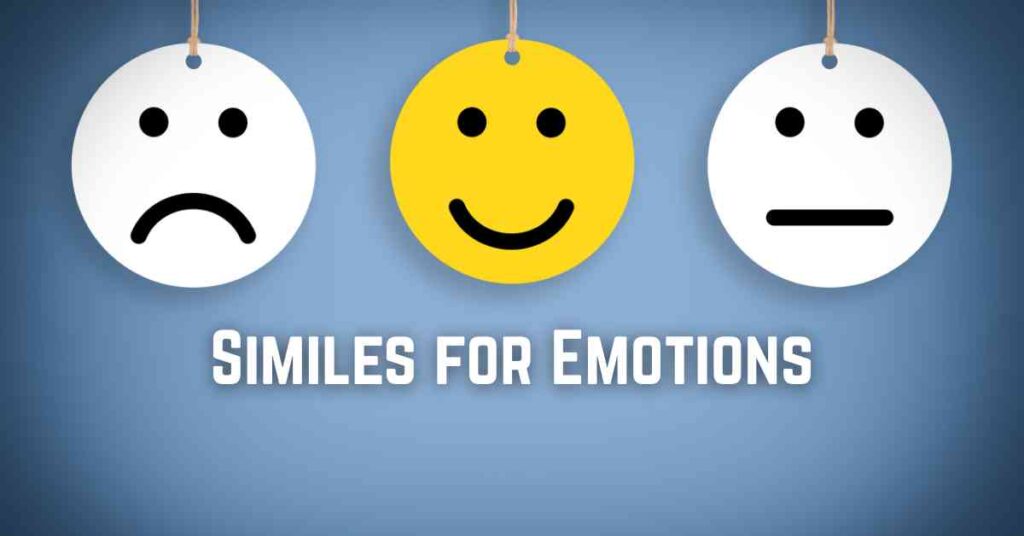

Understanding similes is crucial for mastering the art of descriptive language. Similes, by comparing one thing to another using “like” or “as,” add depth and vividness to our expression, particularly when describing complex emotions. This guide will explore the nuances of using similes to convey emotions effectively. It is designed for English language learners, writers, and anyone seeking to enhance their descriptive abilities.
Table of Contents
- Introduction
- Definition of Simile
- Structural Breakdown of Similes
- Types of Similes for Emotions
- Similes for Positive Emotions
- Similes for Negative Emotions
- Similes for Neutral Emotions
- Examples of Similes for Emotions
- Similes for Joy
- Similes for Sadness
- Similes for Anger
- Similes for Fear
- Similes for Love
- Similes for Anxiety
- Similes for Confusion
- Similes for Calmness
- Usage Rules for Similes
- Common Mistakes with Similes
- Practice Exercises
- Exercise 1: Identifying Similes
- Exercise 2: Completing Similes
- Exercise 3: Writing Similes
- Advanced Topics in Similes
- Frequently Asked Questions
- Conclusion
Definition of Simile
A simile is a figure of speech that compares two unlike things using the words “like” or “as.” It’s a tool used to create a vivid image or convey a specific feeling by drawing a parallel between something familiar and something less so. Similes add color and depth to writing and speech, making descriptions more engaging and relatable.
The primary function of a simile is to enhance understanding and create a more impactful image in the reader’s or listener’s mind. By drawing a comparison, a simile helps to clarify a concept or emotion that might otherwise be abstract or difficult to grasp. For example, saying someone is “as brave as a lion” paints a clearer picture of their courage than simply saying they are “brave.”
Similes are used extensively in literature, poetry, and everyday conversation to enrich language and express ideas more creatively. They can be used in formal and informal contexts, though the specific choice of simile often depends on the tone and audience. Understanding similes is essential for both comprehending and producing effective and evocative language. A well-crafted simile can transform a mundane description into something memorable and impactful.
Structural Breakdown of Similes
A simile generally consists of three key components: the subject, the linking word (either “like” or “as”), and the object of comparison. The subject is the thing being described, and the object of comparison is what it’s being compared to. The linking word establishes the relationship between the two.
The basic formula for a simile is: Subject + Linking Word + Object of Comparison. For instance, in the simile “Her smile was like sunshine,” “her smile” is the subject, “like” is the linking word, and “sunshine” is the object of comparison. This simple structure allows for a wide range of creative expression.
The effectiveness of a simile depends on the strength of the connection between the subject and the object of comparison. A good simile draws a clear and meaningful parallel, highlighting a specific quality or characteristic that the two share. Consider the simile “He was as quiet as a mouse.” The shared characteristic is quietness, making the comparison effective and easily understood. The structure ensures clarity and impact.
Types of Similes for Emotions
Similes for emotions can be broadly categorized into those that describe positive, negative, and neutral emotional states. Each category helps to nuance the emotional landscape being portrayed.
Similes for Positive Emotions
These similes are used to convey feelings of happiness, joy, love, excitement, and other pleasant states. They often involve comparisons to things that are naturally associated with positivity, such as sunshine, flowers, or laughter. Positive similes enhance the sense of well-being and pleasure.
Similes for Negative Emotions
Similes in this category describe feelings of sadness, anger, fear, anxiety, and other unpleasant states. They often use comparisons to things associated with darkness, pain, or discomfort. Negative similes evoke the intensity of suffering and distress.
Similes for Neutral Emotions
These similes describe states that are neither particularly positive nor negative, such as calmness, confusion, or indifference. They might involve comparisons to things that are still, uncertain, or ambiguous. Neutral similes capture a sense of emotional balance or ambiguity. They don’t evoke strong emotions, but rather a state of detachment or lack of intensity.
Examples of Similes for Emotions
Here are some examples of similes categorized by the emotion they describe. These examples illustrate the versatility of similes in expressing a wide range of feelings.
Similes for Joy
Joy is often described using similes that evoke lightness, brightness, and warmth. These similes aim to capture the feeling of elation and happiness.
The following table provides examples of similes used to describe joy. Notice how each simile uses comparisons to bright, light, and pleasant things to evoke feelings of happiness and elation.
| Simile | Explanation |
|---|---|
| She was as happy as a clam at high tide. | Implies a state of complete contentment and joy. |
| His laughter was like sunshine on a cloudy day. | Suggests that his laughter brought warmth and brightness to a gloomy situation. |
| They were jumping for joy like children on Christmas morning. | Conveys a sense of unrestrained excitement and happiness. |
| Her smile was as radiant as the sun. | Describes a smile that is bright and full of happiness. |
| He felt as light as a feather. | Indicates a feeling of buoyancy and freedom from worry. |
| The news made her feel like she was walking on air. | Expresses a feeling of elation and lightness. |
| Their happiness bubbled up like champagne. | Suggests a joyful and effervescent feeling. |
| She was as cheerful as a lark. | Describes someone who is consistently happy and optimistic. |
| His heart sang like a bird. | Conveys a feeling of joy and contentment. |
| He felt as giddy as a schoolboy. | Implies a sense of lighthearted excitement and happiness. |
| She was as thrilled as a lottery winner. | Expresses extreme excitement and happiness. |
| His joy spread like wildfire. | Suggests that his happiness was contagious and quickly affected others. |
| She felt as gleeful as a child with a new toy. | Conveys a sense of innocent and pure joy. |
| His eyes twinkled like stars. | Describes eyes that are bright with happiness. |
| She was as pleased as punch. | Indicates a state of great satisfaction and joy. |
| Their spirits soared like kites. | Suggests a feeling of freedom and happiness. |
| He felt as jubilant as a champion. | Expresses a feeling of triumph and joy. |
| She was as delighted as a queen receiving a precious gift. | Indicates a state of great satisfaction and joy. |
| His laughter rang out like church bells. | Suggests a joyful and celebratory feeling. |
| She felt as blessed as an angel in heaven. | Conveys a sense of pure happiness and contentment. |
| He was as content as a cat in a sunbeam. | Implies a state of complete contentment and joy. |
| Her happiness bloomed like a flower. | Suggests a joyful and effervescent feeling. |
| She was as happy as a song. | Suggests a joyful and effervescent feeling. |
Similes for Sadness
Sadness is often depicted using similes that evoke feelings of heaviness, darkness, and coldness. These similes aim to capture the feeling of sorrow and despair.
The following table provides examples of similes used to describe sadness. Notice how each simile uses comparisons to dark, heavy, and unpleasant things to evoke feelings of sorrow and despair.
| Simile | Explanation |
|---|---|
| She felt as heavy as lead. | Implies a feeling of emotional weight and burden. |
| His tears flowed like a river. | Suggests a continuous and overwhelming flow of sadness. |
| She was as blue as the deep sea. | Conveys a sense of profound sadness and melancholy. |
| His heart was as cold as ice. | Describes a heart that is devoid of warmth and emotion. |
| She felt like she was drowning in sorrow. | Indicates a feeling of being overwhelmed by sadness. |
| The world seemed as gray as a rainy day. | Expresses a sense of bleakness and despair. |
| Her sadness was like a dark cloud hanging over her. | Suggests a persistent and oppressive feeling of sorrow. |
| He was as downcast as a wilting flower. | Describes someone who is dejected and without hope. |
| Her spirit was as crushed as a broken vase. | Conveys a feeling of devastation and loss. |
| He felt as empty as a hollow shell. | Implies a sense of emotional emptiness and isolation. |
| She was as gloomy as a winter night. | Expresses a feeling of darkness and despair. |
| His heart ached like a throbbing wound. | Suggests a deep and persistent emotional pain. |
| She felt as forlorn as a lost child. | Conveys a sense of loneliness and abandonment. |
| His eyes were as dull as a cloudy sky. | Describes eyes that lack brightness and vitality. |
| She was as mournful as a weeping willow. | Indicates a feeling of deep sorrow and grief. |
| Their hopes sank like stones. | Suggests a feeling of shattered dreams and disappointment. |
| He felt as desolate as a barren wasteland. | Expresses a feeling of emptiness and isolation. |
| She was as woeful as a widow’s lament. | Indicates a feeling of deep sorrow and grief. |
| His sadness was like a bottomless pit. | Suggests a profound and seemingly endless feeling of sorrow. |
| She felt as heartbroken as a shattered mirror. | Conveys a feeling of emotional devastation and loss. |
| He was as dejected as a forgotten toy. | Implies a sense of emotional emptiness and isolation. |
| She felt as sorrowful as a funeral dirge. | Expresses a feeling of darkness and despair. |
| His heart was as heavy as a stone. | Suggests a deep and persistent emotional pain. |
Similes for Anger
Anger is often described using similes that evoke heat, sharpness, and explosiveness. These similes aim to capture the feeling of rage and frustration.
The following table provides examples of similes used to describe anger. Notice how each simile uses comparisons to hot, sharp, and explosive things to evoke feelings of rage and frustration.
| Simile | Explanation |
|---|---|
| He was as mad as a hornet. | Implies a state of intense irritation and anger. |
| Her anger flared like a wildfire. | Suggests a sudden and uncontrollable outburst of anger. |
| He was as furious as a raging bull. | Conveys a sense of uncontrolled anger and aggression. |
| Her words were as sharp as knives. | Describes words that are cutting and hurtful. |
| He felt like he was about to explode. | Indicates a feeling of overwhelming anger and frustration. |
| His temper was as volatile as dynamite. | Expresses a sense of unpredictable and explosive anger. |
| Her anger simmered like a volcano. | Suggests a suppressed but intense feeling of anger. |
| He was as cross as a bear. | Describes someone who is easily irritated and grumpy. |
| Her rage was as hot as fire. | Conveys a feeling of intense and burning anger. |
| He felt as bitter as gall. | Implies a sense of deep resentment and anger. |
| She was as indignant as a wronged queen. | Expresses a feeling of righteous anger and outrage. |
| His anger surged like a tidal wave. | Suggests a powerful and overwhelming feeling of anger. |
| She felt as wrathful as a vengeful god. | Conveys a sense of intense and unforgiving anger. |
| His eyes were as cold as steel. | Describes eyes that are devoid of warmth and emotion due to anger. |
| She was as irate as a customer who got the wrong order. | Indicates a feeling of frustration and annoyance. |
| Their argument escalated like a runaway train. | Suggests an uncontrollable and rapidly intensifying conflict. |
| He felt as enraged as a cornered animal. | Expresses a feeling of desperation and intense anger. |
| She was as testy as a toddler who skipped naptime. | Indicates a feeling of frustration and annoyance. |
| His anger was like a storm brewing. | Suggests a powerful and impending outburst of anger. |
| She felt as furious as a dragon protecting its treasure. | Conveys a sense of intense and burning anger. |
| He was as incensed as a chef whose dish was ruined. | Implies a state of intense irritation and anger. |
| Her anger was like a dam about to burst. | Suggests a sudden and uncontrollable outburst of anger. |
| He was as resentful as a prisoner in chains. | Suggests a deep and persistent emotional pain. |
Similes for Fear
Fear is often described using similes that evoke coldness, trembling, and paralysis. These similes aim to capture the feeling of anxiety and dread.
The following table provides examples of similes used to describe fear. Notice how each simile uses comparisons to cold, trembling, and paralyzing things to evoke feelings of anxiety and dread.
| Simile | Explanation |
|---|---|
| He was as scared as a rabbit caught in headlights. | Implies a state of frozen fear and vulnerability. |
| Her fear crept in like a cold draft. | Suggests a gradual and unsettling onset of fear. |
| He was as terrified as a mouse in a snake’s den. | Conveys a sense of extreme danger and helplessness. |
| Her hands were as cold as ice. | Describes hands that are numb with fear. |
| He felt like he was paralyzed with fear. | Indicates a feeling of being unable to move due to fear. |
| His heart pounded like a drum. | Expresses a sense of intense anxiety and fear. |
| Her fear was like a shadow lurking behind her. | Suggests a constant and unsettling presence of fear. |
| He was as jumpy as a cat on a hot tin roof. | Describes someone who is easily startled and anxious. |
| Her voice trembled like a leaf. | Conveys a feeling of nervousness and fear. |
| He felt as helpless as a lamb to the slaughter. | Implies a sense of vulnerability and impending doom. |
| She was as apprehensive as a student before an exam. | Expresses a feeling of anxiety and uncertainty. |
| Her fear was like a vise grip on her heart. | Suggests a powerful and overwhelming feeling of fear. |
| She felt as vulnerable as a bird with a broken wing. | Conveys a sense of extreme danger and helplessness. |
| His eyes were as wide as saucers. | Describes eyes that show shock and fear. |
| She was as petrified as a statue. | Indicates a feeling of being unable to move due to fear. |
| Their courage dissolved like sugar in water. | Suggests a feeling of shattered dreams and disappointment. |
| He felt as uneasy as a tightrope walker. | Expresses a feeling of emptiness and isolation. |
| She was as timid as a mouse. | Indicates a feeling of deep sorrow and grief. |
| His fear was like a ghost in the night. | Suggests a profound and seemingly endless feeling of sorrow. |
| She felt as threatened as a deer in the forest. | Conveys a feeling of emotional devastation and loss. |
| He was as frightened as a child in the dark. | Implies a sense of emotional emptiness and isolation. |
| She felt as insecure as a building on shaky foundations. | Expresses a feeling of darkness and despair. |
| His heart was as cold as a stone. | Suggests a deep and persistent emotional pain. |
Similes for Love
Love is often described using similes that evoke warmth, comfort, and connection. These similes aim to capture the feeling of affection and care.
The following table provides examples of similes used to describe love. Notice how each simile uses comparisons to warm, comforting, and connecting things to evoke feelings of affection and care.
| Simile | Explanation |
|---|---|
| Their love was as warm as a summer breeze. | Implies a gentle and comforting feeling of love. |
| Her love was as comforting as a warm blanket. | Implies a gentle and comforting feeling of love. |
| His love was as strong as an oak tree. | Implies a gentle and comforting feeling of love. |
| Their love was as bright as the sun. | Implies a gentle and comforting feeling of love. |
| His love was as pure as a mountain stream. | Implies a gentle and comforting feeling of love. |
| Their love was as deep as the ocean. | Implies a gentle and comforting feeling of love. |
| Her love was as sweet as honey. | Implies a gentle and comforting feeling of love. |
| His love was as endless as the sky. | Implies a gentle and comforting feeling of love. |
| Their love was as precious as gold. | Implies a gentle and comforting feeling of love. |
| Her love was as fierce as a lioness. | Implies a gentle and comforting feeling of love. |
| His love was as gentle as a lamb. | Implies a gentle and comforting feeling of love. |
| Their love was as vibrant as a rainbow. | Implies a gentle and comforting feeling of love. |
| Her love was as steady as a heartbeat. | Implies a gentle and comforting feeling of love. |
| His love was as true as steel. | Implies a gentle and comforting feeling of love. |
| Their love was as resilient as a tree in a storm. | Implies a gentle and comforting feeling of love. |
| Her love was as bright as a star. | Implies a gentle and comforting feeling of love. |
| His love was as constant as the tides. | Implies a gentle and comforting feeling of love. |
| Their love was as nourishing as sunlight. | Implies a gentle and comforting feeling of love. |
| Her love was as serene as a still lake. | Implies a gentle and comforting feeling of love. |
| His love was as wild as the wind. | Implies a gentle and comforting feeling of love. |
| Their love was as comforting as a lullaby. | Implies a gentle and comforting feeling of love. |
| Her love was as refreshing as rain. | Implies a gentle and comforting feeling of love. |
| His love was as grounding as the earth. | Implies a gentle and comforting feeling of love. |
Similes for Anxiety
Anxiety is often described using similes that evoke restlessness, tension, and unease. These similes aim to capture the feeling of worry and apprehension.
The following table provides examples of similes used to describe anxiety. Notice how each simile uses comparisons to restless, tense, and uneasy things to evoke feelings of worry and apprehension.
| Simile | Explanation |
|---|---|
| Her anxiety was like a swarm of bees in her mind. | Implies a restless and overwhelming feeling of anxiety. |
| His anxiety was as heavy as a stone in his stomach. | Implies a tense and uncomfortable feeling of anxiety. |
| Her anxiety was as relentless as a ticking clock. | Implies a constant and inescapable feeling of anxiety. |
| His anxiety was as sharp as a needle. | Implies a sudden and piercing feeling of anxiety. |
| His anxiety was as tight as a knot. | Implies a tense and uncomfortable feeling of anxiety. |
| Her anxiety was like a dark cloud looming. | Implies a restless and overwhelming feeling of anxiety. |
| His anxiety was as persistent as a dripping faucet. | Implies a constant and inescapable feeling of anxiety. |
| Her anxiety was as fragile as glass. | Implies a restless and overwhelming feeling of anxiety. |
| His anxiety was as raw as an open wound. | Implies a tense and uncomfortable feeling of anxiety. |
| Her anxiety was like a storm brewing. | Implies a restless and overwhelming feeling of anxiety. |
| His anxiety was as unpredictable as the weather. | Implies a constant and inescapable feeling of anxiety. |
| Her anxiety was as suffocating as a mask. | Implies a restless and overwhelming feeling of anxiety. |
| His anxiety was as constant as a hum. | Implies a tense and uncomfortable feeling of anxiety. |
| Her anxiety was like a heavy weight on her shoulders. | Implies a restless and overwhelming feeling of anxiety. |
| His anxiety was as gnawing as hunger. | Implies a constant and inescapable feeling of anxiety. |
| Her anxiety was as paralyzing as fear. | Implies a restless and overwhelming feeling of anxiety. |
| His anxiety was as invisible as air. | Implies a tense and uncomfortable feeling of anxiety. |
| Her anxiety was like a never-ending maze. | Implies a restless and overwhelming feeling of anxiety. |
| His anxiety was as complex as a puzzle. | Implies a constant and inescapable feeling of anxiety. |
| Her anxiety was as exhausting as a marathon. | Implies a restless and overwhelming feeling of anxiety. |
| His anxiety was like a runaway train. | Implies a tense and uncomfortable feeling of anxiety. |
| Her anxiety was as pervasive as smoke. | Implies a restless and overwhelming feeling of anxiety. |
Similes for Confusion
Confusion is often described using similes that evoke disorientation, fog, and complexity. These similes aim to capture the feeling of uncertainty and bewilderment.
The following table provides examples of similes used to describe confusion. Notice how each simile uses comparisons to disorienting, foggy, and complex things to evoke feelings of uncertainty and bewilderment.
| Simile | Explanation |
|---|---|
| His mind was as foggy as a winter morning. | Implies a state of mental disorientation and uncertainty. |
| Her thoughts were as tangled as a ball of yarn. | Implies a complex and disorganized state of mind. |
| He felt as lost as a ship without a compass. | Conveys a sense of disorientation and lack of direction. |
| Her understanding was as murky as muddy water. | Describes a lack of clarity and understanding. |
| He was as bewildered as a tourist in a foreign land. | Indicates a feeling of confusion and unfamiliarity. |
| The situation was as perplexing as a riddle. | Expresses a sense of complexity and difficulty in understanding. |
| Her thoughts swirled like leaves in a storm. | Suggests a chaotic and disorganized mental state. |
| He was as disoriented as someone waking from a dream. | Describes a state of confusion and uncertainty. |
| Her explanation was as clear as mud. | Conveys a lack of clarity and understanding. |
| He felt as though he was in a maze. | Implies a sense of disorientation and lack of direction. |
| She was as puzzled as a detective with no clues. | Expresses a feeling of confusion and uncertainty. |
| His ideas were as jumbled as a mixed-up puzzle. | Suggests a disorganized and confusing state of mind. |
| She felt as uncertain as a tightrope walker. | Conveys a sense of disorientation and lack of direction. |
| His understanding was as incomplete as a broken map. | Describes a lack of clarity and understanding. |
| He was as perplexed as a scientist with an anomaly. | Indicates a feeling of confusion and unfamiliarity. |
| The information was as scattered as seeds in the wind. | Expresses a sense of complexity and difficulty in understanding. |
| Her thoughts were as muddled as a child’s drawing. | Suggests a chaotic and disorganized mental state. |
| He was as lost as a wanderer in the desert. | Describes a state of confusion and uncertainty. |
| Her directions were as helpful as a broken compass. | Conveys a lack of clarity and understanding. |
| He felt as if he were in a fog. | Implies a sense of disorientation and lack of direction. |
Similes for Calmness
Calmness is often described using similes that evoke peace, stillness, and tranquility. These similes aim to capture the feeling of serenity and relaxation.
The following table provides examples of similes used to describe calmness. Notice how each simile uses comparisons to peaceful, still, and tranquil things to evoke feelings of serenity and relaxation.
| Simile | Explanation |
|---|---|
| She was as calm as a still lake. | Implies a state of peace and tranquility. |
| His voice was as soothing as a gentle breeze. | Suggests a calming and peaceful effect. |
| She felt as peaceful as a sleeping baby. | Conveys a sense of serenity and contentment. |
| His presence was as calming as a quiet forest. | Describes a soothing and peaceful atmosphere. |
| She was as serene as a monk in meditation. | Indicates a state of deep peace and tranquility. |
| His demeanor was as steady as a rock. | Expresses a sense of stability and calmness. |
| Her heart was as quiet as a sleeping bird. | Suggests a state of inner peace and tranquility. |
| He was as relaxed as a cat in a sunbeam. | Describes a state of complete ease and comfort. |
| Her aura was as tranquil as a moonlit night. | Conveys a sense of peacefulness and serenity. |
| He felt as grounded as an ancient tree. | Implies a sense of stability and calmness. |
| She was as composed as a seasoned diplomat. | Expresses a feeling of control and calmness. |
| His mind was as clear as a mountain stream. | Suggests a state of mental clarity and peace. |
| She felt as centered as a yoga instructor. | Conveys a sense of inner balance and tranquility. |
| His movements were as fluid as water. | Describes a sense of ease and grace. |
| She was as unperturbed as a Zen master. | Indicates a state of deep peace and tranquility. |
| His spirit was as light as a feather. | Expresses a feeling of freedom and ease. |
| She felt as still as a statue. | Suggests a state of inner peace and tranquility. |
| He was as untroubled as a child at play. | Describes a state of carefree ease and comfort. |
| Her energy was as balanced as a tai chi master. | Conveys a sense of peacefulness and serenity. |
| He felt as at peace as one with nature. | Implies a sense of stability and calmness. |
To use similes effectively, it’s important to follow certain guidelines. These rules ensure that your similes are clear, impactful, and appropriate for the context.
- Ensure Clarity: The comparison should be easily understood. Avoid obscure or overly complex references. The connection between the subject and the object of comparison should be clear and immediate.
- Maintain Relevance: The simile should be relevant to the subject being described. The shared characteristic should be meaningful and contribute to the overall description.
- Avoid Clichés: Overused similes can sound trite and unoriginal. Try to come up with fresh and creative comparisons that will surprise and delight your audience.
- Consider Tone: The simile should match the tone of your writing. A humorous simile might be inappropriate in a serious context, and vice versa.
- Use Sparingly: While similes can enhance your writing, overuse can make it feel forced and unnatural. Use them judiciously to add emphasis and color where needed.
Common Mistakes with Similes
Even experienced writers can make mistakes when using similes. Being aware of these common pitfalls can help you avoid them and use similes more effectively.
- Mixing Metaphors and Similes: Confusing similes, which use “like” or “as” for comparison, with metaphors, which state that one thing *is* another, can lead to unclear or nonsensical statements.
- Using Weak Comparisons: A simile is only as strong as its comparison. A weak or vague comparison will fail to create a vivid image or convey a specific feeling.
- Overusing Similes: While similes can enhance your writing, too many can make it seem cluttered and unfocused. Use them sparingly for maximum impact.
- Creating Mixed Similes: Combining unrelated or illogical elements in a simile can create confusion rather than clarity.
- Ignoring the Context: A simile that works well in one context may be inappropriate in another. Always consider the tone, audience, and purpose of your writing when choosing a simile.
Practice Exercises
To reinforce your understanding of similes, try these practice exercises. They will help you identify, complete, and write effective similes for emotions.
Exercise 1: Identifying Similes
Read the following sentences and identify the similes used to describe emotions.
- Her joy was like sunshine after a long winter.
- He is a volcano of anger, ready to erupt.
- She felt as light as a feather after receiving the good news.
- The news hit him like a ton of bricks.
- His love for her was a deep, unending ocean.
Answers:
- Her joy was like sunshine after a long winter.
- She felt as light as a feather after receiving the good news.
Exercise 2: Completing Similes
Complete the following similes to effectively describe the given emotions.
- His sadness was as deep as __________.
- Her fear was like __________.
- He felt as calm as __________.
- Her anger was as sharp as __________.
- She was as happy as __________.
Suggested Answers:
- His sadness was as deep as the ocean.
- Her fear was like a cold shadow.
- He felt as calm as a still lake.
- Her anger was as sharp as broken glass.
- She was as happy as a lark.
Exercise 3: Writing Similes
Write your own similes to describe the following emotions.
- Love
- Confusion
- Anxiety
- Joy
- Despair
Example Answers:
- Love: Their love was as warm as a summer day.
- Confusion: His thoughts were as tangled as a ball of yarn.
- Anxiety: Her anxiety was like a swarm of bees buzzing in her head.
- Joy: He was as joyful as a child on Christmas morning.
- Despair: Her despair was as heavy as a leaden cloak.
Advanced Topics in Similes
For those looking to delve deeper into the art of using similes, consider exploring these advanced topics:
- Extended Similes: Developing a simile over multiple sentences or paragraphs to create a more detailed and nuanced comparison.
- Subverted Similes: Using similes in unexpected or ironic ways to create humor or emphasize a point.
- Cultural Context: Understanding how cultural references and associations can impact the effectiveness of a simile.
- Sensory Similes: Engaging multiple senses in a simile to create a richer and more immersive experience for the reader.
Frequently Asked Questions
What is the difference between a simile and a metaphor?
A simile compares two things using “like” or “as,” while a metaphor states that one thing *is* another. A simile is a comparison, while a metaphor is an assertion of identity.
How can I avoid using clichés in my similes?
Try to think outside the box and come up with fresh, original comparisons. Consider the specific qualities of the emotion you’re describing and look for unique ways to capture those qualities.
Can a simile be too long?
Yes, a simile can be too long. If a simile becomes overly elaborate, it can distract from the main point and make your writing feel cluttered. Keep your similes concise and focused.
How do I know if a simile is effective?
An effective simile creates a vivid image, enhances understanding, and adds emotional impact to your writing. If your simile achieves these goals, it is likely to be successful.
Conclusion
Similes are powerful tools for describing emotions with vividness and depth. By understanding their structure, types, and usage rules, you can effectively enhance your writing and communication. Whether you are a student, writer, or simply someone who enjoys language, mastering the art of similes will enrich your ability to express and understand the complex world of human emotions. Practice using similes in your daily writing and conversations to further refine your skills and add color to your language.