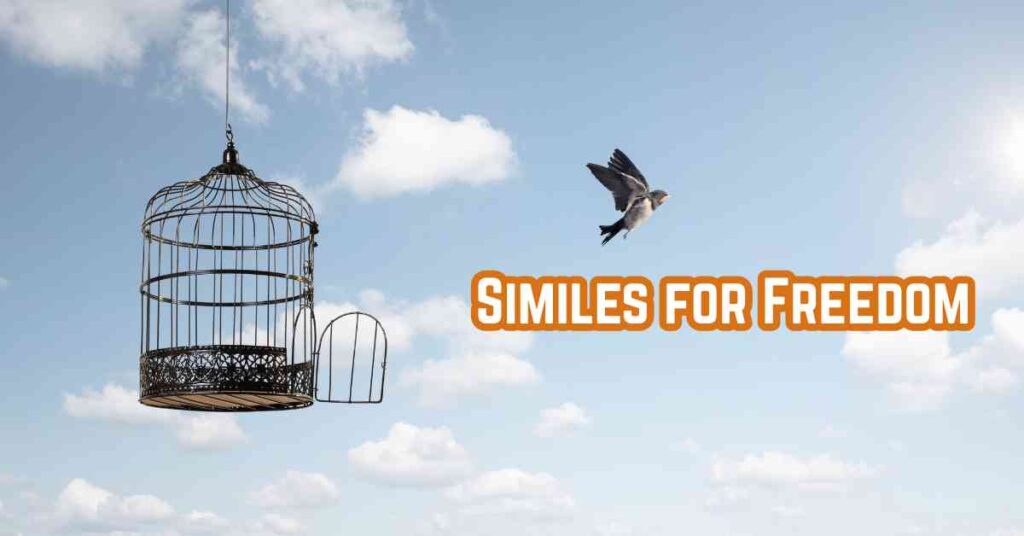

Understanding similes is crucial for mastering English, as they add color and depth to our language. Similes, especially those related to abstract concepts like freedom, allow us to express complex ideas in relatable and vivid ways. This article delves into the world of similes for freedom, exploring their structure, usage, and impact. Whether you’re an English language learner, a student preparing for exams, or simply someone looking to enhance their writing, this guide will provide you with the knowledge and tools to effectively use similes in your communication.
By exploring a range of examples and providing practical exercises, this article aims to empower you to not only recognize and understand similes for freedom but also to create your own. This skill enhances both your comprehension and expression, making you a more effective communicator in various contexts.
Table of Contents
- Introduction
- Definition of Simile
- Structural Breakdown of Similes
- Types of Similes
- Examples of Similes for Freedom
- Usage Rules for Similes
- Common Mistakes with Similes
- Practice Exercises
- Advanced Topics in Similes
- Frequently Asked Questions
- Conclusion
Definition of Simile
A simile is a figure of speech that directly compares two different things, usually employing the words “like” or “as.” The purpose of a simile is to create a vivid image or to emphasize a particular quality of one thing by associating it with something else that is more familiar or concrete. Similes are essential tools in writing and speech, adding depth, color, and clarity to communication.
In the context of grammar, similes are categorized as a type of figurative language. Their function is primarily rhetorical, serving to enhance the expressive power of language. Similes are used extensively in literature, poetry, and everyday conversation to make descriptions more engaging and understandable.
Classification of Similes
Similes are classified as a type of figurative language, specifically a type of comparison. This means they belong to a broader group of rhetorical devices that include metaphors, analogies, and personification. However, what distinguishes similes from these other devices is their explicit use of “like” or “as” to make the comparison.
Function of Similes
The primary function of a simile is to enhance understanding and create a vivid image in the reader’s or listener’s mind. By comparing an abstract concept like freedom to something more concrete or relatable, similes make the concept more accessible and impactful. They also add emotional weight to a statement, making it more persuasive or memorable.
Contexts for Using Similes
Similes are appropriate in a wide range of contexts, from formal writing to casual conversation. In literature and poetry, they are used to create rich imagery and convey complex emotions. In persuasive writing, they can be used to make an argument more compelling. In everyday conversation, they can be used to add humor or emphasis to a point.
Structural Breakdown of Similes
Similes typically consist of three main components: the subject (the thing being described), the linking word (usually “like” or “as”), and the object of comparison (the thing the subject is being compared to). Understanding these components is crucial for constructing effective similes.
The structure can be represented as: Subject + Linking Word + Object of Comparison. For example, in the simile “Freedom is like a bird in flight,” “freedom” is the subject, “like” is the linking word, and “a bird in flight” is the object of comparison.
The Subject
The subject of a simile is the thing that is being described or compared. It can be a concrete noun, such as “a tree,” or an abstract noun, such as “freedom.” The subject is the focal point of the simile, and the rest of the simile is designed to illuminate some aspect of the subject.
The Linking Word
The linking word is the word that establishes the comparison between the subject and the object of comparison. The most common linking words are “like” and “as,” but other words such as “than” or “resembles” can also be used in certain contexts. The linking word signals that a simile is being used, rather than a metaphor or other type of figurative language.
The Object of Comparison
The object of comparison is the thing that the subject is being compared to. It should be something that is familiar or easily understood, so that the comparison will be effective. The object of comparison should also share some quality or characteristic with the subject, so that the comparison will be meaningful.
Types of Similes
While all similes share the same basic structure, they can be categorized based on the type of comparison they make or the effect they create. Understanding these different types of similes can help you to use them more effectively in your writing and speech.
Descriptive Similes
Descriptive similes are used to provide a vivid and detailed description of something. They often focus on sensory details, such as sight, sound, smell, taste, or touch, to create a more immersive experience for the reader or listener. For example, “Freedom felt like the warm sun on her skin” is a descriptive simile that evokes a sense of comfort and pleasure.
Explanatory Similes
Explanatory similes are used to clarify or explain something that might be difficult to understand. They often compare an abstract concept to something more concrete or familiar, making it easier to grasp. For example, “Freedom is like a blank canvas, full of possibilities” is an explanatory simile that helps to illustrate the potential and open-ended nature of freedom.
Emphatic Similes
Emphatic similes are used to emphasize a particular quality or characteristic of something. They often use strong or exaggerated comparisons to make a point more forcefully. For example, “The desire for freedom burned like a raging fire” is an emphatic simile that underscores the intensity and passion of the desire for freedom.
Examples of Similes for Freedom
To illustrate the versatility and power of similes, here are several examples focusing on the concept of freedom. These examples are categorized to showcase different aspects of freedom and how similes can effectively convey these nuances.
Freedom as Movement
This category focuses on similes that compare freedom to various forms of movement, highlighting the ability to move without restriction.
The following table offers a range of examples to illustrate the concept of freedom as movement. Each simile provides a unique perspective on the unrestricted nature of freedom.
| Simile | Explanation |
|---|---|
| Freedom is like a bird in flight. | Emphasizes the unrestricted movement and soaring possibilities. |
| Freedom feels as light as a feather floating on the breeze. | Highlights the effortless and unburdened nature of freedom. |
| Freedom moves like a river flowing to the sea. | Illustrates the natural and unstoppable flow of freedom. |
| Freedom is as boundless as the open road. | Shows the limitless opportunities and paths freedom provides. |
| Freedom dances like a flame in the wind. | Depicts the dynamic and unrestrained nature of freedom. |
| Freedom runs as fast as a wild horse across the plains. | Highlights the speed and untamed aspect of freedom. |
| Freedom soars as high as an eagle in the sky. | Emphasizes the elevated and aspirational nature of freedom. |
| Freedom travels like a thought through the mind. | Illustrates the swift and unimpeded movement of freedom. |
| Freedom is as expansive as the ocean. | Shows the vast and encompassing nature of freedom. |
| Freedom glides like a skater on smooth ice. | Depicts the graceful and effortless feeling of freedom. |
| Freedom leaps like a deer through the forest. | Emphasizes agility and unhindered movement. |
| Freedom rolls like tumbleweed across deserted lands. | Illustrates self-sufficiency and independence. |
| Freedom floats like a cloud in the sky. | Depicts lightness and detachment. |
| Freedom wanders like a nomad in the desert. | Highlights exploration and self-determination. |
| Freedom flows like music through the air. | Emphasizes harmony and liberation. |
| Freedom sails like a ship on the open sea. | Illustrates independence and control. |
| Freedom stretches like a road into the distance. | Depicts endless possibilities. |
| Freedom cascades like a waterfall. | Emphasizes power and natural force. |
| Freedom spirals like a leaf in the autumn wind. | Illustrates unpredictability and change. |
| Freedom pulses like blood through veins. | Depicts vitality and necessity. |
| Freedom sweeps like a storm across the land. | Emphasizes transformative power. |
| Freedom advances like a chess piece across the board. | Illustrates strategic progress and control. |
| Freedom unfolds like a map. | Depicts discovery and direction. |
| Freedom reverberates like a drumbeat. | Emphasizes resonance and impact. |
Freedom as a Feeling
This category explores similes that relate freedom to various emotions and internal states, capturing the subjective experience of being free.
The subsequent table presents similes that explore freedom as an emotional experience. These comparisons aim to capture the internal sense of liberation and joy that freedom brings.
| Simile | Explanation |
|---|---|
| Freedom feels like a weight lifted from your shoulders. | Highlights the relief and release from burdens. |
| Freedom is as refreshing as a cool breeze on a hot day. | Shows the invigorating and revitalizing nature of freedom. |
| Freedom tastes like the sweetest victory. | Depicts the satisfaction and triumph associated with freedom. |
| Freedom sounds like laughter echoing through the mountains. | Illustrates the joyous and resonant nature of freedom. |
| Freedom shines as brightly as a star in the night sky. | Emphasizes the hope and inspiration that freedom provides. |
| Freedom sings like a chorus of voices in harmony. | Highlights unity and shared joy. |
| Freedom whispers like a secret promise. | Depicts intimacy and personal significance. |
| Freedom echoes like a memory of joy. | Emphasizes lasting impact and reflection. |
| Freedom blooms like a flower in spring. | Illustrates growth and renewal. |
| Freedom sparkles like dew on a spiderweb. | Depicts beauty and intricacy. |
| Freedom tingles like anticipation before a journey. | Emphasizes excitement and potential. |
| Freedom resonates like a chord struck on a piano. | Illustrates harmony and deep connection. |
| Freedom radiates like sunlight through clouds. | Depicts optimism and clarity. |
| Freedom comforts like a warm embrace. | Emphasizes security and love. |
| Freedom invigorates like a plunge into cold water. | Illustrates revitalization and sharpness. |
| Freedom soothes like a gentle lullaby. | Depicts peace and tranquility. |
| Freedom excites like the start of an adventure. | Emphasizes thrill and discovery. |
| Freedom satisfies like a thirst quenched. | Illustrates fulfillment and relief. |
| Freedom empowers like knowledge gained. | Depicts strength and capability. |
| Freedom inspires like art revealed. | Emphasizes creativity and vision. |
| Freedom enlivens like a vibrant painting. | Illustrates liveliness and energy. |
| Freedom elevates like music lifting the soul. | Depicts transcendence and inspiration. |
| Freedom grounds like roots in the earth. | Emphasizes stability and connection. |
| Freedom emboldens like armor worn in battle. | Illustrates courage and protection. |
Freedom as an Abstract Concept
This category includes similes that compare freedom to other abstract ideas or concepts, providing a deeper philosophical understanding.
The table below provides similes that explore freedom as an abstract concept. These comparisons delve into the philosophical and conceptual aspects of freedom, offering a more profound understanding.
| Simile | Explanation |
|---|---|
| Freedom is like a blank canvas, full of possibilities. | Highlights the potential and open-ended nature of freedom. |
| Freedom is as essential as the air we breathe. | Shows the fundamental and vital importance of freedom. |
| Freedom is like a guiding star, leading us forward. | Depicts the direction and purpose that freedom provides. |
| Freedom is as valuable as a priceless gem. | Emphasizes the worth and preciousness of freedom. |
| Freedom is like a seed, waiting to grow. | Illustrates the potential for growth and development. |
| Freedom is a precious as a rare diamond. | Highlights rarity and value. |
| Freedom is as vital as water to a plant. | Emphasizes necessity for survival and growth. |
| Freedom soars like a dream taking flight. | Depicts aspiration and imagination. |
| Freedom is as liberating as truth revealed. | Illustrates enlightenment and release. |
| Freedom is as empowering as knowledge gained. | Emphasizes capability and self-reliance. |
| Freedom is as expansive as the universe. | Depicts limitlessness and potential. |
| Freedom is as fundamental as human rights. | Emphasizes inherent value and entitlement. |
| Freedom is as transformative as a caterpillar becoming a butterfly. | Illustrates change and rebirth. |
| Freedom is as fragile as a newborn’s life. | Emphasizes vulnerability and need for protection. |
| Freedom is as dynamic as a flowing river. | Illustrates constant change and movement. |
| Freedom is as enlightening as a flash of insight. | Depicts understanding and clarity. |
| Freedom is as integral as a cornerstone in a building. | Emphasizes necessity and foundational support. |
| Freedom is as nurturing as a mother’s love. | Illustrates care and support. |
| Freedom is as promising as a sunrise. | Depicts hope and new beginnings. |
| Freedom is as complex as the human mind. | Emphasizes depth and intricacy. |
| Freedom is as powerful as a roaring ocean. | Illustrates strength and influence. |
| Freedom is as rare as a shooting star. | Depicts uniqueness and specialness. |
| Freedom is as sacred as a cherished belief. | Emphasizes reverence and importance. |
| Freedom is as timeless as the stars in the sky. | Illustrates permanence and enduring value. |
Freedom as a State of Being
This category consists of similes that describe freedom as a fundamental condition or state of existence, highlighting its intrinsic value to individuals and societies.
The subsequent table features similes portraying freedom as a fundamental state of being. These comparisons emphasize its intrinsic value and its impact on individuals and societies.
| Simile | Explanation |
|---|---|
| Freedom is like having wings to fly wherever you choose. | Emphasizes the ability to go anywhere and do anything. |
| Freedom is as natural as breathing the fresh air. | Shows the inherent and necessary nature of freedom. |
| Freedom is like having a voice to speak your mind. | Depicts the ability to express oneself without fear. |
| Freedom is as vital as the sun providing light and warmth. | Emphasizes the life-sustaining quality of freedom. |
| Freedom is like a key that unlocks endless opportunities. | Illustrates the potential and possibilities that freedom brings. |
| Freedom is as empowering as a shield in battle. | Highlights protection and strength. |
| Freedom is like a compass guiding you on a journey. | Depicts direction and purpose. |
| Freedom is as transformative as a river shaping the land. | Emphasizes influence and change. |
| Freedom is like a garden where ideas can flourish. | Illustrates growth and potential. |
| Freedom is as essential as roots to a tree. | Emphasizes stability and foundation. |
| Freedom is like a dance where everyone can move to their own rhythm. | Depicts individuality and harmony. |
| Freedom is as liberating as shedding old skin. | Illustrates renewal and release. |
| Freedom is like a canvas where life’s masterpiece is painted. | Emphasizes creativity and self-expression. |
| Freedom is as vital as a heartbeat to life. | Depicts fundamental importance. |
| Freedom is like a song that fills the heart with joy. | Illustrates happiness and inspiration. |
| Freedom is as boundless as the imagination. | Emphasizes limitless potential. |
| Freedom is like a bridge connecting dreams to reality. | Depicts possibility and achievement. |
| Freedom is as necessary as water to a fish. | Illustrates fundamental need for survival. |
| Freedom is like a lighthouse guiding ships safely to shore. | Emphasizes guidance and security. |
| Freedom is as integral as the air we breathe. | Depicts necessity for life. |
Usage Rules for Similes
Using similes effectively requires an understanding of certain rules and guidelines. These rules ensure that your similes are clear, meaningful, and impactful.
Clarity in Similes
A good simile should be clear and easy to understand. The comparison should be readily apparent, and the connection between the subject and the object of comparison should be obvious. Avoid using obscure or overly complex comparisons that might confuse the reader or listener.
Relevance in Similes
The comparison made in a simile should be relevant to the subject being described. The object of comparison should share some quality or characteristic with the subject, so that the comparison is meaningful and insightful. Avoid using comparisons that are arbitrary or unrelated to the subject.
Originality in Similes
While some common similes can be effective, try to create original similes that are fresh and imaginative. This will make your writing or speech more engaging and memorable. Avoid overusing clichés or trite comparisons that have lost their impact.
Consistency in Similes
Ensure that the tone and style of your simile are consistent with the overall tone and style of your writing or speech. Avoid using similes that are jarring or out of place in the context in which they are used.
Common Mistakes with Similes
Even experienced writers and speakers can make mistakes when using similes. Being aware of these common errors can help you to avoid them and use similes more effectively.
Using Metaphors as Similes
One common mistake is confusing similes with metaphors. Remember that similes use “like” or “as” to make a direct comparison, while metaphors imply a comparison without using these words. For example:
- Incorrect (Metaphor used as Simile): Freedom is a bird in flight.
- Correct (Simile): Freedom is like a bird in flight.
Using Cliches
Overusing clichés can make your writing or speech sound unoriginal and uninspired. Avoid common similes that have lost their impact through overuse. For example:
- Cliche: Free as a bird.
- Better: Freedom felt like shedding a heavy coat on a warm day.
Making Illogical Comparisons
Ensure that the comparison you are making is logical and meaningful. Avoid comparing things that have no clear connection or shared quality. For example:
- Illogical: Freedom is like a brick wall.
- Better: Freedom is like a vast, open field.
Practice Exercises
To solidify your understanding of similes for freedom, try the following practice exercises. These exercises will help you to identify, analyze, and create similes effectively.
Exercise 1: Identifying Similes
Identify the similes in the following sentences.
| Question | Answer |
|---|---|
| 1. The feeling of freedom was as exhilarating as riding a rollercoaster. | as exhilarating as riding a rollercoaster |
| 2. She embraced freedom, a bird released from its cage. | (None – this is a metaphor) |
| 3. His spirit, now free, soared like an eagle above the mountains. | like an eagle above the mountains |
| 4. Freedom is a concept difficult to grasp. | (None) |
| 5. The possibilities of freedom stretched before her, as vast as the ocean. | as vast as the ocean |
| 6. The taste of freedom was sweet. | (None) |
| 7. Freedom is like a gentle breeze on a summer day. | like a gentle breeze on a summer day |
| 8. The pursuit of freedom burned within him. | (None) |
| 9. Freedom is as precious as a rare diamond. | as precious as a rare diamond |
| 10. The weight of oppression lifted, and they felt as light as feathers. | as light as feathers |
Exercise 2: Completing Similes
Complete the following similes with appropriate objects of comparison.
| Question | Answer |
|---|---|
| 1. Freedom feels like ____________. | a warm embrace |
| 2. Freedom is as essential as ____________. | water to a plant |
| 3. Freedom moves like ____________. | a river flowing to the sea |
| 4. Freedom shines as brightly as ____________. | the sun |
| 5. Freedom tastes like ____________. | the sweetest victory |
| 6. Freedom sings like ____________. | a choir |
| 7. Freedom whispers like ____________. | a secret |
| 8. Freedom echoes like ____________. | hope |
| 9. Freedom blooms like ____________. | a flower |
| 10. Freedom sparkles like ____________. | dew on grass |
Exercise 3: Creating Similes
Create your own similes for freedom, focusing on different aspects of the concept.
| Question | Answer |
|---|---|
| 1. Write a simile describing the feeling of freedom after overcoming a challenge. | Freedom feels like reaching the summit after a long, arduous climb. |
| 2. Write a simile comparing freedom to an element of nature. | Freedom is as boundless as the sky above. |
| 3. Write a simile comparing freedom to an abstract concept. | Freedom is like a blank page, ready to be filled with stories. |
| 4. Write a simile describing the importance of freedom in society. | Freedom is as vital to a society as a strong foundation is to a building. |
| 5. Write a simile describing the sound of freedom. | Freedom sounds like laughter echoing through open fields. |
| 6. Write a simile expressing freedom as a movement. | Freedom runs as fast as a wild horse across the plains. |
| 7. Write a simile expressing freedom as a power. | Freedom is as empowering as knowledge gained. |
| 8. Write a simile expressing freedom as a right. | Freedom is as fundamental as human rights. |
| 9. Write a simile expressing freedom as a start. | Freedom is as promising as a sunrise. |
| 10. Write a simile expressing freedom as a feeling. | Freedom is as refreshing as a cool breeze on a hot day. |
Advanced Topics in Similes
For advanced learners, exploring the nuances and complexities of similes can further enhance their understanding and usage. This section delves into more sophisticated aspects of simile construction and interpretation.
Extended Similes
An extended simile is a simile that is developed over several lines or sentences. Instead of a brief comparison, an extended simile provides a more detailed and elaborate comparison, exploring multiple aspects of the subject and object of comparison. This technique is often used in poetry and prose to create a more vivid and impactful image.
Example: “Freedom is like a river, constantly flowing and changing, never stagnant, always seeking the path of least resistance, carving its own way through the landscape, nourishing the land it passes through, and eventually reaching the vast and boundless ocean.”
Subverted Similes
A subverted simile is a simile that intentionally violates the conventional rules of simile construction. This might involve making an illogical or absurd comparison, or using a simile to create a humorous or ironic effect. Subverted similes can be used to challenge expectations and create a more thought-provoking effect.
Example: “Freedom is like a fish on a bicycle.” (This simile is absurd because fish cannot ride bicycles, highlighting the impossibility or absurdity of a particular situation.)
Cultural Similes
Different cultures may have different similes that are commonly used and understood. These cultural similes reflect the values, beliefs, and experiences of a particular culture. Understanding cultural similes can help you to communicate more effectively with people from different backgrounds.
Example: (This would depend on the specific culture being referenced and is difficult to provide without a cultural context.)
Frequently Asked Questions
Here are some frequently asked questions about similes, along with detailed answers to help clarify any remaining points.
- What is the difference between a simile and a metaphor?
A simile is a direct comparison between two things using “like” or “as,” while a metaphor implies a comparison without using these words. For example, “Freedom is like a bird” (simile) vs. “Freedom is a bird” (metaphor).
- Can a simile be too complex?
Yes, a simile can be too complex if the comparison is obscure or difficult to understand. The goal of a simile is to clarify and enhance understanding, so it should be clear and accessible to the reader or listener.
- Are there any alternatives to using “like” or “as” in a simile?
While “like” and “as” are the most common linking words in similes, other words such as “than” or “resembles” can also be used in certain contexts, although this is less common.
- How can I make my similes more original?
To make your similes more original, try to avoid clichés and think creatively about the qualities that the subject and object of comparison share. Use specific and sensory details to make the comparison more vivid and engaging.
- Is it okay to use similes in formal writing?
Yes, similes can be used in formal writing, but they should be used judiciously and with careful consideration of the audience and purpose. Avoid using overly informal or colloquial similes in formal contexts.
- How do similes enhance writing?
Similes enhance writing by making descriptions more vivid, engaging, and understandable. They can help to create a stronger connection with the reader or listener and make your message more memorable.
- What makes a simile effective?
An effective simile is clear, relevant, original, and consistent with the overall tone and style of the writing or speech. It should also enhance understanding and create a vivid image in the mind of the reader or listener.
- Can a simile be used incorrectly?
Yes, a simile can be used incorrectly if it is illogical, unclear, or inconsistent with the context. It’s important to ensure that the comparison is meaningful and appropriate for the situation.
Conclusion
Similes are powerful tools for enhancing communication, adding depth, and creating vivid imagery. Understanding how to effectively use similes, especially in the context of abstract concepts like freedom, can significantly improve both your writing and speaking skills. By mastering the structure, types, and usage rules of similes, you can express complex ideas in a more engaging and accessible way.
Remember to practice creating your own similes, focusing on clarity, relevance, and originality. By avoiding common mistakes and continuously refining your skills, you can unlock the full potential of similes and become a more effective and persuasive communicator. Keep exploring and experimenting with figurative language to enrich your understanding and expression of the English language.