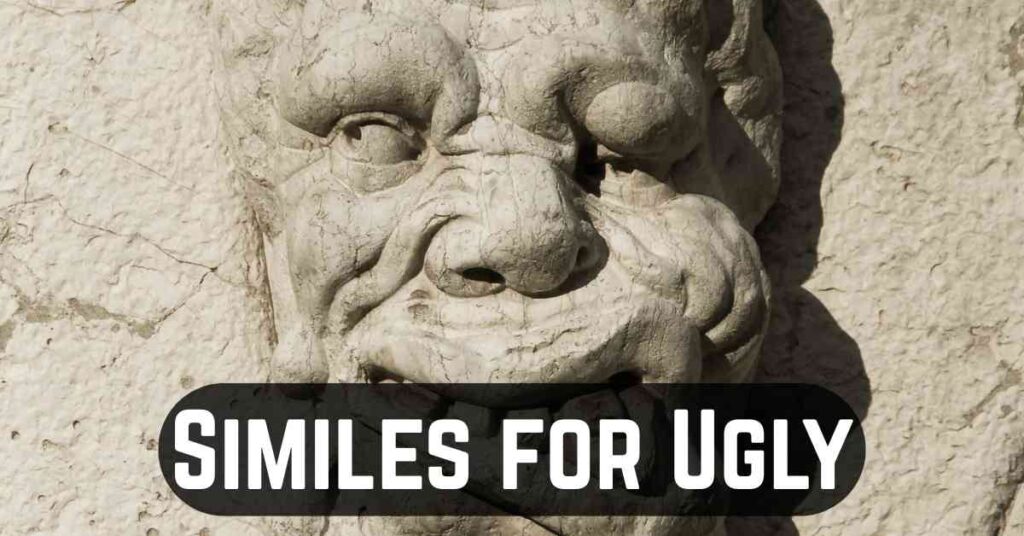

Similes are powerful tools in the English language, allowing us to create vivid and memorable descriptions by comparing one thing to another. When describing something as “ugly,” similes can add depth, humor, or even a touch of artistry to our language. Understanding how to effectively use similes to portray ugliness can significantly enhance your writing and communication skills. This article explores a wide range of similes for “ugly,” providing definitions, examples, and practical exercises to help you master this aspect of figurative language. Whether you’re a student, writer, or simply someone looking to improve their vocabulary, this guide will equip you with the knowledge and tools to use similes for “ugly” with confidence and creativity.
This article is designed for English language learners of all levels, from beginners to advanced students. It’s also useful for writers, educators, and anyone who wants to improve their descriptive writing skills. By the end of this article, you’ll have a solid understanding of how to use similes to express ugliness in a variety of contexts.
Table of Contents
- Introduction
- Definition of Simile
- Structural Breakdown of Similes
- Categories of Similes for “Ugly”
- Examples of Similes for “Ugly”
- Usage Rules for Similes
- Common Mistakes When Using Similes
- Practice Exercises
- Advanced Topics: Nuance and Context
- Frequently Asked Questions
- Conclusion
Definition of Simile
A simile is a figure of speech that compares two unlike things using the words “like” or “as.” The purpose of a simile is to create a vivid image or convey a specific feeling by drawing a parallel between the two things being compared. Similes are a fundamental part of figurative language and are used extensively in literature, poetry, and everyday conversation to add color and depth to descriptions.
Similes fall under the broader category of figurative language, which includes metaphors, personification, and hyperbole. Unlike metaphors, which directly equate two things (e.g., “He is a lion”), similes make a comparison using “like” or “as” (e.g., “He is as brave as a lion”). The function of a simile is to enhance understanding and create a more engaging and memorable experience for the reader or listener. By comparing something unfamiliar to something familiar, similes can make abstract concepts more concrete and relatable.
In the context of describing “ugly,” similes can be used to compare someone or something’s appearance, character, or behavior to things that are generally considered unpleasant or unattractive. This allows for a more nuanced and impactful portrayal of ugliness than simply stating that something is “ugly.” The effectiveness of a simile depends on the strength and relevance of the comparison.
Structural Breakdown of Similes
The basic structure of a simile consists of three main components: the subject, the linking word (either “like” or “as”), and the comparative term. Understanding these components is essential for constructing effective and grammatically correct similes.
- Subject: This is the person, place, thing, or idea that is being described. It’s the focus of the comparison.
- Linking Word: This is the word “like” or “as,” which explicitly indicates that a comparison is being made.
- Comparative Term: This is the person, place, thing, or idea that the subject is being compared to. It provides the basis for the comparison and helps to create the desired effect.
For example, in the simile “The building was as ugly as a decaying corpse,” “the building” is the subject, “as” is the linking word, and “a decaying corpse” is the comparative term. This structure allows for a clear and direct comparison, highlighting the ugliness of the building by associating it with the unpleasant image of a decaying corpse.
While the structure is simple, the effectiveness of a simile depends on the choice of the comparative term. A well-chosen comparative term can create a powerful and memorable image, while a poorly chosen one can be confusing or ineffective. The comparative term should be something that is widely understood and associated with the quality being described. In the case of “ugly,” the comparative term should evoke feelings of unpleasantness, unattractiveness, or repulsiveness.
Categories of Similes for “Ugly”
Similes for “ugly” can be broadly categorized based on what aspect they emphasize: appearance, character, objects, or nature. Each category provides a different lens through which to view and describe ugliness, allowing for a more varied and nuanced portrayal.
Appearance-Based Similes
These similes focus on the physical appearance of the subject, comparing it to things that are visually unattractive or grotesque. This category is particularly useful for describing physical deformities, disfigurements, or simply unattractive features.
Character-Based Similes
These similes focus on the inner ugliness of a person, comparing their personality, behavior, or morals to things that are considered unpleasant or repulsive. This category is useful for describing people who are cruel, malicious, or morally corrupt.
Object-Based Similes
These similes compare the subject to inanimate objects that are considered ugly, broken, or repulsive. This category can be used to describe both physical appearance and abstract concepts.
Nature-Based Similes
These similes draw comparisons from the natural world, often using images of decay, disease, or unpleasant creatures to convey ugliness. This category can be particularly effective for creating a sense of horror or revulsion.
Examples of Similes for “Ugly”
Below are several examples of similes for “ugly,” organized by category. Each example is designed to illustrate the different ways in which similes can be used to describe ugliness.
Appearance-Based Similes Examples
This table provides examples of similes that describe ugliness based on physical appearance. These comparisons help to paint a vivid picture of someone or something’s unattractive features.
| Simile | Explanation |
|---|---|
| His face was as ugly as a gargoyle’s. | Compares his face to a grotesque architectural feature. |
| She looked as ugly as a mud fence. | Implies a rough, unrefined, and unattractive appearance. |
| His skin was as ugly as diseased bark. | Compares the skin to the unpleasant texture and appearance of diseased tree bark. |
| The painting was as ugly as a dog’s breakfast. | Suggests a chaotic and unappealing mess. |
| He was as ugly as sin. | A common expression emphasizing extreme unattractiveness. |
| Her dress was as ugly as something found in a dumpster. | Implies a discarded, unattractive item. |
| The building was as ugly as a concrete bunker. | Suggests a cold, harsh, and unappealing structure. |
| His teeth were as ugly as a row of crooked tombstones. | Compares teeth to uneven and decaying tombstones, emphasizing their unattractiveness. |
| She wore a hat as ugly as a squashed toad. | Compares the hat to a flattened, repulsive creature. |
| The car was as ugly as a rusted-out trash can. | Suggests a dilapidated and unappealing vehicle. |
| His smile was as ugly as a grimace. | Implies a forced, unpleasant expression. |
| Her hair looked as ugly as a bird’s nest. | Suggests a tangled, messy, and unkempt appearance. |
| The sculpture was as ugly as a melted wax figure. | Compares the sculpture to a distorted and unattractive form. |
| His beard was as ugly as a patch of weeds. | Implies an unkempt, wild, and unattractive beard. |
| The wallpaper was as ugly as a clown’s costume. | Suggests a garish, mismatched, and visually unpleasant design. |
| Her makeup was as ugly as war paint. | Compares the makeup to harsh, aggressive, and unattractive markings. |
| The landscape was as ugly as a barren wasteland. | Implies a desolate, lifeless, and unattractive environment. |
| His laugh was as ugly as a cackle. | Suggests a harsh, unpleasant, and grating sound. |
| The shoes were as ugly as orthopedic boots. | Compares the shoes to functional but unattractive footwear. |
| His posture was as ugly as a question mark. | Implies a crooked, unnatural, and unattractive stance. |
| The sweater was as ugly as a thrift store reject. | Suggests a discarded, unfashionable, and unattractive garment. |
| Her walk was as ugly as a waddle. | Compares the walk to an awkward and unattractive gait. |
| The room was as ugly as a prison cell. | Implies a stark, unwelcoming, and unattractive space. |
| His handwriting was as ugly as chicken scratch. | Suggests illegible, messy, and unattractive writing. |
| The food presentation was as ugly as slop. | Compares the presentation to unappetizing and messy food. |
| Her voice was as ugly as nails on a chalkboard. | Implies a grating, unpleasant, and unattractive sound. |
| The garden was as ugly as an abandoned lot. | Suggests an overgrown, neglected, and unattractive space. |
| His haircut was as ugly as a bad perm. | Compares the haircut to a dated, unattractive hairstyle. |
Character-Based Similes Examples
This table provides examples of similes that describe ugliness based on a person’s character or behavior. These comparisons help to illustrate their unpleasant or morally reprehensible qualities.
| Simile | Explanation |
|---|---|
| His soul was as ugly as a festering wound. | Compares his inner self to a decaying and infected injury. |
| She was as ugly as a snake in the grass. | Implies a deceitful, treacherous, and unpleasant character. |
| His lies were as ugly as a spider’s web. | Compares the lies to an intricate and trapping structure. |
| His anger was as ugly as a storm cloud. | Suggests a dark, threatening, and unpleasant emotion. |
| Her jealousy was as ugly as a green-eyed monster. | A common expression emphasizing the unpleasantness of jealousy. |
| His hatred was as ugly as a poison. | Implies a destructive, harmful, and unpleasant emotion. |
| Her gossip was as ugly as a swarm of flies. | Suggests an annoying, intrusive, and unpleasant behavior. |
| His greed was as ugly as a bottomless pit. | Compares greed to an insatiable and unattractive desire. |
| She was as ugly as a backstabber. | Implies a treacherous and unpleasant character. |
| His arrogance was as ugly as a puffed-up toad. | Suggests a conceited, unattractive, and unpleasant attitude. |
| Her spitefulness was as ugly as a curse. | Implies a malicious, vindictive, and unpleasant nature. |
| His indifference was as ugly as a cold shoulder. | Suggests a dismissive, uncaring, and unpleasant attitude. |
| Her manipulation was as ugly as puppetry. | Compares the manipulation to controlling and unattractive behavior. |
| His cowardice was as ugly as a rat. | Implies a fearful, weak, and unpleasant character. |
| Her deceit was as ugly as a mirage. | Suggests an illusionary, misleading, and unpleasant behavior. |
| His selfishness was as ugly as a closed fist. | Compares selfishness to hoarding and unattractive behavior. |
| Her envy was as ugly as a shadow. | Implies a dark, resentful, and unpleasant emotion. |
| His arrogance was as ugly as a peacock’s display. | Suggests a boastful, conceited, and unattractive attitude. |
| Her bitterness was as ugly as a lemon. | Compares bitterness to a sour, unpleasant, and unattractive taste. |
| His prejudice was as ugly as a wall. | Implies a divisive, exclusionary, and unattractive attitude. |
| Her hypocrisy was as ugly as a two-faced mask. | Suggests a deceptive, insincere, and unattractive character. |
| His cruelty was as ugly as a whip. | Compares cruelty to inflicting pain and unattractive behavior. |
| Her betrayal was as ugly as a stab in the back. | Implies a treacherous, harmful, and unpleasant act. |
| His contempt was as ugly as a sneer. | Suggests a scornful, disrespectful, and unattractive attitude. |
| Her resentment was as ugly as a grudge. | Compares resentment to holding onto bitterness and unattractive behavior. |
| His dishonesty was as ugly as a counterfeit coin. | Implies a fraudulent, deceptive, and unpleasant act. |
| Her contempt was as ugly as a curled lip. | Suggests a scornful, dismissive, and unattractive expression. |
| His judgment was as ugly as a gavel. | Compares judgment to harsh and unattractive pronouncements. |
Object-Based Similes Examples
This table provides examples of similes that describe ugliness by comparing the subject to unattractive or unpleasant objects. These comparisons help to create a sense of distaste or revulsion.
| Simile | Explanation |
|---|---|
| The room was as ugly as a cluttered attic. | Compares the room to a messy, disorganized, and unattractive space. |
| The old car was as ugly as a junk heap. | Implies a dilapidated, worthless, and unattractive vehicle. |
| The building was as ugly as a dilapidated warehouse. | Suggests a rundown, neglected, and unattractive structure. |
| The painting was as ugly as a child’s scribble. | Compares the painting to an unskilled, messy, and unattractive creation. |
| The dress was as ugly as a patchwork quilt of rags. | Suggests a mismatched, unattractive, and poorly made garment. |
| The sculpture was as ugly as a broken statue. | Implies a damaged, imperfect, and unattractive artwork. |
| The garden was as ugly as a neglected wasteland. | Compares the garden to an overgrown, barren, and unattractive space. |
| The music was as ugly as a discordant symphony. | Suggests a jarring, unpleasant, and unattractive sound. |
| The food was as ugly as a congealed mess. | Implies an unappetizing, unattractive, and poorly prepared dish. |
| The writing was as ugly as a ransom note. | Compares the writing to a threatening, messy, and unattractive communication. |
| The website was as ugly as a Geocities page from the 90s. | Suggests an outdated, poorly designed, and unattractive online presence. |
| The shoes were as ugly as clown shoes. | Implies oversized, garish, and unattractive footwear. |
| The furniture was as ugly as discarded office equipment. | Compares the furniture to outdated, unattractive, and unwanted items. |
| The presentation was as ugly as a spreadsheet. | Suggests a boring, uninspired, and unattractive visual aid. |
| The room décor was as ugly as a doctor’s waiting room. | Implies a sterile, unwelcoming, and unattractive space. |
| The advertisement was as ugly as spam. | Compares the advertisement to unwanted, intrusive, and unattractive communication. |
| The speech was as ugly as a rambling monologue. | Suggests a disorganized, boring, and unattractive presentation. |
| The performance was as ugly as a train wreck. | Implies a disastrous, chaotic, and unattractive event. |
| The result was as ugly as a failed experiment. | Suggests an unsuccessful, unattractive, and disappointing outcome. |
| The proposal was as ugly as a rejected idea. | Implies an unwanted, unattractive, and unsuccessful plan. |
| The solution was as ugly as a band-aid fix. | Compares the solution to a temporary, inadequate, and unattractive remedy. |
| The compromise was as ugly as a forced agreement. | Suggests an unwilling, unattractive, and unsatisfactory arrangement. |
| The excuse was as ugly as a flimsy lie. | Implies a weak, unconvincing, and unattractive deception. |
| The apology was as ugly as a begrudging admission. | Compares the apology to an insincere, unattractive, and unwilling expression of regret. |
Nature-Based Similes Examples
This table provides examples of similes that describe ugliness by comparing the subject to unpleasant or repulsive elements of nature. These comparisons help to create a sense of disgust or revulsion.
| Simile | Explanation |
|---|---|
| His attitude was as ugly as a festering swamp. | Compares his attitude to a stagnant, decaying, and unattractive environment. |
| The wound was as ugly as a maggot-infested sore. | Implies a decaying, infected, and repulsive injury. |
| The weather was as ugly as a perpetual storm. | Suggests a constant state of unpleasantness and turbulence. |
| The landscape was as ugly as a barren desert. | Compares the landscape to a lifeless, desolate, and unattractive environment. |
| The creature was as ugly as a grotesque insect. | Implies a repulsive, deformed, and unattractive animal. |
| The growth was as ugly as a malignant tumor. | Compares the growth to a harmful, disfiguring, and unattractive abnormality. |
| The smell was as ugly as rotting flesh. | Implies a decaying, repulsive, and unattractive odor. |
| The sound was as ugly as a raven’s croak. | Compares the sound to a harsh, unpleasant, and unattractive noise. |
| The sight was as ugly as a field of withered crops. | Implies a decaying, lifeless, and unattractive scene. |
| The taste was as ugly as spoiled milk. | Compares the taste to a sour, unpleasant, and unattractive flavor. |
| The feeling was as ugly as a thorn in the side. | Implies a constant source of irritation and unpleasantness. |
| The situation was as ugly as a tar pit. | Compares the situation to a sticky, dangerous, and unattractive trap. |
| The truth was as ugly as a venomous snake. | Implies a dangerous, harmful, and unattractive revelation. |
| The memory was as ugly as a haunting nightmare. | Compares the memory to a disturbing, unpleasant, and unattractive experience. |
| The outcome was as ugly as a polluted river. | Implies a contaminated, unattractive, and undesirable result. |
| The future was as ugly as a desolate wasteland. | Compares the future to a barren, lifeless, and unattractive prospect. |
| The reality was as ugly as a shattered mirror. | Implies a broken, distorted, and unattractive reflection. |
Usage Rules for Similes
Using similes effectively requires adherence to certain grammatical and stylistic rules. These rules ensure that the simile is clear, concise, and impactful.
- Clarity: The comparison should be easily understood. The reader or listener should be able to quickly grasp the connection between the subject and the comparative term.
- Relevance: The comparison should be relevant to the quality being described. The comparative term should be something that is widely associated with that quality.
- Originality: While common similes can be effective, original similes can be even more impactful. Try to come up with unique comparisons that will surprise and delight your audience.
- Context: Consider the context in which you are using the simile. A simile that is appropriate in one context may not be appropriate in another.
- Grammar: Ensure that the simile is grammatically correct. The subject and comparative term should be grammatically parallel.
For example, instead of saying “He was as ugly as a person,” which is vague and uninformative, you could say “He was as ugly as a gargoyle,” which is more specific and evocative. Similarly, avoid using similes that are clichés or overused, such as “as ugly as sin,” unless you are using them ironically or for a specific effect.
Common Mistakes When Using Similes
Even experienced writers can make mistakes when using similes. Here are some common errors to avoid:
- Using clichés: Overused similes can sound stale and unoriginal. Example: “as ugly as sin.”
- Creating illogical comparisons: The comparison should make sense. Example: “as ugly as a beautiful flower.”
- Being too vague: The comparison should be specific. Example: “as ugly as something.”
- Mixing metaphors and similes: Keep your figures of speech consistent. Don’t switch between metaphors and similes within the same sentence.
Here are some examples of common mistakes and how to correct them:
| Incorrect | Correct | Explanation |
|---|---|---|
| He was as ugly as something. | He was as ugly as a smashed pumpkin. | The corrected simile provides a specific and vivid comparison. |
| She was as ugly as a beautiful sunset. | She was as ugly as a smog-filled sky. | The corrected simile uses a logical and relevant comparison. |
| The building was ugly, a concrete monster. | The building was as ugly as a concrete monster. | The corrected sentence uses a simile instead of mixing a simile and a metaphor. |
Practice Exercises
Test your understanding of similes for “ugly” with these practice exercises.
- Complete the following similes: “His voice was as ugly as…”
- a songbird
- nails on a chalkboard
- a gentle breeze
- Complete the following similes: “The painting was as ugly as…”
- a masterpiece
- a dog’s breakfast
- a vibrant sunset
- Complete the following similes: “Her attitude was as ugly as…”
- sunshine
- a festering wound
- a warm embrace
- Rewrite the following sentence using a simile for “ugly”: “The car was very unattractive.”
- Rewrite the following sentence using a simile for “ugly”: “His behavior was very unpleasant.”
- Create your own simile for “ugly” to describe a food item.
- Create your own simile for “ugly” to describe an article of clothing.
- Identify the simile in the following sentence: “The house was as ugly as a haunted mansion.”
- Identify the simile in the following sentence: “His heart was as ugly as a stone.”
- Correct the following incorrect simile: “She was as ugly as a rose.”
Answers:
- b. nails on a chalkboard
- b. a dog’s breakfast
- b. a festering wound
- The car was as ugly as a rusted-out trash can.
- His behavior was as ugly as a snake in the grass.
- The soup was as ugly as dishwater.
- The hat was as ugly as a squashed toad.
- The simile is: “as ugly as a haunted mansion.”
- The simile is: “as ugly as a stone.”
- She was as ugly as a gargoyle.
Advanced Topics: Nuance and Context
At an advanced level, using similes involves understanding nuance and context. The same simile can have different effects depending on the situation and the audience. For example, saying someone is “as ugly as a troll” might be humorous in a casual conversation but offensive in a formal setting.
Advanced users should also be aware of cultural differences in the perception of ugliness. What is considered ugly in one culture may be considered beautiful or interesting in another. Therefore, it’s important to be sensitive to cultural norms and values when using similes to describe ugliness.
Finally, advanced users should be able to use similes ironically or satirically. By using a simile in an unexpected or contradictory way, you can create a humorous or thought-provoking effect. For example, you could say “The painting was as ugly as a masterpiece” to suggest that it was so bad it was good.
Frequently Asked Questions
- What is the difference between a simile and a metaphor?
A simile compares two unlike things using “like” or “as,” while a metaphor directly equates two unlike things without using “like” or “as.” For example, “He is as brave as a lion” (simile) vs. “He is a lion” (metaphor).
- Can a simile be too obvious?
Yes, an overused or cliché simile can sound stale and unoriginal. It’s best to strive for fresh and creative comparisons that will engage your audience.
- How can I make my similes more effective?
Choose specific and vivid comparative terms that create a strong image in the reader’s mind. Consider the context and audience, and try to be original.
- Is it okay to use negative similes?
Yes, negative similes can be very effective for describing unpleasant or undesirable qualities. However, be mindful of the potential to offend or hurt someone’s feelings.
- How do I avoid using clichés in my similes?
Read widely and pay attention to the language used by other writers. Try to come up with your own unique comparisons based on your personal experiences and observations.
- Can similes be used in formal writing?
Yes, similes can be used in formal writing, but they should be used sparingly and with careful consideration of the tone and audience. Avoid overly casual or colloquial similes.
- What makes a simile for ‘ugly’ particularly effective?
A simile for ‘ugly’ is most effective when it evokes a strong emotional response, such as disgust, revulsion, or unease. The comparison should be vivid and memorable, and it should accurately convey the specific type of ugliness you are trying to describe.
- How can cultural context affect the use of similes for ‘ugly’?
Cultural context plays a significant role in how ugliness is perceived and described. What is considered ugly in one culture may be perfectly acceptable or even beautiful in another. Therefore, it’s crucial to be aware of cultural norms and sensitivities when using similes to describe ugliness, to avoid causing offense or misunderstanding. For example, a simile that references a specific animal or object may have different connotations in different cultures.
Conclusion
Mastering the art of using similes, especially those describing “ugly,” can significantly enhance your writing and communication skills. By understanding the structure, types, and usage rules of similes, you can create vivid and memorable descriptions that engage your audience. Remember to avoid clichés, be specific, and consider the context in which you are using the simile.
Continue to practice and experiment with different similes for “ugly” to develop your own unique style. The more you use similes, the more natural and intuitive they will become. Don’t be afraid to take risks and push the boundaries of your language. With a little effort and creativity, you can use similes to transform your writing and communication from ordinary to extraordinary.